REVIEW · SPLIT
Diocletian’s Palace Small Group Tour in Split
Book on Viator →Operated by South Tours Croatia · Bookable on Viator
Split’s Romans are still walking around. This small-group tour turns the UNESCO heartbeat of Split into a readable map, with a guide who helps you make sense of the palace’s maze of streets and big-name Roman landmarks. I like the local guide tips that connect the stones to today’s Mediterranean life, and I really like that so much of the visit is about the palace complex itself, with free entry included for the key stops.
You’ll get a fast, satisfying overview in about 2 hours, so you don’t waste your vacation time trying to figure out what everything is. One thing to consider: the tour does not include tickets for the cathedral, so if you’re hoping to go inside that, you’ll need to plan it separately.
The pace is friendly, but it’s still a walking tour, and you’ll be moving between multiple areas of the palace. With a moderate fitness level you’ll be fine, just don’t expect a slow stroll with endless lingering.
In This Review
- Key things I’d watch for before you go
- Why Diocletian’s Palace Feels Like a City Within a City
- Price and value: paying for guidance, not ticket chaos
- Meeting, timing, and what the route actually feels like
- Stop 1: Diocletian’s Palace grounds and the street-level “maze” effect
- Stop 2: The Peristyle—Roman square, temple meaning, and great acoustics
- Stop 3: The Vestibulum—rectangles outside, circles inside
- Stop 4: Diocletian’s Cellars—why the palace is UNESCO-worthy
- Stop 5: The Golden Gate (Porta septemtrionalis) and Diocletian’s 305 entry
- What makes the tour feel great: guides, local tips, and fast context
- Who this tour is best for (and who should consider other plans)
- Should you book Diocletian’s Palace in Split?
- FAQ
- How long is the Diocletian’s Palace small group tour in Split?
- Where does the tour start and end?
- Is the tour offered in English?
- Do I need to buy tickets for the palace stops?
- What’s included in the price?
- Do I get a mobile ticket?
- What fitness level do I need?
- Can I cancel for a full refund?
Key things I’d watch for before you go
- Several departures across the day so you can pick a time that matches your energy level.
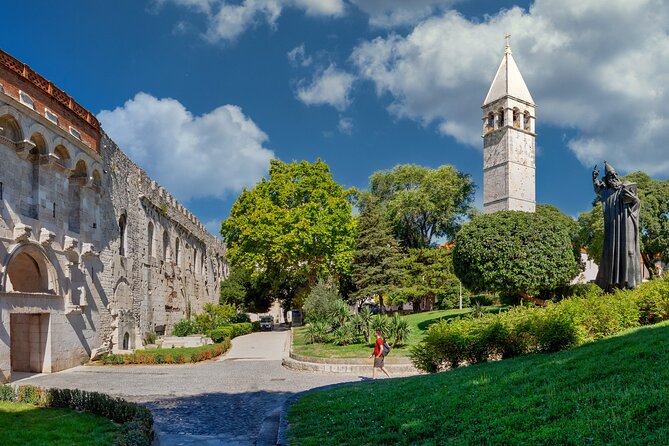
- A guided walk through the palace streets so you’re not wandering in circles (even though it’s designed to be a bit of a maze).
- Peristyle and its unusual acoustics—a central square that’s famous for sounding great.
- Inside access to major structures like the Vestibulum and Diocletian’s Cellars as part of the route.
- Golden Gate context including the Roman name Porta septemtrionalis and the emperor’s arrival in 305.
- Guides praised for personality—people highlighted guides such as Luka, Sandra, and Jelena for mixing history with real local guidance and humor.
Why Diocletian’s Palace Feels Like a City Within a City
Diocletian’s Palace isn’t a “palace” in the dreamy way you might picture from English words. It’s massive, fortress-like, and it basically forms a huge chunk of Split’s old town and city center. Built around the turn of the 4th century AD, it became a retirement residence in name, but it also functioned like a military base for the garrison that lived there.
What makes this tour worth your time is that it helps you read the place fast. Instead of seeing random arches and walls, you start to understand how the space was organized—private areas, public ritual spaces, defensive gates, and the spaces below ground that kept everything running.
And yes, you’ll still feel that “how did people live inside this?” surprise. The streets you walk today grew around the Roman structure over centuries, so you get that layered feeling: Roman scale with later-town energy.
You can also read our reviews of more tours and experiences in Split.


Price and value: paying for guidance, not ticket chaos
At $60.21 per person for about 2 hours, it’s not a freebie. But here’s where the value comes in: the main palace areas on the itinerary are marked as admission ticket free, and the tour includes a guide. That means you’re mostly paying for orientation, storytelling, and practical local context—not for a pile of entry fees.
If you like history but hate reading for hours on vacation, this format fits. It’s designed to get you oriented quickly and give you a framework so the rest of Split makes sense after the tour ends. The cathedral is a separate situation, though—cathedral tickets aren’t included.
Meeting, timing, and what the route actually feels like
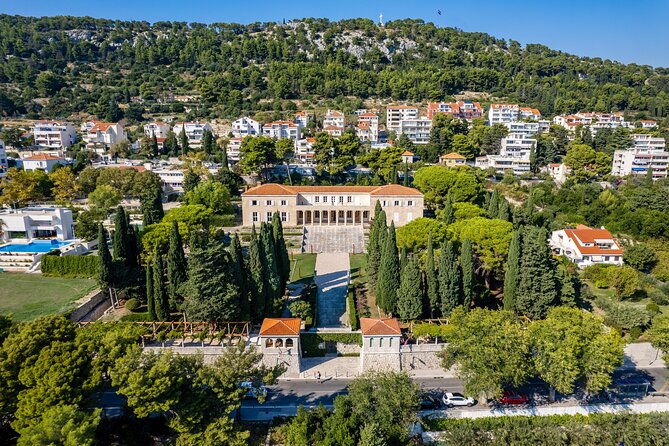
Tours run from South Tours Travel Agency at Mrčelina 1 in Split, and you’ll return back to that same meeting point when you’re done. You get a mobile ticket, and the tour is offered in English.
With several departures throughout the day, you can pick a start time that suits the weather and your stamina. If it’s hot, earlier often feels better because Split’s old streets can get packed and warm. I’d also suggest arriving a few minutes early. One practical lesson people pick up in old-town meeting spots: it’s easy to miss each other if you show up right on the dot.
Group size is capped at a maximum of 99 travelers. That sounds large on paper, but in practice the walk still works because you’re guided through a clear sequence of stops. If you want lots of personal questions, pick a departure time when you expect fewer people.
Stop 1: Diocletian’s Palace grounds and the street-level “maze” effect
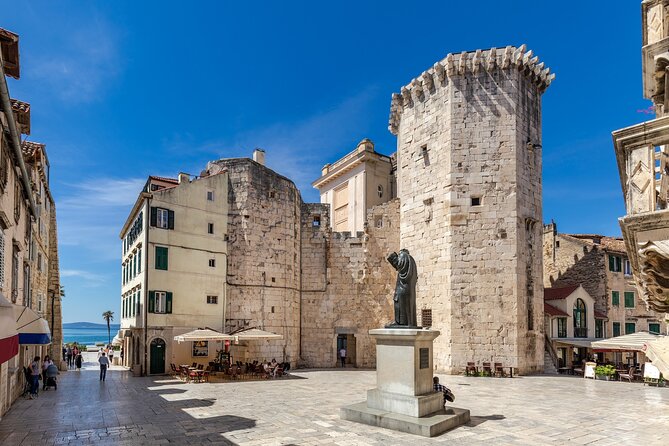
This is where the tour earns its keep. You start in the larger palace complex—today it’s roughly half of Split’s old town and city center. The guide’s job here is to help you see the palace as one coherent structure instead of separate monuments.
You’ll hear what “palace” means in this case, and why calling it a fortress doesn’t feel wrong. Around it, the city life of Split continues—so the effect is part ancient engineering, part living neighborhood. The route also takes you past striking elements that make the place feel like a time capsule, including an Egyptian sphinx that people often notice right away in the wider palace area.
Also, expect that classic old-town sensation: narrow passages, sudden openings, and that sense you could get lost. That’s not a flaw—it’s part of what makes Diocletian’s Palace special. The tour keeps you oriented so you enjoy the maze instead of fighting it.
Potential drawback at Stop 1: because it’s the core part of the experience, you’ll be walking with intent and moving through quickly. If you love to linger at every corner photo moment, you may want to come back on your own later.
Stop 2: The Peristyle—Roman square, temple meaning, and great acoustics
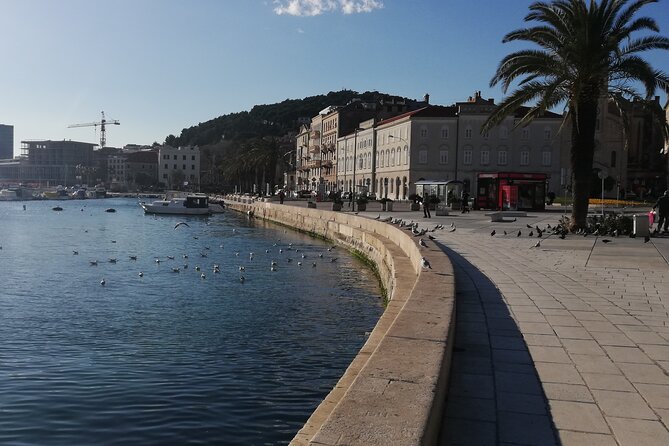
Next up is the Peristyle, the palace’s central square. This space wasn’t designed just for scenery. It ties into the emperor’s image—Diocletian was celebrated as the living son of Jupiter—and it sits among areas with temple associations.
What you should care about here is how the Peristyle works as a public stage. It’s known for unusual acoustics, which is why it’s often described as a natural theater setting, historically linked with performances like opera classics and ancient literary works.
Even if you don’t plan to attend a performance, it helps you “hear” the space. You’ll feel how a central square inside a palace fortress becomes a community focal point, not just a leftover courtyard.
Tip for your visit: stand where your guide points out the best sightlines and sound effects. This is one stop where where you stand can change what you notice.

Stop 3: The Vestibulum—rectangles outside, circles inside

The Vestibulum has a simple idea with a dramatic result. From the outside, it’s rectangular. Inside, it’s built on a circular ground plan. That contrast can feel like walking into an optical trick: you come expecting one geometry and then meet another once you step into the structure.
Even without extra details, the Vestibulum tends to leave a strong impression because it’s monumental in scale and shape. It’s also a reminder that Roman architecture wasn’t just about brute force. It was about planned experience—how you move, where your attention goes, and what kind of space the emperor’s court and visitors inhabit.
If you like architecture that still makes emotional sense today, this one is a solid payoff for the short time you’ll spend there.
Stop 4: Diocletian’s Cellars—why the palace is UNESCO-worthy
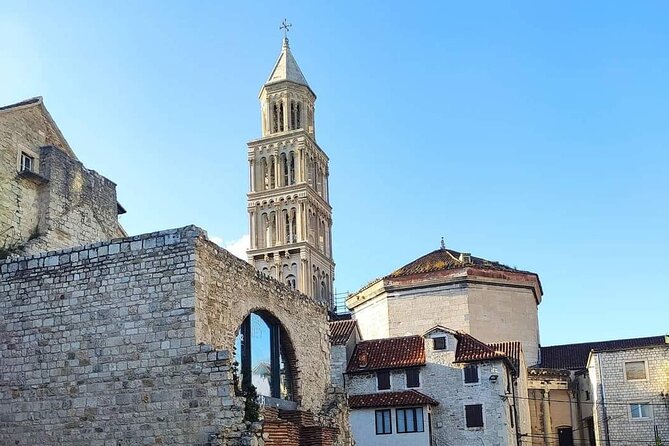
Under (and around) the palace, you’ll get to the Diocletian’s Cellars. These substructures are described as one of the best preserved ancient complexes of their kind in the world. That matters because the cells and foundations show how the palace was built to endure and function.
This stop also explains why Split’s historical core became a UNESCO World Heritage Site. In plain terms: it’s not only the dramatic visible parts above ground. The preserved system underneath is part of what makes the whole story believable and intact.
Practically, the cellars can also feel different in temperature and atmosphere than the bright streets above. Even if you’re not a “cool places” person, it helps your brain reset. You stop treating this as just a photo-op and start recognizing it as a real built environment that had to support daily life.
What to watch for: because it’s about substructures, you may feel some tighter movement and more attention to surfaces. If you have mobility issues, be ready to move carefully through the spaces your guide navigates.
Stop 5: The Golden Gate (Porta septemtrionalis) and Diocletian’s 305 entry
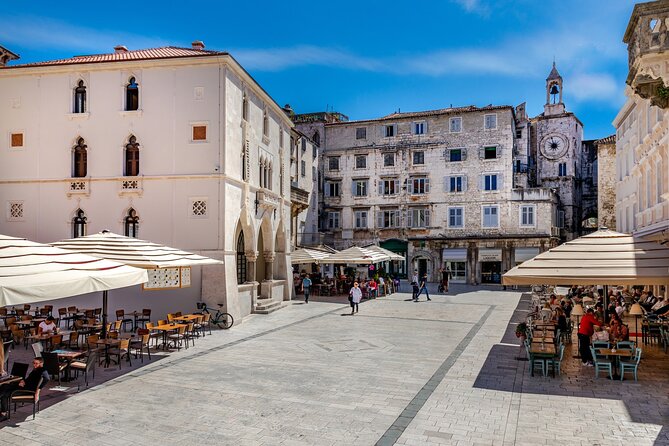
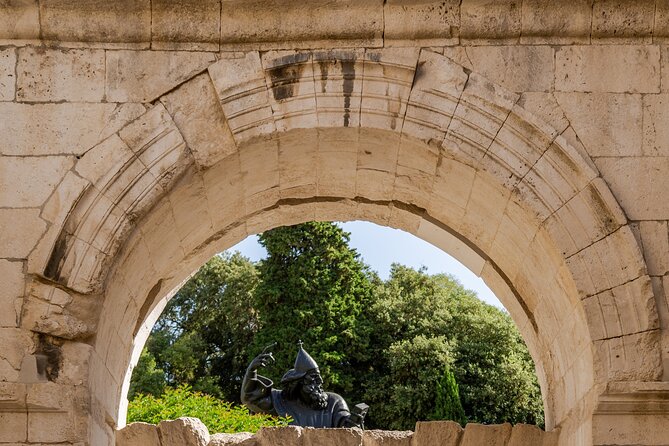
The tour ends by focusing on the Golden Gate, the Roman Porta septemtrionalis. This gate isn’t just a pretty entrance. It’s part of how the palace defended itself.
You’ll learn it was built in a rectangular shape with double doors and used as part of defensive military tactics. That’s the big idea to carry away: even the grand arrival routes had a “keep control” purpose.
And then there’s the date detail. Emperor Diocletian walked through these gates on June 1, 305. That one-line fact can do a lot of work. It turns a gate from a static object into a moment in history—an actual entry, an actual decision point, a real path connecting power, walls, and daily movement in the palace.
What makes the tour feel great: guides, local tips, and fast context
The best part of this experience is how the guide connects each stop into one story. People consistently praised the guides’ ability to teach without turning it into a lecture. They also highlighted friendly professionalism and a sense of fun—one guide even came with a quirky humor style that helped the information stick.
It’s not just dates and architecture either. You also get local street-level tips—how to understand what you’re seeing as a visitor, and how to look for shops or details that feel worth your time. In a place where ancient walls blend into everyday life, those “what to notice” cues matter.
If you’re the kind of traveler who likes to arrive somewhere and immediately start decoding it, this tour gives you that boost. By the time you’re done, you’re more confident walking the old streets on your own. The palace stops aren’t just “sights”—they become landmarks you can point to while you explore further.
Who this tour is best for (and who should consider other plans)
This is a great fit if you want:
- a 2-hour overview of Diocletian’s Palace without ticket headaches
- an English guide who explains how the spaces connect
- help navigating the old-town “maze” so your time in Split feels efficient
You might want a different plan if you’re looking for:
- a super long, slow, spend-all-day palace experience
- cathedral time included as part of the tour (cathedral tickets aren’t included)
- lots of free time sitting in one spot for extended reading or resting
Also consider your comfort with walking. The tour notes a moderate physical fitness level, and the route involves moving between multiple parts of the palace complex. If you’re generally comfortable walking short distances on uneven stone, you’ll be fine.
Should you book Diocletian’s Palace in Split?
I’d book this tour if you want your first taste of Split’s ancient core to come with a clear path and a guide who helps you understand what you’re looking at. At $60.21, you’re paying for that translation—from Roman fortress to living old town—and the fact that most major stops are free to enter makes it a smart value.
If you’re already the type who loves self-guided reading and don’t mind wandering, you could do it on your own. But if you’d rather walk in, get the story, and then explore with confidence afterward, this one is an easy yes—especially because the guides here are getting praised for teaching and for giving practical local guidance.
FAQ
How long is the Diocletian’s Palace small group tour in Split?
It lasts about 2 hours.
Where does the tour start and end?
It starts at South Tours Travel Agency, Mrčelina 1, 21000 Split, Croatia, and ends back at the same meeting point.
Is the tour offered in English?
Yes, the tour is offered in English.
Do I need to buy tickets for the palace stops?
Admission tickets for the listed stops are free, but tickets for the cathedral are not included.
What’s included in the price?
The tour includes a local guide and a professional guide.
Do I get a mobile ticket?
Yes, the tour includes a mobile ticket.
What fitness level do I need?
The tour is designed for travelers with a moderate physical fitness level.
Can I cancel for a full refund?
Yes. You can cancel up to 24 hours in advance for a full refund. Changes within 24 hours of the start time aren’t accepted, and cancellations less than 24 hours before won’t be refunded.