REVIEW · SPLIT
Essential Diocletian’s Palace Tour for First-Time Visitors
Book on GetYourGuide →Operated by KUKUVIA, Vl. Jelena Tanjić · Bookable on GetYourGuide
Split makes old stones feel personal. In this 1.5-hour small-group tour, you get a clear, low-stress route through Diocletian’s Palace and into Old Town, with a guide who knows how to turn big ruins into real daily life. I especially like the easy pacing and the way the story connects the past to what you see around you now.
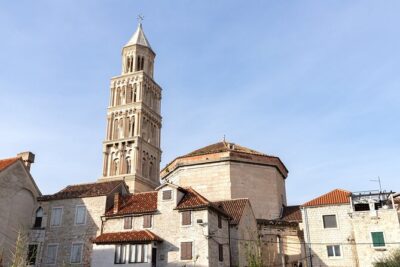
My second favorite part is the guide’s style: Jelena (from Bosnia and Herzegovina, long-time Split resident) mixes history with humor and also shares practical guidance for what to do next. One thing to consider: this tour is not suitable for wheelchair users, and it focuses on the main palace areas rather than including access to the Substructures or Bell Tower.
In This Review
- Key Things I’d Plan For
- Why Diocletian’s Palace Feels Confusing Without a Map
- Finding the Meeting Point Near Golden Gate (and Not Losing Your Time)
- Stop by Stop: How the Tour Makes the Palace Make Sense
- Golden Gate: Your First Big Anchor Point
- People’s Square / Pjaca: Where the City Breathes
- Jupiter’s Temple: When Roman Power Meets Sacred Space
- Peristil (Peristyle): The Courtyard That Tells You Where You Are
- Cathedral of Saint Domnius: Past Built Into Present Life
- Vestibul: A Fun Memory Moment (Yes, It Includes a Selfie)
- Diocletian’s Cellars: Understanding the Palace’s Hidden Work
- The Finish at Split Riva: From Palace to Sea-Level Life
- What You Actually Get Beyond Sightseeing
- Price and Value Check: Is $17 Worth It?
- Who This Tour Fits Best (and Who Might Want Something Else)
- A Few Smart Tips Before You Go
- Should You Book This Essential Diocletian’s Palace Tour?
- FAQ
- How long is the Diocletian’s Palace tour?
- What’s the group size?
- What language is the tour offered in?
- Where do I meet the guide?
- What are the main sights included in the tour?
- Does the tour include access to the Substructures or Bell Tower?
- Are vouchers included?
- Is there free cancellation and reserve-and-pay-later?
Key Things I’d Plan For

- Small group (max 10) for questions and real back-and-forth during the walk
- Jelena’s storytelling that ties Split to the wider Balkans, not just one era
- Must-see palace stops like Golden Gate, Jupiter’s Temple, Peristil, and Saint Domnius
- Vestibul Dome Selfie time, built into the route for a fun memory
- Vouchers for food and drinks at well-known Split spots, plus a curated list of recommendations
Why Diocletian’s Palace Feels Confusing Without a Map
Diocletian’s Palace can look like a maze when you first arrive. You see arches, gates, temples, courtyards, and churches all packed into the same footprint, and it’s easy to wander without really knowing what you’re looking at. That’s where this tour earns its keep.
Instead of treating the palace like a checklist, the experience gives you a simple storyline you can hold onto. You start at the statue of Gregory of Nin, then move gate by gate and courtyard to courtyard, with explanations that help you understand why these places mattered—then how they function in modern Split.
You can also read our reviews of more tours and experiences in Split.


Finding the Meeting Point Near Golden Gate (and Not Losing Your Time)
The tour starts in a very “walkable” spot. Meet in front of the big statue of bishop Gregory of Nin and near the north entrance to the palace called Golden Gate. The guide asks you to look for a black umbrella (the color detail matters because it’s an easy visual cue on a busy street).
This is practical for two reasons. First, you’re starting right where most first-time visitors naturally begin their palace exploration. Second, it keeps the tour from feeling like a long preamble before you reach the real sights.
Stop by Stop: How the Tour Makes the Palace Make Sense
Golden Gate: Your First Big Anchor Point
You begin with the Golden Gate, entering the palace area with guidance. This stop works as the orientation moment. You’re not just stepping through an old entrance—you’re learning how the palace was designed to move people in and out, and why this layout shaped daily life.
What I like here is that the guide doesn’t rush past the symbolism. You get just enough context to make the next stops click, so later details don’t feel random.
People’s Square / Pjaca: Where the City Breathes
Next comes People’s Square, also tied to Pjaca, Split’s main square. This is where you can feel the difference between “ruins as scenery” and “ruins as a living city.” You’re in a space that still works as a meeting point and social hub.
Even if you only glance around, your guide’s framing helps you read the square like a practical place: paths connect, buildings face outward, and the palace doesn’t sit isolated. It’s part of the city’s rhythm.
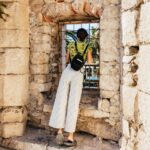

Jupiter’s Temple: When Roman Power Meets Sacred Space
The route then takes you to Jupiter’s Temple. In a short time, you’ll understand why this wasn’t just decorative architecture. It was tied to authority and belief—Rome’s big ideas made visible in stone.
One useful thing I look for in a tour like this: explanation that answers the invisible question. Here, you’ll leave with a clearer sense of what the temple signaled and how the area fits into the broader palace plan, not just that it once existed.
Peristil (Peristyle): The Courtyard That Tells You Where You Are
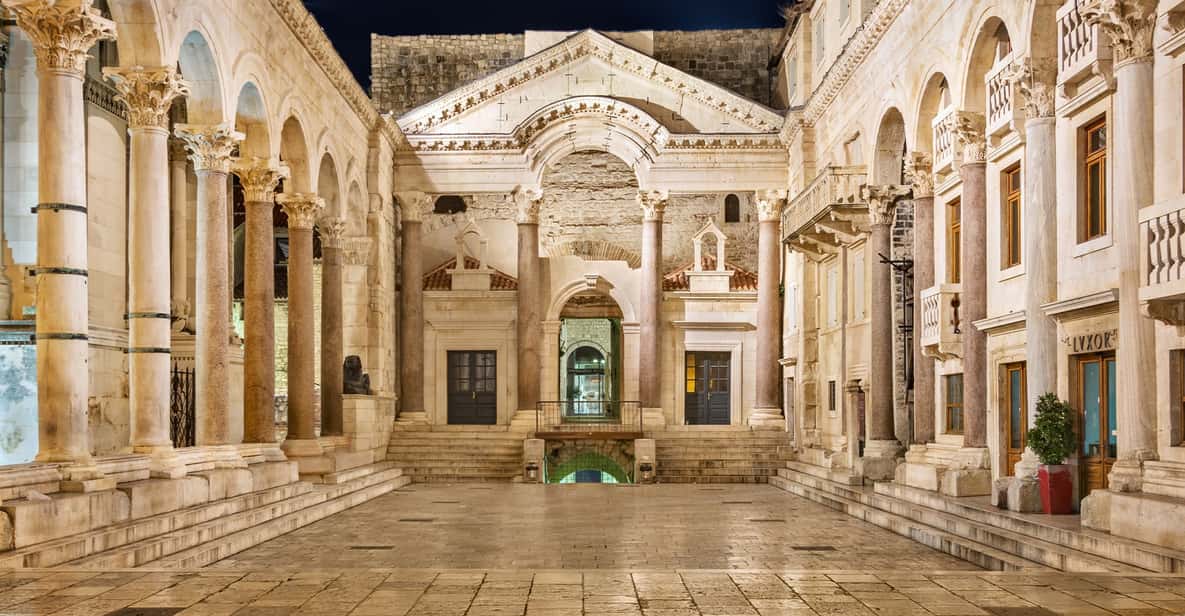
The big visual moment is the Peristil (Peristyle). This is the central courtyard space that helps everything else feel organized. You see the architectural rhythm and the way movement funnels through the palace.
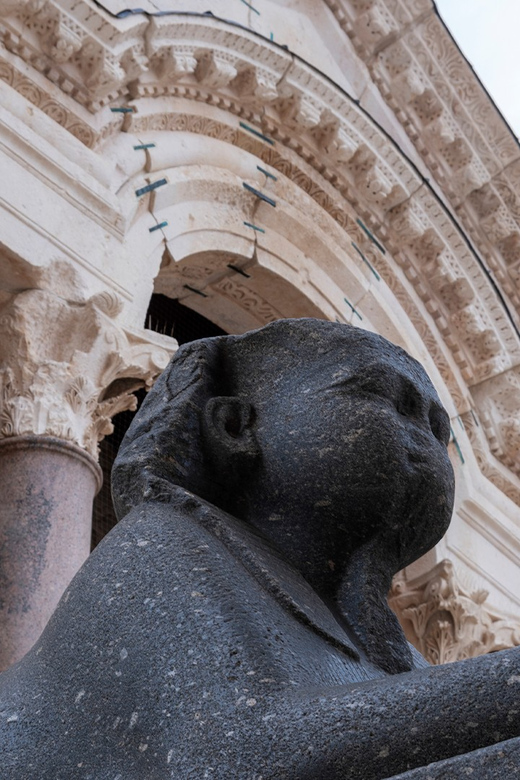
Also, keep your eyes open for the Egyptian sphinx, which is part of this central palace experience. It’s one of those objects that can seem out of place until you understand why it ended up here. Your guide brings that missing context so you don’t just take a photo—you understand what the photo represents.
Cathedral of Saint Domnius: Past Built Into Present Life
Then you reach the Cathedral of Saint Domnius. This stop is especially valuable for first-timers because it shows how the palace story didn’t end with the Roman era. Sacred spaces often evolve, reuse, and adapt, and this one gives you a tangible example.
You’ll get guided context that makes the cathedral feel like part of the same ongoing narrative as the palace itself, not something you happened to walk past.
Vestibul: A Fun Memory Moment (Yes, It Includes a Selfie)
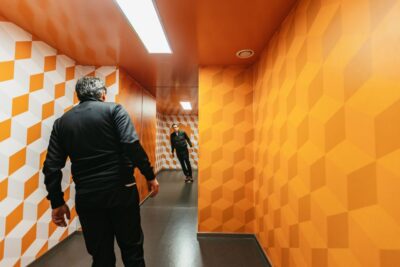
The tour continues to the Vestibul, and this is where the experience adds a lighter touch. There’s a Vestibule Dome Selfie moment—scheduled so you’re not scrambling for good angles while trying to stay with the group.
This part matters more than it sounds. It keeps your energy up mid-tour, and it gives you a shared group photo without turning the walk into a chaotic photo session.
Diocletian’s Cellars: Understanding the Palace’s Hidden Work
Finally, you visit Diocletian’s Cellars. “Cellars” can sound like storage rooms, and that’s not a bad instinct. These spaces help you understand that the palace wasn’t just a set of grand public monuments—it also functioned like an operational center with practical needs.
This stop adds depth. You get the sense that the palace was designed for systems: spaces that supported everyday activity, not only ceremonial grandeur.
The Finish at Split Riva: From Palace to Sea-Level Life
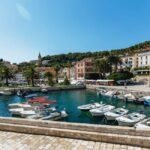
The tour wraps up around Split Riva, the waterfront promenade area where the city opens out and the views become part of the experience. Even if you’re short on time, you’ll now know what you just walked through and why it’s positioned the way it is.
This is a good ending point because it’s easy to transition into your next plan: a meal, a slower stroll, or grabbing a drink while the city energy is right in front of you.
What You Actually Get Beyond Sightseeing
This is the section that makes the price feel less like a ticket and more like a shortcut.
You’re not just paying for entrance-style narration. The tour includes interactive storytelling from a licensed guide, with room for meaningful questions in a small group of up to 10. Jelena’s style also stands out because she doesn’t treat the tour as a one-way lecture. You’ll get answers and occasional humor, and she circles back to tie things together so it feels coherent rather than fragmented.
Then there’s the personalized part. After the tour, you receive individualized recommendations on where to eat, what to see, and what local experiences to try. That’s practical because Split has plenty of options, and a good “next steps” list can save you from aimless wandering.
Finally, you get access to vouchers at some of Split’s well-known restaurants and bars. That’s real value if you plan to eat out during your stay anyway. You’re effectively reducing the cost of at least one meal or drink while still getting local guidance that fits your interests.
Price and Value Check: Is $17 Worth It?
At $17 per person for about 1.5 hours, this tour is priced for first-time visitors who want direction without spending a full afternoon. For that money, you’re getting:
- A structured walkthrough of key palace landmarks
- A licensed English-speaking guide (Jelena)
- A small group size that supports questions
- The Vestibul dome selfie moment
- Discount vouchers for restaurants and bars
- Personalized recommendations after the tour
The one cost consideration is time. You’ll finish with more clarity than you started, but it is still a single 90-minute block. If you want to linger deeply in every space or climb additional sites, you’ll need extra time beyond this tour.
Also note what’s not part of the included access: this experience does not include entry to the Substructures or the Bell Tower. If those are priorities for you, plan a separate visit.
Who This Tour Fits Best (and Who Might Want Something Else)
This is a great match if you:
- Want an organized introduction to Split’s palace core
- Prefer a relaxed pace over a rushed “see it all” scramble
- Like when a guide connects Roman-era structure to today’s city life
- Need help deciding where to eat and what to do next
It’s less ideal if:
- You use a wheelchair (it’s not suitable for wheelchair users)
- You specifically want Substructures or Bell Tower access as part of one timed visit
- You hate group settings and want silent, solo exploration only
A Few Smart Tips Before You Go
A guided walk through Diocletian’s Palace works best when you arrive ready to connect dots. Here’s how to get more from the 90 minutes:
- Wear comfortable shoes. Your time is spent moving between major stops.
- Bring your phone for the Vestibul dome selfie moment, since that’s baked into the route.
- If you’re planning meals that night, ask for recommendations after the tour while the voucher option is fresh.
- If you care most about a single landmark (cathedral, courtyard, cellars), still keep an open mind. The tour’s value is the way it links the stops.
Should You Book This Essential Diocletian’s Palace Tour?
If you’re in Split for a short stay, this is one of the easiest ways to get your bearings fast without missing the main palace highlights. The guide’s approach—storytelling, humor, and the way she adds practical info about modern Split—makes it more useful than a basic walk-through.
I’d book it if you want:
- A clear first-time route through Golden Gate, Peristyle, Saint Domnius, and the palace core
- A small group experience where you can ask questions
- Restaurant voucher perks plus tailored food and sightseeing suggestions
I’d skip or pair it with another plan if you’re set on Substructures or the Bell Tower, or if your mobility needs require wheelchair-friendly access.
FAQ
How long is the Diocletian’s Palace tour?
The duration is about 1.5 hours.
What’s the group size?
It’s a small-group tour limited to 10 participants.
What language is the tour offered in?
The live guide provides the tour in English.
Where do I meet the guide?
Meet in front of the big statue of bishop Gregory of Nin and the north entrance to the palace called Golden Gate. Look for a black umbrella.
What are the main sights included in the tour?
You’ll visit the Golden Gate, People’s Square, Jupiter’s Temple, Peristil, the Cathedral of Saint Domnius, the Vestibul, and Diocletian’s Cellars. The experience also includes Old Town sights and the Egyptian sphinx, and it finishes around Split Riva.
Does the tour include access to the Substructures or Bell Tower?
No. This tour does not include access to the Substructures or the Bell Tower.
Are vouchers included?
Yes. You get access to vouchers in some of Split’s renowned restaurants and bars for discounted local food and drinks.
Is there free cancellation and reserve-and-pay-later?
Yes. You can cancel up to 24 hours in advance for a full refund, and you can reserve now and pay later (book without paying today).