REVIEW · SPLIT
Private Split: Visit Diocletian Palace & Taste Food at the Market
Book on Viator →Operated by Intrepid Urban Adventures - Croatia · Bookable on Viator
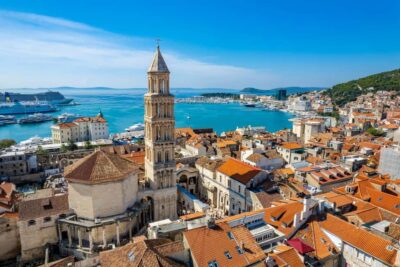
Two hours in Split, and the past bites back. This private tour pairs Diocletian’s Palace storytelling with a real food stop at Split’s Green Market, so you get history you can see and flavors you can taste. I especially like the way the guide points out details inside the palace walls (including Peristil and the Golden Gates) and then follows up with practical, seasonal bites like pršut, cheese, and local wine. One drawback to plan for: the tour does not include extra-paid sights in and around the palace complex like the cathedral areas, underground, Bell Tower, museums, or the Temple of Jupiter.
The meet-up is easy—right on the Riva—and the pacing is built for an old-town wander without rushing you through every stone. You also get the comfort of a small group cap (up to 12) and personalized attention for your party, plus the tour is described as carbon neutral and run by a B Corp certified company.
In This Review
- Quick hits before you go
- Meeting on the Riva: a tour that starts where Split breathes
- Entering Diocletian’s Palace: where Roman power became a city
- What you actually get inside (beyond a quick walk-through)
- Peristil and Vestibule: the best part is the guide’s pointing
- The Green Market: where Split learns how to feed itself
- What to expect from the market atmosphere
- Dalmatian snack time: pršut, cheese, and seasonal plates
- Price and time: is $148.72 worth it?
- What could make it feel less worth it
- Who should book this Split palace and market tour
- Practical tips for getting more out of it
- Should you book this private Split palace and market tour?
- FAQ
- What is the meeting point for this tour in Split?
- How long does the tour take?
- What language is the tour offered in?
- Is a mobile ticket provided?
- What parts of Diocletian’s Palace are included?
- What is included with the food portion?
- What is not included?
- How large is the group?
- What is the cancellation policy?
Quick hits before you go
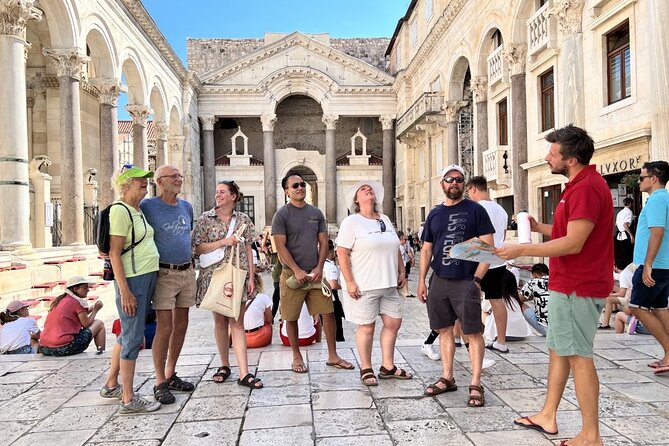
- Diocletian’s Palace, UNESCO inside look: You visit main courtyard areas like Peristil plus private sections and the Vestibule.
- Game of Thrones-friendly stops: The guide connects filming references to real palace features.
- Green Market shopping energy: You meet local vendors and learn how people buy and cook everyday food.
- Peskarija-style seafood atmosphere: There’s a market feel tied to daily, freshly caught seafood just off the coast.
- Dalmatian snack that changes by season: Expect pršut, sheep’s milk cheese, olives, and often favorites like octopus salad.
- English guide, local tips included: You leave with ideas for what to do next on your own time.
Meeting on the Riva: a tour that starts where Split breathes
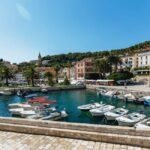
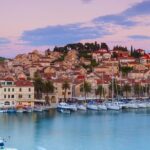
This is the kind of tour that begins in the right place: Split Riva, the long promenade along the waterfront. The meeting point is listed at Obala Hrvatskog narodnog preporoda 23, and after the tour you circle back to the Riva again. That matters because it makes the rest of your day feel simple. You’re not stranded in some random side street—you can keep walking, grab a coffee, or hunt down something sweet without figuring out transport.
The tour is also designed around your guide doing the talking. You’re not handed a silent audio app and left to interpret ruins. Instead, you’re given context as you walk. The guide is English-speaking, and the group size is capped at 12, which helps keep questions from feeling like an interruption.
One more small but real value point: the operator calls out that the experience is carbon neutral and run by a B Corp certified company. I don’t expect that to change your view of Roman walls, but it’s part of the modern travel standard that tells you the company takes more than just profit seriously.
You can also read our reviews of more food & drink experiences in Split

Entering Diocletian’s Palace: where Roman power became a city
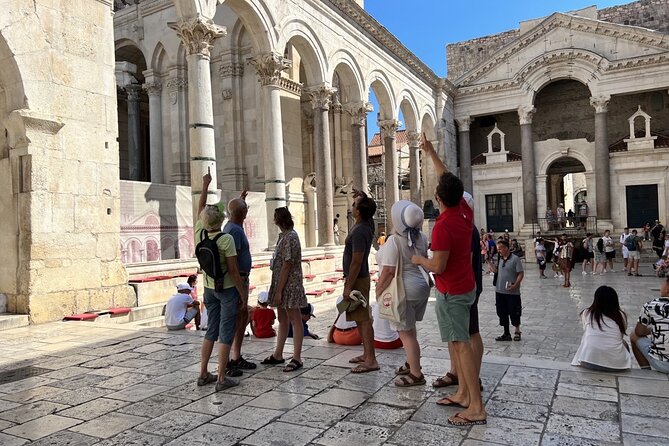
Diocletian’s Palace isn’t just a monument—it’s the backbone of Split’s old town. The tour brings you into the UNESCO-listed core and uses that fact to do something useful: it shows you how a single Roman decision became an entire living neighborhood.
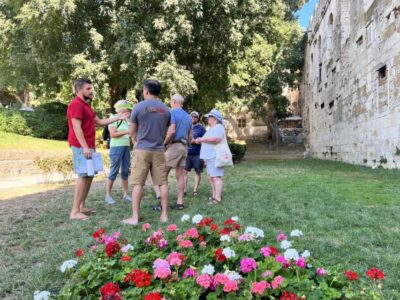
You’ll start with the big picture: the palace was built by Emperor Diocletian, and Split’s age is tied directly to those walls. The guide frames the palace as more than a “tourist site,” emphasizing how people have lived, traded, and adapted the space for centuries. That’s the difference between seeing old stone and understanding why the city looks the way it does.
I like that the tour explicitly focuses on the everyday thread—how the palace went from an emperor’s residence to a place where shops and merchants took root as far back as the early medieval period. Once you hear that, you start noticing small urban details: how movement through space works, where people would gather, and why certain viewpoints and passages feel natural rather than accidental.
What you actually get inside (beyond a quick walk-through)
Stop 1 includes time in the palace’s key areas, and the included visits matter:
- Admission ticket is listed as free for what’s included
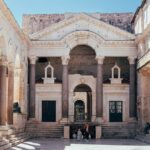
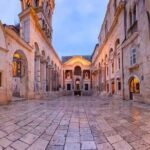
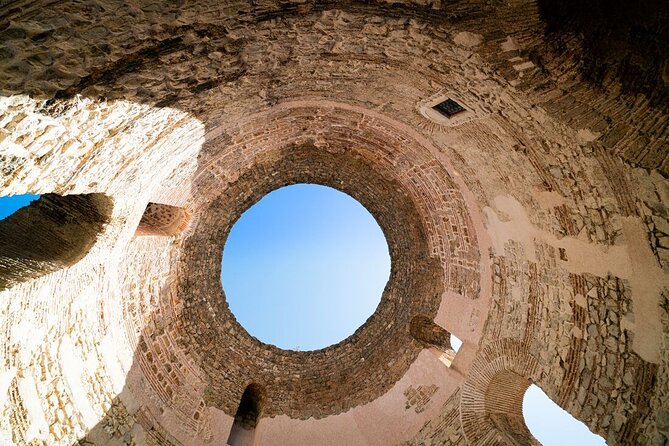
- You visit the main square within the palace walls, Peristil
- You check a private section plus the Vestibule
- You see the Golden Gates
Peristil is worth your attention because it’s one of the places where scale hits you. It’s not “one more courtyard.” It’s a central civic-feeling space that helps you understand how power and public life were designed to connect.
The Golden Gates also help with orientation. Even if you don’t memorize where every arch sits, you’ll walk out knowing which entrances and lines of sight matter.
Game of Thrones fans get another layer here. The tour points out filming references while you’re standing in the real setting. Even if you’re not a superfan, it helps you recognize why certain spots look the way they do on screen.
Peristil and Vestibule: the best part is the guide’s pointing
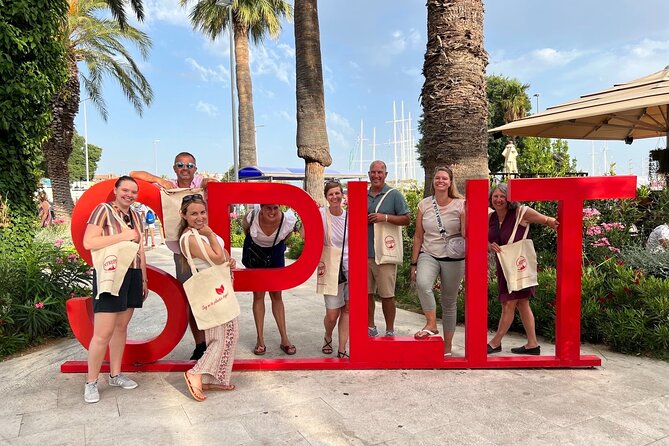
A big reason this tour earns strong ratings is the guide work. Several people highlight guides such as Lindis, Maja, and Maja Bilic as particularly strong—especially when the guide can connect architecture to real historical context. One review even notes a guide who worked as an archaeologist and on excavation/restoration at actual sites. That kind of background shows up in the way a guide explains what you’re looking at.
Here’s what you should watch for on this segment:
- Peristil: Look for how open space and surrounding walls shape movement and sound. Courtyards in palace complexes were designed for visual control.
- Vestibule and private areas: Notice how these spaces feel more controlled or transitional than public plazas. That tells you how the palace “moves” people through layers of access.
- Golden Gates: Use them as a mental landmark. They help you reorient later when you return on your own.
If you like learning history in a way that changes how you see a place, this part delivers. If you want a checklist tour with minimal talk, you’ll still get value, but you may find the amount of information feels like a lot in a short time.
The Green Market: where Split learns how to feed itself
After the palace, the tour shifts gears—toward food, vendors, and the everyday logic of Dalmatian eating. Stop 2 is the Green Market of Split, and it’s not just a place to snack. It’s where you see how locals shop and what “seasonal” means in real life.
You’ll meet local vendors, and your guide shares how locals buy and what they choose when different ingredients are available. That makes a difference because it turns a market stop into something you can use later. You’ll know what to look for when you’re choosing fruit, cheese, olive oil, and other staples.
The tour also weaves in cultural wayfinding inside the old town. You’ll hear about Gregory of Nin—linked to the famous golden toe—and you’ll learn why names like Hajduk show up around Split from suburbs to the old city core. That’s the kind of story that makes a city feel connected, not like a set of separate tourist stops.
You can also read our reviews of more tours and experiences in Split




What to expect from the market atmosphere
The tour also mentions Peskarija, the fish market area off the coast of Split, where vendors call out the day’s catch. Even if you’re not buying seafood, the atmosphere helps you understand what Split’s food scene is built on: ocean-first ingredients that arrive daily, then get turned into simple, honest meals.
If you’re hungry, don’t worry—you’re heading toward a snack next.
Dalmatian snack time: pršut, cheese, and seasonal plates
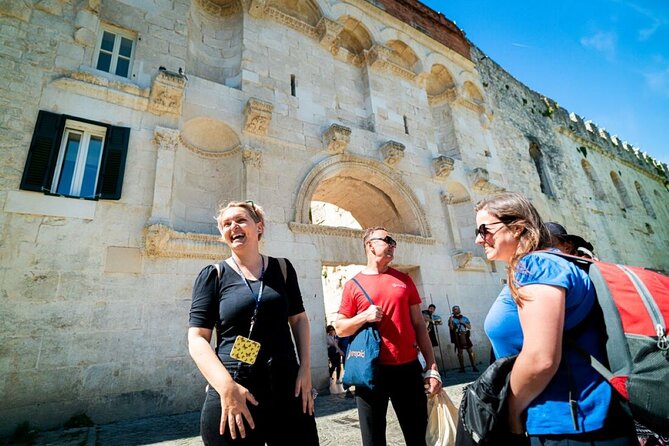
This part is why the tour pairs so well with a history walk. You spend time learning how the palace evolved into a city. Then you eat in a way that shows how the city feeds itself.
The snack menu can change based on what’s in season. But the expected lineup is classic Dalmatian:
- pršut (prosciutto)
- sheep’s milk cheese
- octopus salad
- anchovies
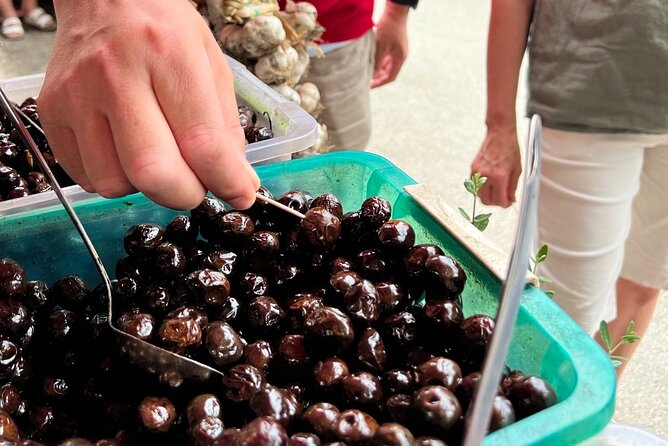
- olives
- locally made wines
In the reviews, I saw a theme: people love the balance—salty and rich cured meats, creamy cheeses, and seafood flavors that feel grounded rather than fancy. One review calls out octopus salad plus homemade bread at a local spot (Maslina). Another mentions a local cafe called The Olive where a traditional meal and wine fit the pacing nicely.
One practical thing to know: the tour includes tasting items, but it also lists that additional food and drinks are not included. So if you finish the snack and want more wine, coffee, or dessert, that’s on you. The upside is you’re free to follow your appetite after you’re done—not forced to pay for a long sit-down meal.
Also, if you’re food-motivated, this is the right tour type. The route literally uses the idea that the way to a Dalmatian’s heart is through the stomach, and then backs it up with real local ingredients.
Price and time: is $148.72 worth it?
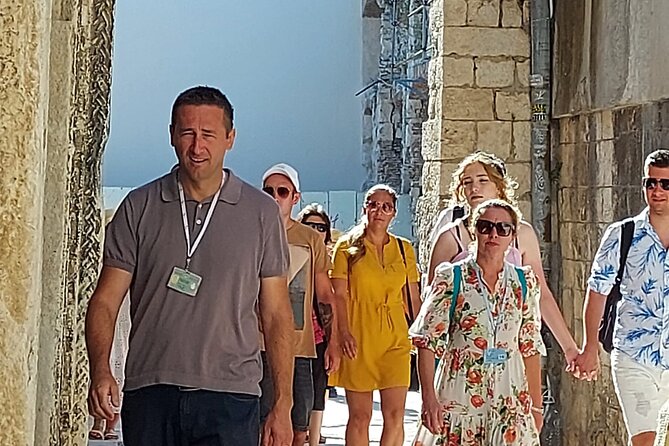
Let’s talk value in plain terms. At $148.72 per person for about 2 hours, you’re not paying for a long day. You’re paying for:
- a guide who can connect Roman architecture to how Split lives today
- access to key palace areas listed as included (Peristil, private section, Vestibule, Golden Gates)
- a guided market walk and an included local food tasting
- tips for what else to see, do, and eat after the tour
If you were to DIY this on your own, you’d still see the palace and you could still wander the market. But you’d likely miss how the palace turned into a neighborhood, why certain details matter, and which food choices fit the local rhythm. That’s what you’re buying: time saved plus understanding gained.
What could make it feel less worth it
This tour does not include additional paid entries for multiple major areas like the cathedral, underground, Bell Tower, museums, and the Temple of Jupiter. If those are top priorities for you, you may need to add a separate visit. The good news is the tour still teaches you enough to decide what’s worth your extra time later.
Also, because it’s a tight time window, you shouldn’t expect to leave having seen every corner of the palace complex. Think of it as your orientation plus your story pack. Then you can return on your own and slow down where you care most.
Who should book this Split palace and market tour
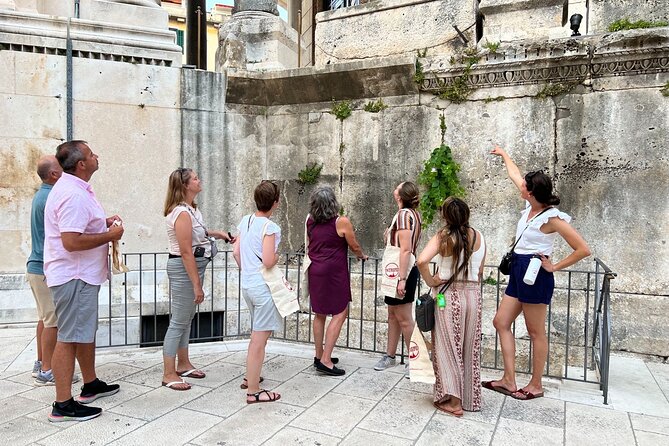
Book it if you want a high-value old town experience that mixes sight and flavor. You’ll like it most if:
- you enjoy history that comes with visible details
- you want a local guide to help you choose what to eat
- you’re a Game of Thrones fan and want references tied to real locations
- you’d rather walk a focused route than do random wandering
It’s also described as child-friendly, with children under 6 permitted to join free (tell the operator if you’re bringing one). And the group size cap helps keep things from feeling like a cattle-car tour.
You might skip it if your goal is to check off every paid palace attraction. In that case, you’ll likely want a palace-focused ticket strategy first, then add food on your own.
Practical tips for getting more out of it
A few things will help you enjoy the tour more:
- Wear comfortable shoes. You’ll be walking through uneven old-town surfaces.
- Bring curiosity. The guide’s strongest moments come when you ask questions as you go, especially about how the palace shaped daily life.
- Pace your expectations: you’re getting an overview plus tasting, not an all-day museum sweep.
- After you’re done, take your guide’s recommendations seriously. The best use of this tour is what you do next with your own time on Split’s streets.
Should you book this private Split palace and market tour?
Yes—if you want a shortcut to understanding Split. I like that the tour blends Diocletian’s Palace storytelling with a real market food experience, and it does it in a tight format that doesn’t drain your whole day.
It’s especially good value when you’re new to Split and want to avoid the common trap: seeing the big sights but missing why they matter. You’ll leave with palace orientation, local food context, and the confidence to explore on your own afterward.
If you’re mainly chasing the very specific paid attractions inside the palace complex (cathedral areas, underground spaces, bell tower, museums, Temple of Jupiter), treat this as a strong first stop—not the final chapter.
FAQ
What is the meeting point for this tour in Split?
The tour meeting point is listed at Obala Hrvatskog narodnog preporoda 23, 21000 Split. It ends back at Split Riva.
How long does the tour take?
The duration is listed as about 2 hours.
What language is the tour offered in?
It is offered in English.
Is a mobile ticket provided?
Yes, the tour includes a mobile ticket.
What parts of Diocletian’s Palace are included?
The included stops cover the main square within the palace walls (Peristil), a private section of the palace and the Vestibule, plus the Golden Gates.
What is included with the food portion?
You’ll taste local food at the Green Market, with items such as fruits, olive oil, rakija, cheese, and dry figs. The snack/menu is described as seasonal and can include options like pršut, sheep’s milk cheese, octopus salad, anchovies, and olives, along with locally made wines.
What is not included?
Additional food and drinks are not included, and tips/gratuities for your guide are not included. Entrance fees for the cathedral, underground, Bell Tower, museums, and the Temple of Jupiter are also not included.
How large is the group?
The tour has a maximum of 12 travelers.
What is the cancellation policy?
Free cancellation is available. You can cancel up to 24 hours in advance for a full refund, with cutoff times based on local time.