REVIEW · SPLIT
Split and Trogir Half Day Guided tour
Book on Viator →Operated by Redono d.o.o. · Bookable on Viator
Two Dalmatian towns, one efficient half-day. You’ll connect Split’s ancient core to Trogir’s medieval and Venetian-era streets, with a guide who explains what you’re actually looking at and why it mattered.
What I like most is the guided tour of Diocletian’s Palace alongside old-town Split, all built around key spots like the palace substructures and the Peristyle. I also love the mix of structure and freedom: you get free time in Trogir after the walking portion, so you can slow down for photos and a coffee.
One thing to consider: this is a walking-heavy day, and in hot, crowded conditions the pace can feel brisk. If you’re not great on your feet, or you hate moving from stop to stop, plan carefully (and bring a little patience).
In This Review
- Key points at a glance
- Split and Trogir in 5 to 6 hours: the value math
- Meeting at Golden Gate: the easiest way to start Split
- Diocletian’s Palace substructures: where the Roman story gets scary (and cool)
- The Peristyle and Vestibulum: the palace’s main stage
- Riva Harbor and Fruit’s Square: Split’s livable side
- The transfer to Trogir: a short hop with an air-conditioned break
- Trogir’s town hall and central square: where the city feels alive
- St. Lawrence’s Cathedral: planned sightseeing with an optional pay point
- St. Sebastian and Kula Karmelengo: the fortress side of the story
- Price and logistics: what you’re really paying for
- Who this tour suits best (and who might feel rushed)
- Should you book the Split and Trogir half-day?
- FAQ
- How long is the Split and Trogir half-day guided tour?
- What does the tour cost?
- Is the tour offered in English?
- Where does the tour start?
- What’s included in the price?
- Are entrance tickets included for all monuments?
- Is transportation between Split and Trogir provided?
- Do I get free time in Trogir?
- Can children join the tour?
- What if I need to cancel?
Key points at a glance
- Diocletian’s Palace basements stop you in the spot tied to Game of Thrones filming.
- Most monuments on the route are free at each stop, so your main paid extras are limited.
- Small-group feel is a real advantage, with many groups reported as split into tiny clusters.
- Round-trip rides from Split keep the day easy, with an air-conditioned vehicle used for the transfer.
- Trogir includes free time, not just another rapid-fire walk-through.
Split and Trogir in 5 to 6 hours: the value math
At $60.49 per person, this is priced like a true sightseeing service, not just a casual meetup. You’re paying for a professional guide, guided time through Split’s palace and old town, a guided walk in Trogir, plus an air-conditioned vehicle for the transfer between towns.
The payoff is that you cover two must-see Dalmatian old towns without trying to connect them yourself. Split is easy to get “stuck” in because the palace and waterfront overlap with everything, while Trogir can feel harder to plan if you only have a few hours. This tour solves both problems with a logical flow and a set of focused stops.
The day runs about 5 to 6 hours. That’s long enough to feel like you got oriented and learned the story, but short enough that you’re still able to add your own dinner plans afterward. Just remember: the time limit means the pace stays active.
You can also read our reviews of more guided tours in Split


Meeting at Golden Gate: the easiest way to start Split
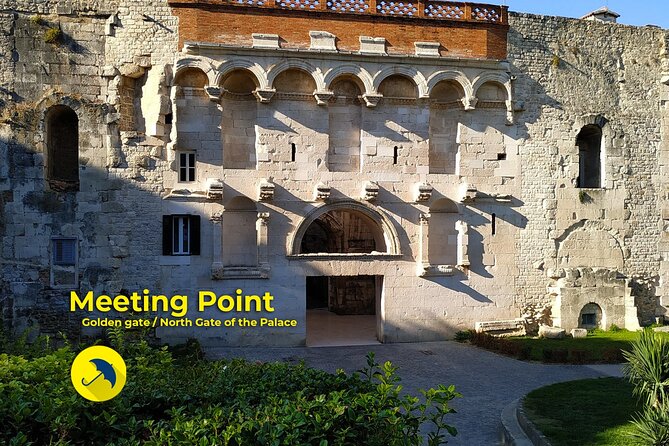
You begin at the Golden Gate (Dioklecijanova 7, Split). It’s more than a convenient meeting point. It’s also the north entrance of Diocletian’s palace, which helps you instantly understand where you are in the old city grid.
That matters because Split is basically a living maze around Roman walls. Having your guide orient you at the palace entry point prevents the common problem where you wander past major things without knowing their purpose. After this start, the palace route becomes much clearer: you’re not just moving between pretty corners, you’re tracing the palace layout.
Golden Gate also acts like a visual anchor. When you’re done with the palace walking section, you’ll be able to look back and place the waterfront and squares you’ll see later that day.
Diocletian’s Palace substructures: where the Roman story gets scary (and cool)
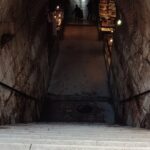
One of the first stops is the palace substructures, often called the basements. This is a standout choice because it takes you below the postcard-level view.
It’s also tied to a pop-culture fact: these substructures were used for filming Game of Thrones. Whether you’re a fan of the show or not, it’s a fun way to make an ancient underground space feel immediate. More importantly, your guide helps you connect the dramatic space to how the palace functioned in its original setting.
The route then moves into the palace’s public heart: ancient spaces that explain power, movement, and community inside what used to be a private residence. The basements give you scale and atmosphere; the next stops give you structure.
Practical note: even if many entry stops are listed as free, you’ll still be walking and looking up and around. Wear shoes you trust on uneven old-stone surfaces.
The Peristyle and Vestibulum: the palace’s main stage
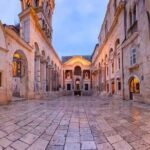
After the substructures, you’ll reach the Peristyle, the ancient main square of Diocletian’s Palace. Think of this as the palace’s big public room: space where people gathered, where events and daily life would have happened inside the walls.
Then you continue to the Vestibulum, described as an ancient entrance to Diocletian’s residence. This stop is useful because it bridges the story between the formal square and the more private interior world of the palace. In other words, you’re learning the palace’s layout by walking through it.
Your guide also uses these spaces to explain what you’re seeing rather than just naming it. Guides like Frane, Antoinette, Antonia, Ivana, and Ante (all named in recent guide feedback) are repeatedly praised for turning architecture into story. That’s exactly what makes these stops worth your time: you leave with context, not just photos.
Riva Harbor and Fruit’s Square: Split’s livable side
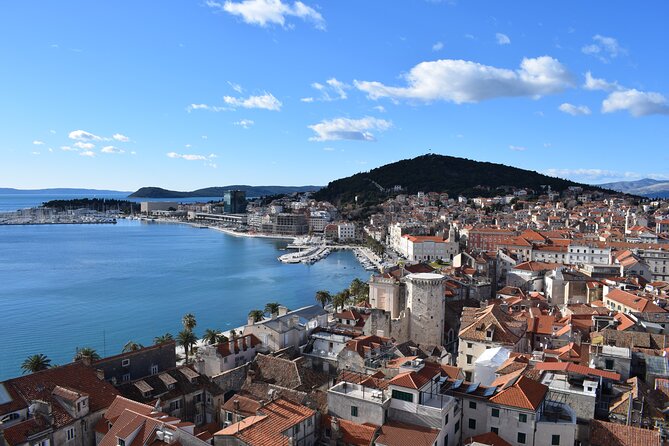
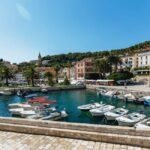
Once you’ve had your fill of palace drama, you shift to the livable streets and squares. One stop is Riva Harbor, the promenade area with classic harbor views. This is where you get a breath of air and a better sense of how Split looks from street level, not just from inside the palace.
Then you’ll visit Fruit’s Square, officially Trg Brace Radic. This square is one of Split’s more interesting public spaces, and it’s the kind of place where you can spot daily life—people pausing, snack breaks, and that mix of old buildings with ongoing modern routines.
What I like about including these two stops is balance. The palace can dominate your attention, and without a promenade and square, Split can start to feel one-note. Riva Harbor and Fruit’s Square help you remember that this city still functions.



The transfer to Trogir: a short hop with an air-conditioned break
After Split, you head to Trogir by vehicle. The tour includes an air-conditioned vehicle, which is a practical win in summer. You’re also not stuck figuring out transportation between towns on your own.
Trogir is reached with enough time to explore, not just arrive and rush through. The tour includes a guided old town visit and then free time in Trogir, so you get both interpretation and personal wandering.
The reviews I’ve read place special focus on how smoothly the day runs, including how drivers and guides coordinate to keep you moving without chaos. That matters on a route like this because the whole point is efficiency.
Also, the tour operates in all weather conditions and you’re told to dress appropriately. If weather turns, you’ll still be moving through the city and talking, so layers and a light rain plan are smart.
Trogir’s town hall and central square: where the city feels alive
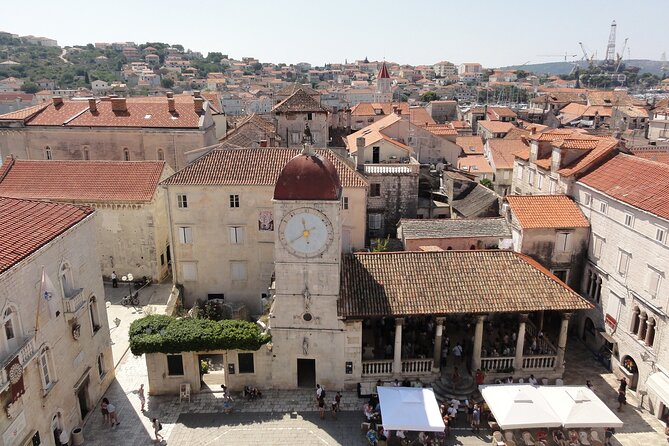
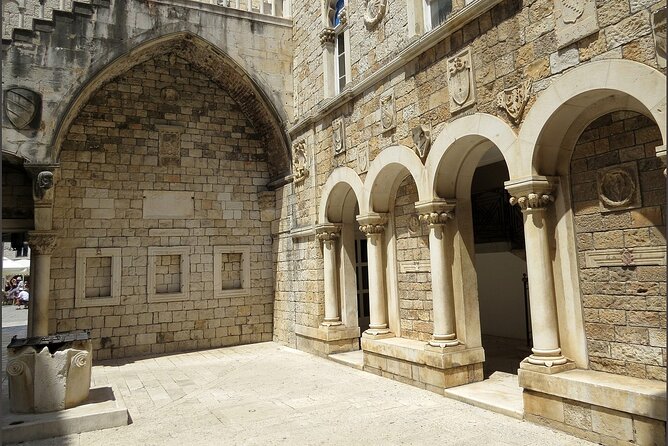
In Trogir, the walking portion includes stops that help you understand the city’s civic identity. One early stop is the Ayuntamiento Trogir, described as the city hall with an interesting history. That kind of stop is valuable because it anchors the town in its governance and community life, not only its churches and fortifications.
Then you move to the Central Square in Trogir, the main square filled with sights to look at. This is usually where you can feel the rhythm of the old town: the layout, the gathering spaces, and the way foot traffic flows between viewpoints.
These are the stops that help you decide what to do during your free time. After your guide’s orientation, you’re not wandering randomly. You’re choosing which alley to re-check, which view to linger at, and where to sit down.
St. Lawrence’s Cathedral: planned sightseeing with an optional pay point
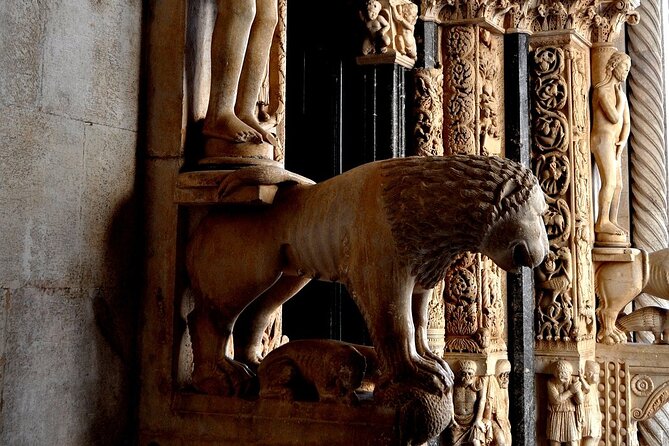
Saint Lawrence’s Cathedral is part of the guided route, but the entrance ticket is not included. That means you may pay separately if you want to go in.
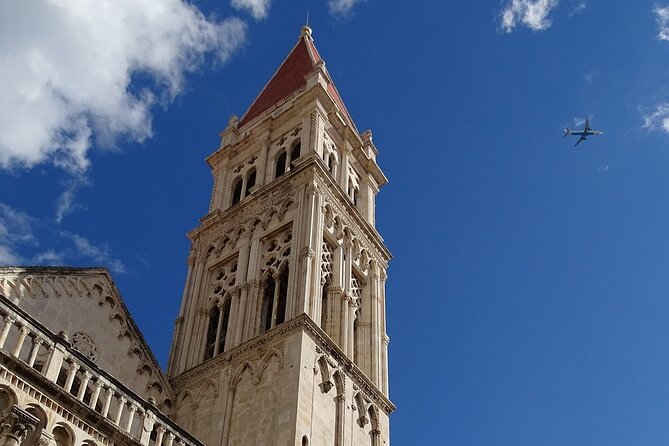
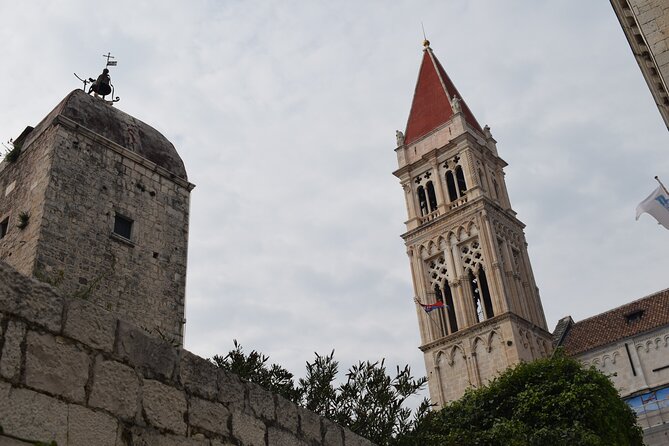
Even if you don’t pay for interior access, the outside experience still helps you grasp why Trogir matters. This cathedral is dedicated to the patron of the city, so it’s tied into local identity. Your guide’s commentary should make it clearer why that patron matters in the city’s story.
This is one of the few moments where your total cost can change. If you’re trying to keep your budget tight, you can still enjoy the public spaces around the cathedral. If you want the full experience, budget for that ticket.
St. Sebastian and Kula Karmelengo: the fortress side of the story
Two more stops bring the day to a slightly more defensive and memorial tone.
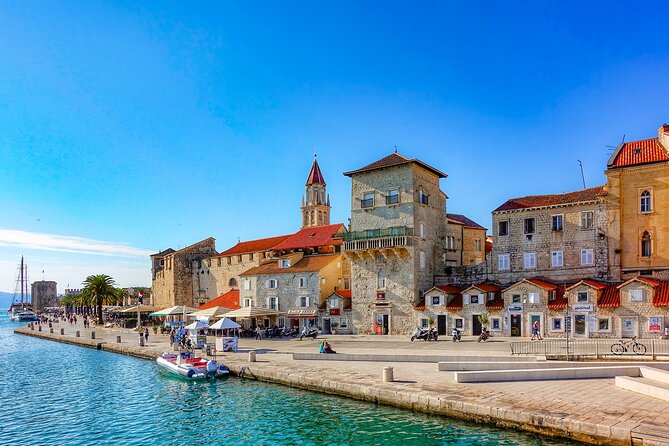
St. Sebastian is listed as once a church, now a memorial place. That transition from church to memorial is the kind of historical detail that gives a city emotional depth, even when you’re just passing by.
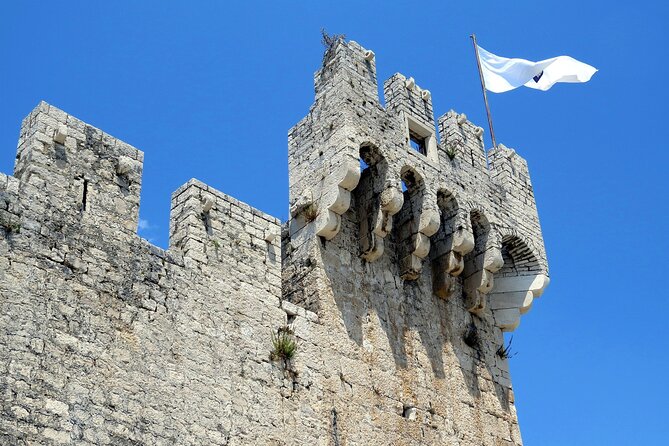
Then there’s Kula Karmelengo, a fortress built by the Venetians. Another paid entrance is possible here because its ticket is not included. A Venetian fortress stop is useful in Trogir because it connects Trogir’s look today to broader regional control and trade influences.
If you’re a “show me the viewpoints” person, fortress areas are often where you get the best sense of the town’s setting. Just keep in mind the tour keeps to a schedule, so you may not get as long as you’d like at every defensive viewpoint.
Price and logistics: what you’re really paying for
Let’s talk value in plain terms.
You’re paying for:
- a professional guide,
- guided tours of Diocletian’s Palace and Split old town,
- guided Trogir old town,
- air-conditioned vehicle transport,
- free time in Trogir.
You’re not paying for:
- food and drinks,
- entrance tickets to certain monuments (notably Saint Lawrence’s Cathedral and Kula Karmelengo).
Most other named stops on the route are listed as free. That means you can control your spending fairly well. It’s not a tour where every stop charges you. The main paid points are limited.
The group size has a maximum of 50 travelers, which is usually large enough for a bus-style tour but still small enough to hear your guide if you stay near the front. In practice, multiple guide feedback comments talk about groups breaking into smaller clusters, and that often improves the experience.
Finally, it starts and ends at the Golden Gate. So you don’t need to plan a second return or coordinate with someone later. You finish back where you began.
Who this tour suits best (and who might feel rushed)
This is a smart fit if:
- it’s your first visit to Split and you want instant orientation,
- you want Trogir without complicated planning,
- you like history explained in context rather than just plaques,
- you’re okay with walking as long as you have breaks and viewpoints.
You might feel rushed if:
- you prefer slow museum-style pacing and long stays at one place,
- you’re sensitive to heat and crowds (summer can make any old-town route feel intense),
- you have mobility limits and struggle with lots of steps and uneven stone.
One review specifically cautioned that the walking can be a lot and that elderly guests or anyone with trouble walking may find it hard by the end. That’s the main “consideration” to take seriously.
If you want maximum time inside the paid monuments, or you want extra hours in Trogir, consider pairing this tour with additional independent exploring later in the day—using the free time you get as your springboard.
Should you book the Split and Trogir half-day?
I’d book this if you want two top Dalmatian towns in one guided loop, with a mix of Roman wonder and Venetian influence, plus enough free time to breathe. The structure makes the day feel efficient, and the inclusion of the air-conditioned transfer saves energy.
Skip or look for a gentler option if walking is a problem for you, or if you’re the type who gets annoyed when the day has a schedule. Also note the separate entrance tickets for Saint Lawrence’s Cathedral and Kula Karmelengo, so your budget may rise a bit depending on what you choose to enter.
If your goal is to get your bearings fast and still come away with real understanding, this route is a strong way to do it.
FAQ
How long is the Split and Trogir half-day guided tour?
It lasts about 5 to 6 hours.
What does the tour cost?
The price is $60.49 per person.
Is the tour offered in English?
Yes, the tour operates in English.
Where does the tour start?
The meeting point is Golden Gate, Dioklecijanova 7, 21000, Split, Croatia.
What’s included in the price?
Included are a professional guide, guided tours of Diocletian’s Palace and Split old town, a guided tour of Trogir old town, air-conditioned vehicle transportation, and free time in Trogir.
Are entrance tickets included for all monuments?
Some are free on the route. Entrance tickets for Saint Lawrence’s Cathedral and Kula Karmelengo are not included.
Is transportation between Split and Trogir provided?
Yes. The tour includes an air-conditioned vehicle for transportation and round-trip service from Split.
Do I get free time in Trogir?
Yes, you’ll have free time in Trogir after the guided portion.
Can children join the tour?
Children must be accompanied by an adult.
What if I need to cancel?
There is free cancellation. You can cancel up to 24 hours in advance for a full refund. If it’s canceled due to poor weather, you’ll be offered a different date or a full refund.