REVIEW · SPLIT
Split and Trogir Half Day Tour from Cruise Ships
Book on GetYourGuide →Operated by www.splitwalkingtour.com · Bookable on GetYourGuide
Split has a way of grabbing you fast. Diocletian’s Palace sets the tone, then you roll right into UNESCO Trogir for a second dose of old-world magic. In just half a day, you get a guided backbone in Split and enough free time in Trogir to walk at your own pace.
I especially like how the tour mixes big-ticket sights with street-level details you can actually picture. You’ll see the Peristyle courtyard, the Cathedral of Saint Domnius, and landmarks like People’s Square and the City Clock, then end with the easy sea views from the Riva promenade. You’ll also get Trogir’s old-town feel with a guided orientation before you’re set loose for an hour.
One thing to consider: it’s a lot of walking in old stone streets, and it isn’t set up for wheelchair users. If you’re moving slowly or easily tired, you’ll want to plan breaks and wear solid shoes.
In This Review
- Key highlights you’ll feel on this tour
- Diocletian’s Golden Gate: the Split start that makes everything click
- Inside Diocletian’s Palace: Roman engineering, explained without the headache
- A quick reality check
- Saint Domnius, Gregory of Nin, and People’s Square: the Split highlights with personality
- The Riva promenade: Adriatic views without the tourist slog
- Van time to Trogir: why the transfer matters more than it seems
- Trogir’s UNESCO old town: one guide, one hour free, and a smart way to see it
- A useful expectation
- Guide quality is the real deal: Antonia, Mario, Ivan, and Jakov/Jacov
- What you pay ($56) and what that buys in real time
- Practical tips so the tour feels easy, not exhausting
- Should you book this Split and Trogir cruise shore tour?
- FAQ
- How long is the Split and Trogir half day tour?
- Where do I meet the guide?
- Does the tour include transport to Trogir?
- Is there free time in Trogir?
- What languages are available for the live guide?
- Is the tour wheelchair accessible?
Key highlights you’ll feel on this tour
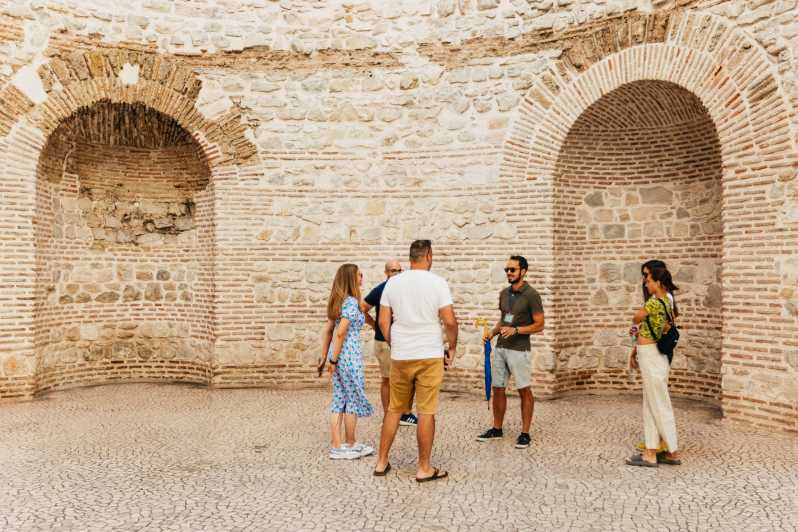
- Diocletian’s Palace guide for real context, not just photo stops
- Saint Domnius + 12th-century bell tower and the city’s religious centerpiece
- Golden Gate and the palace layout explained in plain language
- 45-minute transfer to Trogir so you get both UNESCO towns efficiently
- 60 minutes free time in Trogir to wander without feeling rushed
- Local guide quality, with standouts like Antonia, Mario, Jakov/Jacov, and Ivan
Diocletian’s Golden Gate: the Split start that makes everything click
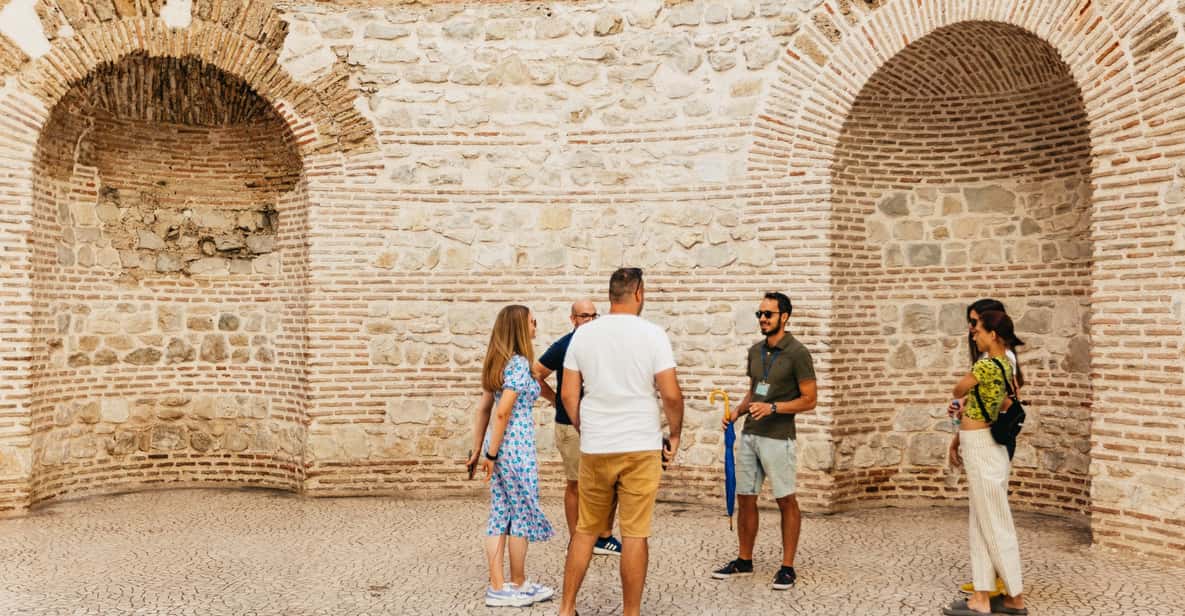
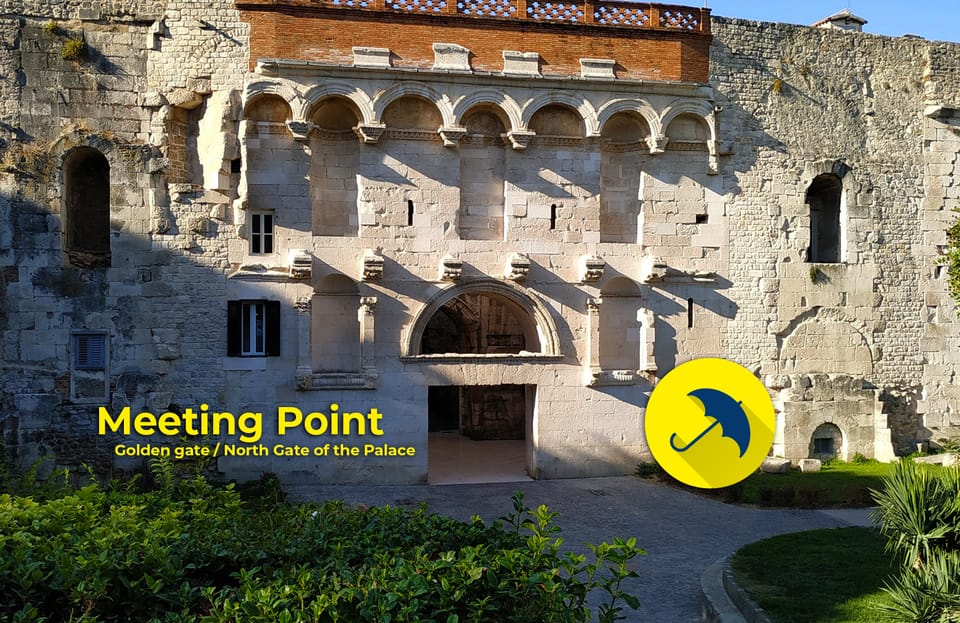
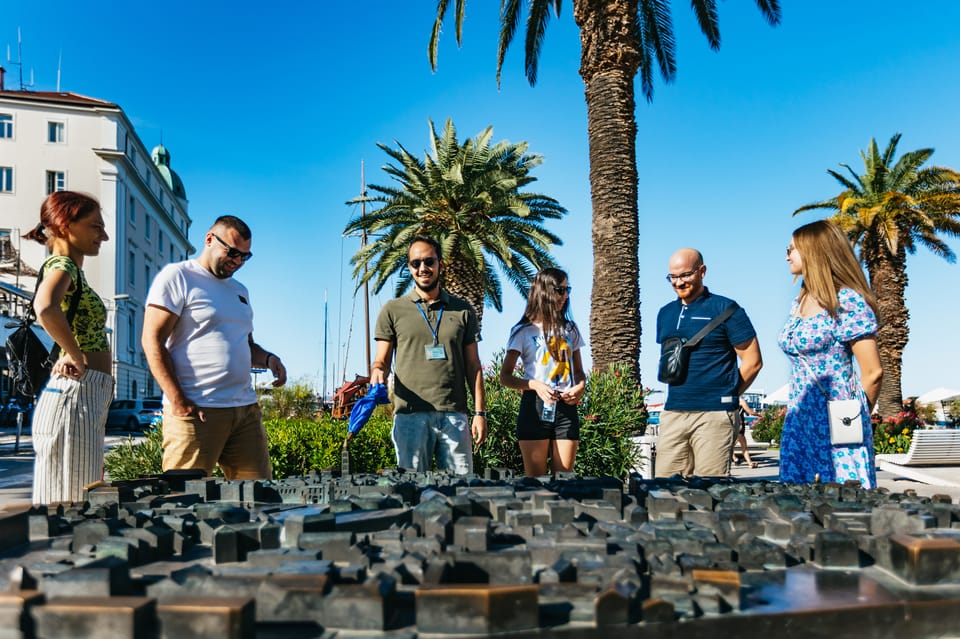
This tour starts at a spot that’s both symbolic and practical: the Golden Gate of Diocletian Palace in Split. Finding the group is easy too—look for the guide with the blue umbrella. That matters on cruise days, when crowds swell and everyone is trying to be in the right place at the right time.
Once you’re assembled, the guide frames Split the way locals tend to think about it: not as a random pile of old buildings, but as a living city grown around one massive Roman project. That single idea helps you connect the dots. You start noticing which streets feel like palace corridors, which squares feel planned, and which corners feel like later layers built on earlier bones.
You’ll get a guided look through the Diocletian’s Palace complex first, and that pacing is smart. It would be easy to do Split in a generic city-walk. Instead, you begin with the engine room of the city’s layout, so the rest of Split makes more sense while you’re walking it.
You can also read our reviews of more boat tours in Split


Inside Diocletian’s Palace: Roman engineering, explained without the headache
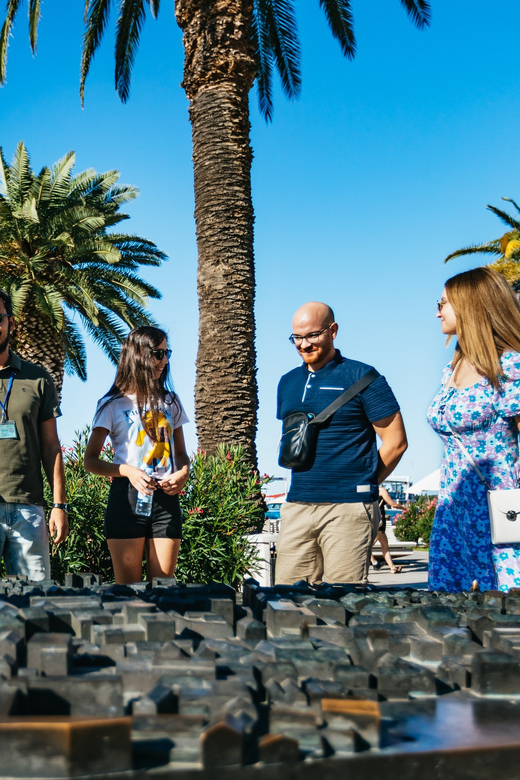
The core of the tour is a guided walk through Diocletian’s Palace that lasts about 1.5 hours. This is where you should pay attention, even if you’re not a “history person.” The reason is simple: once you understand the palace plan, Split stops feeling like you’re walking through disconnected streets.
A few highlights that you’ll move through include:
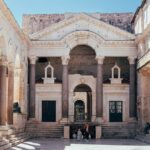
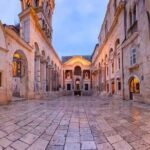
- The Peristyle courtyard, a standout space that helps you see how the palace functioned
- Key remnants that show the scale of the original Roman structure
- The Golden Gate reference point, which ties the palace entrances to what you’re seeing now
- The story around the palace built for the Roman emperor around 305 CE
The palace is big. That’s not a complaint—it’s a gift. But if you try to wander it solo without context, you can end up with a lot of “cool walls” and not much understanding. A good guide fixes that. On this tour, guides like Antonia and Mario are known for keeping the pace friendly and the explanations clear, so the palace feels like a place where people lived, not just a museum shell.
A quick reality check
You’re walking through outdoor stone spaces for about the whole morning portion of the day. Bring comfortable shoes and expect sun. In warm, humid weather, the best guides manage the pace and shade breaks well—some guides (like Mario, according to firsthand accounts) are especially good about keeping the group together and in comfortable spots.
Saint Domnius, Gregory of Nin, and People’s Square: the Split highlights with personality
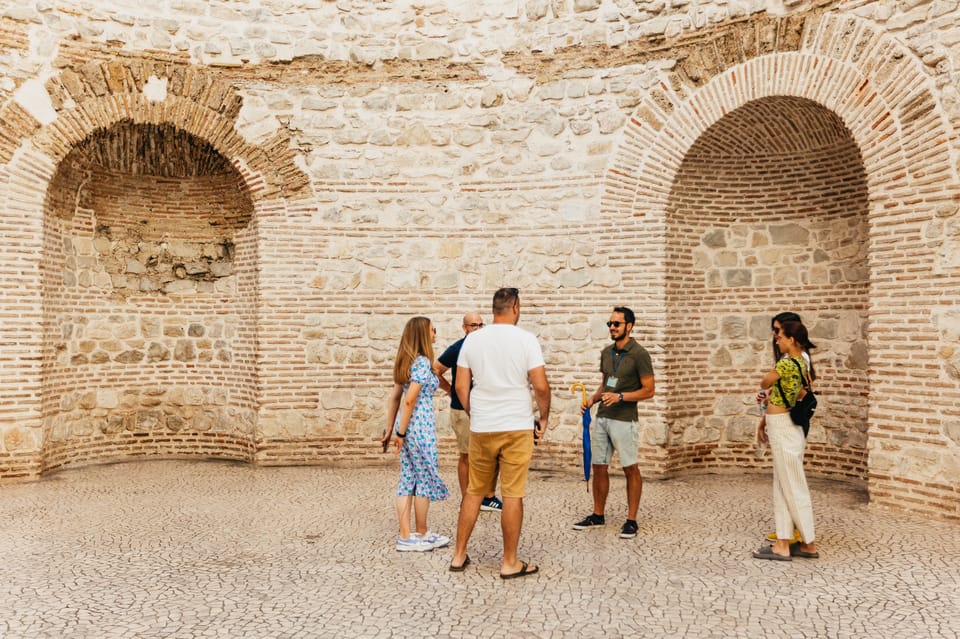
After the palace portion, the tour expands into the classic Split highlights. This is the part where the city becomes more human scale—cathedral details, plazas, and the daily-life feel of the promenade.
You’ll see the Cathedral of Saint Domnius, including its 12th-century bell tower. Even if you only catch it in passing, it’s one of those landmark elements that makes Split feel anchored. It’s not just old for old’s sake; it’s old with a continued presence.
You’ll also learn about the statue of Gregory of Nin, sculpted by Ivan Meštrović. One reason people love this stop is that it’s not purely formal sightseeing—it’s interactive in a fun, local way. If your guide points out the tradition of touching the statue’s toe for good luck, it’s the kind of detail that makes the story stick, and it adds a lighthearted moment in the middle of Roman and medieval layers.
Then you’ll move toward People’s Square—where the Old Town Hall and the City Clock sit. This is where you get to slow your eyes down and see how civic life and architecture overlap. It’s also one of those spots where a guide’s perspective helps: the square feels like a simple intersection until you understand what it was meant to do for the town.
The Riva promenade: Adriatic views without the tourist slog
The Riva promenade is the payoff view. After learning about courtyards and gates, you suddenly get that Adriatic open-air feeling. You’ll walk down to the waterfront area for views and a break from the densest historic core.
This is the part of the tour that feels like a reset button. It’s not just pretty. It helps your brain file the day correctly. You can see the relationship between the buildings and the sea, and that makes Split’s geography click in a way that a photo can’t.
If you’re the type who likes to stop for one good photo, this is your moment. Just don’t spend your whole time here. You still have the second UNESCO town waiting.

Van time to Trogir: why the transfer matters more than it seems
The itinerary includes a 45-minute drive from Split to Trogir. That transfer isn’t filler—it’s what makes this half-day tour realistic. Instead of trying to squeeze intercity logistics into your own plan, the tour handles the moving part for you.
In practice, this means:
- You spend more time walking and less time figuring out transport
- You arrive in Trogir with a guide’s orientation already on board
- You keep the day’s rhythm instead of losing momentum
If you’re on a cruise schedule, that matters. Half-day shore tours live or die by pacing. A smooth transfer keeps you from feeling like you’re sprinting between checklists.
Trogir’s UNESCO old town: one guide, one hour free, and a smart way to see it
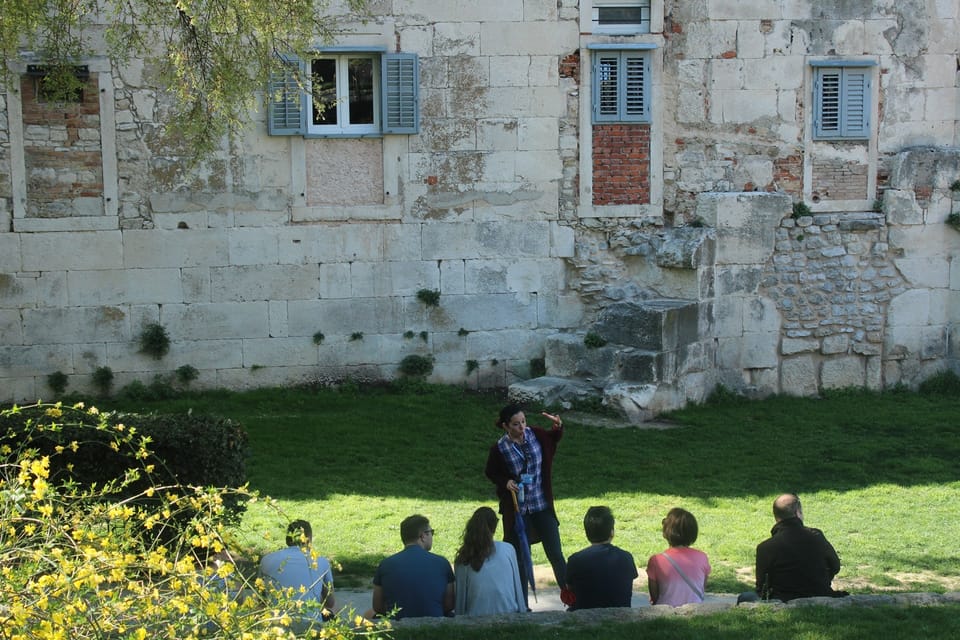
Once you reach Trogir, you get a guided tour of about 1 hour. The big idea here is that Trogir isn’t just “nice old buildings.” It’s a UNESCO-protected old town with history reaching back around 2,000 years—and the walking route is usually easier to follow with context.
In the guided portion, you’ll learn how to read the town’s layout and architectural layers. Then you get about 1 hour of free time to wander on your own. I like this structure because it gives you breathing room. You can chase a view, re-check a street corner, or simply sit with a drink and let the town come to you.
Trogir can feel like a smaller, quieter counterpart to Split. That’s a plus. When you’ve already seen Diocletian’s Palace, you have a reference point. You can notice how the older styles differ, how the town’s character changes with scale, and how stone streets create their own microclimate of shade and sound.
A useful expectation
Because you only have a half day total, the goal is to get the “spine” of both places. You’re not doing deep museum hours. You’re doing the kind of walking tour that gives you orientation fast—then lets you enjoy the atmosphere without overplanning every minute.
Guide quality is the real deal: Antonia, Mario, Ivan, and Jakov/Jacov
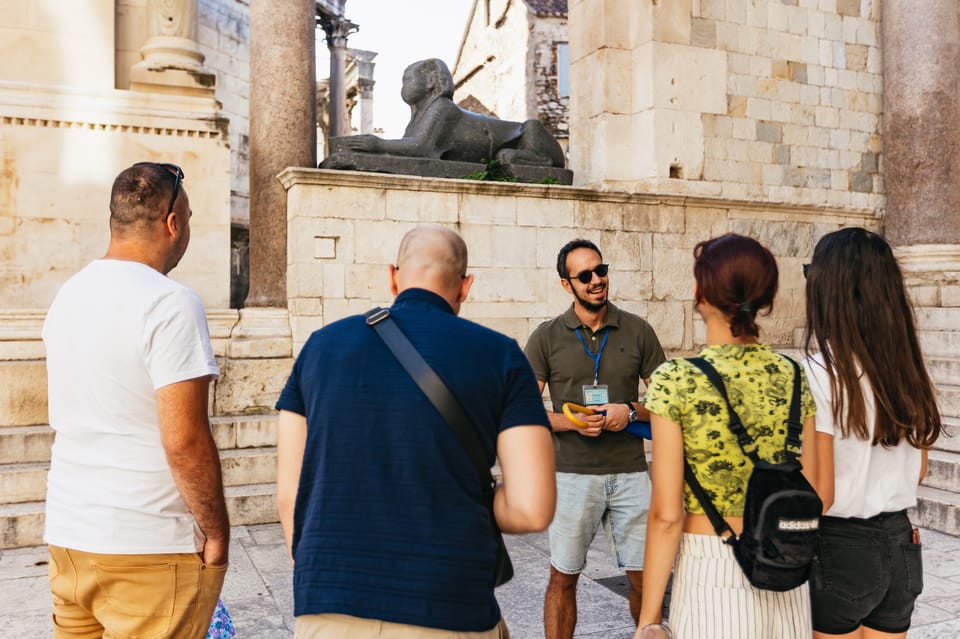
If you care about getting your money’s worth, don’t underestimate the guide. The strongest praise across tour experiences here is about guides who can explain history in a lively way and keep people engaged.
Name examples that came up again and again include:
- Antonia, praised for being extremely knowledgeable and for making the tour fun
- Mario, noted for helpful, engaging guiding and a good sense of humor
- Ivan, described as excellent, knowledgeable, and engaging
- Jakov/Jacov, highlighted as an upbeat explainer with entertaining facts and stories
When a guide is good, you stop treating stops like random points on a map. You start understanding why certain buildings matter and how the city’s layers connect. That’s the difference between collecting photos and getting real context.
It also helps that this tour is run with an English-speaking live guide, and you can find guides in multiple languages—English, Spanish, German, French, and Italian. That flexibility matters if your group has mixed language comfort.
What you pay ($56) and what that buys in real time
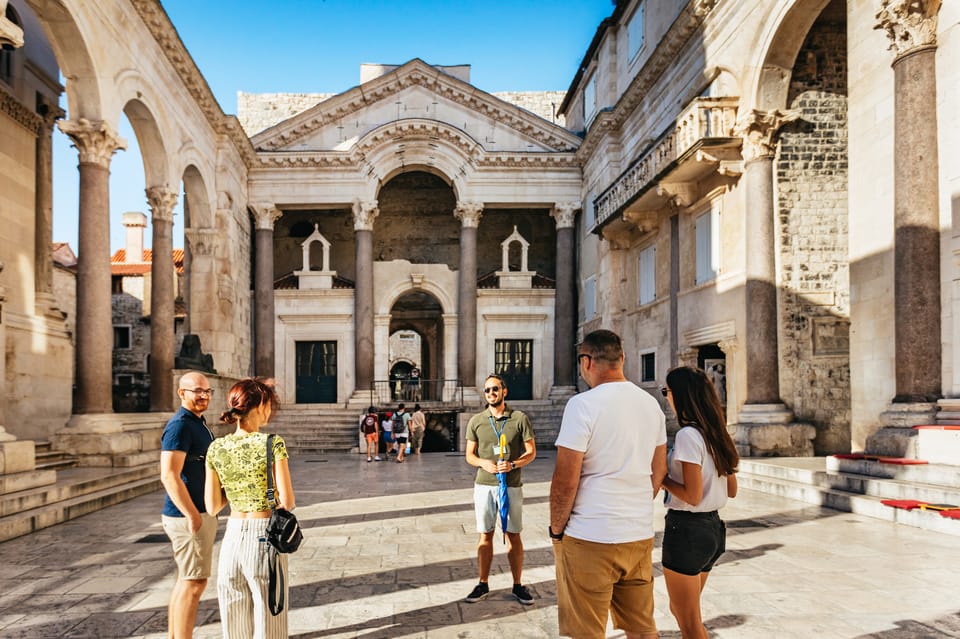
At $56 per person for about 5 hours, this tour is priced like a “value by efficiency” experience. You’re paying for two guided sections, plus transfers between cities, plus the guide support that keeps the day coherent.
Here’s what makes it feel worth it, not just “reasonable”:
- You get 1.5 hours of guided walking inside the major Split attraction that anchors the whole city
- You get a separate 1 hour guided look in Trogir, then an extra 1 hour to wander
- You don’t have to solve transport between Split and Trogir on your own
If you only want one city and you love free time, you could pick a single-town plan. But if you want the best bang-for-time—two UNESCO old towns in one half day—this format matches that goal well.
Practical tips so the tour feels easy, not exhausting
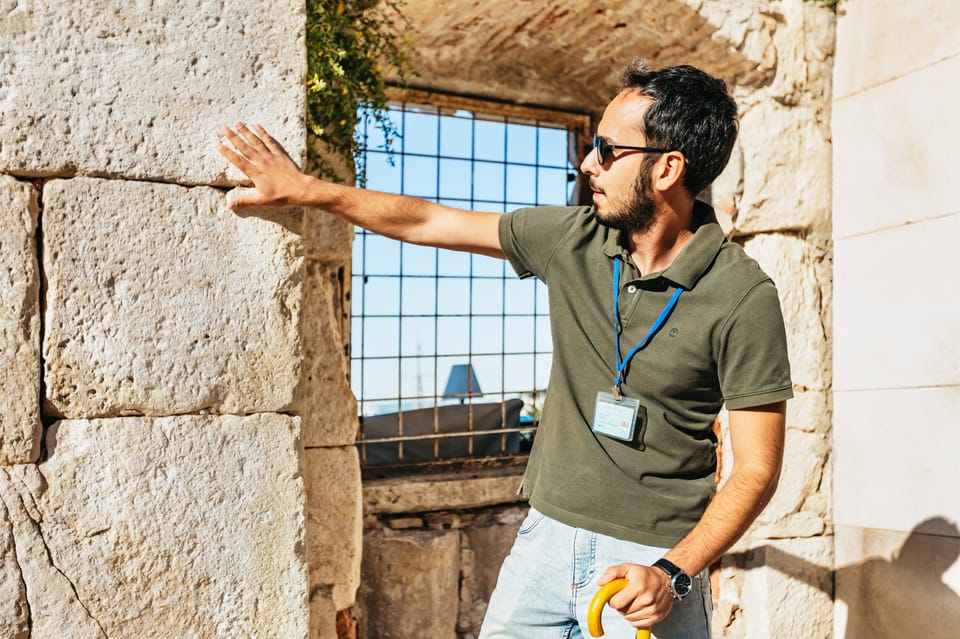
This tour is straightforward, but it still helps to plan for the basics.
Wear: comfortable shoes. You’ll be walking through old streets and palace-like spaces where the ground isn’t flat like a mall.
Bring: sunglasses. The daytime sun along waterfront areas and open courtyards can hit hard.
Keep expectations: it’s a walking tour with short stretches of guided time plus free time in Trogir. You’re not doing everything at a slow, stop-everywhere pace.
One more smart move: pace yourself during Split’s palace portion. That’s the section where your brain is absorbing the most structure. Once you’ve got the palace plan in your head, everything else—cathedral tower, squares, promenade—feels more satisfying.
Should you book this Split and Trogir cruise shore tour?
Book it if:
- You want two UNESCO towns without spending your whole day in transit
- You like walking tours with clear explanations that make historic places feel understandable
- You value the combo of structured guidance in Split and time to wander Trogir on your own
Skip it (or pick a slower option) if:
- You have mobility issues that make longer stone-street walking hard, since it’s not suitable for wheelchair users
- You’re allergic to crowds and tight meeting points, especially if you’re traveling during peak cruise times
FAQ
How long is the Split and Trogir half day tour?
It lasts about 5 hours total.
Where do I meet the guide?
Meet at the Golden Gate of Diocletian Palace in Split. Look for the guide with a blue umbrella.
Does the tour include transport to Trogir?
Yes, you get a transfer to and from Trogir if you select that option. The ride takes about 45 minutes each way.
Is there free time in Trogir?
Yes. You’ll have about 60 minutes of free time in Trogir after the guided portion.
What languages are available for the live guide?
The guide is available in English, Spanish, German, French, and Italian.
Is the tour wheelchair accessible?
No. It is not suitable for wheelchair users.