REVIEW · SPLIT
Split Rock Climbing Tour
Book on Viator →Operated by Given2Fly Adventures · Bookable on Viator
Bolts, limestone, and sea views in 3 hours. This small-group rock climbing trip lets you tackle real routes at Marjan Hill while enjoying Adriatic views from above the city. I also like that guides help you match the climbs to your level, even if you are brand-new. The one thing to factor in is that the whole experience depends on weather.
What makes it especially fun is the setting: Marjan Hill sits on the peninsula in the middle of Split, and it’s known for limestone cliffs plus more than 80 climbing routes. You can also climb near churches and hermit settlements dating back to the 15th century, which turns a standard “climb and leave” day into something more memorable.
In This Review
- Key Things You’ll Notice on This Climbing Trip
- Marjan Hill Makes Split Feel Like a Secret
- How the 3-Hour Experience Actually Works
- Guides, Gear, and Safety on Bolted Routes
- Route Details: Height and Grades You Can Expect
- The Most Memorable Part: Climbing Near 15th-Century Landmarks
- What You Should Wear (So Your Feet Stay Happy)
- Price and Value: Why $77 Works Here
- Who This Climbing Tour Fits Best
- Quick Practical Tips Before You Go
- Should You Book Split Rock Climbing?
- FAQ
- Where does the Split Rock Climbing Tour start and when?
- How long is the tour?
- What’s the maximum group size?
- Do I need prior climbing experience?
- Is climbing equipment provided?
- How tall and difficult are the routes?
- What should I wear and bring?
- Does the tour run in bad weather?
- What is included in the price?
Key Things You’ll Notice on This Climbing Trip
- Small group size (max 10) means quicker feedback and less waiting around
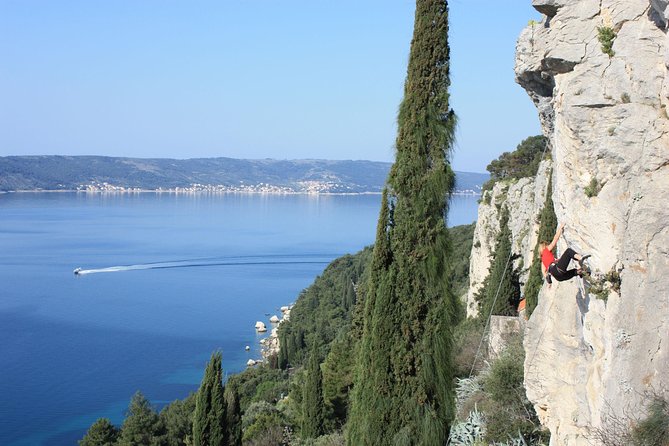
- Marjan Hill limestone cliffs give you classic bolted-route climbing in a scenic park setting
- Beginner support with licensed, experienced guides so you learn technique while staying safe
- Route range that scales from about 10–25 m tall and grades roughly 4c to 7a
- Historic climbing scenery around churches and hermit settlements from the 15th century
Marjan Hill Makes Split Feel Like a Secret
If your Split itinerary is mostly palace walls, waterfront strolls, and bus-stop photo angles, this tour gives you another side of the city. Marjan Hill is in the middle of Split’s peninsula, so you get the odd magic of being close to town while feeling like you’ve slipped into a quieter corner of nature.
The climb itself happens on limestone cliffs with plenty of fixed routes. That matters because bolted climbing is designed for direct access—so instead of hunting around for “where to go,” you can focus on learning movement, clipping, and staying smooth. You’ll spend your attention on holds, posture, and balance, not on figuring out logistics.
And then there’s the view. From the rock, you look out over the islands and down toward the sea. Even when the day is warm, the height and angle help you feel that coastal breeze. That combination—rock time plus ocean time—is a big reason this tour earns a near-perfect recommendation rate.
You can also read our reviews of more tours and experiences in Split.

How the 3-Hour Experience Actually Works
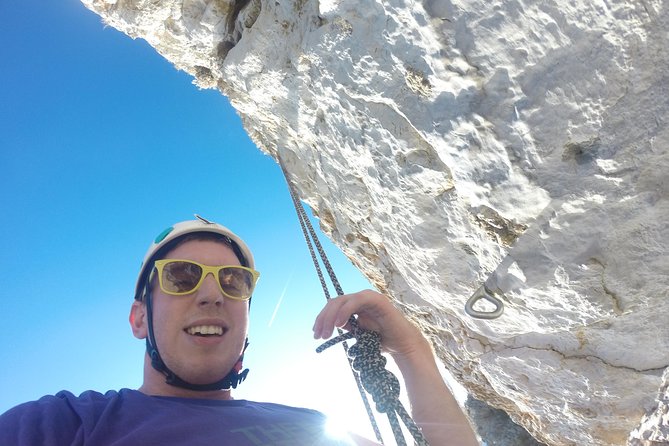
The tour runs about 3 hours and starts at 10:00 am from Plinarska ul. 25, in central Split. You’ll meet there, then head out by shared round-trip transfer. The drive is short, which is a plus if you do not want your whole day “spent on the road.”
Once you’re at Marjan Hill, expect a quick ramp-up before you start climbing. For beginners, the guides focus on first-hand instruction: learning technique, how to handle the rope and gear correctly, and how to climb in a way that keeps you safe step to step. Since all equipment is included, you aren’t trying to rent or borrow the right stuff right before you climb.
After that, you’ll head into the routes. The plan is flexible in practice: difficulty ranges from roughly 4c to 7a, and route selection can suit both less-experienced climbers and those who want a challenge. If the conditions are hot, the guiding team may adjust your slot to a later time to make the day more comfortable—one review highlighted that sensible change, and it matches the tour’s overall weather-based setup.
You end back at the meeting point. So you get a full “go climb, come back, shower, eat” day without needing a second plan.
Guides, Gear, and Safety on Bolted Routes
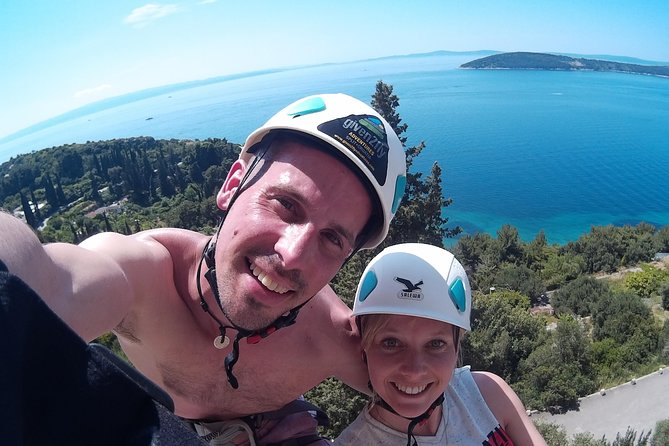
This is the kind of activity where good coaching makes all the difference. The tour includes a professional guide, plus insurance and all essential climbing equipment. That combination is valuable because it removes the biggest “unknown” for first-timers: you are not guessing how to put gear together, and you are not climbing without a safety framework.
For beginners, the guides are described as licensed and experienced, and they stay close to watch your technique. That’s reassuring if your comfort level is still building. It also means you can learn how to move efficiently—using your legs more, keeping your balance over your feet, and reading holds without panic.
For more experienced climbers, the opportunity is to keep improving. Even if you already climb back home, bolted routes at different grades can still feel like a training session: you fine-tune body position, try new sequences, and come away with stronger technique for the next climb.
A small practical note: you are still physically on the rock, so you’ll want to bring a moderate fitness level. There’s no need to be an athlete, but you should be comfortable with climbing motions, short bursts of effort, and getting in and out of a harness system safely.
Route Details: Height and Grades You Can Expect
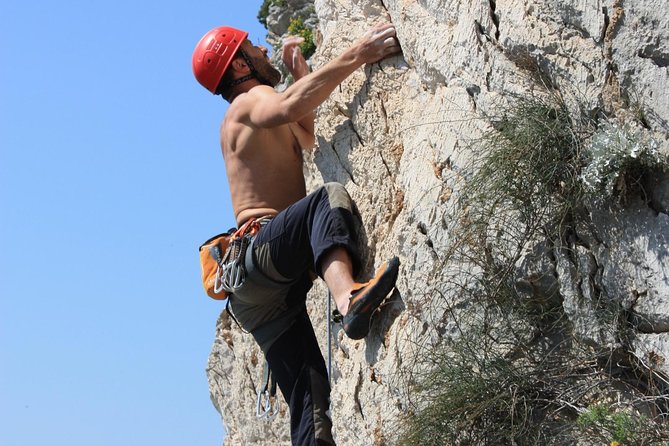
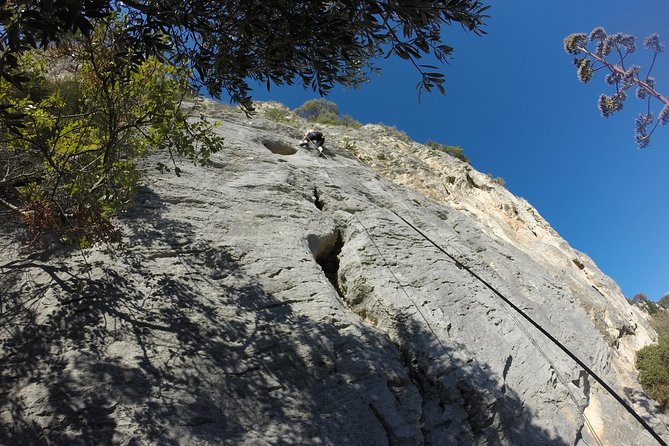
Here’s what you should picture when you hear “real routes.” The routes in this area are between about 10 and 25 m high. That range is great for a short, guided outing because it gives you enough vertical time to feel the challenge, but it doesn’t drag on for hours of hanging around.
Difficulty is described from 4c to 7a. If you are new, you’ll likely be placed closer to the lower end where you can learn movement without constantly fighting grip and balance. If you are more experienced, you get the chance to step upward in grade and test yourself.
Also, Split’s broader climbing scene includes hundreds of bolted options—over 400 bolted routes in the Split area. Even though you won’t climb that many in one afternoon, that number hints at why this location works so well for a mixed group. The area supports different skill levels, which helps keep the tour feeling fair and not randomly “too hard” for half the group.
The Most Memorable Part: Climbing Near 15th-Century Landmarks
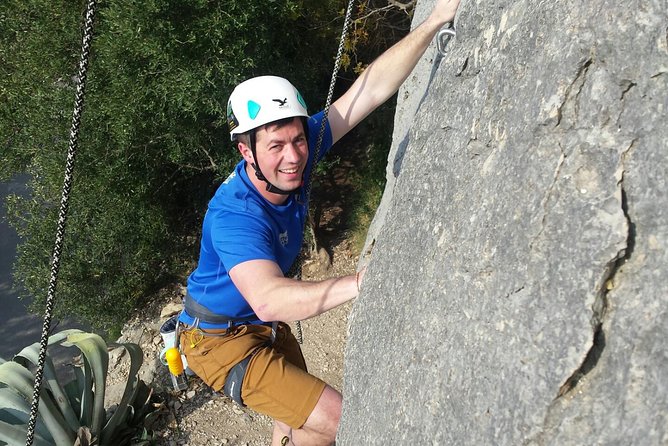
A lot of climbing tours focus purely on sport. This one adds something extra: the chance to climb around churches and hermit settlements dating back to the 15th century. That’s not just decoration—it changes the rhythm of the day.
Between moves, you can look up and around and spot historic structures in the hillside setting. Instead of feeling like you’re only surrounded by rock and rope, you’re also aware of the human footprint—places that have been there for centuries, now framed by modern climbing routes.
It also makes the experience feel more “Split” and less like generic outdoor time. You’re seeing why Marjan Hill matters to local culture, not just using it as a backdrop.
And because you get views out to islands and the open sea, the historic pieces and the panorama blend together. It’s a nice reminder that Split is not only about waterfront—there’s a whole layer of heritage up on the hill.

What You Should Wear (So Your Feet Stay Happy)
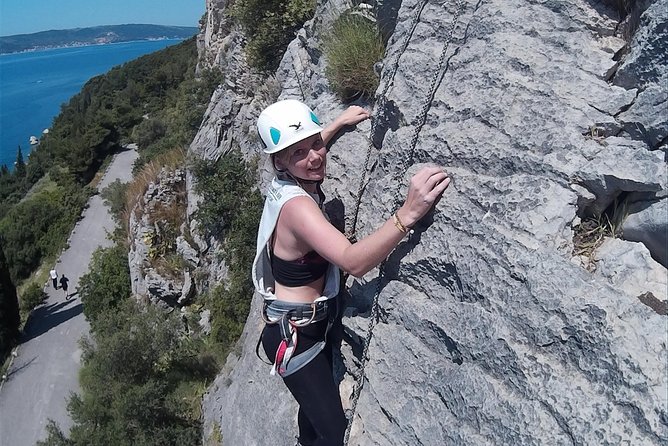
This tour asks for sport shoes for the approach to the rock. That detail matters. The walk from where you park or meet up to the climbing area can be uneven, and you don’t want to arrive in sandals or stiff street shoes that grip poorly.
You’ll also want to dress appropriately for the conditions. The day is short, so overheating is a real risk in summer heat. Bring water, and plan to have a snack before you start climbing. The tour does not include food or drinks, so you are responsible for keeping your energy stable.
If you’re sensitive to wind on exposed edges, bring a light layer. You might start warm on the approach and cool down slightly once you’re higher up, especially when you’re paused between attempts.
Price and Value: Why $77 Works Here
At $77 for about 3 hours, this is not a “cheap activity” in the strict sense, but it does read as good value for what you get.
You’re paying for:
- a professional guide
- all taxes, fees, and handling charges
- insurance
- all climbing equipment
- round-trip shared transfer
The key value is that equipment and safety coverage are handled for you. For many activities, the hidden cost is renting gear or scrambling last minute for the right harness and rope setup. Here, you show up, get kitted up, and climb.
And because the group is kept small (maximum 10), you’re not treated like an interchangeable ticket number. That personal attention helps both beginners (learning technique safely) and experienced climbers (getting better feedback on movement and route choice).
If you’re in Split for only a few days, a 3-hour slot also helps. It’s long enough to feel like a real outing, short enough to pair with dinner plans and a normal morning routine.
Who This Climbing Tour Fits Best
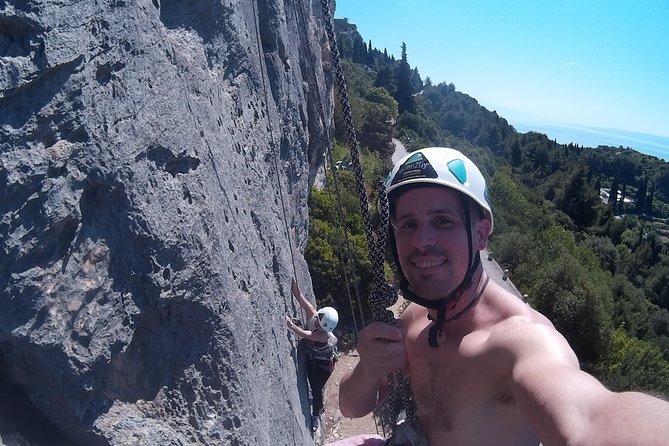
This is a good match if you want an activity with structure but not intimidation.
You’ll probably love it if:
- you’re visiting Split and want a different angle on the city
- you enjoy guided instruction and want someone to watch and correct
- you want a mix of challenge and scenery
- you want routes with a clear grade range from beginner to more advanced
It’s also a solid option if you are an experienced climber. The guide support helps you train movement and route selection, and Marjan Hill’s route variety means you can make it feel like more than a “taster session.”
What might not suit you:
- if you hate weather-dependent outdoor plans, this is not for you (the tour depends on conditions)
- if your comfort with physical activity is very low, the harness work and climbing effort may feel like too much, even if the routes are managed for your level
- if you expect a full-day food included tour, plan meals yourself (food and drinks are not included)
Quick Practical Tips Before You Go
Based on how this tour is set up, you’ll have an easier time if you plan like this:
- Bring water and a snack since food is not included
- Wear sport shoes for the approach to the rock
- Pack a small layer for changing temperature on the hill
- Arrive with moderate physical readiness, not couch-level stamina
Also, save your booking info so you can use your mobile ticket smoothly when you meet up. The meeting point is Plinarska ul. 25, and the tour returns you there when you’re done.
Should You Book Split Rock Climbing?
I’d book this if you want a short, well-guided climbing experience with real views and a setting that feels tied to Split itself. The small group format and the fact that gear and instruction are included make it especially beginner-friendly without being watered down.
If you’re an experienced climber, it can still be worth it for the Marjan Hill location, the route grading range (about 4c to 7a), and the chance to climb in a scenic park area with historic sights nearby.
Just be honest about weather. Since it depends on conditions, you’ll want flexibility on your schedule. If you can work with that, this is a strong use of a few hours in Split.
FAQ
Where does the Split Rock Climbing Tour start and when?
The tour starts at Plinarska ul. 25, 21000 Split, Croatia, and it begins at 10:00 am. It ends back at the meeting point.
How long is the tour?
The duration is approximately 3 hours.
What’s the maximum group size?
This activity has a maximum of 10 travelers.
Do I need prior climbing experience?
No. The tour is designed for people of various backgrounds and skill levels. Beginners receive instruction and supervision from licensed, experienced guides, while more experienced climbers get a chance to improve their level.
Is climbing equipment provided?
Yes. All climbing equipment is included.
How tall and difficult are the routes?
Routes are between 10 and 25 m in height, with difficulty levels from 4c to 7a.
What should I wear and bring?
Wear sport shoes for the approach to the rock. Bring water and a snack, since food and drinks are not included.
Does the tour run in bad weather?
The tour depends on weather conditions. If it needs to be cancelled due to poor weather, you’ll be offered an alternative date or a full refund.
What is included in the price?
The price includes a professional guide, insurance, all climbing equipment, round-trip shared transfer, and all taxes, fees, and handling charges. Food and drinks are not included.