REVIEW · SPLIT
Storytelling World War II in Split Tour
Book on Viator →Operated by Ina Nikolic · Bookable on Viator
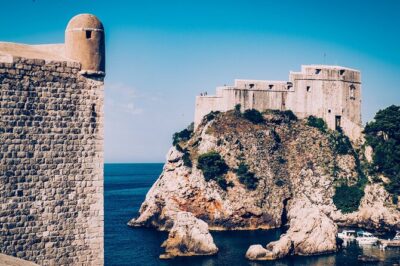
Split’s walls remember the war. This WWII storytelling tour in Split uses archival street-level evidence and a local guide to connect the war to the exact corners you’re standing on, from bombed squares to the last stops tied to prisons and executions.
I especially love the WWII photos the guide brings in, drawn from the Museum of the City of Split archive (not just random images pulled from the internet). I also like how Ina Nikolic blends World War II with later context, including details about Jewish history and references to the wars of the 1990s, without turning the tour into a lecture.
One possible drawback: it’s more about pausing and listening than quick sightseeing; expect some standing around as each location is explained.
In This Review
- Key things to know before you go
- Why a WWII Walking Tour Works in Split
- Ina Nikolic’s Storytelling With Archival Photos
- From Split Riva to Prokurative: The Route in Plain English
- What You Learn at Each Location (and Why It Matters)
- Pace, Comfort, and Timing for a 2-Hour Tour
- Is $60.01 Worth It? The Value Behind the Price
- Getting There: Start at Hrvatskog narodnog preporoda and Finish at Trg Republike
- Should You Book This WWII Tour of Split?
- FAQ
- How long is the World War II in Split storytelling tour?
- Is the tour offered in English?
- Where does the tour start and where does it end?
- Is pickup available?
- How many people are in a group?
- Are there admission tickets required at the stops?
- What historical materials are included during the tour?
- Are service animals allowed?
- Can I get a full refund if I cancel?
Key things to know before you go
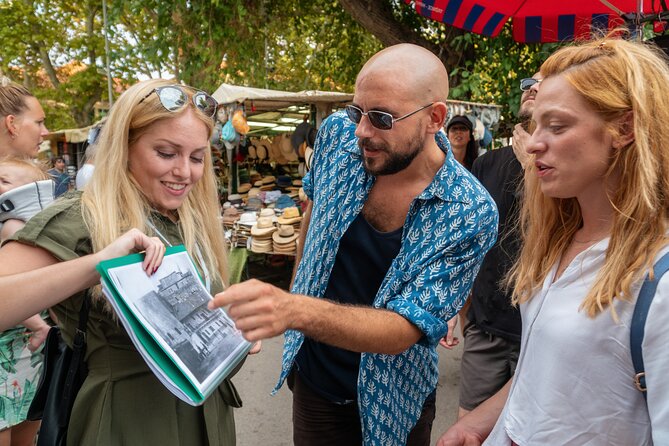
- Archival WWII photos in your hand: the tour uses old photographs kept in the Museum of the City of Split archive.
- Small group size (max 15): you get room for questions without feeling rushed.
- Ancient + wartime in the same walk: Diocletian’s Palace links directly to which parts were attacked.
- Route stays in the old center: you move through major historic stops without needing major transit.
- A narrative guide who answers questions: Ina Nikolic is known for story-focused explanations and friendly, clear communication.
Why a WWII Walking Tour Works in Split
Split is one of those cities where the past doesn’t sit quietly behind ropes. It’s in the street layout, the gates, the squares, even the main roads you’ve probably walked past without thinking. This tour works because it treats those everyday places like evidence. You’re not just hearing that something happened in Split during World War II; you’re learning how the war pressed itself into the city’s geography.
The format is simple: a local licensed guide takes you through the historic core for about 2 hours, with frequent short stops. The pace is intentionally story-driven, so you won’t cover every street in town. Instead, you’ll get a clearer sense of where the conflict landed—at the waterfront, in markets, along key approaches to Diocletian’s Palace, and finally at places tied to punishment and fear.
If you like history, this is a strong match. But even if you don’t call yourself a history buff, you might still enjoy it because the explanations are grounded in what you can see right there. It turns your walk into a map of wartime priorities: where civilians gathered, where people tried to survive, and how the city’s ancient structure became part of the wartime story.
You can also read our reviews of more tours and experiences in Split.


Ina Nikolic’s Storytelling With Archival Photos
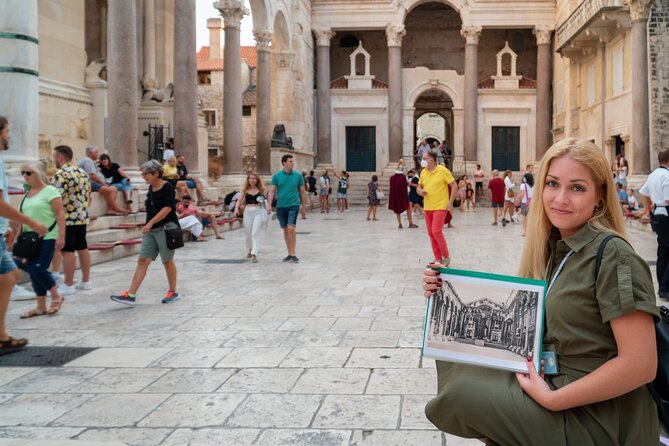
The heart of this experience is the guide: Ina Nikolic. She’s more than a facts person. She tells the story like it’s connected to the stones and street corners in front of you. You’ll hear why the war’s beginnings in Split mattered, and how the city’s landmarks became part of what happened next.
What makes her approach feel extra real is the archival photo component. The tour includes old photographs from the WWII period, stored in the Museum of the City of Split archive. The guide has permission to use those images during the tour, which helps keep the history grounded and specific.
You also get “then and now” thinking. People often walk through Diocletian’s Palace area and see only Roman grandeur; here, you’re shown which parts were attacked. That’s the kind of detail that changes how you look at the buildings after the tour.
A bonus from the guide’s style: she doesn’t stop at WWII-only framing. You may also hear context that stretches into later conflicts (including the wars of the 1990s) and discussion of Jewish history. That can be a useful reminder that history isn’t locked in a single century—it repeats patterns, even when the uniforms change.
From Split Riva to Prokurative: The Route in Plain English
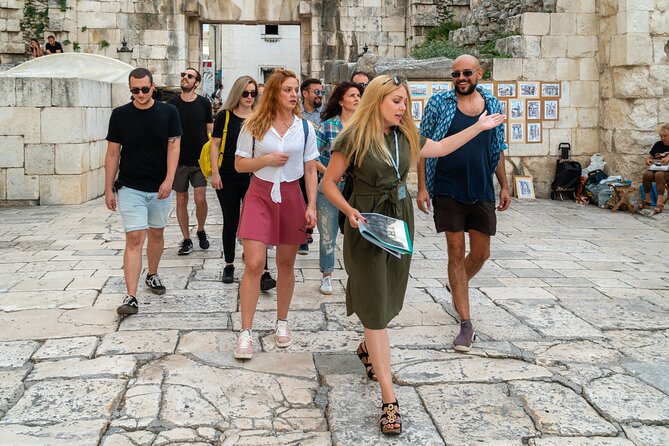
The tour stays in central Split and uses a series of compact stops. Many of the stops are short, which keeps the tour moving, but you’ll still feel the time because you’ll be listening at each location.
Stop 1: Split Riva (meeting point)
You begin at Obala Hrvatskog narodnog preporoda 27, right by the Riva. This first stop sets the stage: you’ll find out when, where, and why the war in Split started. It’s a smart opening because it gives you a timeline and a starting point before you start connecting stories to specific streets and buildings.
Stop 2: Green Market
Next is the Green Market, where you’ll hear about what the guide describes as the most horrific bombing in Split. Markets are usually where ordinary life concentrates, so this is where the story gets personal-fast. Even if the buildings look unchanged today, the narrative reframes the space.
Stop 3: Eastern (Silver) Gate (Diocletian’s Palace entrance)
A quick stop at the Eastern (Silver) Gate, which is the entrance to Diocletian’s Palace from the east. This works like a transition chapter. You move from waterfront and everyday gathering to the city’s fortified heart, and the guide can explain how people and movement through these gates mattered.
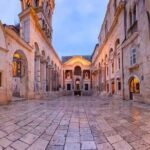
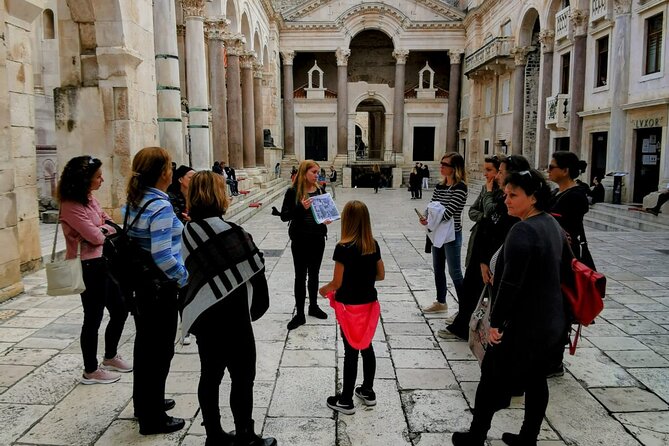
Stop 4: The Peristyle of Diocletian’s Palace
Then you reach the Peristyle inside Diocletian’s Palace. Here, the tour focuses on the Roman emperor’s complex and, crucially, which sections were attacked during the war. This is one of those stops where photos help, because it’s easier to understand damage and targeting when you can compare the past images with what stands today.
Stop 5: Narodni Trg
At Narodni Trg, you visit Split’s main square and learn about terrible events tied to the war. Squares can look peaceful in daylight, but the guide frames them as stages—places where civilians gathered, where information traveled, and where fear could become visible.
Stop 6: Marmontova Ulica
A short stop on Marmontova Ulica, Split’s main street. This is a reminder that not all wartime stories live inside monuments. Major roads and daily routes can become witnesses—channels for people, goods, and consequences.
Stop 7: Prokurative (ending at Trg Republike / Republic Square)
You end at Prokurative at Trg Republike. This final stop is where the tour shifts toward prisons and executions during the war. It’s heavier subject matter, and the fact that it’s the last stop matters: the route has already built context, so the ending lands with more meaning.
One practical note: most stops are listed as no additional admissions, so you’re generally paying for the guide and the storytelling materials—not for entry tickets.
What You Learn at Each Location (and Why It Matters)
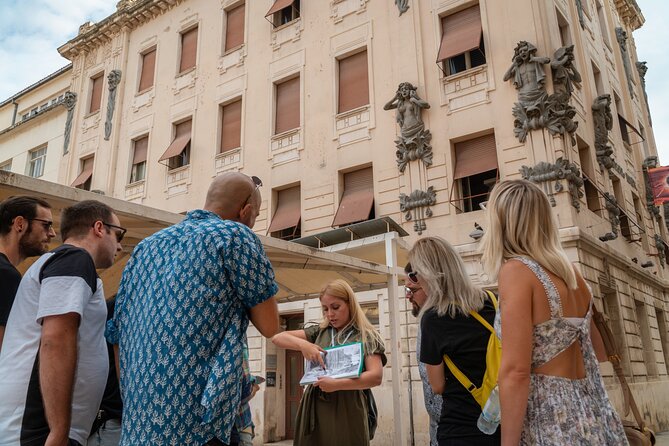
The strongest value of this tour is that it teaches history as spatial reality. You get a better mental picture of the war by connecting events to where they occurred.
At the Riva, you start with causation: why the conflict reached Split and how the war’s arrival changed the city’s rhythm. That opening matters, because without a timeline you can feel lost in the details later.
In the Green Market, the story focuses on bombing and civilian impact. When the guide describes the worst bombing in Split, it makes sense why markets and gathering areas would be targeted—yet it still feels shocking because these are the same kinds of places you’d use for daily life.
Moving into Diocletian’s Palace is a big part of the educational payoff. The guide isn’t just pointing at ancient architecture for its own sake. She’s showing how the war hit the palace’s structure and functions. That makes you notice how older cities can become both shelter and target, depending on the circumstances.
Then the tour spreads out to Narodni Trg and Marmontova Ulica, which helps you understand that wartime effects weren’t isolated to one corner. The city’s main square and main streets become part of the narrative. You start to grasp how the war shaped movement and public space.
Finally, the ending at Prokurative ties the story to human consequences: prisons and executions. It’s not a casual finale, but the sequence helps. You’ve built an understanding of daily spaces and major sites before you reach the parts of history that center punishment and terror.
If you like tours that leave you with a stronger mental map than just a list of sights, this one delivers.
Pace, Comfort, and Timing for a 2-Hour Tour
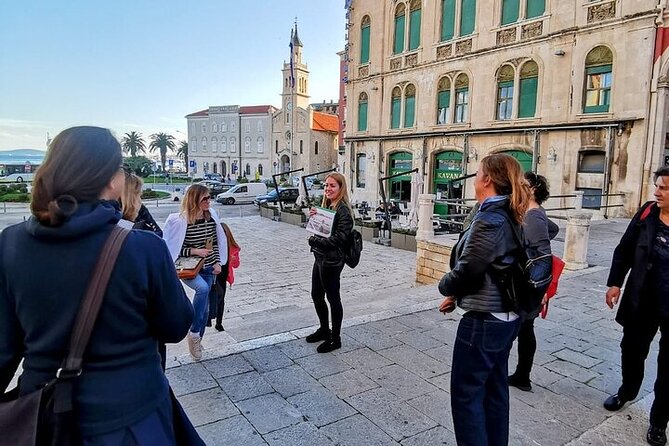
This is not a high-kilometer walking tour. It’s a stop-and-listen tour, with several brief stretches where you’ll likely spend more time standing than walking.
That’s exactly what some people like about it: you slow down at each place and get a focused story instead of sprinting from one highlight to the next. But it’s also the main “consideration” for anyone who hates standing. If you choose this tour, wear shoes you can stand in comfortably.
The tour duration is listed at about 2 hours, with stops that are each around 5–15 minutes. That short-stop structure can feel very doable, even if you’re only moving a little at a time.
It also helps that group size is capped at 15 travelers. Smaller groups generally mean the guide can keep a tight narrative flow and still answer questions without derailing the timing.

Is $60.01 Worth It? The Value Behind the Price
At $60.01 per person, you’re not buying a cheap “quick facts” walk. You’re paying for three things that tend to cost real effort:
- a local licensed guide with story-focused historical framing
- archival WWII photos from the Museum of the City of Split archive, used with permission
- a guided route through key sites tied to how the war affected Split
The stops are also listed as free of admission tickets, which helps the value. You’re spending money on interpretation and materials, not on entry fees.
Group discounts are offered too (if your situation qualifies), and there’s pickup available for those who prefer not to start right where you’re docked or parked.
For history lovers, the price can feel like it makes sense fast—especially because the photos and “then vs now” comparison is the kind of detail that’s hard to replicate on your own. If you’re hoping for a casual stroll with light background, you might find the focus heavier than you expected. But if you want your city walk to mean something, this tends to land well.
Getting There: Start at Hrvatskog narodnog preporoda and Finish at Trg Republike
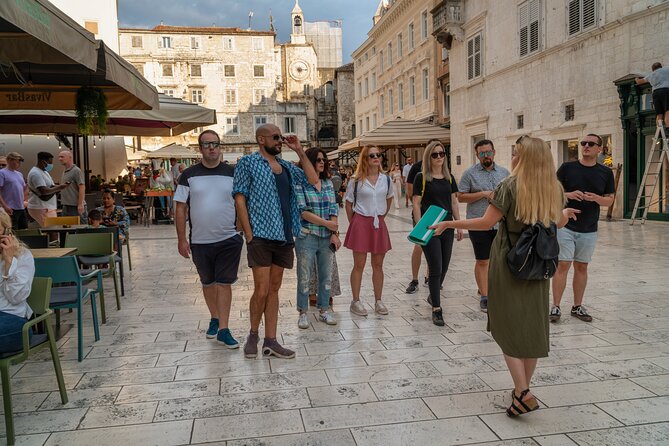
Meeting point details are specific, which is a good thing. You start at Obala Hrvatskog narodnog preporoda 27, 21000 Split. The tour ends at Trg Republike / Prokurative square (Trg Republike, 21000 Grad, Split).
If you want pickup, it’s available at Trajektna luka Split, Obala kneza Domagoja. For many people, that’s a relief because it reduces the “where do I need to be” stress at the start.
The tour stays close to central public transport and remains in the historic center of Split near the promenade. So even after you finish at Prokurative, you’re not suddenly far from dinner plans or your next walk.
Should You Book This WWII Tour of Split?
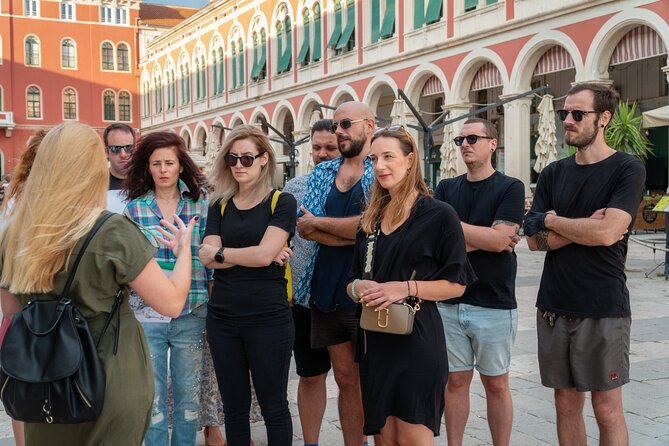
Book it if you want WWII history tied to real corners of the city, not just general timelines. This tour is especially good for you if you:
- like narrative-style guides who connect events to what you can see
- appreciate archival photos and comparing past to present
- want a focused route without museum tickets or complicated entry plans
- can handle a tour that includes some standing
Skip it (or choose a different format) if you’re looking for a tour that’s mostly walking with minimal pauses. Since the design is story-based, you should expect to spend time stopped at multiple locations.
If you’re visiting Split for the first time and you want one experience that makes the city feel deeper—this is one of the better choices for turning “I visited” into “I understood.”
FAQ
How long is the World War II in Split storytelling tour?
It runs for about 2 hours.
Is the tour offered in English?
Yes, it is offered in English.
Where does the tour start and where does it end?
It starts at Obala Hrvatskog narodnog preporoda 27, 21000 Split, and ends at Trg Republike / Prokurative square.
Is pickup available?
Yes. Pickup is offered at Trajektna luka Split, Obala kneza Domagoja.
How many people are in a group?
The tour has a maximum of 15 travelers.
Are there admission tickets required at the stops?
The stops listed are marked as admission ticket free.
What historical materials are included during the tour?
The tour includes old WWII photographs kept in the Museum of the City of Split archive, and the guide has permission to use them.
Are service animals allowed?
Yes, service animals are allowed.
Can I get a full refund if I cancel?
Yes. Free cancellation is available if you cancel up to 24 hours in advance for a full refund. If you cancel less than 24 hours before the start time, the amount paid is not refunded.