REVIEW · SPLIT
Experience Split With Local Professional Historian – Private
Book on Viator →Operated by Pomalo tours · Bookable on Viator
Split’s Roman layers click into place fast.
This private tour is interesting because it turns the old streets of Split into a guided story, not a scavenger hunt, with a local historian and visual 3D reconstructions to help you make sense of what you’re seeing. I love the stop-by-stop pace around the Diocletian’s Palace complex and the practical way the guide explains the bigger picture, from Roman power to medieval city life. I also like that you finish in the heart of town so you can keep exploring right away. The main drawback: it’s mostly an outdoor, walking-focused route, and some key sights are discussed from the outside, with no admission tickets included.
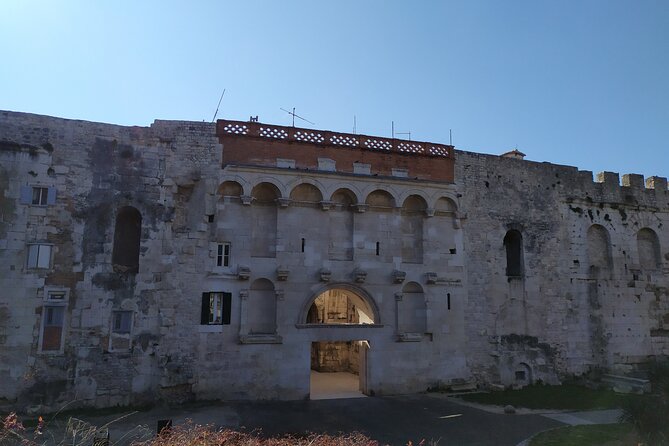
You’ll meet right at Golden Gate, one of Split’s most famous entrances to the palace walls. From there, the tour works outward like a map: emperor’s spaces, religious sites, then the public life of squares and the harbor. It’s a good fit when you want to understand the why behind the stone, without losing time to ticket lines.
Let’s talk value for a private group. At $156.21 per group (up to 15), the cost can feel surprisingly reasonable if you’re sharing with friends or family. Still, you should consider your schedule: the tour runs on a set window on weekdays, with flexible start times by request, and you’ll want good walking conditions for the full 2 hours.
In This Review
- Key highlights worth planning for
- Entering Split the right way: Golden Gate meets Gregory of Nin
- Diocletian’s Palace explained where it’s easiest to get lost
- Peristyle, cellars, and Triclinium: the palace’s daily-life pulse
- Jupiter’s Temple and St. Domnius: religion at street level
- Vestibulum to Riva Harbor: from private power to public life
- Fruit Square (Trg Brace Radic) and Pjaca: where the city performs
- Price and timing: what $156.21 per group buys you
- What’s included (and what you’ll handle yourself)
- Who should book this private Split historian tour?
- Should you book it? My straight answer
- FAQ
- How long is the Split private historian tour?
- Where does the tour start?
- Where does the tour end?
- Is the tour private?
- How large can the group be?
- What language is the tour offered in?
- Are admission tickets included?
- Is there an option for a flexible start time?
- What time does the tour operate?
- Is the tour dependent on weather?
- Are service animals allowed?
- Can I cancel for a full refund?
Key highlights worth planning for
- A private, master’s-level historian guide who can answer real questions, not just recite dates
- 3D reconstructions in a display book to picture parts of Diocletian’s Palace that aren’t obvious today
- Golden Gate to Gregory of Nin: the tour begins with the palace boundary and a major medieval hero figure
- Inside access to the cellars area (central substructure) while much of the route stays outside and easy to follow
- Ends at Pjaca (People’s Square), a smart landing spot for lunch, coffee, or your next stop
Entering Split the right way: Golden Gate meets Gregory of Nin
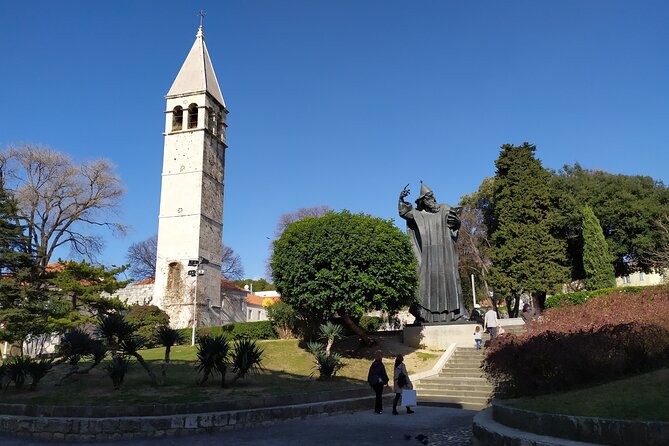
You start at Golden Gate, the northern gate of Diocletian’s Palace. It’s one of those Split landmarks that’s famous for a reason: the gate sits across from another big name, the statue of Gregory of Nin. The guide uses this first moment to set the tone—this isn’t just sightseeing, it’s understanding how the palace shaped the city that grew around it.
From here, you’ll get the foundation: why this gate matters for Split’s story and how people moved between the palace world and the rest of the city. It’s a fast introduction, and that matters, because Diocletian’s Palace can feel like a puzzle if you only show up and start wandering.
Next comes the Grgur Ninski statue, dedicated to Gregory of Nin. If you’ve seen the statue from afar and wondered what the fuss is about, this stop clarifies it. You’ll hear specific stories and facts tied to Gregory of Nin—plus details about the monument itself and the sculptor. It’s one of those moments where a single public statue suddenly connects to religion, identity, and the way history gets remembered in a working city.
My practical take: this opening stretch is ideal if you want early momentum. In 20 minutes, you go from “I’m in front of two famous things” to “I understand the storyline behind them.”
You can also read our reviews of more private tours in Split

Diocletian’s Palace explained where it’s easiest to get lost
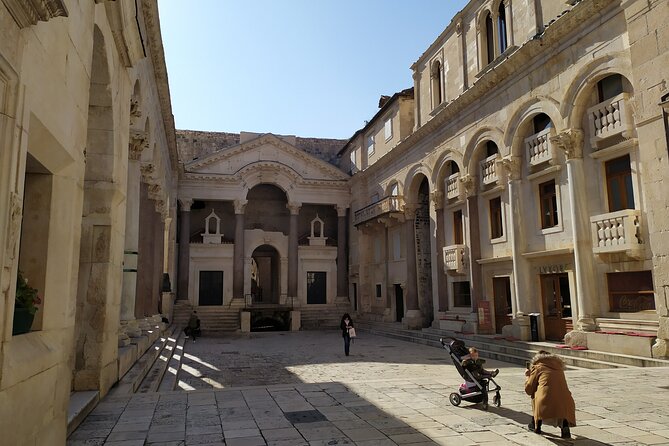
Then the route flows into the core of Diocletian’s Palace—Split’s center monument and the reason the old city still feels oddly organized. You’ll be guided through key areas, starting from the Golden Gate side and moving through spaces that shaped daily life under Roman rule.
What makes this part work is the combination of viewpoint + explanation. Even when you’re mostly outside, the guide points out what each zone was for and how later centuries repurposed palace spaces into a medieval city with its own rhythm.
Here’s what you’ll focus on during the palace segment:
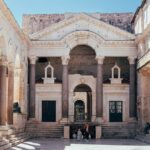
- Peristyle: You’ll stand in the central yard-like space that was both a connector and a divider between people and the emperor. The guide explains function, not just form.
- Jupiter’s Temple (outside): You view it from outside and learn why temples mattered so much in Roman residences and what role religion played in public life.
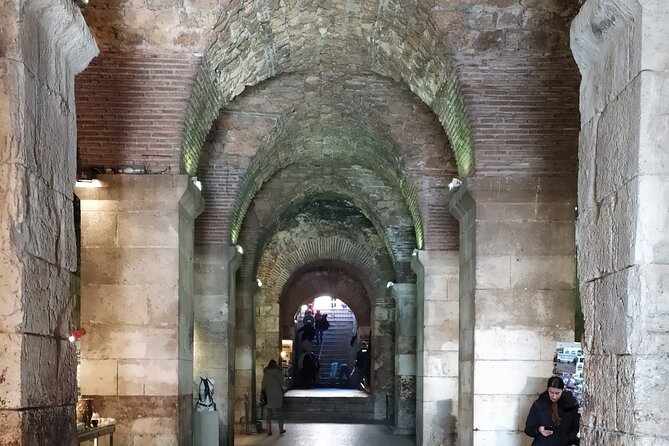
- Diocletian’s Cellars (central substructure): You enter into the cellars area, where you’ll hear how these spaces were used historically and why they’re important for Split’s development.
- Triclinium: You’ll connect what you see with what Romans ate and how the emperor’s dining room was organized.
- Mausoleum / Cathedral area (outside): You’ll look at the outside of the mausoleum turned cathedral space and get the thread from Roman imperial power to later Christian presence.
A standout element is the guide’s use of 3D reconstruction images through a display book. You’ll get help visualizing how parts of the palace would have looked or worked when everything wasn’t broken, reused, or partially hidden by later buildings. It’s the difference between memorizing a list of sites and understanding the layout.
Potential drawback to know: the tour is designed for a 2-hour walk, so the palace explanation is structured for clarity, not for museum-level depth at every single spot. If you’re the type who wants long indoor time, you might add separate time later for specific interiors. But for most people, this gives you a strong base.
Peristyle, cellars, and Triclinium: the palace’s daily-life pulse
The Peristyle is where you’ll start feeling the palace as a living machine. You’re in the middle, with a strong view around you, which makes the guide’s explanation easier to follow. The guide explains how the Peristyle worked as a hub—bringing people together, but also separating access from the emperor.
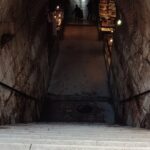
Then you move into the cellars area, specifically into the central substructure. This is one of the more “you can’t fake it” sections because being down there changes how you think about power and daily operations. You’ll hear about usage through history and how it fed into Split’s later story.
From the cellars, you check Triclinium, the dining-room space. The guide focuses on eating habits of the emperor and Romans in general, and how the emperor’s dining room was set up. Even if you’re not a food history nerd, it helps you picture the people behind the stones—who ate, where they ate, and how ritual shaped the room.
Here’s the practical value: by the time you’re done with the Peristyle/cellars/Triclinium flow, you’ll be able to look at other palace spaces afterward and guess their purpose more confidently.
Jupiter’s Temple and St. Domnius: religion at street level
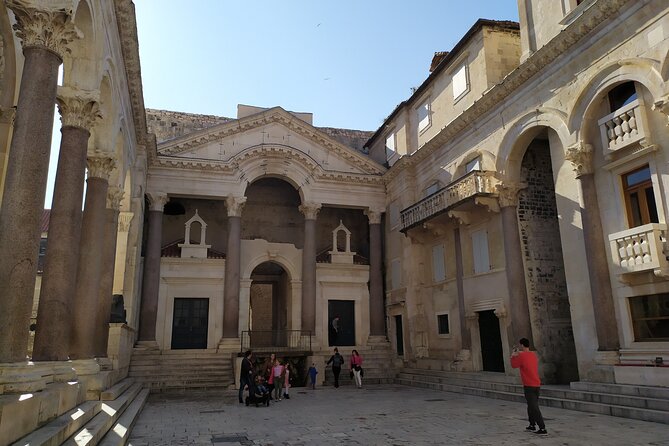
You’ll next pause at the Temple of Jupiter from the outside. The Roman Empire treated religion as essential, and temples weren’t decorative extras. This stop explains that idea directly, tying the temple to the logic of Roman residences and how belief was part of the everyday structure of authority.
After that, you’ll stand at the Cathedral of Saint Domnius (St. Domnius). You’ll get guidance on significant outside parts and a story behind what you’re seeing. The key detail for planning: the stop is an outside visit. The guide also warns you about interesting things you might notice inside, in case you decide to come back later on your own.
This is a smart approach because it keeps the tour moving while still giving you a reason to return. You don’t get stuck timing your whole day around interior openings you might not control.
If you’re picky about interiors: plan one extra hour later (or a separate trip day) if St. Domnius interior is a priority. The tour itself doesn’t position you to do it during the walkthrough.
Vestibulum to Riva Harbor: from private power to public life
Next you’ll see the Vestibulum of Diocletian’s Palace. This is the pre-entrance area to the emperor’s private chambers—so the guide focuses on appearance, function, and why this kind of space mattered. It’s a reminder that Roman authority was designed with movement in mind: who could go where, and what the transition zones were meant to communicate.
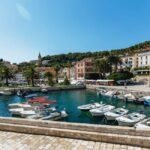
Then you shift out of the palace-only world into Riva Harbor, the main city promenade. Here the tour changes tempo. The guide explains how Riva was built over centuries and why it became important for locals as a central gathering place.
This is a nice reset. After a lot of palace structure, you get a sense of how the city lives today along the waterline. Even if you don’t stop long, you’ll leave with a clearer mental map of where city energy flows.


Fruit Square (Trg Brace Radic) and Pjaca: where the city performs
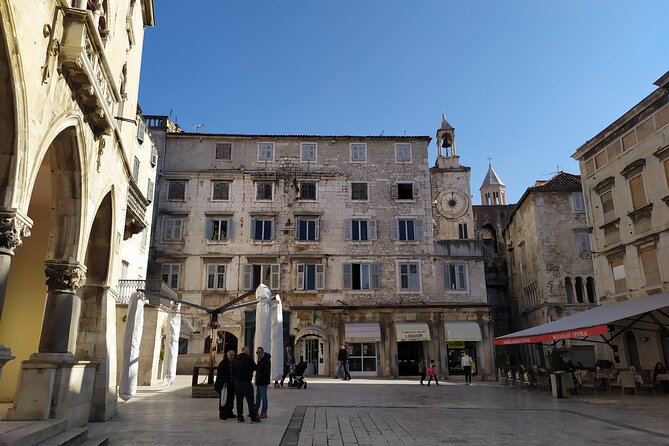
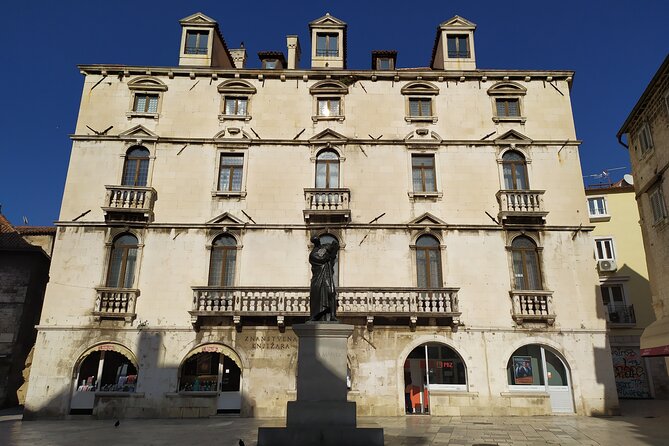
The last stretch walks you into the smaller, more “human-scale” spaces that make Split feel like a real town instead of an ancient site. First is Fruit Square (Trg Brace Radic), a small, charming square. You’ll learn why it’s called Fruit Square, plus the significant monument standing in the middle and what surrounds it.
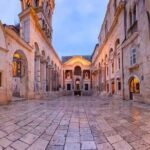
Then you reach Pjaca (People’s Square). This is the central stage of city life from medieval times to now—one of those squares that works because it’s functional as well as scenic. The guide explains the story of the square itself and points out surrounding buildings, including the old city hall area.
The tour ends at People’s Square (Narodni trg 16). After showing you key sights and sharing the last secrets of the square, the guide will advise you on other places in the city to see next. It’s a good way to prevent that common travel problem: you finish a walking tour with no clear next step.
Price and timing: what $156.21 per group buys you
This tour is priced at $156.21 per group for up to 15 people, and it runs about 2 hours. That group pricing is the biggest value lever here. If you’re traveling as a couple, it’s still a fair cost for a private historian-led route—especially because you’re not relying on audio guides to stitch together meaning.
For families or small friend groups, it can work out much better per person than a standard per-head tour, because the group cap is generous.
Timing matters too. The tour’s opening window listed is Monday to Friday, 5:00 PM to 7:00 PM. The start time can be flexible, but you need to contact in advance. For planning, I’d treat this as an early-evening old-town walk: you’ll want a light meal before, and you’ll want comfortable shoes. The tour also requires good weather, so have a backup plan mindset.
One more practical detail: mobile tickets are used, and the experience language is English. Also, it’s a private tour/activity, meaning only your group participates.
What’s included (and what you’ll handle yourself)
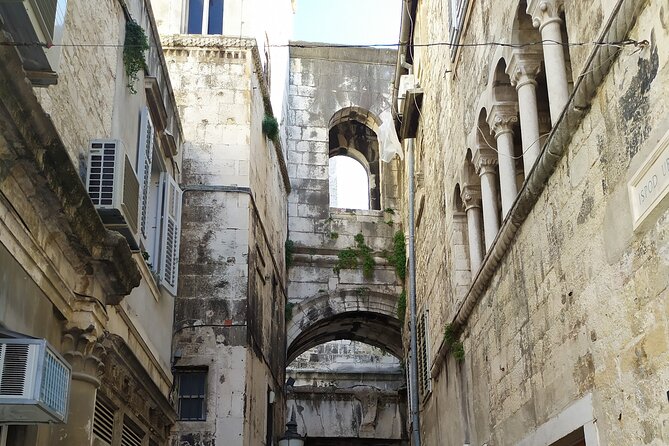
You get a local guide with a master’s degree in history, plus 3D reconstruction images and pictures via a display book. That visual tool is important in Diocletian’s Palace areas, where parts of the original design are hard to read from street level.
You also get a “no drama” approach to entrances at each stop: the itinerary is marked as admission ticket free for the listed stops. Still, the tour explicitly states that no admission tickets are included. Practically, that matches what the itinerary implies—most stops are outside, and the cathedral segment is framed as an outside visit with advice for if you choose to see more inside later.
My advice: if you have strong interest in museum-style interior time, add it yourself after the tour. This experience is built for walking comprehension, not for long indoor holds.
Who should book this private Split historian tour?
This is a smart pick if you fall into one of these groups:
- You want a private guide who can explain meaning, not just point out sights
- You like Roman sites but find them hard to visualize without help
- You’re short on time in Split and want a high-return route through the palace and key squares
- Your group includes mixed interests (history buffs and people who just want to get oriented fast)
It’s also practical for people who need the pace managed. The guide’s style includes adapting to your schedule—like adjusting so you don’t miss a dinner reservation. If your day has tight timing, this matters.
Should you book it? My straight answer
Book it if you want Diocletian’s Palace to make sense quickly, with a guide who uses 3D reconstructions to connect what you see to what it used to be. The route covers the palace logic, the religious layers, and then the city’s public spaces, ending in the right place for more wandering at your own speed.
Skip (or supplement) it if you’re looking for long indoor museum time or you want to prioritize multiple interiors during the same 2-hour window. This tour is built for outdoor orientation and clear explanations, not for an all-day deep dive.
If you’re planning your first real day in Split, this one gives you the kind of context that makes the rest of the old town easier to read.
FAQ
How long is the Split private historian tour?
It runs for about 2 hours.
Where does the tour start?
The meeting point is Golden Gate, Dioklecijanova 7, 21000, Split.
Where does the tour end?
It ends on People’s Square (Pjaca), at Narodni trg 16, 21000, Split.
Is the tour private?
Yes. It’s private, so only your group participates.
How large can the group be?
The tour is priced per group and can include up to 15 people.
What language is the tour offered in?
The tour is offered in English.
Are admission tickets included?
No admission tickets are included. The itinerary’s stops are marked as admission ticket free, but you should still plan to handle any additional interior visits separately if you choose to add them.
Is there an option for a flexible start time?
Yes. The starting time is flexible if you contact before the tour.
What time does the tour operate?
The listed opening hours are Monday to Friday from 5:00 PM to 7:00 PM.
Is the tour dependent on weather?
Yes. The experience requires good weather.
Are service animals allowed?
Yes, service animals are allowed.
Can I cancel for a full refund?
You can cancel up to 24 hours in advance for a full refund.
—
If you tell me your group size and what day/time you’re considering, I can help you figure out whether the 5–7 PM window is the best fit (and what to pair it with right after it ends on Pjaca).