REVIEW · SPLIT
Experience Split With Local Professional Historian – Small Group
Book on Viator →Operated by Pomalo tours · Bookable on Viator
Split’s old core can feel like a maze. This tour turns it into a story you can read as you walk. You’ll follow a smart route from Golden Gate through the palace complex and out toward the squares and harbor where everyday life still happens.
What I like most is the way the guide uses a display book with pictures and 3D reconstruction images to make Roman architecture feel real, not abstract. I also love the small-group setup (max 12), which means you can ask questions and get photo help along the way, not just listen while everyone drifts.
One thing to consider: this is very focused on the Roman-to-medieval city inside and around Diocletian’s Palace, so if you’re hoping for lots of separate, far-flung sights, you’ll still need extra time to explore beyond the route.
In This Review
- Key highlights you’ll actually feel on the ground
- Split’s “2-hour plan” for understanding Diocletian’s Palace
- Meeting at Golden Gate: the fastest start into Roman Split
- From Golden Gate to the palace core: Peristyle first, then the stories
- The Peristyle plus Triclinium: how daily life worked inside the walls
- Temple of Jupiter and the Roman religion angle
- Saint Domnius and the Vestibulum: the shift from Roman to Christian Split
- Riva Harbor, Fruit Square, and Pjaca: ending where locals still meet
- The 3D reconstruction book: why it’s more than a prop
- Photo-friendly pacing and interactive moments with Boris
- Price and time: what $38.62 buys you (and what it doesn’t)
- Practical tips so your tour feels easy
- Should you book this Split walking tour with a local historian?
- FAQ
- How long is the Split walking tour?
- Where does the tour start and end?
- Is the tour in English?
- Are admission tickets included for the sights?
- How large is the group?
- Can the guide help with photos during the tour?
Key highlights you’ll actually feel on the ground
- Max 12 travelers means the pacing stays human and questions don’t get lost
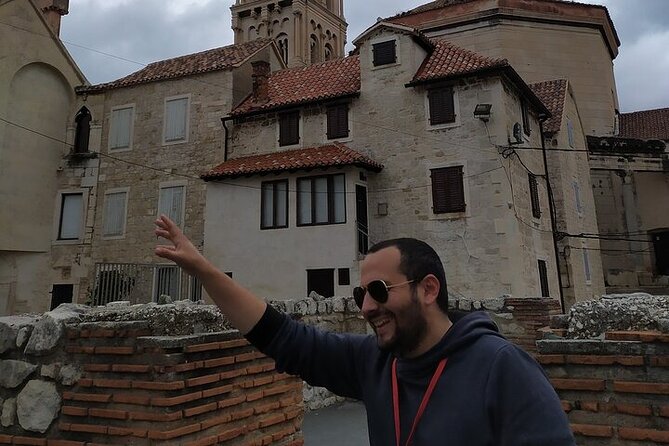
- Boris, a licensed history professional brings the palace and the city together with clear explanations
- 3D reconstruction images in a display book help you visualize what you’re standing on
- Photo guidance during the walk makes it easier to get solid shots without awkward timing
- Free-entry stops / outside views keep the tour moving without ticket bottlenecks
- Ends at People’s Square (Pjaca), so you finish where Split’s action and options are
Split’s “2-hour plan” for understanding Diocletian’s Palace
If you’ve never been to Split before, Diocletian’s Palace can overwhelm fast. You see walls, arches, doorways, churches, and courtyards—and it’s hard to know what mattered most and why. This tour is designed to give you a working map of the place, plus the meaning behind the stone.
The time matters. At roughly two hours, you’re not stuck in long lectures, and you still get a big-picture grasp of how the palace shifted from Roman stronghold to medieval city. For many first-timers, this is the fastest way to go from I’m lost to I get it.
And because the group is capped at 12, you’re not watching the guide from the back row. You can ask about what you’re seeing right now, like how a temple area functioned or why a certain space later became part of Christian Split.
You can also read our reviews of more tours and experiences in Split.


Meeting at Golden Gate: the fastest start into Roman Split
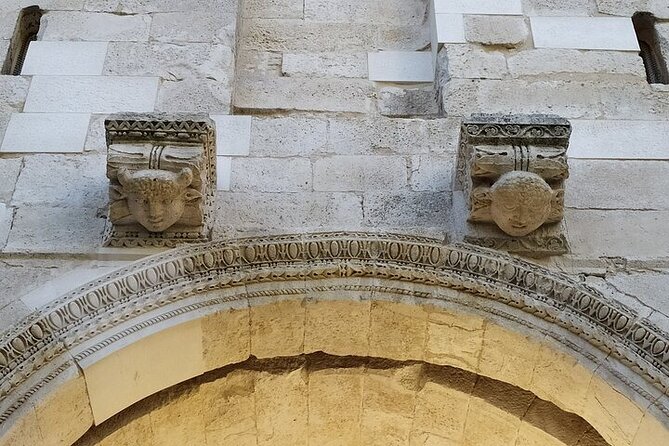
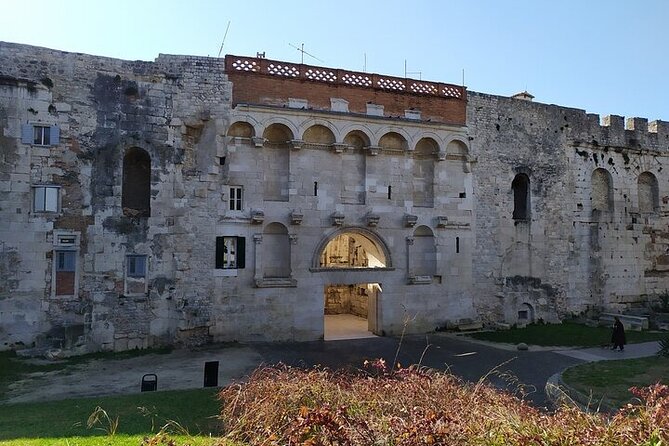
The tour begins at Golden Gate at Dioklecijanova 7 (across from another famous stop in the same palace orbit: the Gregory of Nin area). Even if you’ve read that the gate is called Golden Gate, you’ll quickly understand it’s not literally gold—it’s stone and name. That little detail sets the tone: you’ll learn the story behind the nickname.
At Golden Gate, you’re introduced to why this point matters in the palace layout. You’ll also get a quick orientation for the rest of the walk: where you are relative to bigger symbols in the old town, and how the palace’s walls and entrances shaped movement for both rulers and regular people.
From there, the guide shifts to Gregory of Nin with a stop at the statue of Grgur Ninski (Gregory of Nin). You’ll hear who he was, why the monument is so prominent in Split, and who sculpted the statue. It’s a good “bridge” moment: you go from Roman power to a later religious and civic identity that locals still care about.
From Golden Gate to the palace core: Peristyle first, then the stories
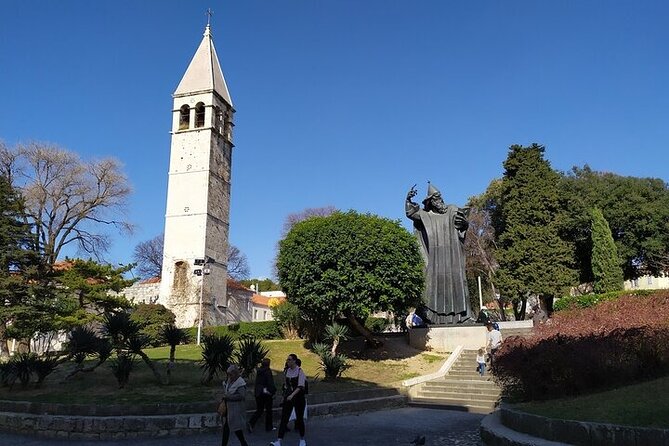
The main weight of the tour happens once you step into the palace area around Diocletian’s Palace. This is where you’ll understand that the palace wasn’t just one building—it was a whole controlled world inside the walls.
You’ll explore the most important parts and hidden-gem style features around the palace, including spaces you’d likely overlook if you were sightseeing alone. The route is structured so each stop answers a bigger question: What was this used for? Who had access? How did it change after Roman rule?
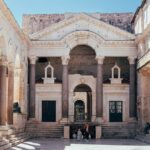
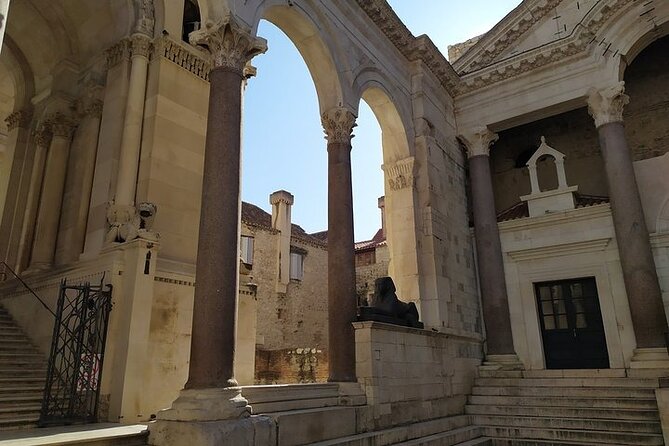
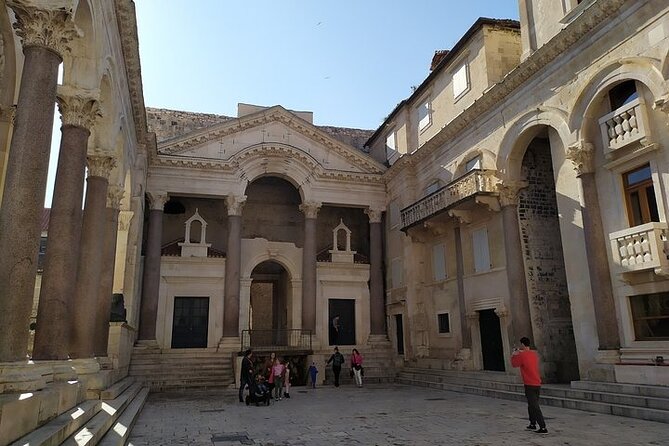
A standout moment is the way you move through the palace’s central spaces without feeling rushed. You’re guided to key points such as Peristyle, Jupiter’s Temple (outside view), the Triclinium dining area, and the Mausoleum/Cathedral of Saint Domnius (outside). Even with only outside-facing viewing for some stops, you get enough context to understand what you’re looking at.
And yes, you can expect photo help. The guide can help you time shots so you’re not fighting the crowd without knowing where to stand.
The Peristyle plus Triclinium: how daily life worked inside the walls
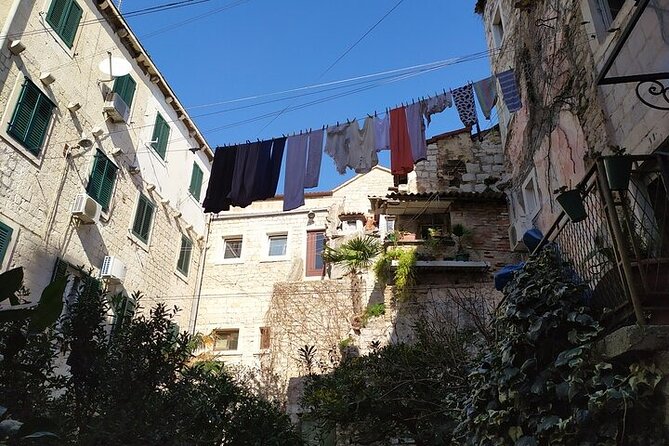
The Peristyle of Diocletian’s Palace is the kind of space that looks simple until you understand its role. Standing in the center, you learn how it functioned as a connector—and also a divider—between people and the emperor’s world. That explanation changes how you perceive the architecture around you.
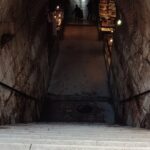
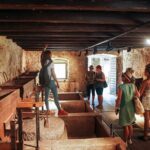
From Peristyle, you move toward the central area of the cellars of Diocletian’s Palace. Even though you’re still outdoors or viewing from specific points, the guide explains how these underground areas mattered across time. That matters in Split, because the city keeps reusing Roman spaces instead of erasing them.
Next comes the Triclinium, where you’ll learn about eating habits of Roman leadership and how the emperor’s dining room was organized. This is one of those stops where context is everything. Without it, Triclinium can look like more stone ruins. With it, it becomes evidence of daily power—how meals signaled status, order, and control.
If you enjoy history that feels practical (not just dates), you’ll probably like this part the most.
Temple of Jupiter and the Roman religion angle
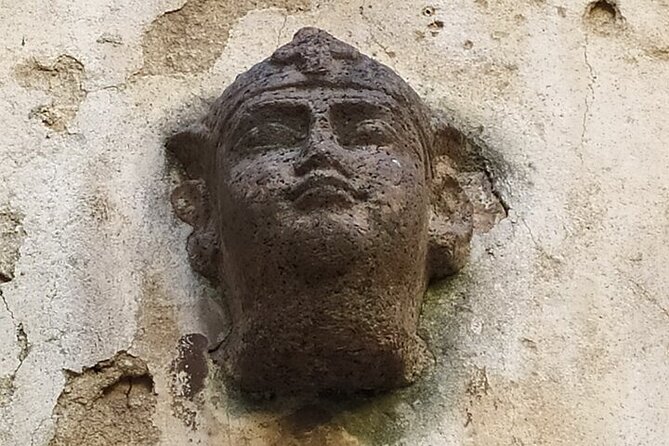
The Temple of Jupiter is presented from outside, but the guide still makes the reasoning clear. In the Roman Empire, religion wasn’t a side hobby; it was part of how authority worked. Temples weren’t just for faith—they reinforced a worldview.
You’ll learn what Jupiter’s Temple represented within a Roman residence and how religion fit into the bigger palace system. It’s a short stop, but it adds a piece that many first-time visitors miss: Roman power didn’t just run on armies and buildings; it also ran on ritual and public meaning.
Even if your eyes are mostly catching stone details, you’ll come away with a mental model for why temples mattered inside palace space.

Saint Domnius and the Vestibulum: the shift from Roman to Christian Split
The Cathedral of Saint Domnius (outside visit) gives you another turning point. You’ll stand in front of it while the guide points out significant features and explains the story behind what you’re seeing. You’ll also get a heads-up about what’s interesting inside, so if you choose to visit later, you’re not walking in blind.
After that comes the Vestibulum of Diocletian’s Palace, essentially a pre-entrance area connected to the private chambers. The guide explains what it looked like and what it was for, which helps you understand how access was controlled even before you reached the private spaces.
This pair of stops is valuable because it shows the palace didn’t freeze in time. Roman spaces were repurposed, and new religious identity layered over older architecture.
And if you like those “why is this here” moments, this section gives you a lot of them.
Riva Harbor, Fruit Square, and Pjaca: ending where locals still meet
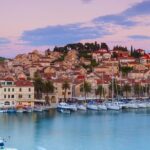
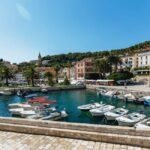
After the palace-heavy portion, the tour shifts out into the lived-in parts of Split. First stop on the city promenade is Riva Harbor, described as the main promenade area. You’ll hear how it developed over the centuries and why it became central for locals, not just for tourists with cameras.
Then you’ll visit Fruit’s Square (Trg Brace Radic), a small square with charm and a specific backstory. The guide explains why it’s called Fruit Square and what important monument sits at the center. Even if the square is compact, you’ll understand what kind of urban life it once supported.
Finally, you end on People’s Square, known as Pjaca. This is the kind of finishing point that makes sense: it’s a city heart where things happen. The guide shares the story behind the square and nearby buildings, then suggests other places you might want to visit that weren’t part of this two-hour route.
If you’re planning dinner or a post-tour wander, ending here is smart. You’ll already know what you’re looking at, and you won’t feel like you just left a museum and forgot to eat.
The 3D reconstruction book: why it’s more than a prop
A big reason this tour works is the display book with pictures and 3D reconstruction images. Roman ruins can look like random blocks if you don’t have help visualizing the full structure. The 3D images close that gap in a way that explanations alone can’t.
In practice, it does two things for you. First, it helps you recognize what the guide is pointing at—especially when you’re seeing exterior views of temples, entrances, and cathedral structures. Second, it makes your photos better, because you start to frame shots with the original layout in mind.
It’s also a nice break from the stone-and-sun routine. When you stop at the right moment, you can look at the reconstructions and connect them instantly to what you’re standing in.
Photo-friendly pacing and interactive moments with Boris
This tour isn’t just a lecture. The guide can help you take photos, and the pace leaves room for questions. With a max group size of 12, it’s easier to hear every answer without straining.
Based on what you’ll likely experience in a session led by Boris, you may also get interactive bits—short trivia and conversation prompts that help you stay engaged, including for families. That style can keep the tour fun if you’re not trying to memorize a textbook.
One bonus detail: some sections near Diocletian’s Palace overlap with spots that pop up in Game of Thrones filming discussions, so you might recognize a few locations as you walk. Even if you’re not a superfan, it gives extra energy to an already interesting route.
Price and time: what $38.62 buys you (and what it doesn’t)
At about $38.62 per person for around two hours, the value comes from three areas: the licensed guide, the small group, and the visual reconstructions. You’re not paying for admission tickets inside the tour itself—stops are listed as free, and several are outside views—so your money goes to interpretation.
The “small group with a professional historian” part is the main cost driver, and it’s also the main benefit. At 12 or fewer people, the guide can tailor the pacing and answer questions instead of pushing everyone through a script.
What it doesn’t do is cover every inch of Split. You’re hitting the palace and Old Town heart, then ending at Pjaca. If you want beaches, nearby villages, or a deeper dive into museums, you’ll need additional time after this.
For first-timers who want fast orientation plus real meaning, it’s a smart spend.
Practical tips so your tour feels easy
This is a walking experience with multiple stops, mostly outdoors and outside-facing viewing. So bring comfortable shoes and plan for a few minutes of standing while the guide explains key points.
If you care about photos, don’t wait until the end. Ask for help during the palace portion when the guide can guide your position relative to entrances and angles.
Also, keep your questions simple and specific. When you ask things like how a space was used or what changed when the city’s identity shifted, you’ll get clearer answers, because the whole tour is built around those transitions.
Finally, timing matters. The tour is about the palace story, so if you arrive at Split exhausted or rushed, you’ll miss connections. If you arrive with at least a little energy, you’ll leave with a map in your head, not just photos on your phone.
Should you book this Split walking tour with a local historian?
Book it if you want a clean start in Split: Diocletian’s Palace explained in human-sized chunks, with a small group and strong visual support. If you like learning how everyday life and political power overlapped, the Peristyle and Triclinium sections will click.
Skip it (or pair it with something else) if your goal is mostly modern Split vibe, long beach time, or museum hopping. This tour stays focused on the palace zone and the old-town center.
One more thought: the experience is weather-dependent, so plan a backup day if your schedule is tight. If you’re visiting in seasons with uncertain weather, have a flexible afternoon or let yourself enjoy the pace instead of trying to cram everything around it.
FAQ
How long is the Split walking tour?
The tour lasts about 2 hours.
Where does the tour start and end?
It starts at Golden Gate (Dioklecijanova 7, Split) and ends at People’s Square (Pjaca).
Is the tour in English?
Yes, it’s offered in English.
Are admission tickets included for the sights?
No admission tickets are included, and the listed stops are marked as free-entry or outside viewing.
How large is the group?
The group size is capped at a maximum of 12 travelers.
Can the guide help with photos during the tour?
Yes, the guide can help you take photos on the tour.