REVIEW · SPLIT
Salona & Amphitheater – Private guided tour – Admission incl.
Book on Viator →Operated by Split Guide · Bookable on Viator
One city, three religions, and a lot of stone. This private Salona tour is a fast, focused way to see how Roman life shifted into early Christian Split, with the Amphitheatre Salona as the payoff. I like that the pacing keeps stopping points short and meaningful, so you don’t spend your whole time staring at one wall. You’ll also get the kind of on-the-ground explanations that make details click, especially with guides such as Ivan—easy company and clearly switched on.
My second favorite part is the mix of sites. You’ll move from Roman-era structures to early Christian burial grounds, passing places tied to St. Dominius and later martyrs—without needing a history degree. One thing to consider: the tour depends on good weather, and the Salona open-air museum has an entrance fee (about 10 euros for adults) that is not included.
In This Review
- Key Things to Know Before You Go
- Salona’s Roman-to-Christian Story, in a Practical Walk
- Meeting Point and How the 2.5 Hours Really Runs
- Stop 1: Ancient Salona and the City That Got Wiped Out
- Entrance fee you should plan for
- A small drawback
- Stop 2: Manastirine Necropolis and St. Dominius
- Consideration
- Stop 3: Tusculum and Don Frane Bulić’s Work
- Why this works
- Stop 4: Biskupska palača (Palatium episcopi) and Early Cathedral Foundations
- What you’ll likely notice
- Stop 5: The Large Urban Spa (Roman Baths)
- The drawback to expect
- Stop 6: Pet mostova and the Five Bridges
- Stop 7: Town Gate (Porta Caesarea) and Roman Chariot Ruts
- Stop 8: Hram and the Forum-Temple-Theatre Cluster
- Stop 9: Cemetery of the 16 Sarcophagi (Ul. don Frane Bulića 91)
- Why this stop is worth your time
- Stop 10: Kapljuc and Martyrs from Early 4th Century Persecution
- Stop 11: Amphitheatre Salona, the Big Finish
- What to look for with a guide in the room
- Price and Value: Is $203.50 Worth It?
- Weather and Timing: The Two Things That Change the Experience
- Who This Tour Suits Best
- Should You Book This Salona and Amphitheatre Tour?
- FAQ
- How long is the Salona and Amphitheatre private guided tour?
- What language is the tour offered in?
- Is this tour private?
- Where does the tour start and end?
- Is the entrance ticket to Ancient Salona included?
- Are the other stops included for admission?
- Does the tour use a mobile ticket?
- Does the tour require good weather?
- Can I bring a service animal?
- What is the highlight of the tour?
Key Things to Know Before You Go
- Private, English-guided, 2.5 hours means you can ask questions without a crowd steamrolling the moment.
- Ancient Salona on foot first sets the scene for everything that comes after.
- Most stops are free—only the Salona open-air museum entrance has a listed adult fee (about 10 euros).
- The amphitheatre is the highlight and it’s surprisingly intact, despite Venetians taking stones for Venice churches.
- Roman marks still visible—you’ll see the ruts from old chariots at Porta Caesarea.
- Good weather matters because you’re outside for the whole experience.
Salona’s Roman-to-Christian Story, in a Practical Walk
Salona (near today’s Split, in Solin) is the kind of place where you can almost trace a timeline with your feet. You start in the Roman world—when Salona functioned like a metropolis—and then you move forward into later Christian practice and burial culture. The tour keeps that transformation clear by grouping sites that match the era you’re talking about, rather than sending you all over town with no thread.
If you like ruins that feel specific—rather than generic “cool stones”—you’ll probably enjoy this approach. Each stop is a short visit, but the guide’s context helps you understand what you’re actually seeing: public buildings, burial spaces, and the architecture that signaled power and belief.
You’ll also like that the experience is designed for real travel pace. It’s about 2 hours 30 minutes total, so it fits neatly into a day when you also want beaches, old town wandering, or dinner without rushing.
You can also read our reviews of more guided tours in Split



Meeting Point and How the 2.5 Hours Really Runs
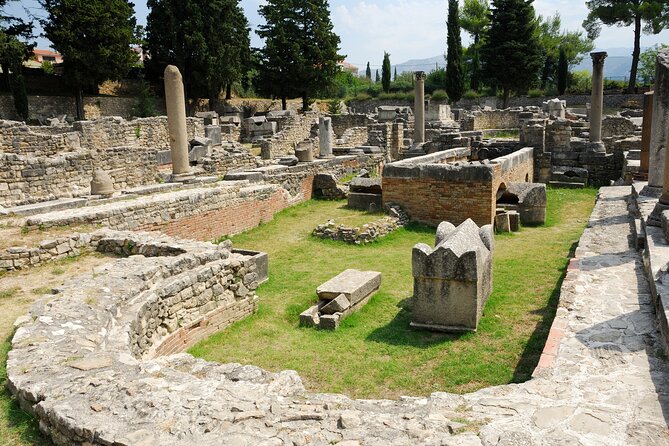
This is a private tour/activity, so it’s just your group. It starts at the Salona Main entrance on Ul. don Frane Bulića 58, 21210, Solin, Croatia. After the final stop, the activity ends back at the same meeting point.
You’ll get a mobile ticket, and confirmation is handled at booking time. The tour is offered in English, which matters here because so many of the details are interpretive—Roman funerary customs, Christian burial shifts, and why certain remains are only foundations now.
One practical note: the stop durations are short, usually around 10–15 minutes, with a longer anchor at the end. That’s not a flaw; it’s the whole format. You’re going for clarity and movement, not a slow sit-down tour where you lose the thread.
Also, the tour is near public transportation, and service animals are allowed. Most people can participate, but if you know you tire quickly on uneven outdoor paths, it’s worth planning an easy rest-of-day afterward.
Stop 1: Ancient Salona and the City That Got Wiped Out
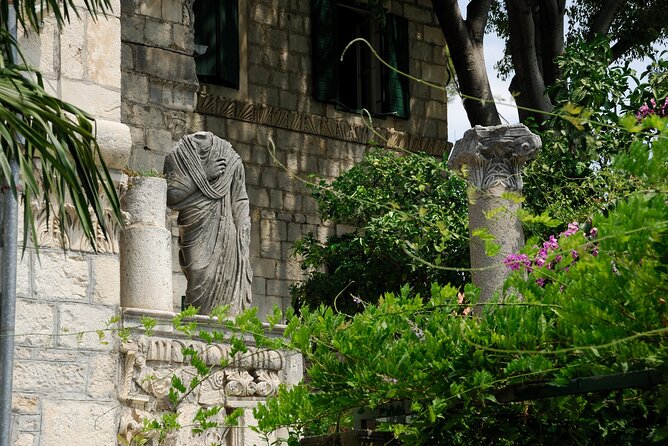
The tour begins at Ancient Salona, the Roman metropolis that reportedly grew to around 60,000 inhabitants. The guide frames what you’re seeing against a major break in the story: Salona was completely destroyed by the Avars in the 6th century, an event that helps explain why much of what remains is fragmented and archaeological.
You’ll explore this part on foot, and at the entrance you’ll get the baseline overview so you understand the layout as you move. Expect an “open-air museum” style stop: you’re seeing the bones of a city, not a fully restored set piece.
Entrance fee you should plan for
There’s a note that the entrance fee to the open-air museum is about 10 euros for adults, and it’s not included. That’s the main ticket-related catch in the whole tour.
Why this first stop matters: it gives you the mental map for later sites. When you reach Christian cemeteries and early church remains later on, the Roman setting stops feeling like background and starts feeling like the cause of how people lived (and died) afterward.
A small drawback
Because it’s the first stop and it’s outdoors, if you’re arriving late or you’re running hot in the sun, you may feel the clock more sharply here than later.
You can also read our reviews of more private tours in Split

Stop 2: Manastirine Necropolis and St. Dominius
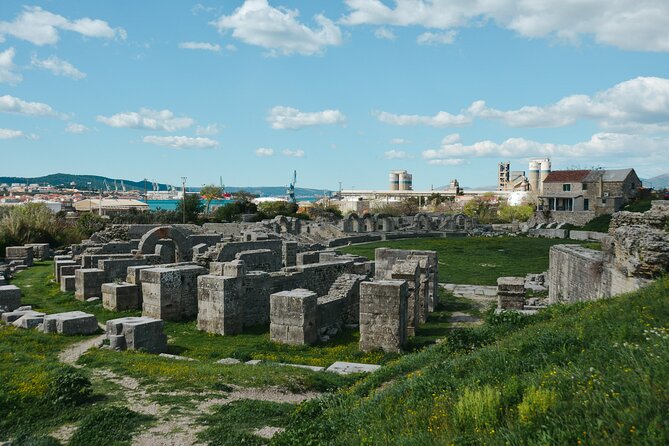
Next is Manastirine, a necropolis that began in Roman times and later became a Christian cemetery. That layered use is one of the coolest ways to see history without guesswork: a burial ground that kept serving successive communities.
This stop is tied to St. Dominius, the martyr and patron of Split. You’re not just looking at “ancient graves”; you’re seeing how early Christian identity anchored itself in specific people and places.
This part lasts about 15 minutes. That’s enough time to connect the dots—Roman funerary tradition, then a Christian re-meaning of the landscape.
Consideration
This is a cemetery-focused moment, so if you prefer ruins that are mainly about architecture and engineering, you might wish for more building views here. Still, the St. Dominius connection makes it more than a quick pass.
Stop 3: Tusculum and Don Frane Bulić’s Work
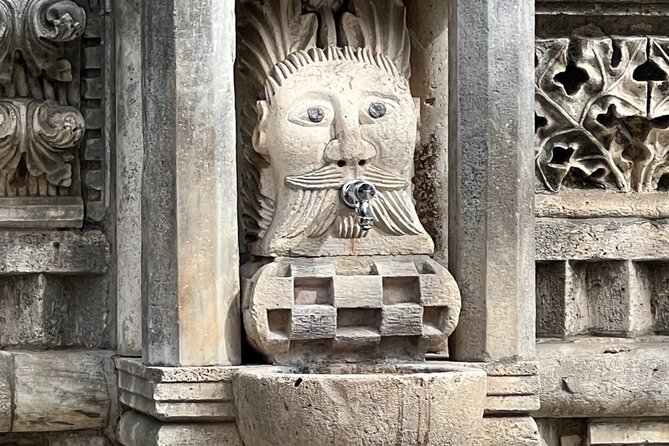
The Tusculum stop is shorter (about 15 minutes) and it brings in a different kind of value: modern archaeology and the people who made the site readable again. The Tusculum was built by Don Frane Bulić, a famous clergyman and archaeologist from Split.
In practice, you’ll see some rooms and learn how this “office and meeting place” fits into the story of discovery and research. Even if you don’t geek out on excavation history, this kind of stop adds a helpful layer: it explains why you can visit these remains today instead of only knowing them from scattered fragments.
Why this works
It breaks the pattern of “Roman, then Roman, then Christian.” You get a reminder that interpretation takes effort, and local scholars like Bulić shaped what’s visible and understandable.
Stop 4: Biskupska palača (Palatium episcopi) and Early Cathedral Foundations
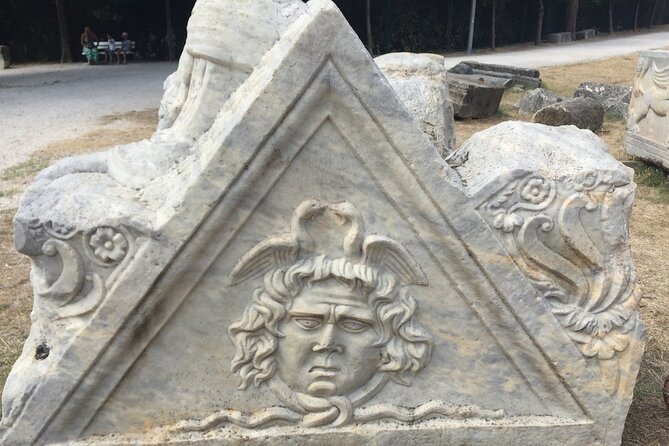
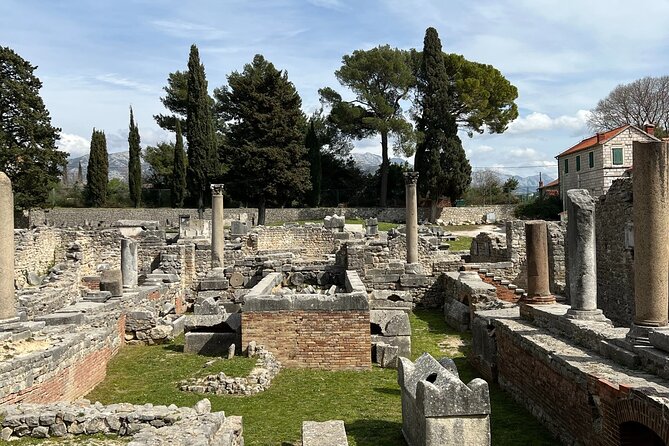
At Biskupska palača, you’re in the area of the bishop’s palace, plus the remains of two cathedrals from a time when Christians were allowed to practice their religion freely. Today, only foundation walls can be seen.
That might sound anticlimactic, but it’s actually a key kind of ruin. Foundation walls are like the outline of belief—what was important enough to build bigger, and then how those structures got reduced through time.
What you’ll likely notice
Even in a short stop, the guide’s framing helps you picture scale and layout. You’re not meant to marvel at intact ceilings. You’re meant to understand how the center of religious power functioned and where that power sat in the city.
Stop 5: The Large Urban Spa (Roman Baths)
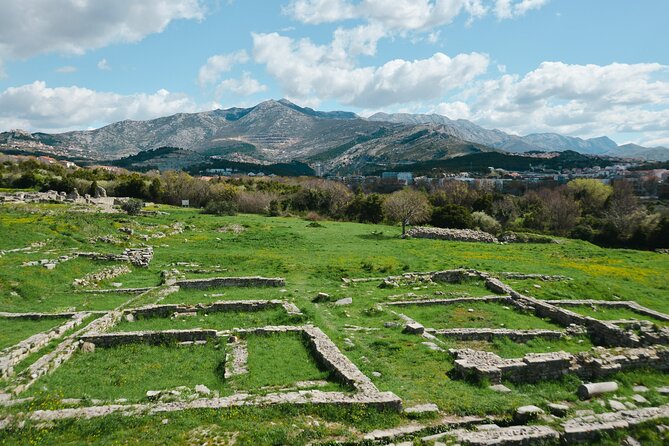
Then comes the Large urban spa, essentially Roman baths used for several hundred years. The tour connects this to why baths mattered: they were the social and cultural life hub in Roman times.
This stop is about 10 minutes and is free. Even if you’ve seen other bath complexes in Europe, what makes this one useful is how it shifts the feeling of the day. It changes the mood from ceremony and burial to everyday community space—where people met, talked, and maintained social ties.
The drawback to expect
Bath remains can feel repetitive if you’re not given a reason to look at specific corners. The guide helps here, but if you’re prone to zoning out at reused stone, you’ll want to ask what your guide wants you to focus on.
Stop 6: Pet mostova and the Five Bridges
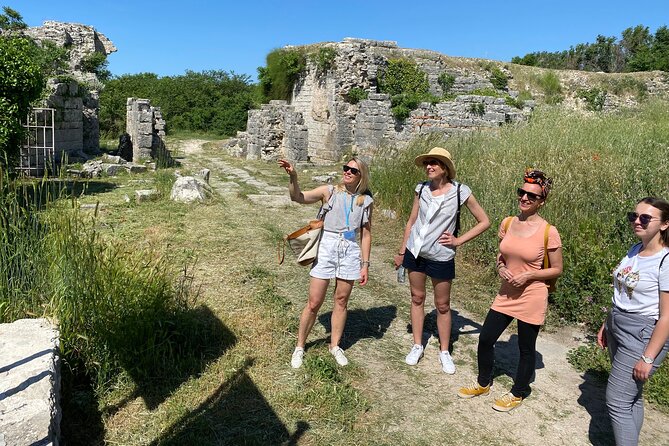
Pet mostova means the five bridges. Here you’ll hear they belonged to a kind of industrial area outside the old city center. That’s a smart contrast with the earlier “city center” feel.
This stop is about 10 minutes and free. The value is in the function: the city wasn’t only temples and bishops. It also had working zones tied to water management and movement.
Stop 7: Town Gate (Porta Caesarea) and Roman Chariot Ruts
At Porta Caesarea, the capital gate in Roman times, you’ll see something rare: the ruts of old Roman chariots still visible.
This is a classic example of ruins that feel physical instead of abstract. You’re not only reading history—you can visually track how traffic moved through the gate area. The stop is about 10 minutes and free, but it can be one of the more memorable “wait, that’s real” moments of the walk.
Stop 8: Hram and the Forum-Temple-Theatre Cluster
Next is Hram, in the oldest part of the city where you can see remains of the forum, a temple, and an ancient Roman theater. This is also about 10 minutes and free.
This part helps you see how Roman civic life worked in layers:
- The forum for public life and decision-making
- The temple for religious authority
- The theater for entertainment and social cohesion
If you’ve ever wondered how one city manages power, belief, and leisure without splitting into separate worlds, this cluster is a clear answer.
Stop 9: Cemetery of the 16 Sarcophagi (Ul. don Frane Bulića 91)
You’ll then reach the Cemetery of the 16 Sarcophagi near the road leading to the amphitheater. It’s described as a necropolis next to the road—because Roman cemeteries were typically built outside the city walls.
This is free and about 10 minutes.
Why this stop is worth your time
Cemeteries outside walls can feel like a background detail. Here, it becomes a way to understand a Roman belief system about the boundary between city life and burial space. The road link to the amphitheater also matters, because it hints at how public spectacles and public death could connect within the same overall environment.
Stop 10: Kapljuc and Martyrs from Early 4th Century Persecution
Kapljuc is another basilica and necropolis on the way to the amphitheater. It marks burial for five martyrs who died in the amphitheater at the beginning of the 4th century during persecution of Christians under Diocletian.
This stop is about 10 minutes and free.
It’s heavy subject matter, but the short format keeps you from getting overwhelmed. The guide’s job here is essential: linking the names, the dates, and the reason the amphitheater later carries such a powerful story.
Stop 11: Amphitheatre Salona, the Big Finish
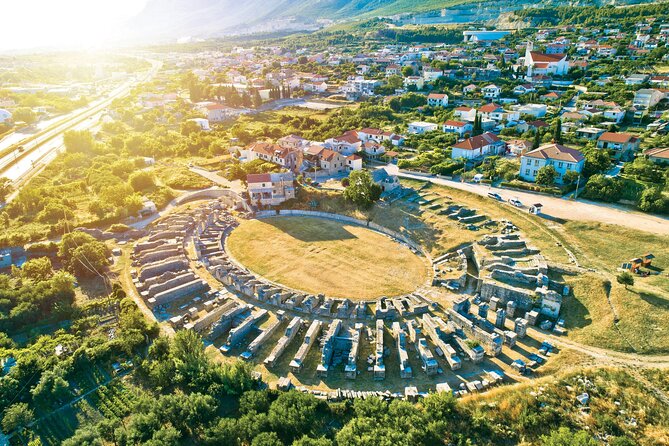
Finally, you reach Amphitheatre Salona, the highlight. You’ll spend about 30 minutes here.
It’s relatively well preserved, even with an important historical twist: the Venetians removed most of the stones to build churches in Venice. That kind of “ruins with an afterlife” story is something you only appreciate once you hear it while standing in place. It also explains why certain sections look more intact than others.
What to look for with a guide in the room
Even when the structure is incomplete, an amphitheater tells a lot: how crowding worked, how people watched, and how a venue becomes a symbol long after its original use. Because your walk leads you through Roman civic spaces, burial sites, and Christian persecution context, the amphitheater stop lands with more weight than if it were just another round of “look at the arches.”
Price and Value: Is $203.50 Worth It?
At $203.50 per person for about 2 hours 30 minutes, the best way to judge value is not just the cost—it’s what you’re buying.
You’re buying:
- A private format (your group only), which usually means more attention per person
- English interpretation, which matters when remains are partial and you need guidance to “see” what matters
- A logical route that ties together Roman city life, Christian burial space, and early religious authority
- Multiple free stops, so you’re not stacking admissions repeatedly along the way
The one extra cost to plan for is the open-air museum entrance fee about 10 euros for adults at the Salona start. Everything else listed is free.
So, the value equation is pretty simple: if you want guided storytelling that connects scattered remains, and you prefer a smaller-group experience, this price can make sense. If you’re traveling on a shoestring, you might compare self-guided options—but the guide’s role is especially useful in a place where so much is foundations and fragments.
Weather and Timing: The Two Things That Change the Experience
This experience requires good weather. Since most of it happens outdoors, rain or harsh heat can turn your best moments into a rushed shuffle. If the tour is canceled due to poor weather, you’ll be offered a different date or a full refund.
Timing wise, the format works well on a day you still want freedom afterward. You’re not stuck all afternoon. You finish back where you started, so you can pivot quickly to Split’s center, a meal, or a beach break.
Also, on average this is booked 84 days in advance, which is a hint that it’s popular. If you’re traveling in peak season or on specific dates, earlier booking is smart.
Who This Tour Suits Best
This is a good match if:
- You like Roman and early Christian sites, but you want them explained clearly.
- You prefer a walk-with-context format over a lecture or a museum-only day.
- You’d enjoy the amphitheater more because you’ve been led there with the right story first.
It’s not the best match if:
- You want long, slow viewing time at every stop.
- You dislike cemetery-focused spaces, even when the context is historical and guided.
Should You Book This Salona and Amphitheatre Tour?
I’d book it if you want a tight, high-value overview of Salona’s Roman-to-Christian shift, with the amphitheater as a memorable end point. The route makes sense, the stopping rhythm keeps momentum, and the private guide attention is where you’ll feel the difference.
I’d think twice if you’re very weather-sensitive, or if you prefer fully restored monuments over foundations and outdoor archaeological fragments. In that case, you might want a slower self-paced plan.
If you’re on the fence, use this rule of thumb: if you’ll appreciate interpretive guidance while standing in partial remains, this tour is likely worth your time and money.
FAQ
How long is the Salona and Amphitheatre private guided tour?
It’s approximately 2 hours 30 minutes.
What language is the tour offered in?
The tour is offered in English.
Is this tour private?
Yes. It’s a private tour/activity, and only your group participates.
Where does the tour start and end?
It starts at Salona Main entrance, Ul. don Frane Bulića 58, 21210, Solin, Croatia, and ends back at the same meeting point.
Is the entrance ticket to Ancient Salona included?
The entrance fee to the open-air museum at Ancient Salona is about 10 euros for adults and is not included.
Are the other stops included for admission?
The information provided lists several stops (Manastirine, Tusculum, Biskupska palača, and others) with admission ticket free.
Does the tour use a mobile ticket?
Yes, it includes a mobile ticket.
Does the tour require good weather?
Yes. This experience requires good weather. If canceled due to poor weather, you’ll be offered a different date or a full refund.
Can I bring a service animal?
Yes, service animals are allowed.
What is the highlight of the tour?
The highlight is the Amphitheatre Salona, where you spend about 30 minutes.