REVIEW · SPLIT
Semi-Private Balkans Tour; Split to Athens or Corfu in 14 Days
Book on Viator →Operated by Choose Balkans · Bookable on Viator
One bridge can change your whole trip.
This semi-private route strings together UNESCO old towns, Ottoman-to-Austrian architecture, and big scenic moments, all with a guide and private transport so you spend less time wrangling schedules and more time walking. I love the way the tour builds variety day by day, from Mostar’s Stari Most to Meteora’s cliff monasteries; it’s not just “see a city,” it’s see how cultures overlap. I also like the small-group feel (max 10 people), which keeps the pace human and the questions actually get answered. One drawback to plan for: it’s a lot of ground in 14 days, so you’ll want to be comfortable with early starts, long drives, and some uneven, cobbled walking.
In This Review
- Key Things to Know Before You Go
- Split to the Border: the 7:30am start that saves you time
- Mostar and Blagaj: Stari Most plus the Buna spring scenery
- Sarajevo walking: Ottoman and Austro-Hungarian layers with wartime scars
- Kotor and Budva: medieval mazes and a coastline that changes mood
- Sveti Stefan, Rozafa, and Shkoder: viewpoints that connect land and water
- Kosovo days: slow food farm time and Prizren’s Ottoman mix
- Gjakova market repairs, Decan monastery, and Rahovec vineyards
- Kruja: the Albanian resistance story and a bazaar built for browsing
- Tirana food stops and Bunk’Art 2: a capital day that mixes tastes and facts
- Struga and Ohrid: a lake town built for slow views
- St Naum and Drilon: Albania’s park calm before the castles of southern towns
- Berat: 1001 windows and living inside the castle walls
- Gjirokaster: Stone City streets and a castle preserved by time
- Greece finale: Ioannina then Meteora’s monastery sunset
- Athens or Corfu: finishing with a transfer and a ferry
- Price and value: what you’re really paying for at $5,153.85
- Who should book this Balkans route
- Should you book this tour?
- FAQ
- FAQ
- What is the tour start time and where do I begin?
- Does the tour include pickup in Split?
- Where can the tour end?
- How many people are in the group?
- Are accommodations and breakfast included?
- Are site entry tickets included?
- Is the ferry to Corfu included?
- Are lunches and dinners included?
- What happens if I cancel?
Key Things to Know Before You Go
- Small group (max 10) keeps the days flexible enough for real questions, not just a stamp-and-go routine
- Hotel pickup in Split at 7:30am removes the first-day stress fast
- Mix of walking and viewpoint time means you can enjoy towns without trying to power through every alley
- Included ferry to Corfu (tickets included) is a clean, low-effort way to finish in the Greek islands
- Breakfast included on 13 mornings helps you start strong for all that sightseeing
- Tipping is optional but practical if you want good service to stay good
Split to the Border: the 7:30am start that saves you time
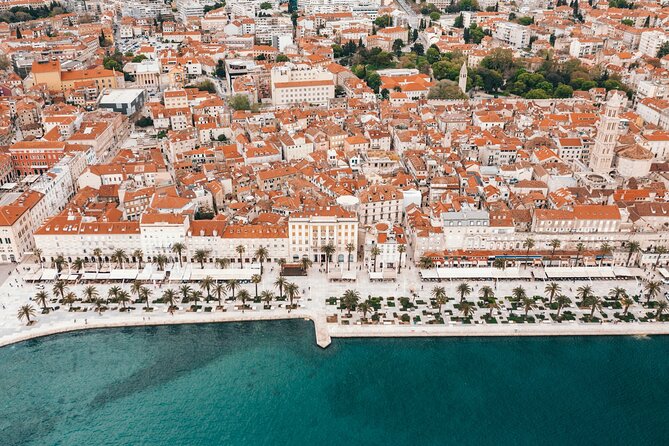
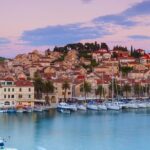
Your day kicks off early. You’ll be picked up in Split at 7:30am from your hotel, then shuttled to the border area where you meet your tour leader. That’s a real value point here: you don’t have to solve logistics on your first morning in a new country.
This tour is set up like a “follow the guide” road trip, using private transportation across multiple borders. That means less waiting around and more consistent touring windows, even when you’re hopping between Croatia, Bosnia, Montenegro, and beyond.
You can also read our reviews of more private tours in Split
Mostar and Blagaj: Stari Most plus the Buna spring scenery
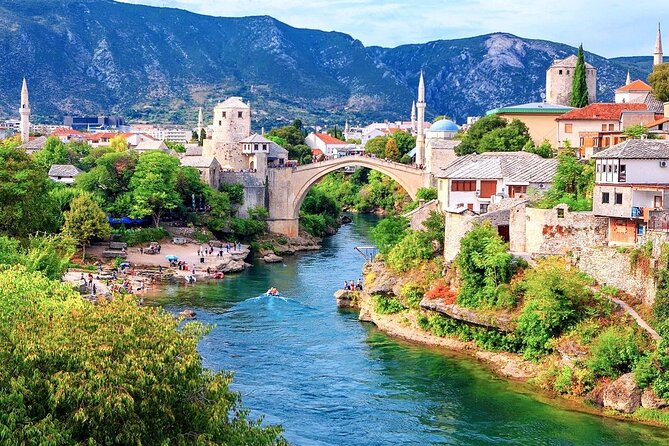
Mostar is where the trip turns from travel to story. First stop is the Mostar Old Bridge (Stari Most), the UNESCO-listed icon built in the 16th century with classic Islamic architectural style. It’s short time, but it’s the kind of place where you instantly understand why people take photos—and why they still come back years later.
Then you’ll wander the Old Bazaar area, a maze of cobbled lanes, Turkish bazaars, and old mosques. One detail I’d watch for: the “Don’t Forget” stones around town, which add an honest, commemorative edge to the pretty streets.
Next is Blagaj tekija, outside Mostar, perched at the foot of a cliff with blue water in front. The main pull is the dramatic setting and the spring of the river Buna. It’s the kind of stop that breaks up the driving days, and it gives you a calmer rhythm before the next big city.
Sarajevo walking: Ottoman and Austro-Hungarian layers with wartime scars
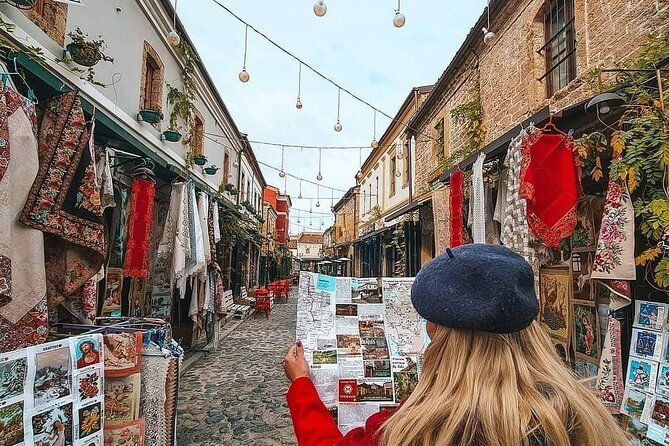
From Mostar you head into Sarajevo, Bosnia’s capital, and the walking is on uneven terrain. You’ll see reminders of the Yugoslav War in bullet holes and cannon marks, which turns “historic city” into lived history you can’t really ignore.
You’ll cover Ottoman and Austria-Hungarian parts of the city, including bazaars and markets that show how these empires shaped everyday life. Sarajevo often gets described as a crossroads, and that theme is visible on the ground—mosques, churches, and synagogues all within a walkable pattern.
You’ll also visit Latin Bridge, with the story of how WWI was triggered there. The point isn’t just the event; it’s the geography—how the bridge connected areas that were known by different names in Ottoman times.
For your own timing, I’d treat Sarajevo free time like a food day. Expect meat dishes and desserts in the old town, and plan to slow down instead of trying to “optimize” every minute.
Kotor and Budva: medieval mazes and a coastline that changes mood
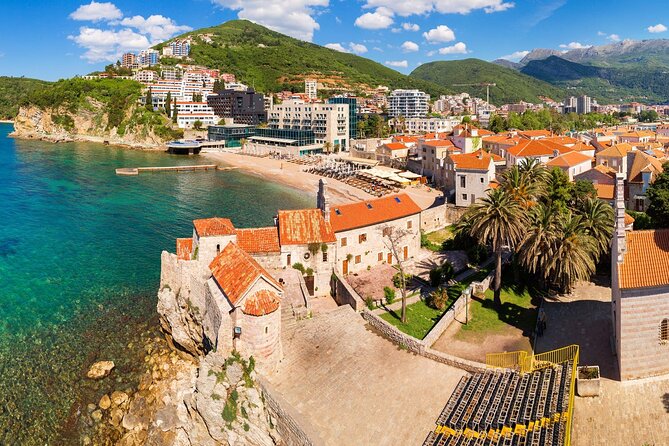
Day three shifts to Montenegro with Kotor, another UNESCO old town. Kotor’s streets look chaotic at first, but that design was intentional—an old trick to confuse intruders who came to plunder. It’s smart city planning you can feel when you walk the turns.
You’ll explore narrow cobblestone lanes and visit Saint Luke’s church, significant to locals because it represents unity. Then you’ll have afternoon time to roam the old town on your own.
Later comes Budva, split between Old Budva and New Budva. Old Budva is the medieval part with the historical center, including stops like St. Ivan church and the smaller church of St. Mary. New Budva is where you’ll find modern buildings and busy shopping areas, so you can choose the vibe you want—heritage or energy.
Sveti Stefan, Rozafa, and Shkoder: viewpoints that connect land and water
On the way toward Albania, you stop near Sveti Stefan. Historically a fishing town on a small island, it’s now an exclusive residential resort, and you won’t be able to visit the island itself. Still, standing on the coast with the view is worth it for that “how can a place look like a postcard” feeling.
Then comes Rozafa Castle, where the payoff is the view: lake-and-river scenery as waters meet and head toward the Adriatic. It’s a great moment to pause, because the day’s geography starts to feel bigger than any one city.
You’ll also spend time in Shkoder, in northwest Albania, a place linked to the largest lake in the Balkans. The tour touches on very old habitation (wall dates back to the 1st millennium BCE) and Roman-era references to Illyrian kings. Even if you only see part of the city, you’ll get the sense of a borderland town where Venetian influence is part of daily architecture.
Kosovo days: slow food farm time and Prizren’s Ottoman mix
One of the best “breather stops” is Mrizi i Zanave. This slow-food style agrotourism farm is more than a quick meal stop. You’ll get a tour of how the family business preserves regional bio products and adapted older communist buildings for storage. The farm is tied to job creation in the wider area, so your time there connects to real local economics.
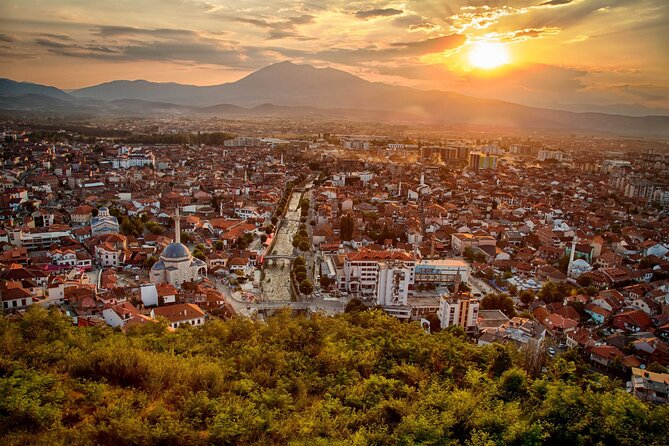
Then you head to Prizren, often described as Kosovo’s cultural capital. It’s built around the river, with bridges and old-town streets that keep changing as you walk. If you love cities where different faiths coexist visibly in the streetscape, Prizren is a strong match.
You’ll visit Sinan Pasha Mosque, known for richly patterned color and arabesque detail. Then you’ll have fortress-hill views for a panorama over the old town, which helps you understand Prizren’s layout in one glance.
Gjakova market repairs, Decan monastery, and Rahovec vineyards
Next is Gjakova, famous for having the oldest and largest bazaar in Kosovo. It suffered damage during multiple conflicts, but the bazaar was rebuilt back into something that still works as a real place to eat and browse. That matters here: you’re not just seeing restoration as a concept; you’re walking through it.
Then you go to Decan Monastery, UNESCO-listed since 2004 for frescoes that document 14th-century life. A practical detail: Orthodox monks still live there and make organic foods like cheeses. That gives the visit a living feel, not just a museum vibe.
Before returning, you visit Rahovec, a viticulture area with cultivation evidence dating back about 2,000 years. Grapes are grown at altitudes roughly 350–520 meters, which is one reason this valley is tied to higher-quality wine. If you happen to travel in September, there’s also a wine festival, though the tour timing depends on your dates.
Kruja: the Albanian resistance story and a bazaar built for browsing
Day seven is Kruja, famous as a symbol of Albanian resistance against Ottoman expansion in the 15th century. The setting helps: the city sits on rocky mountainous terrain about 560 meters above sea level, so you get hills and views almost immediately.
You’ll spend time at Kruja Castle and walk through the Medieval Old Bazaar. The bazaar is described as one of the biggest and oldest in the Balkans, and it’s a great shopping zone for carpets, handmade crafts, and small souvenirs that feel more local than mall-style.
Inside the castle area, you’ll also hear about hidden paths used by locals to leave the castle unnoticed during enemy sieges. It’s a dramatic historical layer, and it changes how you look at the stone walls.
Tirana food stops and Bunk’Art 2: a capital day that mixes tastes and facts
Tirana is a full, hands-on day. You’ll meet a local companion and focus on food and culture rather than just checking landmark boxes. The first part includes Byrek breakfast at Tregu Çam, in a small local place where only locals know how to find it.
Then you’ll visit Çam bazaar, founded by the Albanian Çam community originally from Çameria in today’s northwest Greece. Even if you just browse for a short time, it’s an interesting reminder of how borders shifted and people carried culture with them.
Later comes more local neighborhood exploring, including coffee culture and dessert at an authentic pastry place. You’ll also try lunch at the New Bazaar area, with qofte grilled meatballs, fresh bread, and optional vegetarian options with gjize (cottage cheese). To finish, there’s raki tasting, with the tour framing it as part of Albanian hospitality.
The final stop is BUNK’ART 2, a museum converted from a nuclear bunker designed for Enver Hoxha and the communist leadership. The bunker stayed hidden from the public until 2014, and the museum now focuses on the history of the communist army and the daily lives of people under the regime.
Struga and Ohrid: a lake town built for slow views
North Macedonia starts with Struga, where you’ll stop by the source of the Drini River and have time for a drink. It’s a small moment, but it sets the tone: less “stamp-and-see,” more “take in the water and the light.”
Then you go to Ohrid, UNESCO-listed since 1980 for both the city and the lake. You’ll get key stops like the viewpoint at the Church of St. John, the Church of St. Nicolas, and Halveti Hayati Tekke mosque. Ohrid is described as one of Europe’s oldest human settlements, and the tour emphasizes how the Illyrians and Romans shaped its early identity (including the Roman nickname Lyhnidas, the Light Lake).
Ohrid’s mix of religious sites and lake views makes it a strong contrast to the faster, heavier borderland cities earlier in the trip.
St Naum and Drilon: Albania’s park calm before the castles of southern towns
You start the next day with Monastery of St. Naum, at the source of the Crni Drim river where it feeds into Lake Ohrid. The setting is inside National Park Galicica, in a strictly protected area, and the tour highlights the crystal-clear spring water and dramatic mountain backdrop.
After that, you stop at Tushemisht, described as a hidden and calm stop with natural beauty and warm hospitality (time is short, so think of it as a refresh and a photo break).
Then you visit Driloni National Park, described as an oasis of tranquility with springs forming a small lake and weeping willow trees along the shore. If your schedule has felt like a lot of cities in a row, this is where your body finally gets a breather.
Berat: 1001 windows and living inside the castle walls
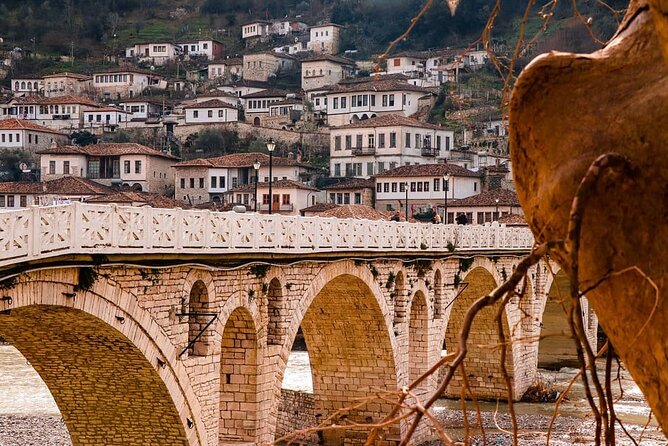
Berat is where the trip starts to feel more like slow travel—on purpose. You’ll visit Berat, UNESCO-listed as the town of 1001 windows. The architecture is the headline: medieval houses with windows stacked so closely they look like they’re piled in layers.
You’ll also explore Berat Castle and the lower town with grand old houses on steep hillsides, an old stone bridge, museums, and remains from the communist era. The tour also includes the National Iconographic Museum Onufri, tied to Onufri, the painter of churches across the Balkans known for a reddish color difficult to imitate.
You’ll also visit Gorica Bridge and the Gorica neighborhood for more of that hillside city feel.
Gjirokaster: Stone City streets and a castle preserved by time
Next is Gjirokaster, called the Stone City and UNESCO-listed. It’s arranged like a fortress town where every house feels like a small defense. You’ll visit Gjirokaster Castle, described as one of the best-preserved medieval towns in the Balkans, with origins tied to the castle built in the 4th century AD.
There’s also a cultural note: every five years, Gjirokaster becomes the capital of Albanian folklore and traditional music, with ensembles performing in the stone city. Even if your dates don’t match that festival, the tour framing helps you understand why locals care about this town’s identity.
You’ll also visit the bazaar area and see one of the best-preserved houses, emphasized as original and authentic. If you like old-town textures—stone steps, narrow streets, and the feel of a place still lived in—this stop is satisfying.
Greece finale: Ioannina then Meteora’s monastery sunset
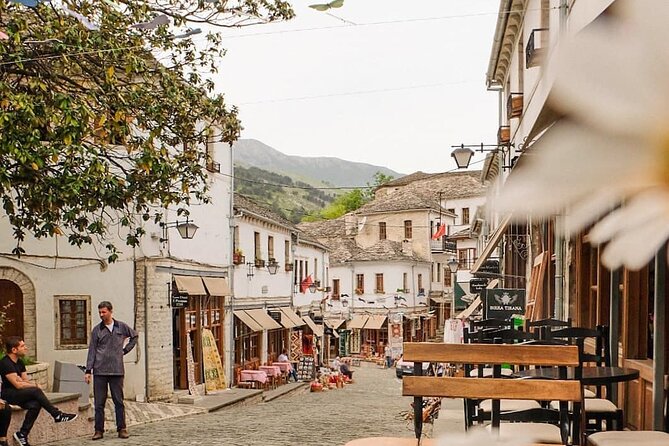
Day thirteen moves into Greece with Ioannina. You’ll walk cobbled streets in the old town and see Byzantine and Ottoman architecture, then visit Ioannina Castle. Inside, there’s a network of narrow streets and historic buildings, plus cafes where you can try traditional Greek food and local delicacies.
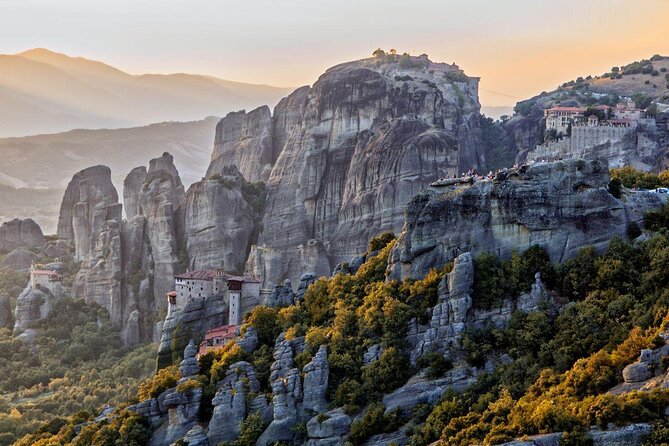
Then you drive toward Meteora, UNESCO-listed, with monasteries built on rock formations. The tour specifically highlights one of the best parts: watching a spectacular sunset over the rocks. If you’re someone who likes “one big photo you’ll remember forever,” this is the day.
Athens or Corfu: finishing with a transfer and a ferry
Your last day is a transfer out, with two options depending on what you booked. You’ll either be transferred toward Athens, or you’ll go to Igoumenitsa Port and take the included ferry to Corfu Port (ferry tickets included).
This ending matters because it keeps you from having to negotiate transport at the very end, when you’re tired and want the trip to simply close out cleanly.
Price and value: what you’re really paying for at $5,153.85
At about $5,153.85 per person, the value depends on what you would otherwise pay to DIY. This price covers 3-star accommodations with breakfast on 13 mornings, private transportation, a professional tour leader, hotel pickup in Split, and major entry tickets for visited sites. It also includes the ferry tickets to Corfu (when you choose that ending).
What’s not included is just as important: lunches, dinners, drinks, and snacks are on you, plus souvenirs and anything not listed. So you’ll want to budget for meals. Still, the cost-to-effort ratio often works well if you’re traveling across multiple borders, because border logistics and transport planning add up fast when you’re doing it alone.
One practical note: pricing is calculated based on double/twin/triple/quad room occupancy in 3-star hotels, so your total might change if your room setup differs.
Who should book this Balkans route
This tour fits best if you want a guided, structured route across several countries without spending your days on transport planning. It’s also a good match if you like mixing city history with a few high-impact nature and viewpoint stops—Mostar, Kotor, Ohrid, Berat, Gjirokaster, and Meteora are all very different, and the pace keeps you from feeling stuck in one mood.
If you dislike long driving days or you need a trip with lots of free time each day, you may feel rushed. And if stairs, cobblestones, and uneven ground are tough for you, take that seriously—there is walking involved, including uneven terrain in Sarajevo and active sightseeing elsewhere.
Should you book this tour?
I’d book it if you’re the kind of person who likes structure, wants a guide handling the details, and enjoys seeing how the Balkans connect—religion, architecture, food, and conflict all side by side. I would not book it if you want a slow, single-country vacation where you can fully linger in one place for days.
The strongest reason to choose it is simple: you get a lot of major “must-see” moments with the logistics handled, plus the small-group setup (max 10 people) makes the whole thing feel more personal than a big-bus circuit.
FAQ
FAQ
What is the tour start time and where do I begin?
You start in Split, Croatia, with pickup from your hotel at 7:30am.
Does the tour include pickup in Split?
Yes. Hotel pickup in Split is included.
Where can the tour end?
It can end either with a transfer to Athens or with a transfer to Igoumenitsa Port for the ferry to Corfu Port.
How many people are in the group?
The maximum group size is 10 travelers.
Are accommodations and breakfast included?
Yes. It includes accommodation and breakfast (BB) for all overnights in 3-star hotels.
Are site entry tickets included?
Yes. Entry tickets are included for the sites that are part of the visit.
Is the ferry to Corfu included?
Yes. If you choose the Corfu ending, ferry tickets to Corfu Port are included.
Are lunches and dinners included?
No. Lunches, dinners, drinks, and snacks are not included.
What happens if I cancel?
The experience is non-refundable and cannot be changed for any reason.