REVIEW · SPLIT
Secret Split: Socialist Architecture & brutalism – Urban Utopia
Book on Viator →Operated by Walking tours with The Storyteller Croatia · Bookable on Viator
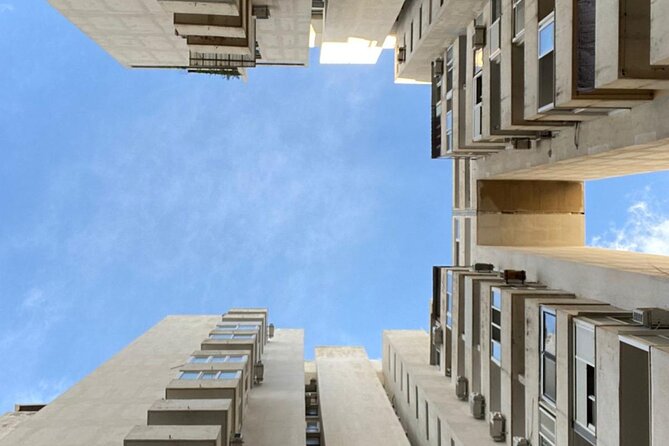
Concrete tells a story in Split. This tour is your chance to trade Roman sightseeing for 20th-century urban planning—Split 3, a socialist experiment built to shape daily life. You’ll walk through a city-within-a-city feel, with raw brutalist forms and real residential streets that still influence how people live.
Two things I like right away: the chance to connect the buildings to ideas, not just photos, and the way the storytelling feels personal. Guides such as Mirjana are praised for being passionate and locally grounded, and that matters here because the subject is architecture + society, not only aesthetics.
One drawback to consider: this is a modern-life, design-logic walk. If you’re in town only for quick classic landmarks, you may find the tone more cerebral than scenic, even though it’s very hands-on.
In This Review
- Key highlights worth knowing before you go
- Why Split 3 feels different from the usual Split walk
- Papandopulova ulica and MoMA’s Toward a Concrete Utopia connection
- Split-Dalmatia County: the planning logic behind the concrete dream
- Art activism in Split: critical communication meets the street
- Brutalism as care: what you should notice while walking
- What’s included, and why it affects your experience
- Price and timing: is $113.90 worth it?
- Where this tour fits best (and who might want a different one)
- The Storyteller Croatia experience: what to expect from the vibe
- Should you book Secret Split: Socialist Architecture & brutalism – Urban Utopia?
- FAQ
- How long is the Secret Split tour?
- Where does the tour start and end?
- How much does it cost?
- Is the tour private?
- What’s included in the price?
- Are tickets or entry fees needed at the stops?
- Can I cancel for a full refund?
Key highlights worth knowing before you go
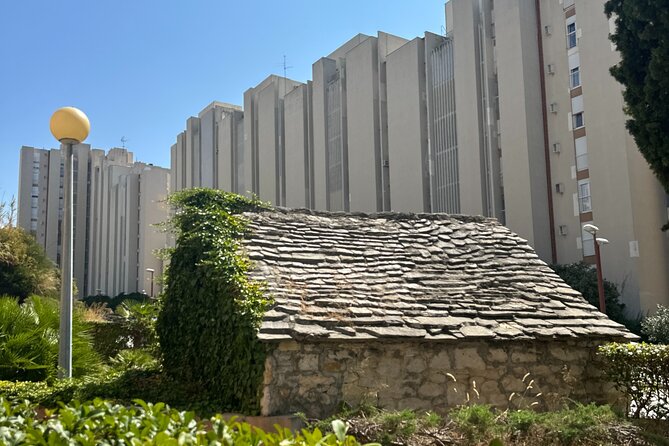
- Split 3’s concrete utopia link to MoMA: the neighborhood was featured in the Museum of Modern Art exhibition Toward a Concrete Utopia (New York, 2018).
- A short route into everyday residential space: you’re not touring ruins—you’re moving through a neighborhood built for daily routines.
- Brutalism explained as care: clean geometry and open spaces are framed as part of a social plan, not just concrete style.
- Urbanism lessons tied to growth and planning: the story includes why the project emerged and what it meant for Split’s future.
- You meet local voices: the walk includes a meeting with local artists/activists during the experience.
- Private-group feel: only your group participates, so questions are easier to ask.
Why Split 3 feels different from the usual Split walk
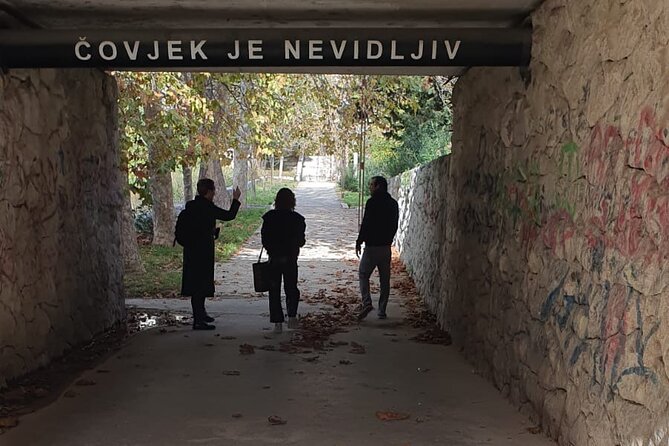
Most Split walks start in the Roman era and keep stacking ancient stops. This one flips the script. You’ll spend your time where the city’s most modern thinking still shows up—neighborhood planning from after World War II, when new ideas about housing, community, and everyday life were tested in concrete.
What makes that exciting is how visible the ideology is. You can see the logic in the spacing, the layout, and how public and shared areas are treated. It’s architecture with a point of view, and you’ll get that point of view explained as you go.
Split 3 is often described as a socialist urban plan that behaved like a utopian experiment. Even when the project wasn’t fully realized, it still became important enough to be studied internationally—so you’re not just looking at local buildings. You’re looking at a concept that traveled.
And the walk has a real edge to it: it’s not nostalgia. You’re watching how a design era still shapes contemporary life in the city.
You can also read our reviews of more tours and experiences in Split.

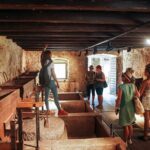

Papandopulova ulica and MoMA’s Toward a Concrete Utopia connection
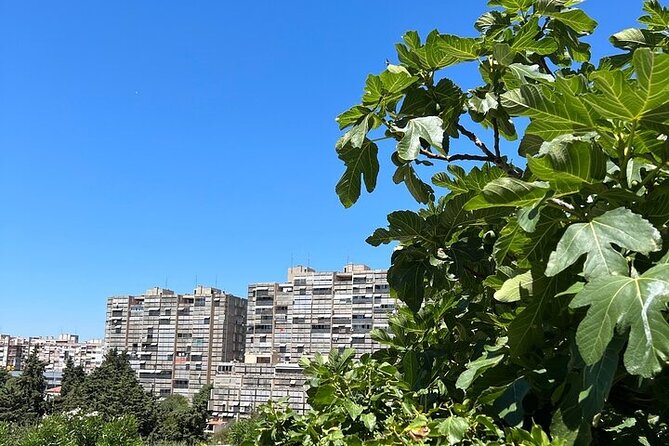
Your first stop is Papandopulova ulica, and it sets the theme fast: this is about socialist architecture with global recognition. The area tied to Split 3 was featured in MoMA’s Toward a Concrete Utopia exhibition in New York in 2018, and you’ll hear why that matters beyond trivia.
Here’s what I find useful for you to expect: this isn’t a lecture that floats above the street. The explanation is tied to what you can actually see—concrete forms, planning choices, and the way the neighborhood is designed around shared spaces and daily movement. You’ll learn how architects’ beliefs show up in layout decisions, and how those decisions still affect what it feels like to be in the area now.
The time at this stop is about 38 minutes, which is long enough for the guide to connect the dots without turning into an all-day class. You’ll also likely use your own eyes more than usual, because the tour’s premise is that brutalism isn’t only texture. It’s a whole system of intent.
If you like architecture, you’ll appreciate how this stop gives you context that many people miss when they only stick to older city layers.
Split-Dalmatia County: the planning logic behind the concrete dream
Next you’ll move to the Split-Dalmatia County area, where the tour shifts from artistic style to urbanism and demographic reality. The core idea you’ll hear is that Split 3 was designed as an answer to rapid population growth. This is where the socialist utopia stops being abstract.
Instead of romanticizing a plan, the guide frames it as a practical response: people needed housing and space, and planners tried to build a different kind of city life. Even though it was never fully realized, the project still enters the annals of 20th-century architecture and urban design—not just in Croatia, but in wider discussions.
For you, this stop is valuable because it teaches you how to read cities like documents. You start noticing questions such as:
- Who was the plan for?
- What daily needs was it trying to solve?
- How did planners imagine community forming?
This is also where you get a clearer sense of the tour’s main claim: brutalism wasn’t only about exposed concrete. The tour’s focus is on care—care expressed through geometry, open space, and the idea of shared life.
The stop is about 25 minutes, so it stays focused. You’ll walk away with a stronger framework for interpreting the rest of what you see in Split, even after the tour ends.
Art activism in Split: critical communication meets the street
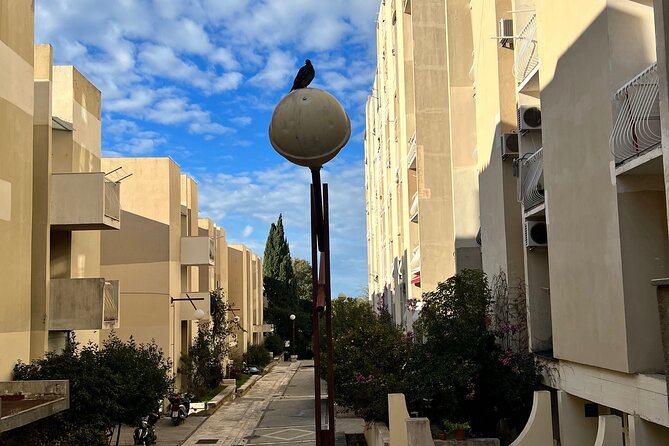
The final stop brings something different: art activism and critical communication in Split. The tour positions this part as a response to the need for explicit critical messaging—how people speak up through creative work when society is changing.
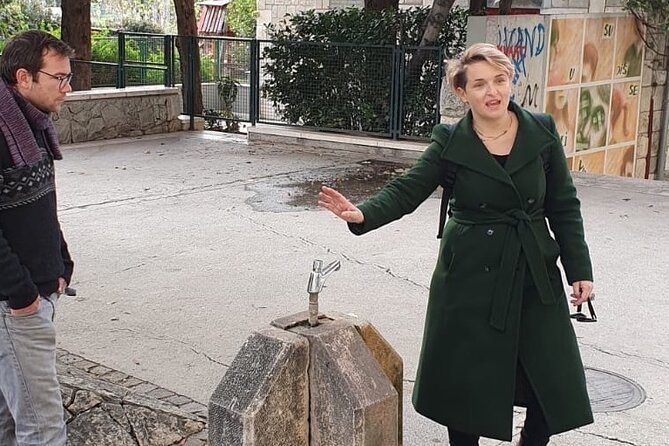
You’ll also get a meeting with local artists/activists during the experience. That matters because it connects the architecture theme to real culture. Socialist-era planning was one kind of social experiment; activism and art can be a different kind of one, using the city as a message board.
Time here is around 35 minutes, so it’s enough for the guide to explain the concept and connect it to the spaces you’ve already seen. When you’ve walked through a planned residential zone, it’s easier to understand how art and communication would want to take place in that kind of environment—where community spaces exist and where public life is part of the design.
The tour also avoids turning this into a heavy political lecture. You’ll learn the ideas, but you’ll stay anchored to the walking experience and the neighborhood’s reality.
Brutalism as care: what you should notice while walking
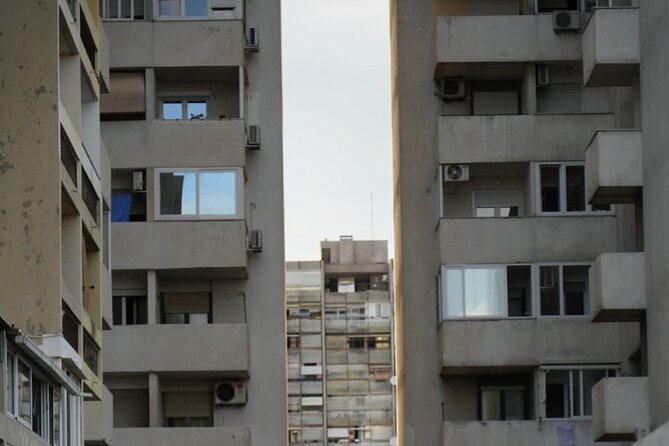
Brutalism can scare people away if they think it means cold or harsh. This tour nudges you to look again. The way the guide explains it, the point isn’t concrete for concrete’s sake. It’s about what the concrete-making allows: clearer structure, stronger definitions of space, and the potential for shared, everyday routines.
As you walk, keep an eye on the basics the tour is really about:
- Geometry: where lines and angles guide movement
- Open spaces: areas that feel intended for people, not just traffic
- Pedestrian scale: a neighborhood-within-the-city feeling that supports everyday life
- Residential context: buildings that aren’t museums, they’re homes and community spaces
The tour’s best moments tend to be when you notice that the design decisions are consistent. You’re not just seeing one brutalist facade; you’re seeing a planned environment.
And here’s the subtle win: once you understand the social purpose, you stop treating the buildings like objects and start treating them like infrastructure for human life.

What’s included, and why it affects your experience
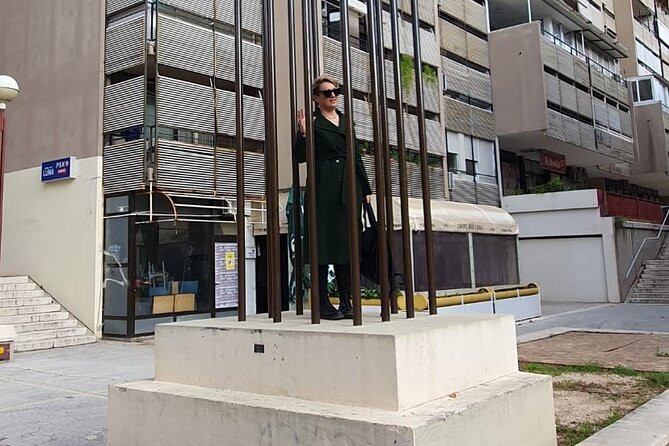
This experience includes a guided walk with a licensed tourist guide and a certified heritage interpreter. That combo is useful here because you need both the cultural framing and the architectural reading.
You’ll also visit a residential area of Split, which is a big difference from many city tours that only graze the edges. The walk is designed to take you into parts of the city most visitors never reach—especially those newer layers built after World War II.
Another inclusion that changes the feel: you meet local artists/activists. That turns the tour from a visual history lesson into something more like a conversation about how cities keep evolving.
Price and timing: is $113.90 worth it?
At $113.90 per person, this isn’t a budget add-on. The value comes from three things:
First, it’s guided with a specialist approach—licensed guide plus heritage interpreter—so you’re paying for interpretation, not just movement from one spot to another.
Second, the subject isn’t casual. Split 3 has a real international footprint through its MoMA connection, and the tour uses that link to explain what the buildings mean in a broader 20th-century urban context.
Third, you get added cultural texture through local artist/activist interaction. That’s not something you can replicate easily on your own without already knowing where to look and who to ask.
Timing also helps you judge value. The walk is roughly 1 to 3 hours. It’s short enough to fit into a day, but it isn’t so short that the ideas don’t land. If you like modern architecture, planning, and community design, it’s money well spent.
If you’re expecting a long highlight reel of famous landmarks, you may decide it’s too focused. That’s the trade-off.
Where this tour fits best (and who might want a different one)
This tour is a great match if you:
- like architecture that has a social thesis
- enjoy brutalism once it’s explained
- want to see a less-photogenic, more lived-in side of Split
- prefer tours that teach you how to read a city
It may not fit as well if you’re the type of traveler who wants only iconic views and easy storytelling without planning context. Also, because it’s focused on 20th-century design and neighborhood life, you should be ready for a more thoughtful pace than a typical sightseeing loop.
One more practical note: since it’s a walk that goes through a residential area, bring your best attitude for seeing daily-life city texture, not postcard scenery.
The Storyteller Croatia experience: what to expect from the vibe
This is a private tour/activity, meaning only your group participates. That tends to make a big difference with topics like this, because you can ask follow-up questions when something clicks—or when it doesn’t.
You’ll start at Ul. Šime Ljubića 3 in Split and end back at the meeting point. That simple start-stop structure keeps things straightforward.
If you’re a planner, you’ll like that the experience supports mobile tickets and has group discount options. The overall structure is built to keep you moving, with focused stop lengths that add up to that 1 to 3 hour window.
Also, the experience runs across a broad range of daily hours (with the opening-hours window listed through 2026), so you should be able to find a time that works.
Should you book Secret Split: Socialist Architecture & brutalism – Urban Utopia?
I’d book it if you want a smarter way to understand Split. This tour doesn’t just show you concrete. It teaches you the why behind it: social goals, planning decisions, and how those choices echo into daily life.
I wouldn’t book it if your trip goal is mainly classic sightseeing and photo stops. You can absolutely enjoy modern ideas, but this experience is built for people who care how cities are shaped.
If you’re on the fence, use this rule: if the words Split 3, brutalism, and urban planning make you curious, you’ll likely have a great time. If those topics feel like work, you might prefer a lighter landmark tour instead.
FAQ
How long is the Secret Split tour?
It runs about 1 to 3 hours (approx.).
Where does the tour start and end?
It starts at Ul. Šime Ljubića 3, 21000, Split, Croatia, and ends back at the meeting point.
How much does it cost?
The listed price is $113.90 per person.
Is the tour private?
Yes. Only your group will participate.
What’s included in the price?
A tour with a licensed tourist guide and certified heritage interpreter, visiting a residential area of Split, and meeting local artists/activists.
Are tickets or entry fees needed at the stops?
Admission is listed as free for the stops on this experience.
Can I cancel for a full refund?
Yes. You can cancel up to 24 hours in advance for a full refund. If you cancel less than 24 hours before the start time, the amount paid is not refunded.
If you want, tell me what kind of architecture you usually enjoy (brutalism, modernism, historic interiors, city planning) and I’ll suggest the best way to pair this with the rest of your Split day.