Split’s old streets can feel like a puzzle. This tour helps you put the pieces together with a focused walk through Roman and early Christian Split.
I like the way it covers big identity sites in a short time, with admission tickets built in for the Peristyle, Saint Domnius Cathedral, and the Temple of Jupiter. I also like the human touch: guides such as Nicole/Nikol are praised for answering questions and keeping a pace that feels right (there are some stairs, but not a brutal amount). The one drawback to keep in mind is that you’re moving on foot for about 90 minutes, so it’s not ideal if stairs are a deal-breaker.
This is the kind of tour that gives you confidence fast. You’ll learn what you’re looking at, why it exists, and how Split’s Roman bones still show through the later city layers you see on every street corner.
In This Review
- Key things to know before you go
- How Split’s Roman core turns into a “walkable story”
- Entering Diocletian’s Palace Peristyle: the city’s “heart” space
- Saint Domnius Cathedral and its bell tower: where Roman power becomes Christian space
- The Temple of Jupiter: a Roman temple that still feels intact
- Price and value: what you’re actually paying for at $41.70
- Pacing, stairs, and how to plan your day in Split
- Who should book this walking tour (and who might skip it)
- Should you book Discover Split’s Hidden History?
- FAQ
- How long is the walking tour?
- What time does the tour start, and where do I meet?
- Does the tour end at the same place?
- Is the tour offered in English?
- What major sites are included on the route?
- Is admission included in the price?
Key things to know before you go
- 1.5 hours, compact route: A short, efficient loop through central Split Old Town.
- Small group size: Maximum of 15 travelers, so questions don’t get swallowed.
- English guided tour: Certified English-speaking local guide.
- Tickets included: Admission tickets are included for each main stop.
- Mobile ticket: You can use a mobile ticket instead of printed passes.
- Some stairs: Expect a few steps, but the pace is typically described as manageable.
How Split’s Roman core turns into a “walkable story”
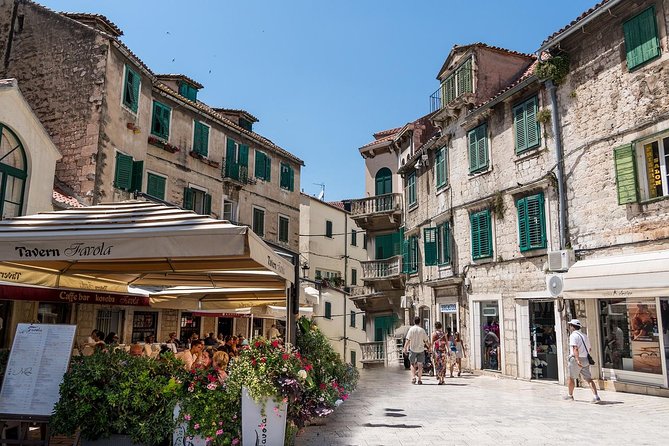
Split can feel confusing at first: Roman walls, medieval churches, later buildings, all stacked close together. This tour works because it follows that logic step by step—starting with the palace space, moving to the cathedral built on Roman power, and ending at a Roman temple tied to Diocletian’s beliefs.
You’re also getting more than a checklist. The Peristyle isn’t just a pretty courtyard; it’s the palace space that shaped daily movement and life inside Diocletian’s fortress-city. Then Saint Domnius Cathedral shows how Christian Split grew out of Roman authority rather than replacing it cleanly. Finally, the Temple of Jupiter reminds you that Diocletian didn’t just rule the empire—he connected himself to Roman religion in a way you can still point to today.
The best part for most people: this tour gives you orientation fast, so the next time you wander Split on your own, you’ll recognize what you’re seeing instead of walking past it blind.
You can also read our reviews of more walking tours in Split
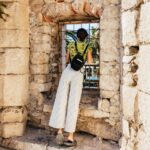
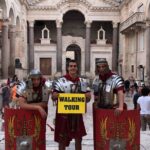

Entering Diocletian’s Palace Peristyle: the city’s “heart” space
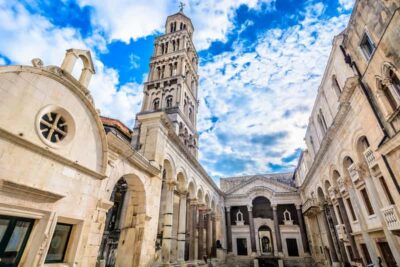
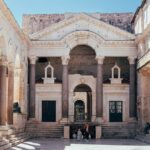
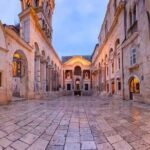
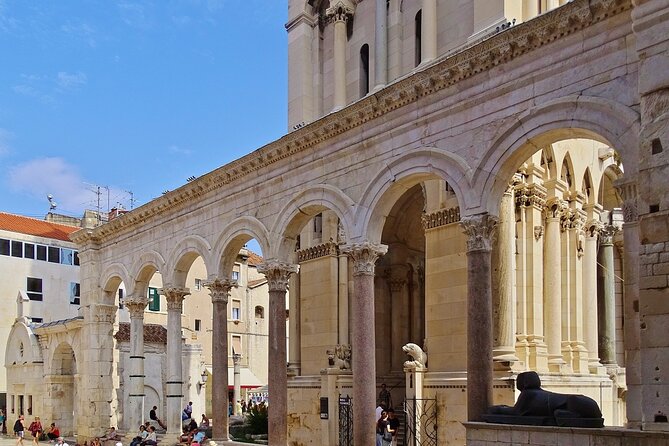
Your first real stop is the Peristyle of Diocletian’s Palace. This is described as the beating heart of Split, and you can see why the moment you’re there. It was originally the courtyard of the fortress built by one of the last Roman emperors—so instead of thinking of Roman history as distant or sealed off, you’re standing in an active, central space that shaped how the city worked.
Why this stop matters:
- It sets the frame. The palace courtyard helps you understand the layout idea behind Split’s Old Town.
- You get a feel for “palace life.” Even if you only spend about 30 minutes here, the architecture tells you where the power sat and how people moved.
- Roman scale becomes real. This is one of the largest preserved examples of Roman architecture in the world, and the scale lands quickly once you’re inside the space.
A practical note: this is also where many people start asking the questions that make the rest of the walk easier—like how later builders used older structures, or why certain spaces became public centers over time.
If you like history that’s visual (not just dates on a plaque), this is a strong opener. You’ll leave with a mental map, which makes everything else you see later more satisfying.
Saint Domnius Cathedral and its bell tower: where Roman power becomes Christian space
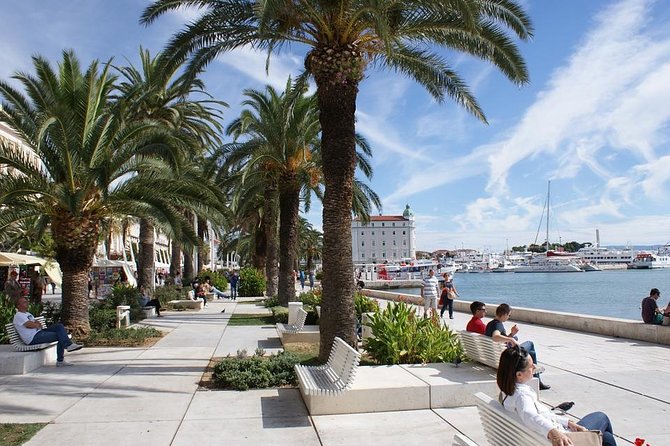
Next comes Cathedral of Saint Domnius, often the most popular attraction in Split. This is one of those sites where the story goes two ways: it’s Roman in origin and Christian in identity.
You’ll learn that the cathedral was built as a mausoleum for Diocletian—the last famous persecutor of Christians. That sounds like a dramatic irony, and it is. But the point isn’t shock value; it’s how places evolve. In Split, a Roman ruler’s final resting place became a cornerstone of later religious life.
What to focus on while you’re there:
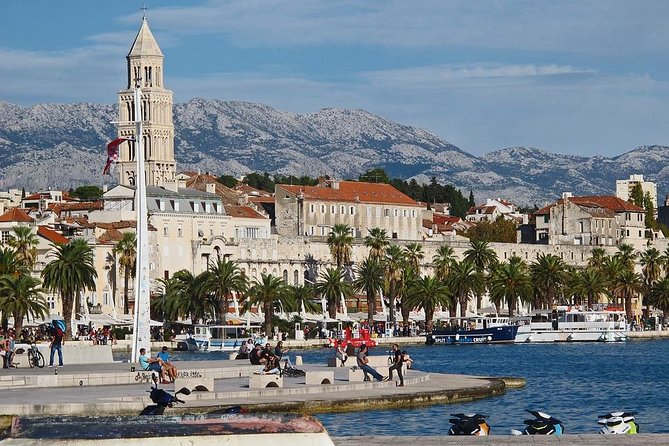
- The bell tower: it’s become an emblem of the city, so even if you don’t climb it, you’ll recognize it across Split.
- The exterior colonnade: you can still spot the original ring of 24 columns around the exterior.
- The treasure connection: the cathedral’s treasury holds reliquaries, icons, church robes, illuminated manuscripts, and documents in Glagolitic script.
That Glagolitic detail is the kind of thing that makes the stop feel more specific than generic sightseeing. It’s a reminder that this part of Croatia didn’t just copy the Mediterranean—it developed its own layers.
Timing matters here too. You’re typically spending about 30 minutes, which is enough to absorb the big visual points and understand what you’re looking at without rushing. The one thing to watch: if you’re sensitive to stairs or uneven stone, keep an eye on your footing during transitions between spaces.
The Temple of Jupiter: a Roman temple that still feels intact
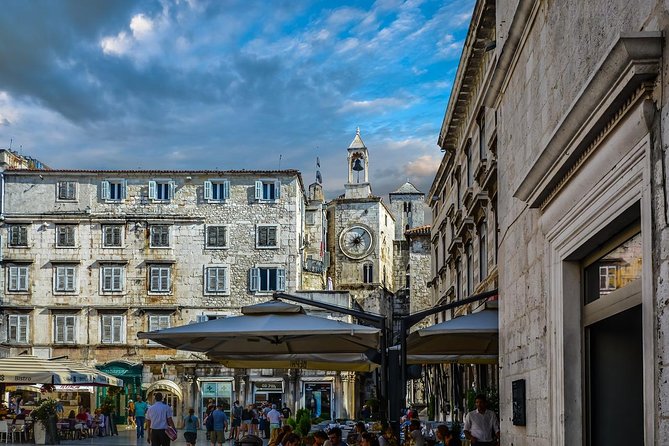
The last major architectural stop is the Temple of Jupiter, constructed in the 3rd century as part of Diocletian’s Palace. This is often described as one of the most well-preserved Roman temples in the world, and you can see why in a short amount of time.
What makes it more than a quick photo stop is the belief behind it. Diocletian believed he was the reincarnation of Jupiter, and Jupiter was highly worshipped until Roman rule shifted under Christian influence. Standing there, you get a clearer sense of how politics and religion were fused in Roman life—not as separate themes, but as one system of authority.
Why this ending works well:
- It finishes the Roman loop. You’ve seen the palace courtyard and the mausoleum-to-cathedral transformation. Now you get the religious centerpiece tied directly to Diocletian’s self-image.
- It’s compact. The visit is about 15 minutes, so you won’t feel dragged through the last stop. It’s a clean wrap-up before you return to street level and start exploring on your own.
If you’re the kind of traveler who enjoys architecture because it tells you how people thought, this is a satisfying capstone. Even with limited time, it gives you a story thread you can carry into the rest of Split.
Price and value: what you’re actually paying for at $41.70
At $41.70 per person, this tour sits in the “serious value” zone for a few reasons.
First, admission tickets for the main stops are included. That matters because Roman sites and cathedral-linked experiences can cost more once you start adding ticket lines. Here, you’re paying for the guide plus a set of entries that cover the core highlights—Peristyle, Saint Domnius Cathedral, and the Temple of Jupiter.
Second, the group size stays small (max 15). That’s not just comfort; it often improves the tour quality. When your guide can keep track of the group and answer questions without constantly resetting, you learn faster and feel less like you’re herded.
Third, the tour length is efficient. Around 1 hour 30 minutes means you’re not giving up most of your day. It’s ideal as either:
- your first “orientation” walk in Split, or
- a history add-on after you’ve already explored a bit and want the meaning behind what you saw.
The only “cost” that isn’t reflected in dollars is your energy for walking. You’ll cover Old Town on foot and you may deal with some stairs. If you know you struggle with steps, consider your comfort before booking.
You can also read our reviews of more guided tours in Split





Pacing, stairs, and how to plan your day in Split
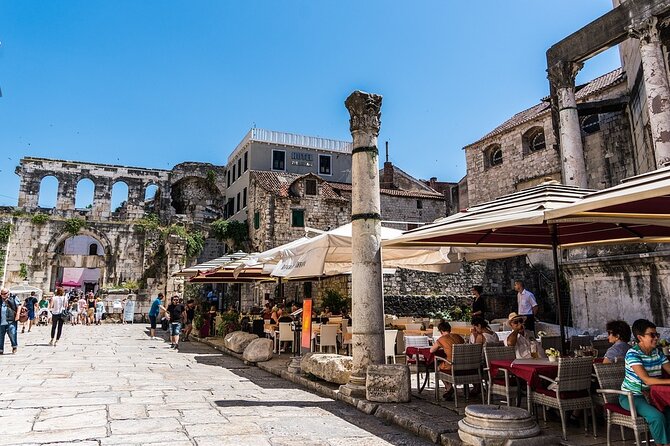
The tour duration is about 1 hour 30 minutes, split across the three main stops (roughly 30 minutes at the palace Peristyle, 30 at the cathedral, and 15 at the Temple of Jupiter). That structure is a good sign. You’re not stuck for long periods at one location where interest might fade, and you’re not rushing through everything like it’s a sprint.
In terms of physical effort: there are some stairs, but descriptions of the experience suggest it’s not an exhausting climb marathon. Still, it’s smart to dress for stone streets and plan for the fact that Old Town is not flat.
A practical day-planning tip:
- Start your history tour when your brain is fresh. This route works best before you get overwhelmed by too many new streets and too many names.
- After the tour, use your new context to explore slowly. You’ll recognize what’s Roman, what’s Christian, and what’s later reuse.
Also note the meeting point: Obala Lazareta 3, 21000 Split. Since the tour ends back at the meeting point, you don’t have to worry about ending up in a different part of town with no easy way back.
Who should book this walking tour (and who might skip it)
This tour fits best if you want:
- a tight Old Town orientation
- Roman and early Christian context without a long day
- an English guide who helps you make sense of the architecture as you go
It’s also a good choice for couples, solo travelers, and small groups because the experience is organized around a short loop with a maximum group size of 15.
You might skip or choose another option if:
- you strongly dislike stairs or uneven stone (even though it’s described as not many)
- you’re expecting long, deep museum-style time at one site (this is a walking and seeing tour, not an hours-long indoor program)
- you prefer a “free wandering” approach with no structured storytelling
If you’re the kind of traveler who likes to understand what you’re looking at—before photos or after photos—this is a solid match.
Should you book Discover Split’s Hidden History?
I’d book it if you want your first real understanding of Split fast. The combination of Roman palace architecture, a major cathedral tied to Diocletian, and the Temple of Jupiter gives you three connected angles on the same core story. Add included admissions and a small-group English guide, and the value looks solid for what you actually get.
I wouldn’t book it if stairs are a deal-breaker or if you need a long, unhurried visit inside fewer places. But for most people—especially those who want their next self-guided walk to feel smarter—this is exactly the right kind of short tour.
FAQ
How long is the walking tour?
It lasts about 1 hour 30 minutes.
What time does the tour start, and where do I meet?
The start time is 9:00 am, and the meeting point is Obala Lazareta 3, 21000 Split, Croatia.
Does the tour end at the same place?
Yes. The activity ends back at the meeting point.
Is the tour offered in English?
Yes. The tour is offered in English.
What major sites are included on the route?
The tour includes the Peristyle of Diocletian’s Palace, Cathedral of Saint Domnius, and the Temple of Jupiter.
Is admission included in the price?
Yes. Admission tickets are included for each of the three main stops. Coffee and/or tea are not included.