REVIEW · SPLIT
Split Walking Tour with Professor of History
Book on Viator →Operated by Split Walking Tour with History Professor · Bookable on Viator
Diocletian’s stories come alive as you walk. This Split Old Town tour is led by a professor of history, with a small group size that keeps the pace friendly and the questions flowing. You’ll move through the core of the city where Roman, medieval, and modern life overlap, from the harbor promenade to the squares you’ll actually want to revisit later.
I especially like the way the guide turns big ruins into clear, human scenes. Guides such as Mario and Anita bring the palace to life with explanations you can reuse as you explore on your own. I also love that most stops are view-and-learn, with free access where it counts, so your $24.19 feels more like a history lesson than a museum ticket.
One thing to consider: you mostly see major sites from the outside. If you’re hoping to go inside the Cathedral of Saint Domnius or the Temple of Jupiter during the tour, that’s not included, and you’ll need to plan optional visits afterward.
In This Review
- Key moments you’ll enjoy on this Split professor-led walk
- Starting at the Brass Gate: where your walk sets its tone
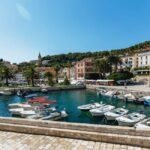
- Riva Harbor: the daily-life intro you can feel
- The substructures of Diocletian’s Palace: where UNESCO begins to make sense
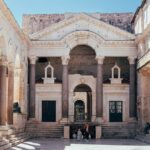
- The Peristyle: the palace square, power theater, and everyday movement
- Vestibul (Rotonda): a circular hall with serious engineering
- Cathedral of Saint Domnius: outside views that prepare you for an optional visit
- Temple of Jupiter and the Let Me Pass Street shortcut of legend
- Golden Gate: how a main entrance changes over centuries
- Grgur Ninski statue: a Roman-world prank that’s become a tradition
- Marmontova Ulica and Prokurative: the city’s nicer side between monuments
- Fruit Square (Trg Brace Radic): ending on stories you can eat with
- Price and value: what $24.19 buys you in real terms
- Tips that make the tour easier (and more enjoyable)
- Should you book the Split Walking Tour with a History Professor?
- FAQ
- How long is the Split walking tour with a history professor?
- What does the tour cost?
- Is the tour offered in English?
- How big is the group?
- Where does the tour start and end?
- Are tickets included for the Cathedral of Saint Domnius and the Temple of Jupiter?
- What’s included in the price, and what’s not?
Key moments you’ll enjoy on this Split professor-led walk
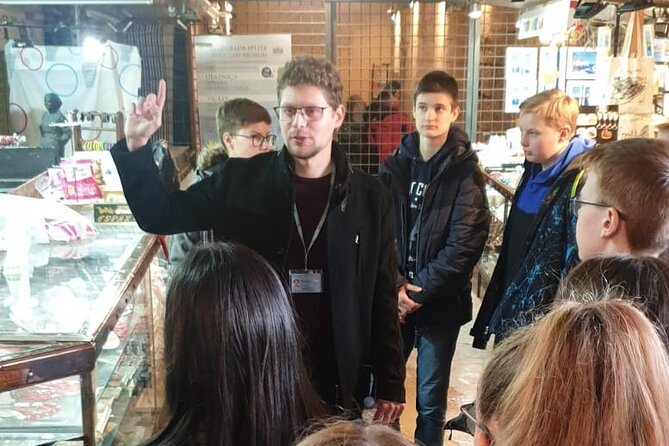
- Small group (max 17): easier to hear, ask questions, and stay together in busy Old Town lanes
- Diocletian Palace substructures: a world-class, well-preserved complex tied to Split’s UNESCO listing
- Peristyle and Vestibul (Rotonda): the power center of the palace explained with scale and purpose (like dome height and diameter)
- Outside-only viewpoints with context: Cathedral and Temple of Jupiter are framed so you understand what you’re looking at
- Grgur Ninski toe-rubbing tradition: a quick, fun local ritual at an iconic statue by Ivan Meštrović
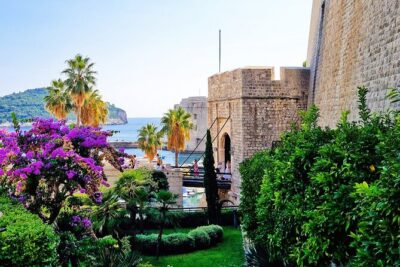
Starting at the Brass Gate: where your walk sets its tone
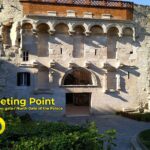
Your tour starts back at Brass Gate (Porta Aenea) at Obala Hrvatskog narodnog preporoda 22. This matters more than it sounds. Starting at the edge of the palace complex helps you understand the layout right away, so you’re not stuck figuring out where everything fits while you’re trying to listen.
From the first stretch on the promenade, you’re not just staring at stone. You’re learning how Split works as a living city, not a theme park. The meeting point also makes the “get back here later” part easy since the tour ends back at the same place.
You can also read our reviews of more walking tours in Split
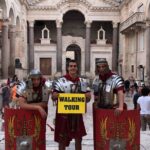

Riva Harbor: the daily-life intro you can feel
The first stop is Riva Harbor, the promenade where local people hang out—coffee, sun, and public life. This opening is smart. Before you jump into Roman architecture, you get your bearings with a real slice of everyday Split.
You’ll get a quick orientation to where people gather, which roads and sightlines lead into the palace core, and how the waterfront connects to the Old Town streets. It’s a short stop, but it helps the rest of the tour click.
The substructures of Diocletian’s Palace: where UNESCO begins to make sense
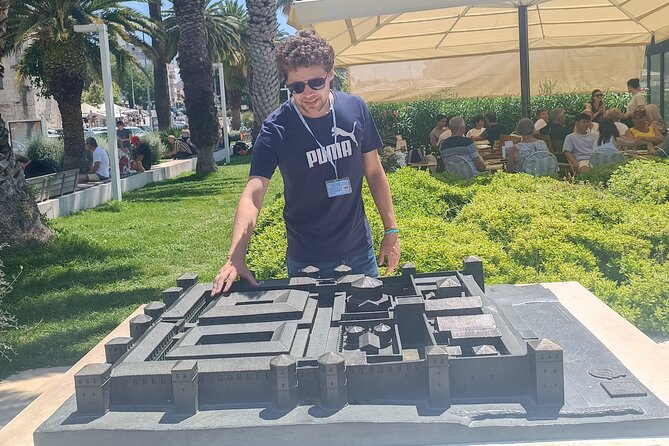
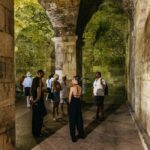
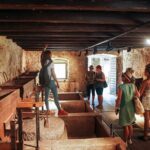
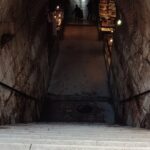
Next comes Diocletian Palace Substructures, the basement halls of the palace. These are described as one of the world’s best-preserved classical antiquity complexes—and that’s not hype. The key idea you should walk away with is scale: this is a huge underground world that still reads as palace infrastructure, not just ruins.
This area is also tied directly to why Split’s historic center is on UNESCO’s World Heritage List (since 1979). The guide’s value here is turning the UNESCO label into something concrete: you see what’s preserved, and you learn why it matters.
Practical note: since this stop is underground and stone-heavy, your best move is to keep your attention on the guide’s framing. The space can feel complex on your own if you don’t know what you’re looking at.
The Peristyle: the palace square, power theater, and everyday movement
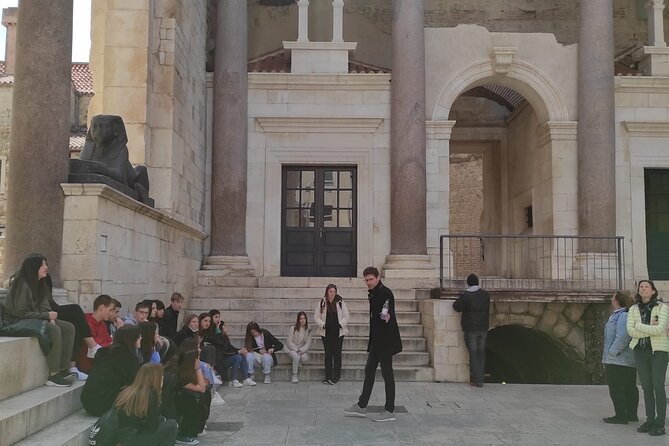
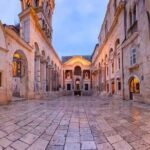
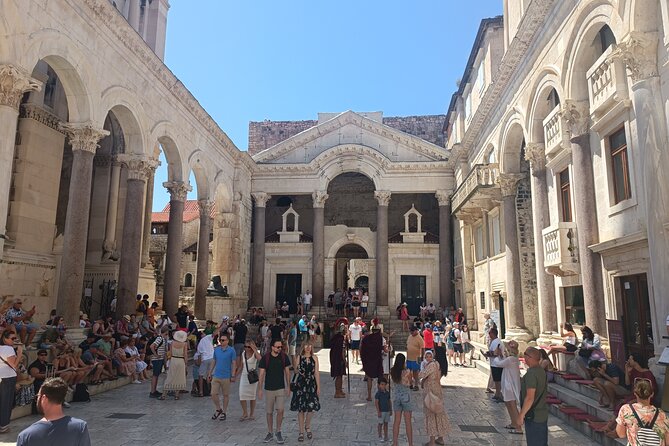
At the Peristyle, you’re standing in the central square of Diocletian’s Palace. The guide explains it as a place for the emperor to appear, celebrated as the living son of Jupiter, with subjects approaching in dramatic gestures. Even if you’ve seen photos before, hearing the intended behavior makes the architecture feel less random.
This stop is about understanding rhythm. The peristyle is the center from which movement and authority make sense: where people would approach, how ceremonies would play out, and why the palace was designed to control space as much as it controlled power.
Vestibul (Rotonda): a circular hall with serious engineering
Then you step into the Vestibul, also known as the Rotonda. This is the first section of the imperial corridor that led from the Peristyle to the imperial apartments. It’s built up to the beginning of the 4th century, and it’s circular with a once-dome-covered top—about 17 meters high and 12 meters across.
What you should love here is how the guide uses measurements and function to translate “cool architecture” into “this was built for specific people and specific moments.” It’s an “okay, I get it now” kind of stop.
If you’re short on time later, this is one of the places that stays with you because it’s where you can feel the palace layout as a system, not scattered landmarks.
You can also read our reviews of more historical tours in Split


Cathedral of Saint Domnius: outside views that prepare you for an optional visit
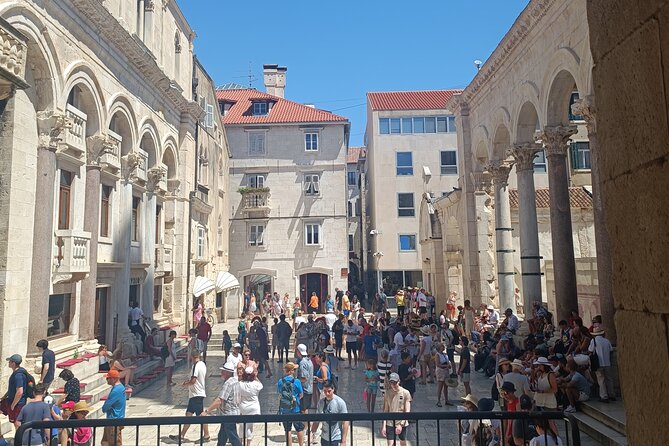
The next stop is Cathedral of Saint Domnius. This site is described as a Roman temple, mausoleum, and church depending on how you look at it. That description is useful because it tells you not to treat it as one era’s building.
Important detail: on this tour, you visit only from outside. Entrance is not included. The guide shares detailed information anyway, and if you want to go inside, you can decide after the walk with the context already in your head.
If you’re the type who likes to choose your own “deeper look,” this structure works well. You get the big picture now, then you choose whether to spend extra time and money later.
Temple of Jupiter and the Let Me Pass Street shortcut of legend
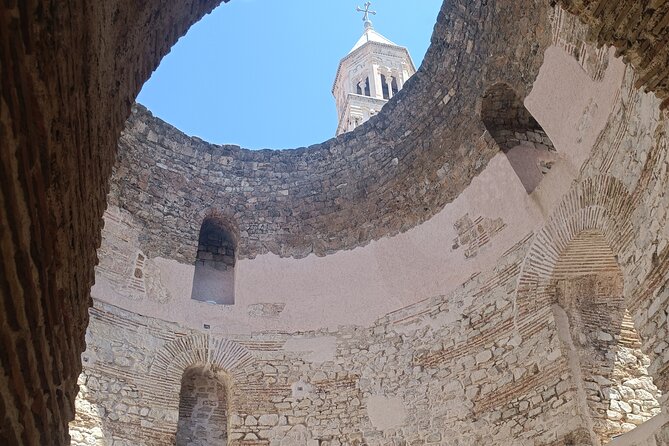
After that, you’ll see the Temple of Jupiter from outside. The tour frames Jupiter as the Roman sky-and-thunder supreme god, and it also notes a major historical shift: the temple was converted into a baptistery dedicated to St. John the Baptist.
This stop also includes a walk through a small street between the ancient temple and medieval building called Let Me Pass Street. Local people believe it’s the narrowest street in the world. Even if you’ve never heard of it, this is exactly the kind of quick story that makes Old Town walking memorable.
Again, since this is outside-only on the tour, the value is interpretation. You learn what the structure used to mean, and you notice details you’d otherwise miss.
Golden Gate: how a main entrance changes over centuries
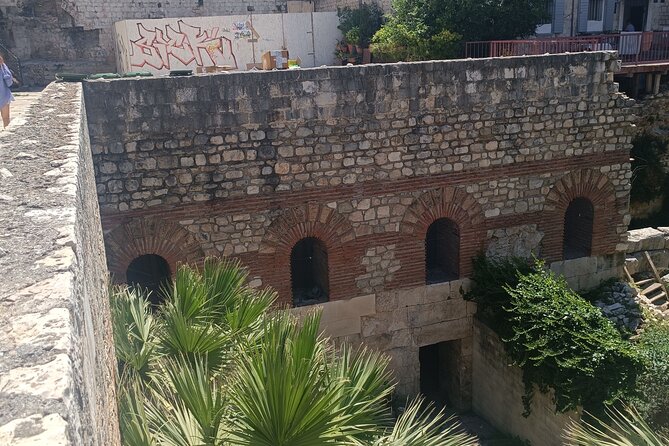
At the Golden Gate (the Northern Gate), you’re looking at one of the four principal Roman gates into the old town of Split. The gate is part of Diocletian’s Palace and served as the main gate through which the emperor entered, with elaborately decorated status.
The guide also explains what happened after the palace era: over the Middle Ages, the gate was sealed off and lost its columns and statuary. In modern times it was reopened and repaired, and today it’s a tourist attraction.
This is a strong “transition” stop. You’re not only seeing the ancient city; you’re seeing how later centuries modified the ancient city’s meaning and visuals. It’s a good reminder that history keeps editing itself.
Grgur Ninski statue: a Roman-world prank that’s become a tradition
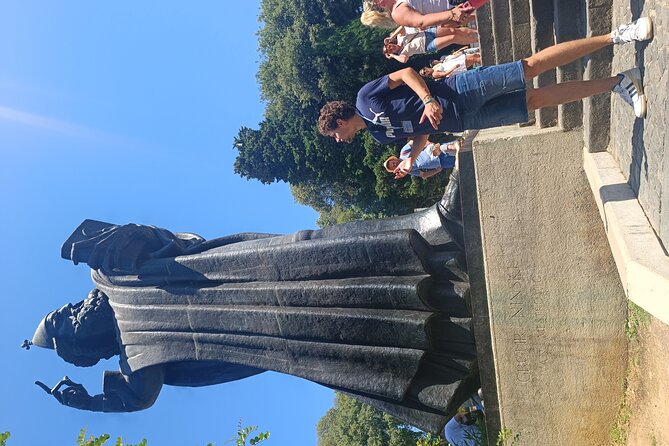
Then you’ll hit Grgur Ninski Statue, the tall (about 8.5 meters) figure by sculptor Ivan Meštrović. There’s a lot of attention here because of one simple ritual: rubbing the statue’s toe is said to bring good luck.
You can literally see wear on the toe from generations of rubbing. It turns the stop from a quick photo moment into a tiny cultural insight: people keep creating meaning long after the original context is gone.
If you like adding a small tradition to a trip, this is one of the fun stops that doesn’t feel childish. It feels like local folklore you can participate in for free.
Marmontova Ulica and Prokurative: the city’s nicer side between monuments
After the statue, you walk along Marmontova Ulica, Split’s most beautiful street, named after Napoleon’s marshal Marmont. The guide links the naming to his role in the urbanisation of Dalmatian cities. In return, the citizens of Split named the street after him.
This is where the tour starts to feel like a city stroll instead of only a monument march. The point isn’t to memorize street history. It’s to understand why the city looks the way it does today.
Next up is Prokurative (Republic Square)—an open square surrounded on three sides by elaborate neo-Renaissance buildings. This stop is short, but it gives you a sense of Split’s style beyond Roman ruins. You get a place to imagine courtly promenades and later social life, which makes the later food-and-squares conversation feel real.
Fruit Square (Trg Brace Radic): ending on stories you can eat with
The last stop is Fruit’s Square (Trg Brace Radic). The tour describes it as a small and beautiful square where ladies used to sell fruits. That kind of detail is gold, because it reminds you Old Town spaces weren’t built for tourists. They were built for daily life.
You’ll hear about the Marko Marulić statue, described as the father of Croatian literature. This is also one of the best spots to connect history and food: the guide uses this ending location to talk about Croatian history and gastronomy, so your next hours in Split are easier to plan.
It’s also a practical ending. After you walk back to the meeting point area, you’re already near the places you’re likely to want to revisit at a relaxed pace.
Price and value: what $24.19 buys you in real terms
At $24.19 per person for about 2 hours 20 minutes (often around the neighborhood of 3 hours depending on the flow), you’re paying for a guided lens. You’re not paying primarily for entry fees. The tour includes all fees and taxes, and most stops are free.
Only two areas are flagged as optional paid entrances if you want to go inside afterward: Cathedral of Saint Domnius and Temple of Jupiter. On the tour itself, you view them from outside, and the guide gives information so you’ll get more from an optional follow-up visit.
For value, I look for three things: time, group size, and how much the guide can connect the dots. This tour has a small group maximum of 17 and a history-professor focus, which shows in how often the explanation is about meaning, not just dates.
If you’re the kind of traveler who likes self-guided wandering afterward, this format is ideal. You’ll leave with a mental map and a set of story anchors.
Tips that make the tour easier (and more enjoyable)
- Wear shoes you can trust on Old Town stone. You’ll be walking and standing for the different palace segments and squares.
- Bring a water bottle if it’s warm. The stops include outdoor segments, and you’ll want comfort for the full loop.
- If you’re torn about entrances, decide in stages. You see the Cathedral and Temple from outside during the walk, and you can choose whether to pay to enter later.
- Keep an eye on pacing. The tour runs around 2h20 on paper, but it may run longer in real life, especially when the guide adds extra stories.
Should you book the Split Walking Tour with a History Professor?
Book it if you’re a first-timer in Split and you want the city to make sense fast. This tour is built for travelers who prefer a guided storyline—especially the Diocletian Palace sequence—before going off on your own for photos, snacks, and extra exploring.
Skip it or plan differently if your main goal is indoor access to major sites. The Cathedral of Saint Domnius and the Temple of Jupiter are outside-only during the tour, with optional entrances not included. If you need those interiors during your visit, pair this walk with a separate plan.
FAQ
How long is the Split walking tour with a history professor?
It runs about 2 hours 20 minutes (approx.).
What does the tour cost?
The price is $24.19 per person.
Is the tour offered in English?
Yes, it’s offered in English.
How big is the group?
The tour has a maximum of 17 travelers.
Where does the tour start and end?
It starts at Brass Gate (Porta Aenea) on Obala Hrvatskog narodnog preporoda 22, Split, Croatia, and ends back at the meeting point.
Are tickets included for the Cathedral of Saint Domnius and the Temple of Jupiter?
No. You visit both only from outside during the tour, and entrance is not included if you want to visit later.
What’s included in the price, and what’s not?
The price includes all fees and taxes. Alcoholic beverages are not included.
If the weather is poor, the experience may be canceled and you’ll be offered a different date or a full refund. Cancellation is free up to 24 hours in advance for a full refund.