REVIEW · SPLIT
Walking Tour of Split and Diocletian’s Palace
Book on Viator →Operated by Ancient Tours · Bookable on Viator
Diocletian’s Palace feels human, fast. This small-group walk is built around the palace’s most important spaces, then it spills into Split’s historic center so you leave with clear bearings. Two big wins for me are the tight 90-minute route that hits the highlights without wasting time, and the chance to ask questions face-to-face as you move between stops.
You’ll start at the Peristyle area and work outward through key architectural moments like the Vestibulum and the Golden Gate. Guides in the past—such as Mario, Antonella, Antonio, Anton, and Professor Marino—have been praised for turning hard-to-follow details into stories you can actually remember, with English that stays clear.
One consideration: the route includes uneven streets and some up-and-down stairs, so it’s not a good match if steps are a problem for you.
In This Review
- Key things you should notice before you go
- Why Diocletian’s Palace is the perfect first stop in Split
- Price and value: what $48.37 gets you in 90 minutes
- Starting at the Peristyle: how you get oriented fast
- Vestibulum and the Golden Gate: the palace’s public face
- Substructures without the museum: smart pacing, then your choice
- Riva Harbor: the bronze model that makes the whole place click
- Fruit’s Square (Trg Brace Radic): Venetian layers and Croatian literature
- Passing the Split Synagogue: a quick cultural sidebar
- What to watch for: steps, hearing, and finding your guide
- Who this tour suits best
- Should you book this Split and Diocletian’s Palace walking tour?
- FAQ
- How long is the Walking Tour of Split and Diocletian’s Palace?
- How much does the tour cost?
- What language is the tour offered in?
- How many people are in the group?
- Do I need to buy admission tickets for the palace stops?
- Does the tour include the museum part of the substructures?
- Is the Split Synagogue visit included?
- What if I have trouble with steps?
Key things you should notice before you go
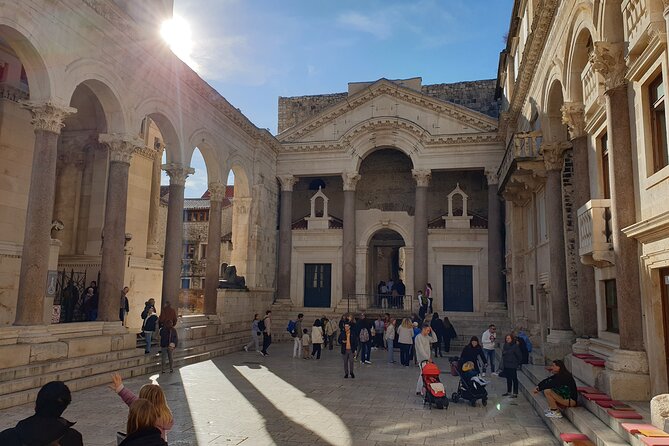
- Small group up to 20 people: easier questions, less getting shuffled away from the guide.
- UNESCO focus on Diocletian’s Palace: you see the Peristyle, Vestibulum, Golden Gate, and the substructures.
- You do not get paid museum access included: you’ll skip the substructures museum area, so plan that visit separately.
- Riva Harbor orientation: a bronze model gives you a quick “big picture” of what you’re standing in.
- Stops that connect past to present: Gregory of Nin and the language story, plus Marko Marulić at Fruit’s Square.
- A cultural pass-by: the tour includes a look at the Split Synagogue area, but paid entry isn’t included.
Why Diocletian’s Palace is the perfect first stop in Split

Split can feel like a maze at first. Diocletian’s Palace is the reason. Romans built a fortress that later became a city within a city—then generations layered homes, worship, and public life on top. A guided walk helps you decode what you’re seeing instead of just taking photos and hoping it makes sense later.
I like that this tour is practical in the way it prioritizes. You’re not stuck in one room for ages. You move through a chain of spaces that connect logically: public courtyard, ceremonial entry areas, palace underlayers, then out to the harbor and the nearby squares where Split’s identity took shape.
And because it’s designed as an overview (not a full museum marathon), it’s ideal when you’ve only got part of a day, or when you want a mental map before choosing what to do next. If you’re the type who likes to return to places with context, this sets you up well.
You can also read our reviews of more walking tours in Split

Price and value: what $48.37 gets you in 90 minutes
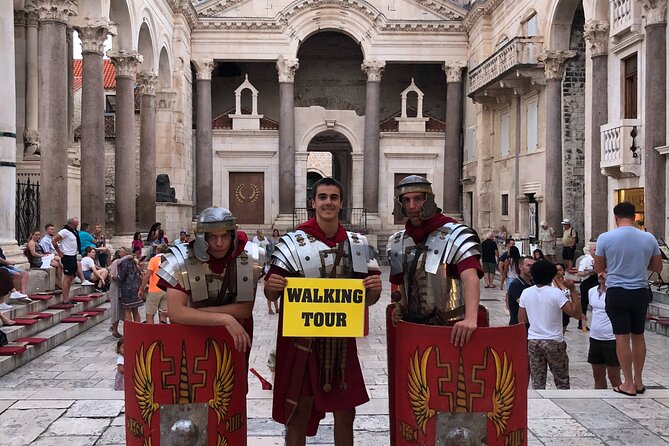
At $48.37 per person for about 1 hour 30 minutes, this is priced like an efficient introduction—short enough to fit in a busy day, but long enough to cover multiple palace zones plus a few key spots outside the palace walls.
Here’s where the value really shows: you’re paying for interpretation. The palace is huge, and many important corners aren’t obvious at street level. A guide helps you understand why the Peristyle matters, what the Golden Gate connects to, and what the substructures were built to do.
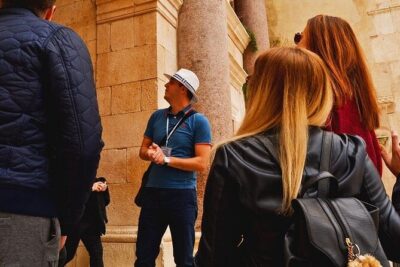
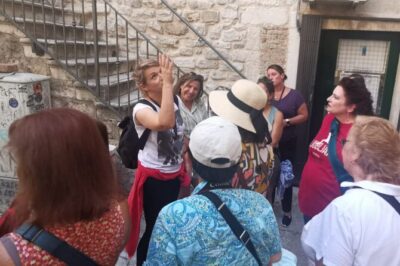
Also, the tour is capped at a maximum of 20 travelers. That matters more than people think. In a place this packed with visitors, a smaller group makes it easier to stay near the front and hear what the guide is saying. Several guides featured in past groups—like Antonella and Antonio—were praised for making the walk organized and fun, not just factual.
You should know the limits of the ticket: no admission tickets are included. That doesn’t make it a bad deal—it just means you’re buying guided access to key exterior and interior areas you can see without paying for every paid section.
Starting at the Peristyle: how you get oriented fast
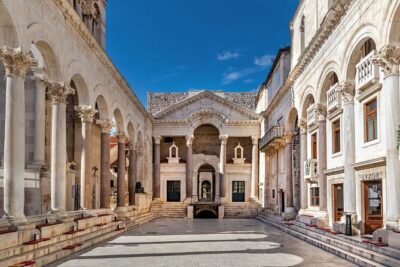
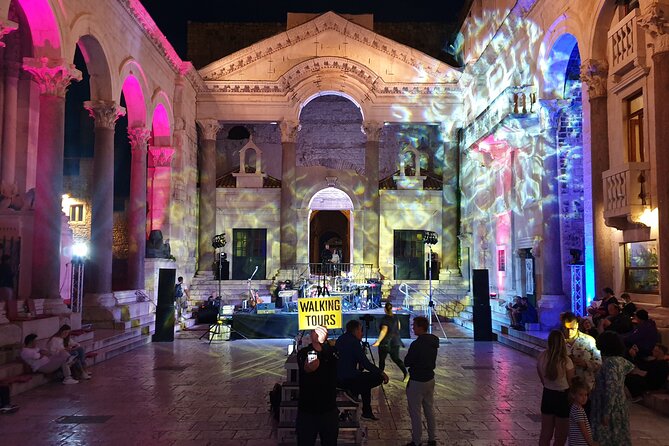
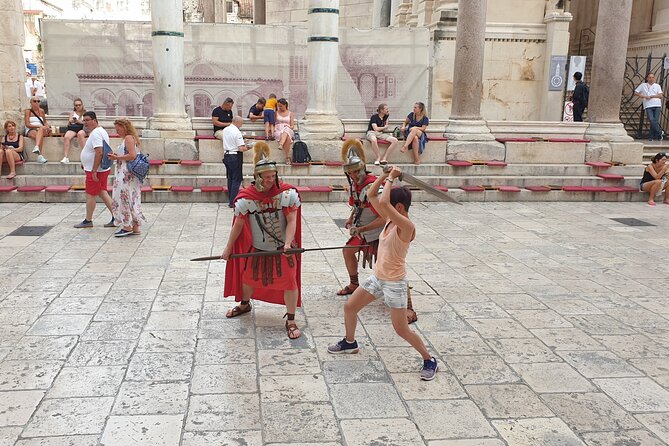
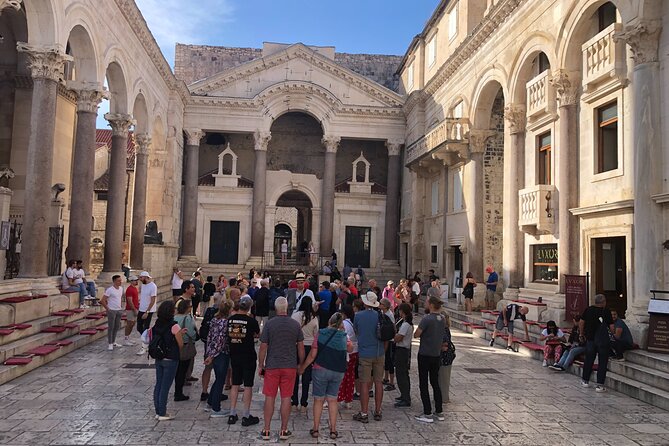
The tour begins in the Peristil ulica area, with the first stop at the Peristyle—the central square of Diocletian’s Palace. This is the anchor. From here you can reach almost every major palace location, so your brain starts building a map immediately.
This is one of my favorite design choices of the route. Instead of starting at some distant corner, you begin with the palace’s center of gravity. In real life, that means when you later wander on your own, you’ll recognize directions. You won’t feel like you’re randomly bumping into walls and gates.
Expect about 15 minutes here. You’ll also get a useful mindset: Diocletian’s Palace isn’t just a monument; it’s a working layout. When the guide explains how the spaces relate, you start spotting the palace’s logic in everyday streets—doors, corridors, and viewpoints that you would otherwise miss.
And because the Peristyle area doesn’t require admission on this stop, it’s an easy win: you get value right away, no waiting for tickets.
Vestibulum and the Golden Gate: the palace’s public face

From the Peristyle, the route moves to the Vestibulum of Diocletian’s Palace. This is a smaller stop—about 5 minutes—but it’s built for context. You learn about Diocletian’s role and the meaning of this transitional space, which sits between grand ideas and physical architecture.
One detail you might catch here: the guide may mention the possibility of hearing traditional Dalmatian singing. Even if you don’t get it, the point is the same—this isn’t just about Roman stone. It’s also about how local culture lives around historic settings.
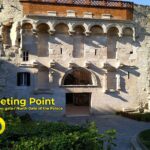
Then comes the Golden Gate, the palace’s main entrance. You’ll spend around 10 minutes, and this is where the tour connects the palace to identity. You’ll see the statue of Gregory of Nin and hear how important he is to Croatian history and language. That kind of explanation turns a statue from a photo-op into a story you can carry for the rest of your trip.
In my view, this pairing works well: Vestibulum gives you the emperor-era frame, and the Golden Gate gives you the national-cultural frame. Together, they explain why this fortress became a living city with real meaning for locals.
Substructures without the museum: smart pacing, then your choice
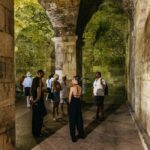
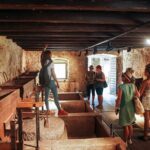
Next you’ll pass through the substructures of Diocletian’s Palace. This area sits underneath the main palace life, and it’s fascinating because it shows the palace as a designed system—not just a set of rooms.
You’ll have about 10 minutes here, with an important note: the tour does not visit the museum part of the substructures. Admission to the museum area isn’t included, and you can visit that section after the walk if you want to go deeper.
This is a real value point. Full museum time can swallow your afternoon. By skipping the museum rooms during the tour, you keep the pace human and preserve energy for the rest of Split.
How to use this:
- If you’re curious about the palace’s construction and function across the ages, this guided look is a great preview.
- If you want maximum depth, treat the museum visit as a separate add-on afterward, so you can choose your time instead of being rushed.


Riva Harbor: the bronze model that makes the whole place click
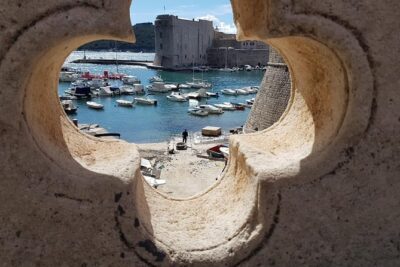
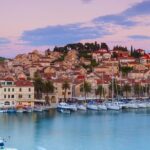
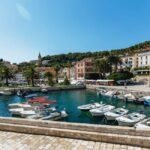
After the palace spaces, the walk heads to Riva Harbor. You’ll spend about 15 minutes here, and one highlight is a bronze model of Diocletian’s Palace.
That model can feel like a small thing until you realize what it does. It gives you scale. It helps you connect the stop-by-stop route you just walked with the bigger layout sitting inside the city. Once you see the model, you start noticing how the palace’s footprint shapes what you’re walking on.
Riva is also where Split’s energy shows up. You’ll learn about the history of the Riva promenade, so you understand why this harbor strip feels like the social heart of town—not just a pretty walkway.
This stop is the bridge between “architecture lesson” and “day in the city.” It’s a good place to pause mentally and decide what you want next.
Fruit’s Square (Trg Brace Radic): Venetian layers and Croatian literature
The tour then goes to Fruit’s Square (Trg Brace Radic). Expect around 10 minutes. Here the focus shifts from Roman structure to later civic life.
You’ll learn about a 15th-century Venetian citadel and you’ll also hear why Marko Marulić matters—the father of Croatian literature. This is one of those moments where Split’s layers stop being abstract. Venetian design and Croatian intellectual history show up in the same city blocks, so the palace isn’t isolated in time.
If you like walking tours that help you connect the dots, this stop does that. It turns the experience into a timeline you can recognize as you wander. Even if you only remember one name—Marulić—that’s still worth it.
Passing the Split Synagogue: a quick cultural sidebar
The walk includes a pass-by of the Split Synagogue (about 10 minutes). Admission to paid sections is not included here, so think of this as orientation and context rather than a full visit.
What you’ll get is history about the Jewish community in Split, placed into the broader story of the city’s mix of cultures. For many people, this is exactly the right amount on a first walk through the area—just enough to point you toward further reading or a later, dedicated visit if you want it.
What to watch for: steps, hearing, and finding your guide
This is a walking tour in a stone city. Uneven steps are part of the experience, and it’s not recommended if stairs are hard for you. I’d also plan for short climbs and descents, because you’re moving through palace passageways and old-center streets.
Sound can be tricky in crowds. Some past groups noted difficulty hearing the guide at times, especially when other tours overlapped. So if you know your hearing is sensitive, try to position yourself closer to the front when you can.
Logistics-wise, the starting point can be hard to find. The meeting point is listed as Peristil ulica, 21000, Split, Croatia, and the tour ends back at the same place. I recommend arriving a bit early and checking your map twice, not once—old streets can be deceptive.
Who this tour suits best
This walk is best for:
- First-time visitors who want a clear introduction to Split and the palace before they branch out.
- Travelers who enjoy short guided stops that explain what you’re seeing, not long museum marathons.
- Groups that prefer a smaller pace—up to 20 people helps keep the tour feeling connected.
It’s less ideal for:
- Anyone who struggles on uneven steps or gets uncomfortable with stairs.
- Travelers hoping for full museum-style entry included in the price. Paid sections like the substructures museum area and the synagogue entry aren’t part of this tour.
Should you book this Split and Diocletian’s Palace walking tour?
If you want your first day in Split to feel organized, I’d book it. The route is designed to give you orientation quickly: central palace spaces, the palace entrance story, a look at underlayers, then a harbor model that helps the whole place make sense.
I’d also book it if you like guides who bring the story to life—past groups have praised guides such as Mario, Antonella, Antonio, and Professor Marino for strong English and engaging storytelling. And the price is fair for what you get: a guided overview with a small group, built around the palace’s most important nodes.
The main reason not to book is if you know stairs are a problem for you, or if you were counting on museum entry being included. If that’s you, you can still use the palace knowledge afterward—but you may want a different format that matches your energy and access needs.
FAQ
How long is the Walking Tour of Split and Diocletian’s Palace?
It runs about 1 hour 30 minutes (approximately).
How much does the tour cost?
The price is $48.37 per person.
What language is the tour offered in?
The tour is offered in English.
How many people are in the group?
The tour has a maximum of 20 travelers.
Do I need to buy admission tickets for the palace stops?
No admission tickets are included. Some stops you’ll see are free to view, but paid sections are not included in the tour.
Does the tour include the museum part of the substructures?
No. The tour goes through the substructures, but the museum part is not visited. You can visit it after the tour.
Is the Split Synagogue visit included?
The tour includes a pass-by of the synagogue. Admission is not included.
What if I have trouble with steps?
It’s not recommended for travelers who have issues with high steps.