REVIEW · SPLIT
Grand Split Walking Tour with Diocletian’s Palace
Book on Viator →Operated by Redono d.o.o. · Bookable on Viator
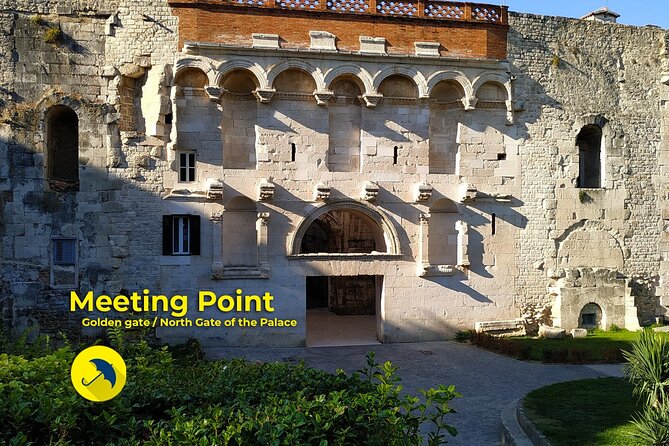
Stone streets, Roman ghosts, and a tidy route. This guided Diocletian’s Palace walk is one of the fastest ways to understand how Split works, with a professional local guide leading you between the old palace complex and the nearby public spaces that make the city feel alive. You meet at the Golden Gate by the Statue of Gregory of Nin, then you’re off on foot for stops that you can actually picture later when you’re trying to place everything on a map.
I like the way the tour keeps its promise: you spend the bulk of the time on the palace area, then you get just enough time at the big photo magnets like the City Clock and Riva Harbor to orient yourself for the rest of your trip. Guides such as Mia and Ante stood out to me for making the place feel understandable, not like a list of dates.
One thing to consider: while the experience is positioned as small-group, group sizes can swell during peak periods and the tour may run with a larger crowd split into separate groups. If you hate waiting for people, go earlier in the day or plan to be patient at the first few gathering points.
In This Review
- Key highlights worth your time
- A 90-minute way to get your bearings in Split
- Meeting at the Golden Gate and walking the old-town spine
- Diocletian’s Palace walkthrough: what you actually see
- City Clock, Pjaca square, and Split’s postcard corners
- Riva Harbor, City Hall, and Gregory of Nin moments
- Peristil and St. Duje Cathedral: the palace’s living heart
- How the small-group format really plays out
- Price value: about $22 for a guided Roman city tour
- When to go, what to wear, and who this suits best
- Should you book this Grand Split walking tour with Diocletian’s Palace?
- FAQ
- How long is the walking tour?
- Where do I meet the guide?
- What sights are included during the walk?
- Is the tour in English?
- Is admission included for Diocletian’s Palace?
- Are food and drinks included?
- Is there a mobile ticket?
- How large is the group?
- Does the tour run in bad weather?
- Can I cancel for a refund?
Key highlights worth your time
- Diocletian’s Palace guided visit that turns the stone maze into something you can follow
- Photo-stop pacing that includes Riva Harbor and Pjaca (Narodni Trg) without dragging
- Starter-tour usefulness for first-time Split visitors who need context fast
- Major landmarks in a short loop that finishes back at the meeting point
- Local guide stories and practical tips (you’ll often get ideas for what to do next)
A 90-minute way to get your bearings in Split
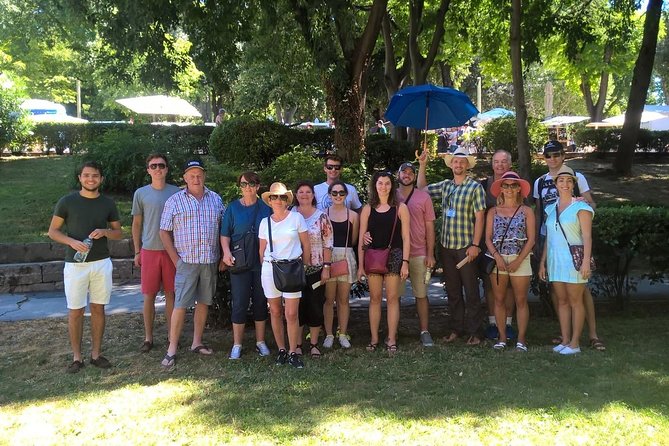
Split can feel like two cities at once: the Roman palace core that was built for power, and the modern streets that grew right around it. This tour is built for that exact challenge. In about 90 minutes, you walk enough ground to connect the dots between the palace architecture and the waterfront promenade.
What you’re really buying is orientation. Not just seeing famous places, but learning how they connect—where the power lived, where people moved, and why certain streets and squares became the city’s social stage. If you’re only in Split for a short time, this helps you avoid the common mistake of wandering for hours without knowing what you’re looking at.
You’ll also get a clear rhythm: a longer guided focus at the palace, then quick hits at standout areas so you can snap photos and move on. It’s a good format for heat, jet lag, and limited vacation time.
You can also read our reviews of more walking tours in Split

Meeting at the Golden Gate and walking the old-town spine
Your starting point is Split’s Golden Gate at Dioklecijanova 7, near the Statue of Gregory of Nin. This matters more than it sounds. When you start right at the edge of the palace zone, the whole walk makes sense fast—you’re not bouncing across town with no thread connecting the stops.
The tour offers multiple departure times, and you can pick what fits your day. That flexibility is handy in Split, because the city can get crowded (especially in summer), and timing can make your photos cleaner and your walking easier.
The guide keeps you moving on foot and finishes back at the original meeting point. That means you’re not left figuring out transit or trying to meet someone across town. You can treat this as your first “map-making” outing before your next activity.
Diocletian’s Palace walkthrough: what you actually see
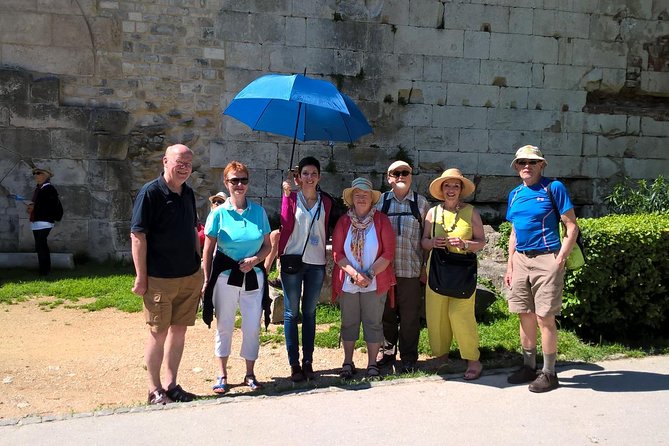
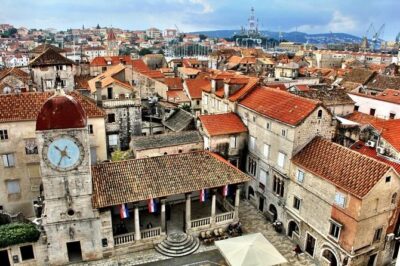
The star of the show is Diocletian’s Palace, often described as a 1,700-year-old structure wrapped into today’s city life. You’ll spend most of the tour time here, and the guide’s job is to help you read the palace like a plan—not just admire walls.
Expect to check out the palace area and key features tied to how it functioned. The walk typically includes places you’ll see referenced constantly, such as Peristil and areas linked to the palace’s internal movement. You’ll also get a guided look that ties architecture, history, and art into a story you can hold onto.
A practical note from what I’ve learned about this tour format: this is a walking experience focused on sightseeing. If you want to go inside additional churches or museum spaces that aren’t part of the standard walk-through, you may need separate entry arrangements. The guide will point out what’s worth your attention, but the tour itself is not positioned as a ticketed entry marathon.
Still, even without piling on extra entrances, this stop is the payoff. The palace is the anchor for understanding Split. Once you grasp how the palace corridors and public rooms connect, the rest of the city becomes easier to navigate and more rewarding to explore on your own.
City Clock, Pjaca square, and Split’s postcard corners
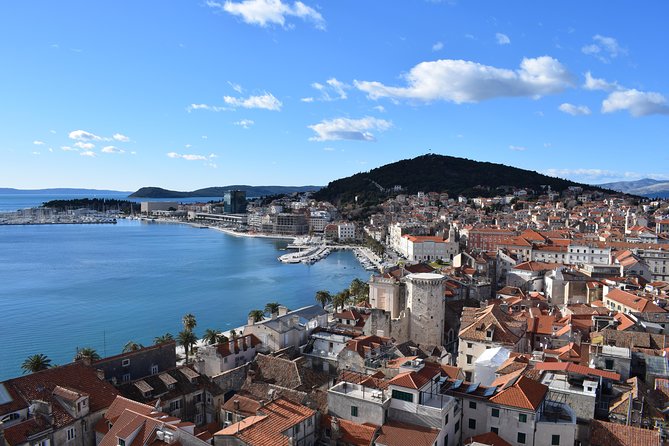
After the palace-focused portion, the tour shifts gears to the places that make Split feel like Split. One standout is the City Clock. You’ll pause there for about 10 minutes to see the famous 24-hour sun clock at City Square. Even if you don’t go deep into technical details, the setting is the point: it’s a quick way to feel the city’s rhythm and understand why this spot matters in daily life.
Next comes Narodni Trg (Pjaca square). This is one of the city’s classic public spaces, and the guide uses the pause there to explain why it mattered historically—so it doesn’t become just another pretty plaza. In a short tour, that context is what separates a photo stop from a meaningful stop.
The pacing here is also smart. You get enough time to look, take photos, and regroup, without losing the momentum that makes a walking tour worth your time.
If you’re the type who hates rushing, tell yourself you’re looking for landmarks and orientation now—not perfection. Save the long lingering for later when you already know what you’re seeing.
Riva Harbor, City Hall, and Gregory of Nin moments
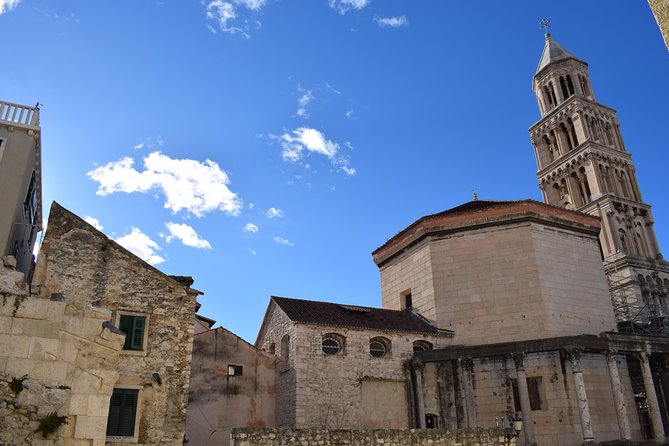
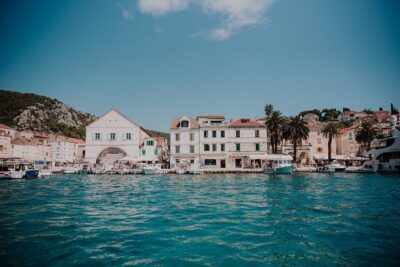
Riva Harbor is usually the next “wow” moment for first-timers. You’ll stop for about 10 minutes at Riva Harbor, which is the busy promenade lined with energy. This is your chance to connect the palace zone to the waterfront. The palace built the structure; the sea-side promenade became the city’s daily stage.
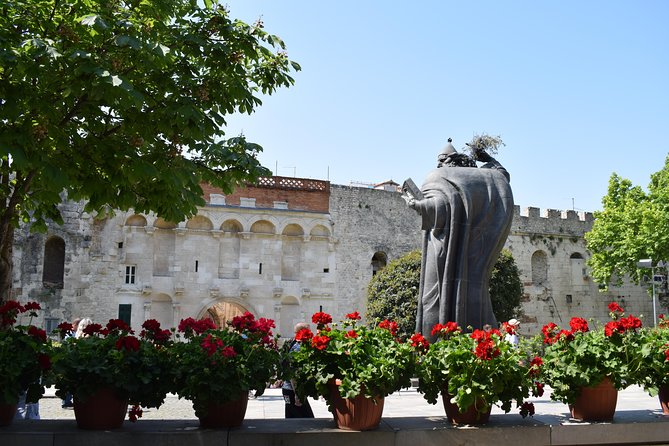
The route also includes major landmarks in the old town orbit, including the Statue of Gregory of Nin (which you’re near at the start) and stops around City Hall. These pauses are short, but that’s the point: you’re building a mental map while the guide keeps the story flowing.
One practical reason these stops are useful: if you later decide to walk along Riva or explore those squares deeper on your own, you won’t feel like you’re repeating the tour blindly. You’ll know where you are and what each location is for.


Peristil and St. Duje Cathedral: the palace’s living heart
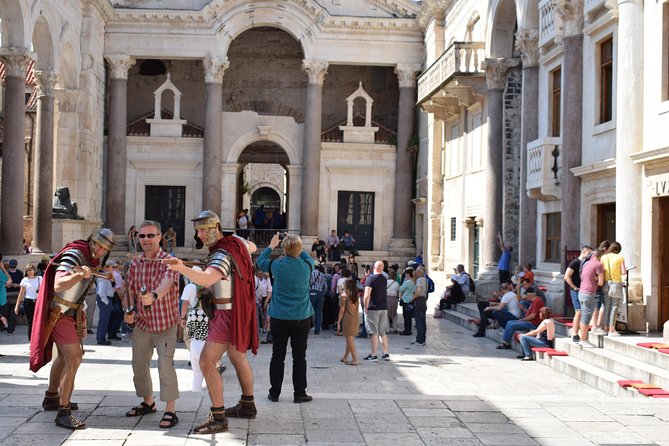
You’ll also pass through highlights such as Peristil and St. Duje Cathedral during the guided portion. These aren’t just “more sights.” They help you understand what changed over time as the palace area became part of a living city rather than a sealed imperial stronghold.
Peristil is often mentioned because it’s a space that makes the palace feel less like an exhibit and more like architecture with a heartbeat. St. Duje Cathedral brings in the later layers of Split, showing how religious and civic life grew out of the ancient core.
In this kind of short tour, you won’t get hours to wander and linger. But you will get the important framing: where to look, what to pay attention to, and what each feature meant in its day. That’s the value you can’t replicate from a map app alone.
Also, if it’s hot, don’t worry if your questions come out a bit messy. Guides tend to keep answers friendly and practical, and you can always ask for a quick pointer on what you should revisit later.
How the small-group format really plays out
The tour is described as a small-group experience limited to 15 people or fewer. At the same time, the overall maximum for the activity can be higher, and at peak times the group may be split into separate groups if numbers run large.
Here’s how that can affect you:
- If you truly get the smaller group, it’s easier to move quickly between stops and ask questions without feeling swallowed by crowds.
- If you end up with a larger crowd, expect more waiting at gathering points and more crowding in the tight palace areas.
Either way, the guide should keep you moving and regrouping. In my view, the best strategy is to treat this tour like a guided route with smart story stops, not a private walk.
Also, the fact that guides in this setting often come from Split itself is a plus. Names that stood out include Mia, Ante, Ivan, and Slavko, and they tend to bring local context and a relaxed conversational style.
Price value: about $22 for a guided Roman city tour
At around $21.78 per person, this tour is priced for accessibility. You’re not paying for a luxury experience—you’re paying for a professional local guide and a structured route through the most important pieces of Split’s palace zone and nearby landmarks.
The biggest value is time. A DIY route can absolutely work, but you’d need to spend extra effort figuring out what you’re seeing and how it relates. Here, the guide gives you the connections inside a short walking format.
Another value factor: several key stops are listed as free admissions, including the palace visit and quick stops at sites like the City Clock. That keeps the cost from ballooning mid-tour.
And because it finishes back where you started, you’re less likely to spend time and money on extra logistics. For many visitors, that alone makes the price feel fair.
When to go, what to wear, and who this suits best
This is a walking tour, and it runs in all weather conditions. That means you should dress for rain as well as sun, and you should expect you’ll still be outside for long stretches. On days when weather is too poor, you might get offered a different date or a full refund, so it’s worth checking what’s happening the day you book.
Wear comfortable shoes. Split’s old town can be uneven in places, and you’re walking between stops rather than sitting in a bus that smooths out the day.
Who it fits best:
- First-time Split visitors who want a quick map of the city
- History-minded travelers who prefer a guided story over reading plaques alone
- Couples and families who want a structured walk with manageable timing
- Anyone planning their days around heat or limited vacation time
Who might find it less ideal:
- If you want long, slow exploring and museum-level time inside multiple sites, you’ll probably want to pair this with independent time afterward.
- If you hate waiting for regrouping in crowded areas, pick a less peak departure time when possible.
Should you book this Grand Split walking tour with Diocletian’s Palace?
Yes—if you want a smart first move in Split. This is the kind of tour that helps you stop feeling lost. You get a guide-led visit through the palace core, plus quick orientation stops at major city landmarks like Riva Harbor and Pjaca (Narodni Trg). For the price, it’s a lot of meaningful city context without eating your whole day.
Book it especially early in your trip. Once you understand the palace and how the old city squares connect, your later walks become easier and more fun. You’ll also know what to revisit if you’re curious about extra details like religious sites or museum spaces beyond the standard sightseeing flow.
Just go in with the right expectations: it’s a walking tour with a set route and time limits. If you’re okay with that, you’ll likely feel like you got your Split bearings fast—and that’s the best kind of value.
FAQ
How long is the walking tour?
The tour lasts about 1 hour 30 minutes.
Where do I meet the guide?
Meet at the Golden Gate, Dioklecijanova 7, 21000 Split, near the Statue of Gregory of Nin.
What sights are included during the walk?
You’ll see Diocletian’s Palace and stop for other major sights around Split, including the City Clock, Riva Harbor, and Narodni Trg (Pjaca square), plus additional iconic spots along the route.
Is the tour in English?
Yes, the tour operates in English.
Is admission included for Diocletian’s Palace?
Diocletian’s Palace is listed as admission ticket free for this activity.
Are food and drinks included?
No. Food and drinks are not included.
Is there a mobile ticket?
Yes. The tour includes a mobile ticket.
How large is the group?
The tour is described as small-group, limited to 15 people or fewer, and the activity also lists a maximum capacity for travelers.
Does the tour run in bad weather?
The tour operates in all weather conditions, but if it’s canceled due to poor weather, you’ll be offered a different date or a full refund.
Can I cancel for a refund?
Yes. You can cancel for a full refund up to 24 hours before the experience’s start time.