REVIEW · SPLIT
Private History and Trivia Walking Tour by a Local Guide
Book on Viator →Operated by Lingua Tours · Bookable on Viator
In Split, the past is not behind glass. This private history and trivia walk threads you through the city’s key landmarks with a local guide and smart pacing. It is a great fit when you want major sights plus real context, without spending your day in long tours or busy buses.
I like two things a lot: the way the tour focuses on Diocletian’s Palace from multiple angles, and the guide-led trivia that turns stone and street corners into clear stories. You also get the value of a small group (up to 15) and the option for English, French, German, Spanish, or Italian.
One watch-out: it is a whistle-stop format at about 1 hour 45 minutes, so if you want to linger for photos or sit for longer explanations, you may need to build extra time before or after.
In This Review
- Key highlights you’ll feel fast
- A private 1-hour-45-minute history tour that fits Split’s tight hours
- Where you meet: Riva Harbor sets the tone
- Entering Diocletian’s Palace through the Bronze Gate substructures
- The Peristyle Square, St Domnius, and the Temple of Jupiter trio
- Fruit’s Square, Pusti me Proć, and the city’s side streets
- Narodni trg and Zeljezna Vrata: squares, gates, and noble palaces
- City Museum in the Papalic Palace and the Golden Gate approach
- Grgur Ninski, St Arnir’s Bell Tower, and the finish on Marmontova Ulica
- Price and value: what $53.95 buys you here
- Who should book this (and who might want a different plan)
- Should you book it?
- FAQ
- What is the duration of the Private History and Trivia Walking Tour in Split?
- Where does the tour start and end?
- Is this a private tour?
- How large is the group?
- What languages are the guides available in?
- Are tickets or admission included for the stops?
- What kind of cancellation is offered?
- Is the tour suitable for most travelers?
Key highlights you’ll feel fast
- A private guide plan that keeps you moving through the old core efficiently
- Diocletian’s Palace substructures and gates you would likely miss on your own
- Temple of Jupiter turned baptistery story, plus the sphinx detail in front
- Narrowest street moment at Fruit’s Square and the Pusti me Proć passage
- Game of Thrones tie-in at the City Museum area without needing a fan background
A private 1-hour-45-minute history tour that fits Split’s tight hours
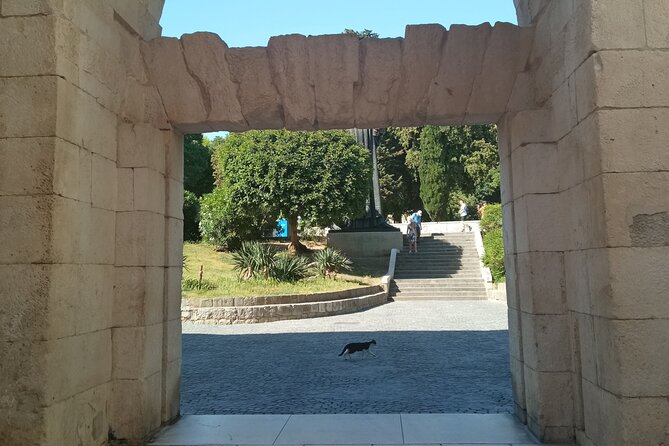
Split can trick you. You arrive in the morning, and somehow the day slips away—cathedrals, palaces, viewpoints, coffee stops, repeat. This tour is designed to fight that problem by compressing the must-see highlights into a tight walking loop.
At about 1 hour 45 minutes, you still get a meaningful route: the harbor view, the palace entrances, the central Peristyle area, the cathedral and temple complex, then a handful of important squares, gates, and streets. It is not a slow, sit-down museum day. It is a walking orientation that also teaches you how the city changed over time—Roman power, Christian reuse, and later noble life centered around palaces and squares.
And because it is private (only your group), the guide can respond to your pace and questions. The tour caps at 15 persons, so you are not stuck hearing explanations at full volume over a crowd.
You can also read our reviews of more walking tours in Split

Where you meet: Riva Harbor sets the tone
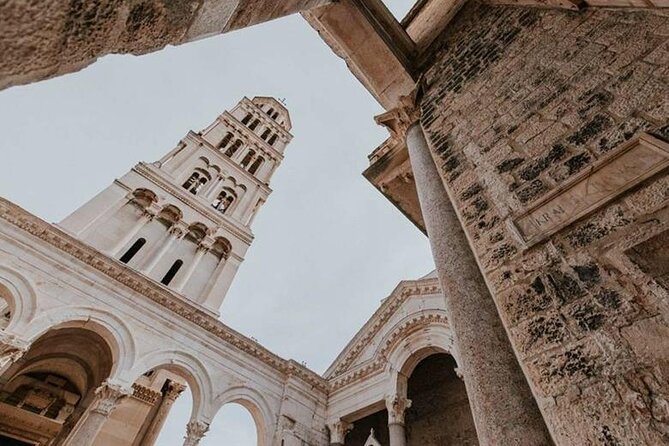
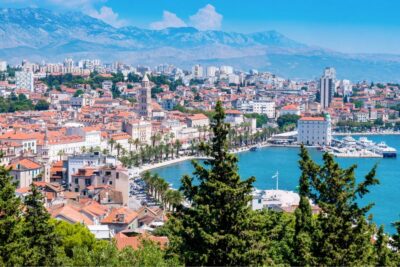
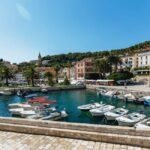
You start at Obala Hrvatskog narodnog preporoda 22, on the promenade by Riva Harbor. The guide meets you in a spot that helps you understand the layout before you walk deeper.
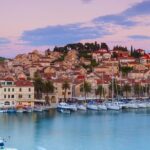
From the promenade, you get a visual anchor: the southern wall of Diocletian’s Palace, the split harbor, plus the eastern and western promenade views. Even if you are tired from travel, this first stop is smart because it turns the buildings into a map. You are not guessing where you are going next.
Practical note: this is the “look up and orient yourself” part. If you like photos, take a minute here—later you’ll be looking mostly at details at street level.
Entering Diocletian’s Palace through the Bronze Gate substructures
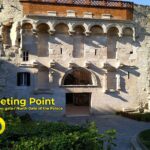
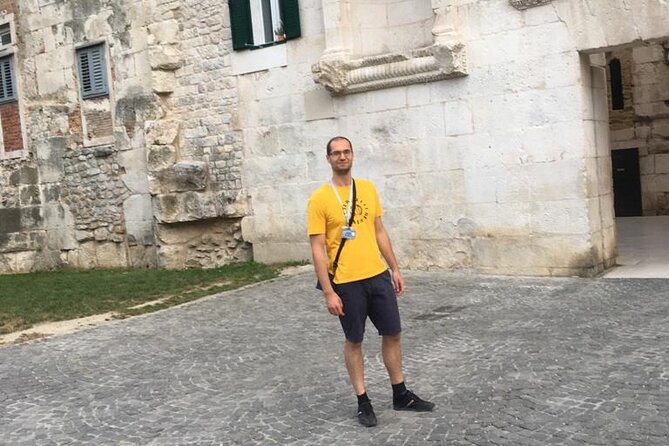
Next you go inside the palace world, starting with the southern entrance—the Bronze Gate—and walking through the substructures. This is one of the big values of a guided tour here: you move through spaces that feel connected to the palace’s original function, not just its exterior.
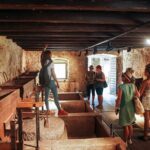
The guide explains the specific role the substructures played through history as you pass through. That matters because Diocletian’s Palace can otherwise feel like “cool old walls.” With context, you see how the architecture was used and why later generations kept adapting it.
This is also a spot where a good guide earns their pay. The explanations help you connect what you see (arches, passages, entrances) to why it was built the way it was. If you’re the kind of traveler who wants to know the logic behind the stones, you’ll appreciate this section.
The Peristyle Square, St Domnius, and the Temple of Jupiter trio
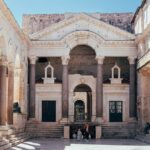
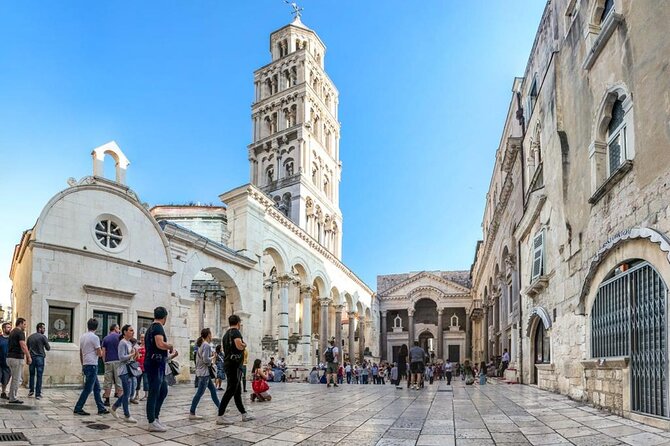
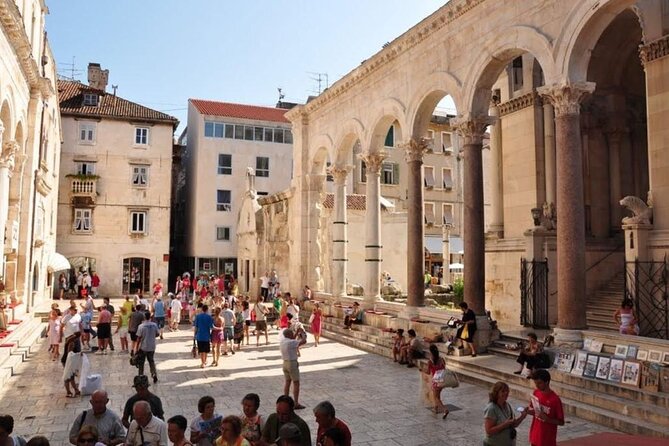
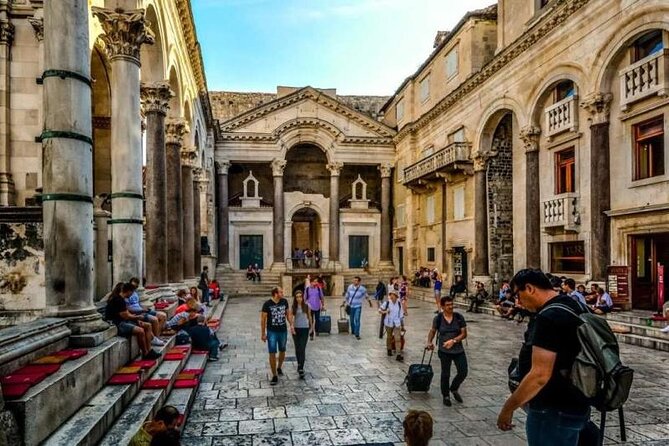
After the substructures, you reach the Peristyle, the central ancient square of the palace. This is where the tour slows down just enough to let the history land. The guide sets the historical and cultural background of the space, which helps you understand why this square became the hub you keep hearing about when people talk about Split.
From there, you move to the Cathedral of Saint Domnius. The guide explains the role of Diocletian’s mausoleum and how it was turned into a cathedral. You also get a quick look at construction style connections between the cathedral and the adjacent bell tower area.
Then comes one of my favorite “wait, really?” moments: the Temple of Jupiter. As the tour leaves the Peristyle, you visit the temple and learn how it was turned into a baptistery as Christianity spread within the palace walls. You also spot the sphinx in front, which the guide uses as a stark visual contrast. Even without technical details, that image helps you grasp the idea of reuse—old symbols, new meanings, all in the same place.
If you like tours that blend major sights with a clear narrative, this trio is the heart of the experience.
Fruit’s Square, Pusti me Proć, and the city’s side streets
From the cathedral/temple area, you head toward Fruit’s Square (Trg Brace Radic). This part of the walk is partly about stories and partly about scale. You pass through the narrowest street in Split, known as Pusti me Proć, and it changes how you feel about the city immediately.
At Fruit’s Square, the guide talks about the town of Split and its development—or the lack of development—during earlier periods. This is also where the tour adds colorful place-based trivia: you pass by the statue of Marko Marulić, father of Croatian literature, and then you see the Milesi family palace from the 17th century behind the statue.
Why this matters: the palace complex is dramatic, but the “everyday” Split is where the city really becomes real. These narrow lanes and small squares teach you that Split grew as a lived-in organism, not just a Roman monument.
A practical tip: if you want a good photo at the square, position yourself quickly. Narrow streets create bottlenecks, and you will share the space with other foot traffic.
You can also read our reviews of more guided tours in Split




Narodni trg and Zeljezna Vrata: squares, gates, and noble palaces
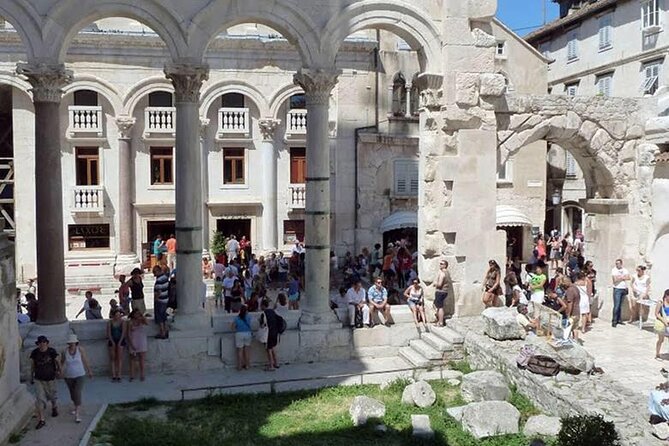
Next up is Narodni trg, the main square in Split (the tour also calls it the famous Piazza). The guide explains how it developed historically and why it became the town’s main square.
As you move around the square, you pass by:
- a recently renovated palace once owned by a noble family
- an old City Hall
- palaces connected to noble families of Split, including one belonging to a family from Korčula
Then you keep heading eastward to Zeljezna Vrata, the western gate of the palace. The guide shares the history behind the iron gate and mentions the different activities conducted there over time. You also get a glance at the oldest parts of what you can see around this area.
You’ll notice the tour repeatedly returns to the same theme: power and wealth were expressed through architecture, and those expressions changed as the city evolved.
If you enjoy street-level history, this section gives you variety. Squares are open and easier to take in, while gates and passageways feel more like “chapters” you walk through.
City Museum in the Papalic Palace and the Golden Gate approach
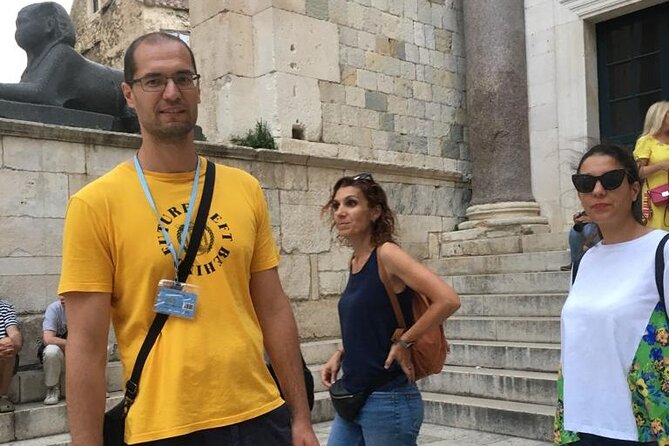
One of the most visitor-friendly stops is the City Museum of Split, located in Papalic Palace. The guide keeps it short, but with useful context about the building’s historical significance. For Game of Thrones fans, there is also a reference to a memorable (and notably bloody) scene set in front of the palace.
Even if you are not chasing TV locations, this is still a smart stop because it connects a big name landmark to the modern layer of Split’s identity: media, tourism, and storytelling built on top of older walls.
Then you head to the Golden Gate, described as the northern palace entrance and the most decorated. You’ll see why: the guide focuses on the impressive Roman building approach. It’s one of those moments where the palace stops being a single monument and becomes a system of entrances, functions, and status.
Grgur Ninski, St Arnir’s Bell Tower, and the finish on Marmontova Ulica
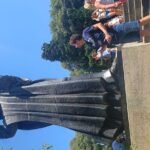
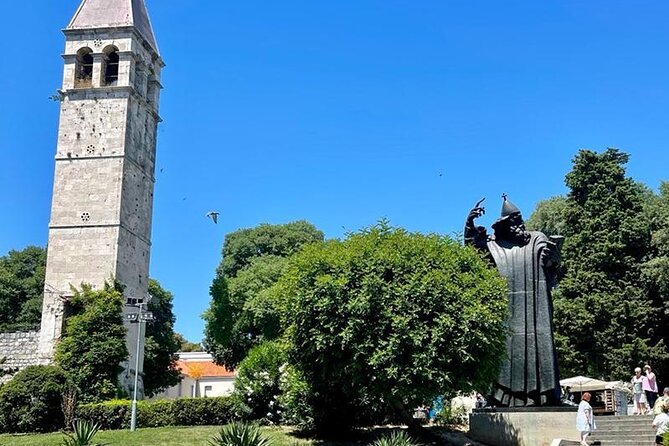
Just opposite the northern gate, you see the statue of Bishop Grgur of Nin, created by sculptor Ivan Meštrović. The guide explains why Bishop Grgur is such an important figure. Even if you only remember one name from the day, this is a strong one to keep.
Next to the statue is the Bell Tower of St. Arnir, including the chapel of Saint Arnir and remnants of an early Christian church. The guide wraps this segment with a few words that tie the area back to what you’ve been learning: the palace and its surroundings moving from Roman structures into Christian use.
Finally, the tour ends on Marmontova Ulica, up near the viewpoint overlooking the Croatian National Theater and the Monastery and Church of Our Lady of Health. The guide covers historical aspects of this street area and brings the walk to a close with a “look back” feeling. You finish on height, which helps you digest everything you just walked through.
Price and value: what $53.95 buys you here
At $53.95 per person, this tour sits in the “value with a local guide” zone rather than the “private luxury” zone. The best way to judge value here is by what you actually get:
- A private guide for your group, not a seat in a bus tour
- Access to palace substructures and palace gate areas that are harder to interpret on your own
- A guided route that hits multiple landmark clusters in about 1 hour 45 minutes
- Free admission-style access is listed for the included stops (so you’re mostly paying for interpretation, not tickets)
It also helps that the tour has group discounts and uses a mobile ticket, both of which can make planning easier. And with a maximum group size of 15, you’re less likely to feel lost in a crowd.
If you’re the type who would otherwise spend your first day googling maps and reading plaques, this price can feel fair because it hands you the storyline in one compact walk.
Who should book this (and who might want a different plan)
This is a strong choice for:
- time-tight travelers who still want a real narrative of Split’s key landmarks
- history-minded people who like architecture that shows up in daily life
- families who want something structured; the tour has worked well for kids of different ages (as seen in the way the guide handles questions and keeps explanations friendly)
You might consider a different option if:
- you hate walking or need lots of rest breaks
- you want deep museum time, because this is a landmark walk, not a long interior visit marathon
- you want the freedom to linger at each stop for long photo sessions
The good news: the tour ends back at the starting area, so you can build your next steps immediately after.
Should you book it?
Yes, if your goal is to get your bearings fast and understand why Split’s top landmarks connect the way they do. I especially recommend it when you are standing in front of Diocletian’s Palace and want the guide to translate what you see into a clear timeline—Roman to Christian reuse, then forward into later palaces and civic squares.
If you’re going to Split for the first time and you only have a short window, this is one of those tours that can save you time later. You’ll finish with better city sense, plus practical advice for what to chase next on your own.
If you have a little extra time in your schedule, pair this with a slow coffee stop afterward. You’ll appreciate the places more when you’re not rushing.
FAQ
What is the duration of the Private History and Trivia Walking Tour in Split?
The tour lasts about 1 hour 45 minutes.
Where does the tour start and end?
The tour starts at Obala Hrvatskog narodnog preporoda 22, 21000, Split, Croatia and ends back at the same meeting point.
Is this a private tour?
Yes. It is described as private, so only your group participates.
How large is the group?
The tour has a maximum of 15 persons.
What languages are the guides available in?
The included guide is available in English, French, German, Spanish, and Italian.
Are tickets or admission included for the stops?
The itinerary lists admission ticket/free access for the stops mentioned, and there is no admission listed as not included.
What kind of cancellation is offered?
There is free cancellation. You can cancel up to 24 hours in advance for a full refund; within 24 hours, the amount paid is not refunded.
Is the tour suitable for most travelers?
The tour notes that most travelers can participate and that service animals are allowed. It is also near public transportation.