REVIEW · SPLIT
Split: 1.5-Hour Walking Tour and Diocletian’s Palace
Book on GetYourGuide →Operated by www.south-tours.com · Bookable on GetYourGuide
Roman Split gets real when you walk below ground. In this 90–120 minute guided stroll, you enter the Diocletian’s Palace cellars and trace how an ancient Roman base became the living heart of today’s Split.
I also love the way the route snaps together city streets and major sights—especially with a visit to the Cathedral of Saint Domnius. One drawback: this is a full walking tour on stone streets, and it’s not recommended if you have limited mobility.
In This Review
- Key highlights you’ll feel fast
- Why Diocletian’s Palace feels different with a guide
- Starting points: Golden Gate vs. South Tours Travel Agency
- Quick stop at the Game of Thrones Museum (and why it works)
- People’s Square and Fruit Square: old-town landmarks with a purpose
- Down to Riva: the sea views that reset your brain
- Entering Diocletian’s Palace: gates, courtyards, and real Roman planning
- The cellars: where the story gets physical
- Peristyle to Saint Domnius: architecture you can read
- The Vestibul photo stop: a short closer look
- Pricing: is $41 worth it?
- Who this tour suits best (and who should skip it)
- Should you book this Split walk?
- FAQ
- How long is the Split walking tour with Diocletian’s Palace?
- What does the tour cost?
- What’s included in the price?
- Are entrance fees included?
- Are food and drinks included?
- What languages are available?
- Where does the tour start?
- Is this tour recommended for people with limited mobility?
- Is the tour cancelled if I book and weather changes?
- Can I reserve without paying right away?
Key highlights you’ll feel fast
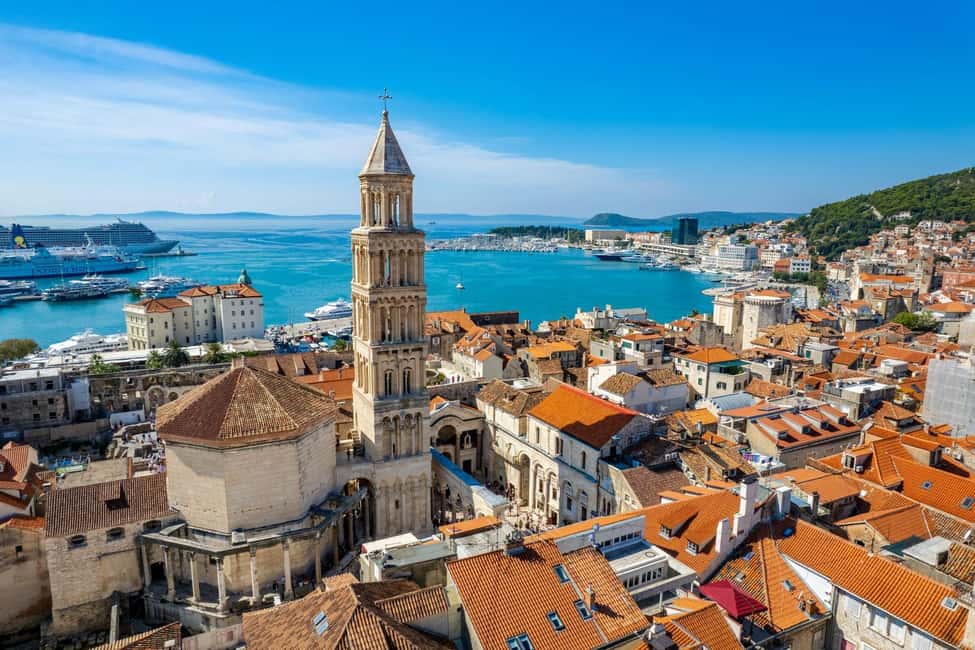
- Roman cellars you can actually stand in: Go down into the palace’s underground spaces and get the big-picture story of Diocletian’s world.
- The Peristyle’s Egyptian sphinx: You’ll see the last remaining Egyptian sphinx carved in black granite in the Peristyle area.
- An old-town route that helps you navigate after: You’ll get your bearings through gates, squares, and the palace core, so you can explore on your own afterward.
- Cathedral of Saint Domnius (oldest Catholic cathedral claim): You’ll see how an imperial Roman mausoleum became a Christian cathedral.
- Sea views from the Riva promenade: A quick waterfront walk gives you panoramic moments toward Marjan Hill.
- Storytelling tied to modern culture: Many guides mix in entertaining context, including Game of Thrones filming-location notes.
Why Diocletian’s Palace feels different with a guide
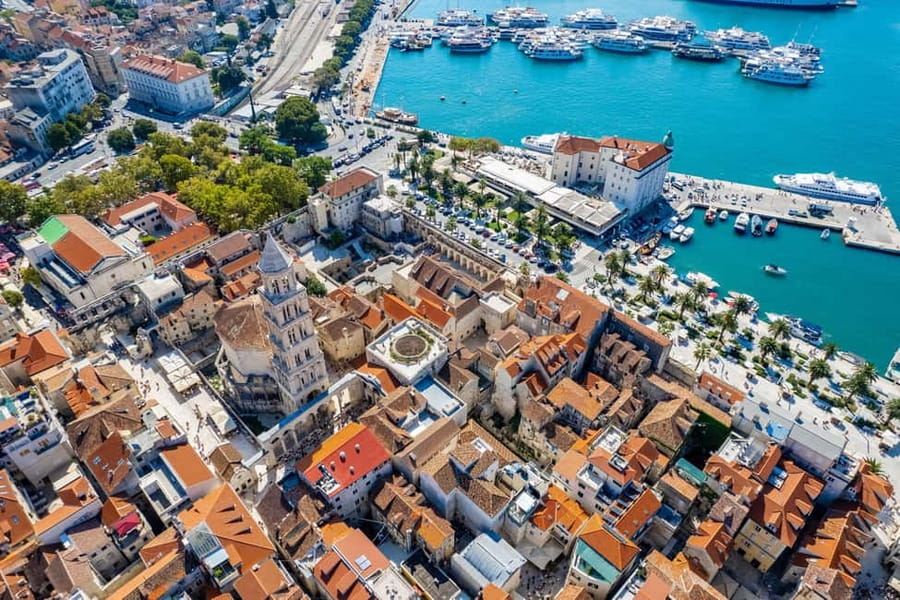
Split’s old town can be fun to wander on your own, but Diocletian’s Palace is the kind of place where a guide saves you from getting lost in the maze. With a live leader, you connect the dots between what you’re seeing now—gates, squares, courtyards—and the Roman plan underneath it all.
I like that this tour doesn’t treat the palace like a museum-only set. You also get time around everyday city landmarks like Fruit Square (Voćni Trg), People’s Square, and the Riva waterfront, so the Roman story sits inside real modern life.
The pacing matters too. At 90 minutes to about 2 hours, you get the big highlights without turning your legs into noodles. You should still plan for steady walking, uneven stone, and a few uphill-feeling moments as the old town curls around the palace.
You can also read our reviews of more walking tours in Split

Starting points: Golden Gate vs. South Tours Travel Agency
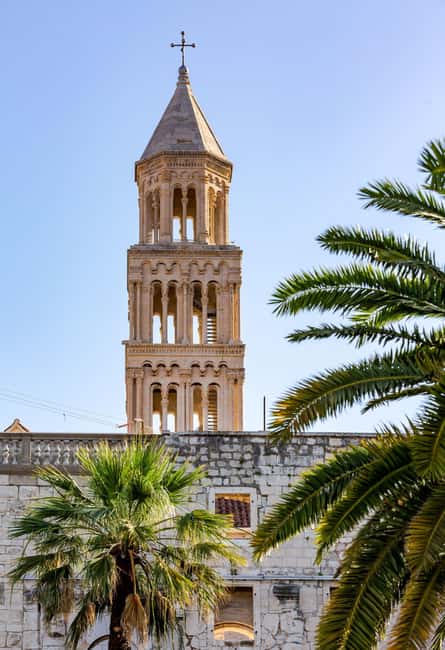
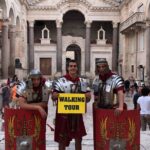
Your meeting point can vary depending on what option you book, including a location at South Tours Travel Agency and another starting spot at the Golden Gate area. Either way, the goal is the same: you’ll start near the palace-or-old-town “spine” so the early minutes make sense.
If you’re the type who likes to arrive and settle quickly, I’d pick the option that starts closest to the route you want—because the tour is basically one continuous walk. Also, because languages are offered in English and Spanish, it’s worth matching your language needs to the departure you choose.
Quick stop at the Game of Thrones Museum (and why it works)
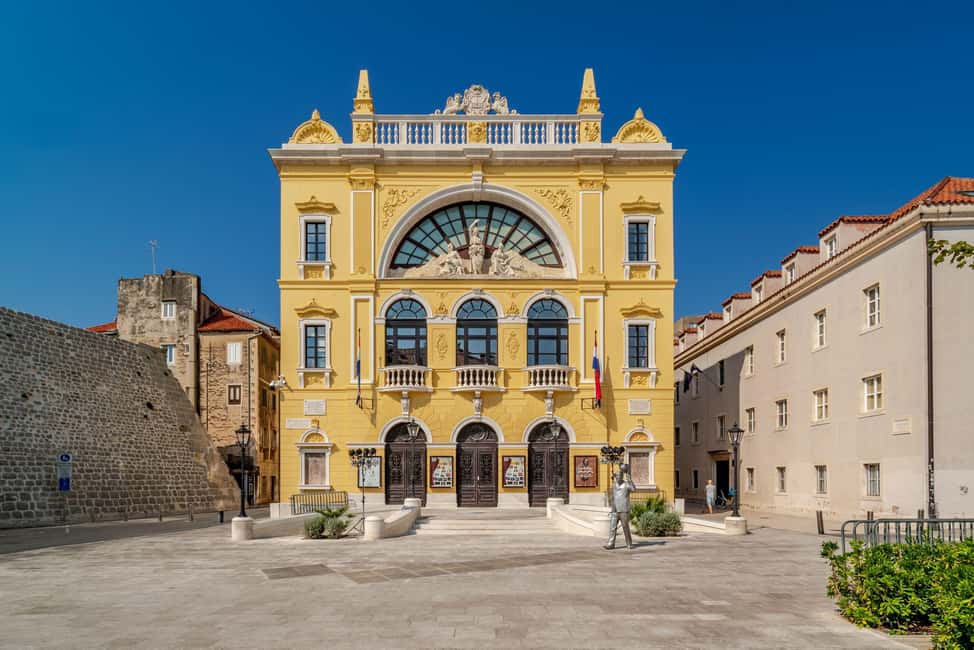
The tour includes a brief stop at the Game of Thrones Museum. It’s short—just enough to spark context—so you’re not stuck browsing while everyone else moves on.
This is a smart add-on if you’re coming to Split through pop-culture curiosity. A guide can use it as a bridge: how modern films borrow from real historical spaces, and how those spaces look when you’re standing inside them instead of watching from a screen.
Even if you’re not a fan of the show, the museum stop can still help you understand why people are drawn to this part of town. In Split, history is the main character, and pop culture just points you toward the backstory.
People’s Square and Fruit Square: old-town landmarks with a purpose
The tour spends time at People’s Square and Fruit Square (Voćni Trg). These aren’t random photo corners. They’re useful waypoints that show how city life threads through the palace district.
Fruit Square is especially interesting because the stop connects to its older role as the fruit market area. You’ll get a sense of how commerce and daily routine shaped the streets around the palace over time, not just grand imperial monuments.
Why this matters for you: after this tour, you’ll recognize the “crossroads” in the old town and feel less like you’re guessing. You’ll also know what to prioritize next—when you return for a longer lunch, a sunset walk, or a second look at the palace.
Down to Riva: the sea views that reset your brain
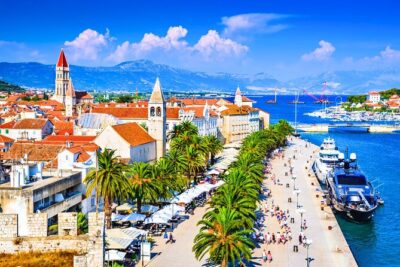
Next comes the Riva waterfront. You’ll walk the promenade and get panoramic views toward Marjan Hill. This is one of those moments that gives your legs a small breather and your eyes a new scale—less stone maze, more sea and sky.
I like adding this kind of view break because the palace story is dense. Even a great guide can only do so much for mental stamina in a short window. The Riva segment helps you absorb everything you just learned, then carry it forward as you head deeper into the palace.
Practical tip: if you’re sensitive to sun, time your visit accordingly. Some guides have pointed out that earlier departures can feel more comfortable—one past group noted an 8am start helped avoid crowds and heat. If that option is offered when you book, it’s worth considering.


Entering Diocletian’s Palace: gates, courtyards, and real Roman planning
When you step into Diocletian’s Palace, the big advantage of a guided walk is orientation. You don’t just see “an old place,” you learn how the whole complex was structured—starting near the South Gate area and moving through the palace spaces toward the main palace square.
You’ll also get stops around other key entrances like the North Gate and West Gate. Those details help you understand why Split’s streets feel like they wrap around the palace rather than running through it like a normal town grid.
One of the most memorable moments is the Peristyle area. This is where the palace’s grandeur becomes visible, including the black-granite Peristyle setting for the last remaining Egyptian sphinx. It’s an odd detail in the best way: a Roman palace in Split still carrying an Egyptian artifact, showing how empires borrow and reuse symbols.
The cellars: where the story gets physical

The headline feature here is the chance to visit the cellars of the Roman-era Diocletian’s Palace. Going underground changes your perspective fast. You can feel the scale and think about how the palace functioned beyond sightseeing—storage, movement, and the practical life that made the imperial shell work.
This is also where a good guide shines, because you’re surrounded by stone and echoes, and you need interpretation. Many guides named in past outings—like Sandra, Ivan, and Ana—were praised for mixing straight facts with small anecdotes that make the space feel lived-in. If you get a guide who tells stories well, the cellars stop feeling like a quick checklist and start feeling like a chapter.
You may also spot more palace-adjacent highlights during the walk. One group noted time near areas like Jupiter’s Temple and the crypt, though your exact minutes can vary by departure. If those are priorities for you, ask your guide on-site what’s included in your specific route once you meet.
Peristyle to Saint Domnius: architecture you can read
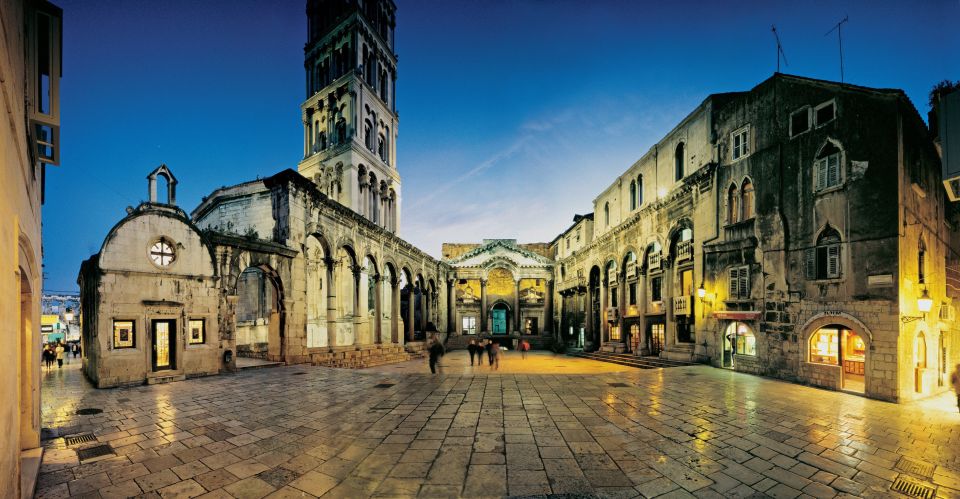
After the palace core, you’ll move through the Peristil area and then visit the Cathedral of Saint Domnius. This is one of the tour’s best “why this matters” moments.
You’ll see how the cathedral formed from an Imperial Roman mausoleum, and you’ll hear the significance behind that transformation. The highlight pitch calls Saint Domnius the oldest Catholic cathedral in the world, and even if you only keep the takeaway that it’s historically exceptional, you’ll still leave with a strong sense of continuity: Roman power to Christian worship, all in the same stones.
Why you’ll like this part of the tour: it stops the story from being only about Roman emperors. You get a sense of how the same built space keeps serving new generations, with new meanings stacked on top of the old plan.
The Vestibul photo stop: a short closer look
The tour includes the Vestibul as a photo stop and walk-through area. This is a small segment, but it’s useful because it gives you a chance to slow down right after the bigger cathedral moment.
If you like photography, this is the kind of stop that helps you capture details you might miss while keeping the group moving. It’s also a good time to ask quick questions—like where to stand for the best views back toward the palace spaces—because your guide is fresh and the route is still in your muscle memory.
Pricing: is $41 worth it?
At $41 per person for 90 minutes to 2 hours with a live guide, I think this is solid value—especially if it’s your first visit to Split’s old town. You’re paying for human interpretation of a complicated site: gates, courtyards, layers of architecture, and the connections between Roman planning and modern streets.
The important catch: entrance fees aren’t included, and neither are food and beverages. That means your real day cost depends on what you choose to add at the sights and whether you grab a snack afterward. For budgeting, I’d assume you’ll pay for any ticketed entries during the visit and plan a simple water-and-snack strategy outside the tour.
In short: the guide is the main product here. If you love history, love structure, and want to make the palace make sense fast, this price usually feels fair.
Who this tour suits best (and who should skip it)
This is best for you if you want a guided overview that gets the essentials without dragging. It’s also a great fit if you’re the kind of traveler who likes learning the “how” behind a place—how Roman design, later changes, and daily city life coexist inside Split’s old streets.
It’s less ideal if you have mobility limitations. The tour itself isn’t recommended for limited mobility, and the route is built around walking. Comfortable walking shoes are a must, and you should expect uneven surfaces.
Also consider your language comfort. One past group noted that their experience mixed English and Spanish speakers, which can slightly change how smoothly the explanations land for everyone. If language precision matters a lot to you, choose a departure that matches your preference.
Should you book this Split walk?
I’d book this tour if you want fast orientation plus real highlights: Diocletian’s Palace cellars, the Peristyle with the Egyptian sphinx, and the Cathedral of Saint Domnius—then a reset at the Riva waterfront. It’s a smart way to turn Split from confusing to understandable in just a couple hours.
Skip it only if you strongly dislike walking on stone streets or you need a step-free route. If that’s your situation, you’ll likely be happier with a different format that reduces mobility strain.
If you can, look for a departure time that feels comfortable for your body (cooler early slots can help), and if you have the option, pay attention to guide language. Past groups have had stand-out experiences with guides such as Sandra, Anna, Ivan, Jelena, Ana, and Elena, often praising their enthusiasm and story-driven explanations—those details can make the palace feel even more alive.
FAQ
How long is the Split walking tour with Diocletian’s Palace?
The duration is listed as 90 minutes to 2 hours.
What does the tour cost?
The price is $41 per person.
What’s included in the price?
You get a live guide for about 1.5 to 2 hours.
Are entrance fees included?
No. Entrance fees are not included.
Are food and drinks included?
No. Food and beverages are not included.
What languages are available?
The live tour guide offers English and Spanish.
Where does the tour start?
The meeting point may vary depending on the option booked, including South Tours Travel Agency and the Golden Gate area.
Is this tour recommended for people with limited mobility?
No. It’s not recommended for people with limited mobility.
Is the tour cancelled if I book and weather changes?
The tour offers free cancellation up to 24 hours in advance for a full refund.
Can I reserve without paying right away?
Yes. The option is listed as reserve now & pay later.