REVIEW · SPLIT
Split: Cultural Walking Tour with Anthropologist Guide
Book on GetYourGuide →Operated by Context Culture · Bookable on GetYourGuide
Split has a second story beneath the marble. This cultural walking tour in Dalmatia uses Split’s most famous landmarks as evidence, then explains the socio-political tensions behind them, from identity and religion to economics and sexuality. It’s led by cultural anthropologist Marin, so you’re not just sightseeing. You’re learning how people argue about the past in the present.
I especially like the no-gloves-off approach and the way Marin connects architecture to everyday politics, not just dates and rulers. You also get extra audio-visual material to support each theme as you walk. One consideration: if you want an easy, purely scenic highlights tour, the focus on controversial and taboo topics might feel a bit intense.
In This Review
- Key highlights if you like your history with context
- Why an anthropologist guide changes Split’s walking tour game
- Park Josipa Jurja Strossmayera: starting with a map of meaning
- Golden Gate, Peristil, and the Diocletian undercurrent
- People’s Square and the politics of being in public
- Židovski prolaz and Fruit Square: memory in everyday streets
- Riva (a pass-by) and Republic Square: power, pleasure, and selective memory
- Trumbićeva obala: finishing with questions instead of a checklist
- How the tour’s controversial themes become practical knowledge
- Price and value: is $33 for 2 hours worth it?
- Who this tour suits best
- Should you book this Split anthropologist walking tour?
- FAQ
- FAQ
- How long is the Split cultural walking tour?
- What does the tour cost?
- What language is the tour offered in?
- Where do I meet the guide?
- Where does the tour end?
- Is it wheelchair accessible?
- What’s included in the price?
- Is there any extra cost during the tour?
- Is free cancellation available?
- Can I reserve and pay later?
Key highlights if you like your history with context
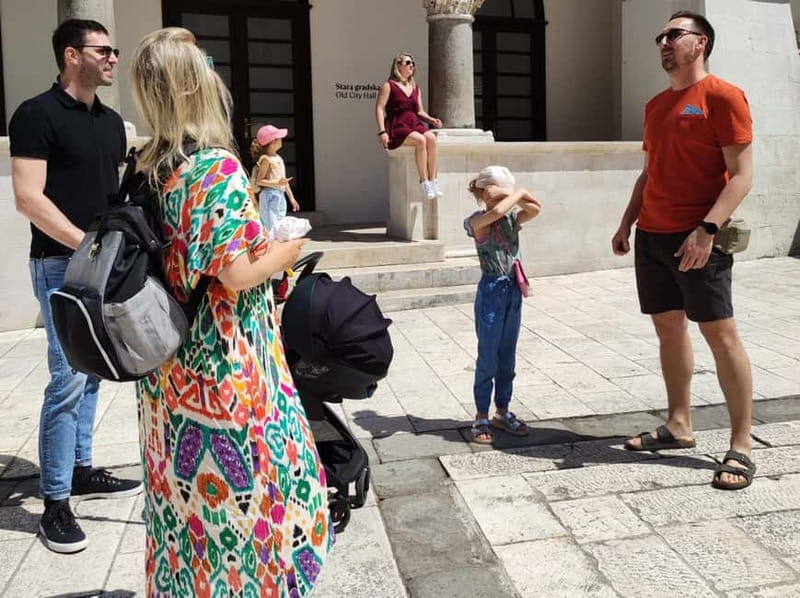
- Anthropologist-led storytelling that ties monuments to modern Croatian identity and politics
- Contested themes: religion, demographics, sexuality, geopolitics, and economics
- Major central sights covered fast, so first-timers still get their bearings
- Audio-visual material for each topic, helping you follow the argument on the move
- Designed for learners of different levels, not just history nerds
Why an anthropologist guide changes Split’s walking tour game
Most Split tours explain what you see. This one asks why it still matters. That shift is the whole point.
With Marin, the city becomes a living case study. The guide treats monuments like clues—doors into questions about who belongs, who remembers, and what gets softened or ignored. You’ll move through central streets and squares, but the real progress happens in your head as narratives collide: ancient empire meets modern statehood, and tourism-friendly myths meet uncomfortable realities.
I like this format because it respects your time. It does not make you choose between “old stuff” and “current stuff.” It blends them, then shows you how one leads to the other.
You can also read our reviews of more walking tours in Split

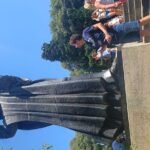
Park Josipa Jurja Strossmayera: starting with a map of meaning
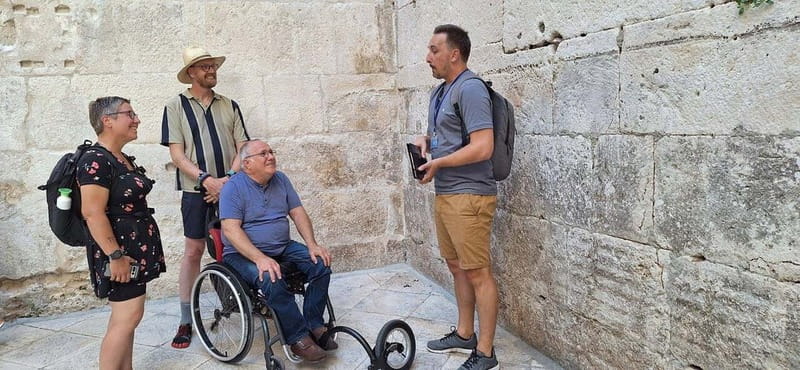
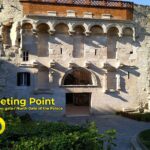
You meet at Ul. kralja Tomislava 12, in a big park next to the fountain in the middle. It’s a smart start point because you’re in a calmer spot before the tour gets into the city’s dense center.
From there, Marin sets expectations: this is a tour about contested history and contested contemporary issues. That means you’re not going to get a neutral, one-size-fits-all story. Instead, you’ll get a structured walk where each location supports a theme—politics, religion, identity, demographics, economics—often with tensions that don’t fit neatly into a brochure.
If you like being mentally prepared, take a minute before you walk. Look around. Then when the guide points out how people use places to argue, you’ll catch it faster.
Golden Gate, Peristil, and the Diocletian undercurrent
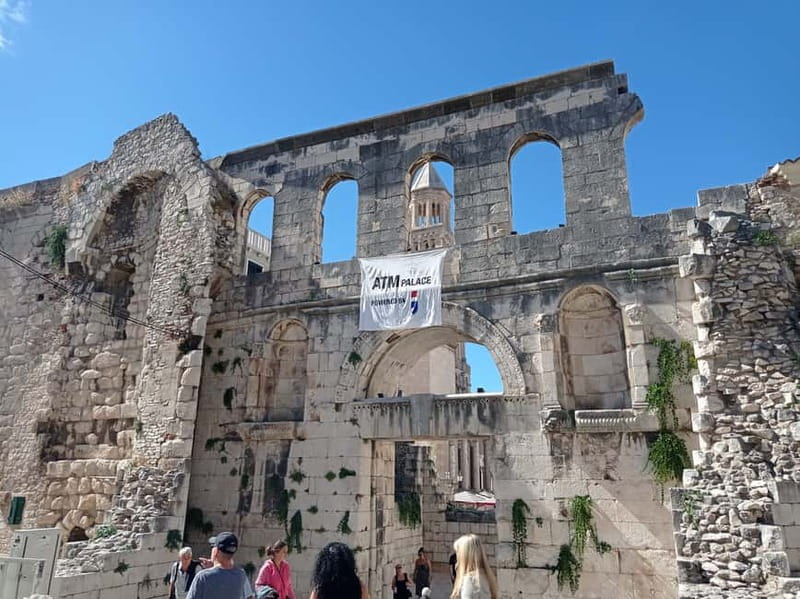
The first landmark stop is the Golden Gate, where you get an orientation moment and a quick sense of how the old city’s “face” became a kind of symbol. Expect the guide to frame it not only as architecture but as political messaging—how power announces itself through stone.
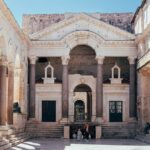
Next up is Peristil, a core space where you can feel how public life gets organized. Marin’s approach here is useful for first-timers: you’ll recognize the layout, but you’ll also understand what kind of story people want to tell about this space today. It’s not only the past. It’s how the past is used.
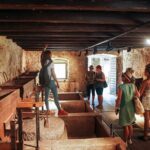
Then you’ll step into the Diocletian’s Cellars for a shorter stop. Ten minutes goes quickly, so the value isn’t in museum-level detail. It’s in connecting subterranean structure to a bigger theme: how empires function, how cities adapt, and why the meaning of these spaces changes as society changes.
A small drawback to know: the tour is designed to keep moving. If you want to linger and read every plaque, you might wish for extra time here.
People’s Square and the politics of being in public
People’s Square is where the tour leans harder into the question of society. You’re in a space built for gathering, then Marin uses it to talk about how modern Croatian politics and social life get shaped by historical attitudes and unresolved arguments.
You’ll learn how people interpret history differently, and how those interpretations affect identity today. That might mean discussing competing narratives rather than presenting one clean storyline. If you’re the type who asks what a city is hiding behind its monuments, this stop is a big payoff.
Also, because this is an English live guide, you’ll be able to ask for clarifications as you go. Marin constantly engages participants, so the tour stays interactive rather than lecture-style.
Židovski prolaz and Fruit Square: memory in everyday streets
You’ll pass through Židovski prolaz, the Jewish Passage. Ten minutes is not enough for a full history lesson, so treat it like a guided prompt. Marin uses the setting to talk about religion, identity, and how communities show up in a city’s map—and how demographics and beliefs reshape what’s visible.
Then comes Fruit Square, another central stop where the guide connects place to social meaning. This is one of those times when the tour does something practical: it helps you see what you would normally walk past without noticing. You’ll start spotting patterns in how different neighborhoods and squares relate to who lived there, what changed, and what stories got highlighted.
I like this section because it keeps the tour grounded. You’re not only in grand monumental zones. You’re in the kinds of places where daily life and historical memory overlap.
If rain hits, you’ll still have a shot at enjoying the main themes. One of the strengths of the guide’s style is making room for interpretation even when conditions aren’t ideal.
You can also read our reviews of more guided tours in Split




Riva (a pass-by) and Republic Square: power, pleasure, and selective memory

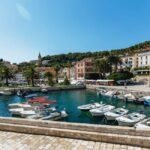
The tour continues along Riva, with a short pass. Think of it as a transition. You get the city’s famous waterfront energy, then shift back into analysis.
Then you reach Republic Square, a fitting place to talk about modern state identity and public symbolism. Here, Marin ties broader themes—geopolitics, economics, and religion—back to what you’re looking at. The goal is not to shock you for sport. It’s to explain why the same stonework can support different political feelings depending on who tells the story.
This is also a good moment for you to self-check. Ask yourself: what details do I naturally notice when I visit? And which ones did the guide point out that I would have missed? If you enjoy that kind of mental reset, this tour will feel like money well spent.
Trumbićeva obala: finishing with questions instead of a checklist
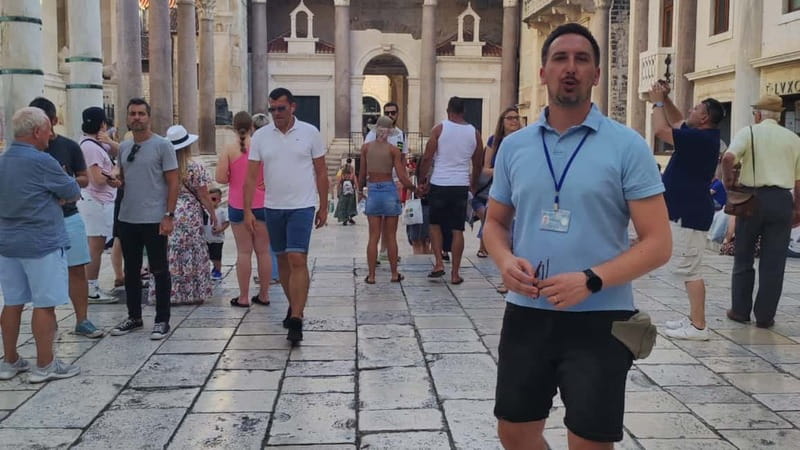
The walk ends at Trumbićeva obala. Even if the route keeps you moving through tight city blocks, the ending matters because it’s when the themes start clicking together.
By this point, you’ve visited major anchors—Golden Gate, Peristil, Diocletian’s Cellars, People’s Square, Židovski prolaz, Fruit Square, Republic Square—so you leave with both a map in your mind and a way to interpret what you’ll see afterward on your own.
I like tours that help you travel smarter later. After this, you’ll be able to look at Split and ask better questions: Who benefits from a simplified story? What gets remembered in public? What gets avoided? Those questions follow you to the next museum, the next conversation in a café, even the next street name.
How the tour’s controversial themes become practical knowledge
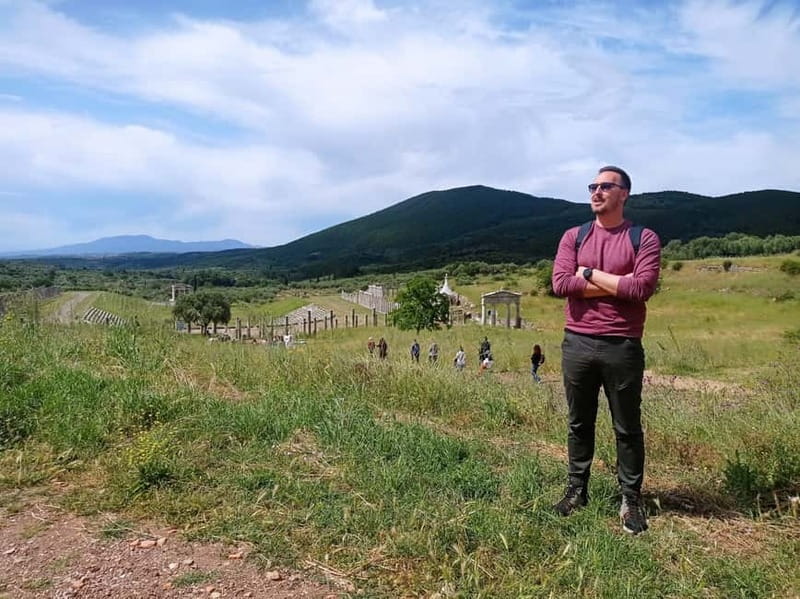
The tour’s stated goal is to cover taboos and contested issues with a no-gloves approach. That can sound dramatic, but the real value is how it affects your understanding of modern Croatia.
Instead of treating history as a finished product, Marin treats it as an ongoing argument. You’ll connect topics that are usually separated on tour: politics and religion. Identity and demographics. The past and contemporary economics. Even sexuality, discussed through the lens of how societies develop rules, labels, and tensions.
What you take away isn’t a single opinion forced on you. It’s a toolkit for reading the city. You start noticing that monuments are often public negotiations about belonging. You also realize that modern Croatia’s story isn’t only about ancient inheritance—it’s about how communities lived through change and how they interpret that change now.
For many travelers, this is what turns a “nice day in Split” into a “now I understand why Split feels like it does.”
Price and value: is $33 for 2 hours worth it?
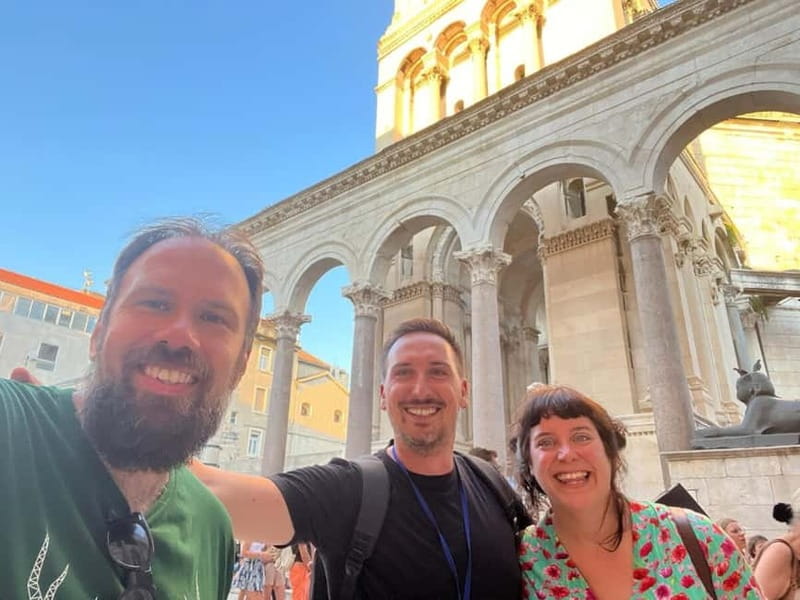
At $33 per person for about 2 hours (with starting times you can check based on availability), the price is very reasonable for an English-led, live guided experience focused on structured interpretation—not just a quick lap of famous stops.
The strongest value-add is the format. You’re getting:
- Multiple central landmarks covered efficiently
- A cultural anthropologist guiding the narrative
- Additional audio-visual material tied to the topics
This combination is what makes the tour more than a sightseeing walk. If your priority is deep context and you want help connecting architecture to real social issues, you’ll feel the value quickly.
If your priority is purely scenic photos and you don’t want any uncomfortable topics, you may feel like the cost is higher than expected for your taste.
Who this tour suits best
This is ideal if you’re intellectually curious and you like learning how societies argue about their own past. It’s also a strong choice for first-timers to Split because you still cover key sights in the center.
You’ll probably enjoy it most if you:
- Want context for Croatia’s modern identity
- Like “why this place looks like this” explanations
- Are comfortable discussing religion, politics, and contested history in an open, guided way
You might skip it if you’re on a tight schedule and only want a quick monuments-to-photos route, or if controversial topics would spoil your mood.
Should you book this Split anthropologist walking tour?
I’d book it if you want to understand Split beyond postcard views. The tour’s biggest strength is how it connects central landmarks to the human debates behind them. With Marin guiding, you’re not just learning facts—you’re learning how to interpret evidence and arguments using the city as your guidebook.
If you’re unsure, use this rule: if you enjoy questions more than checklists, this one fits. If you want a light, purely traditional highlights walk, pick a different tour and save this one for a trip when you want to think.
FAQ
FAQ
How long is the Split cultural walking tour?
It lasts 2 hours.
What does the tour cost?
The price is $33 per person.
What language is the tour offered in?
The live guide speaks English.
Where do I meet the guide?
Meet at Ul. kralja Tomislava 12, 21000 Split, in the big park next to the fountain in the middle.
Where does the tour end?
The activity ends at Trumbićeva obala, and the tour is described as ending back at the meeting point area.
Is it wheelchair accessible?
Yes, it is wheelchair accessible.
What’s included in the price?
The tour includes additional audio-visual material for each topic covered.
Is there any extra cost during the tour?
No extra costs are listed as part of the experience.
Is free cancellation available?
Yes, you can cancel up to 24 hours in advance for a full refund.
Can I reserve and pay later?
Yes, there’s a reserve now & pay later option.