REVIEW · SPLIT
Walking Tour Split
Book on GetYourGuide →Operated by Sol Travel Croatia · Bookable on GetYourGuide
Roman walls meet street life.
This short tour is a smart way to understand Split fast, because you walk the UNESCO-protected Diocletian’s Palace with a licensed local guide, then connect it to what you’ll see in today’s Old Town. If your guide is Anna or Victoria G, you’ll get lively, story-driven explanations that make the Roman-era spaces feel usable, not just academic.
I like that the route hits the big, recognizable landmarks while still teaching you what to look for as you go. One drawback: tickets/entrance fees for the sights are not included, and at 1.5 hours this is best as an orientation tour, not a full-day deep dive.
In This Review
- Key highlights you’ll actually feel on this walk
- Meeting at the National Theatre and getting your bearings fast
- Walking the UNESCO Diocletian’s Palace route
- St. Duje, Peristyle, Jupiter’s Temple, and Vestibul—what each stop teaches
- Cathedral of St. Duje
- Peristyle
- Jupiter’s Temple
- Vestibul
- Golden Gates and Grgur Ninski statue—human scale in stone
- Pjaca and Fruit Square—ending in the part of town you’ll use
- Duration, pace, and value: is $28 a good deal?
- Languages, guide style, and what to do with your questions
- Who this Split walking tour suits best
- Should you book this Walking Tour Split?
- FAQ
- What is the duration of the Walking Tour Split?
- Where do I meet for the tour?
- Where does the tour end?
- What’s included in the price?
- Are entrance tickets included for sights?
- What languages is the live guide available in?
- What’s the cancellation policy?
Key highlights you’ll actually feel on this walk
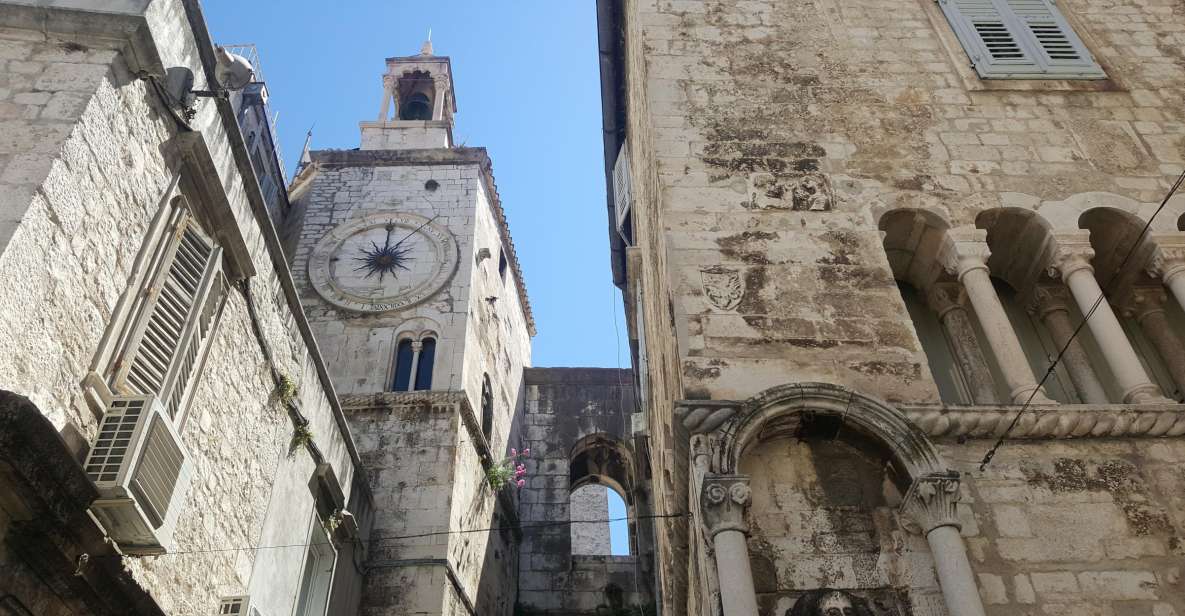
- UNESCO Diocletian’s Palace on foot: you’ll pass through the ancient palace area with an official guide at a comfortable walking pace.
- Cathedral-to-ruins context: stops like St. Duje and the Peristyle help you see how different eras overlap in Split.
- Seven-plus landmark stops that matter: Jupiter’s Temple, Vestibul, Golden Gates, and Grgur Ninski statue keep the walk from feeling repetitive.
- Old Split plus contemporary Split: the guide ties heritage sites to how the city functions now, so your photos make more sense later.
- Small-group flexibility in quieter months: the tour can still run even in off-season with very small groups, so the guide’s attention stays personal.
Meeting at the National Theatre and getting your bearings fast
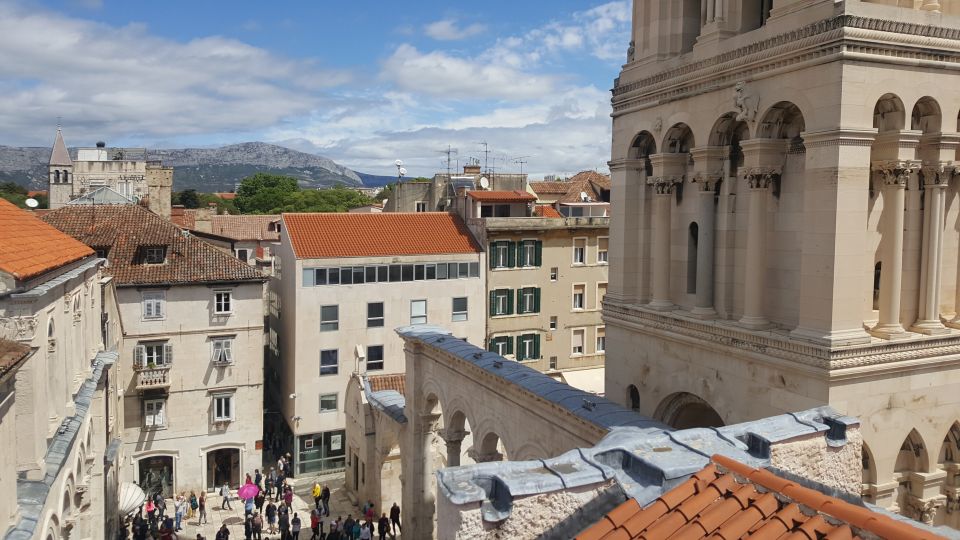
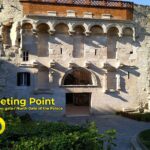
You start in front of the National Theatre in Split, at Trg Gaje Bulata 1. It’s a solid spot to begin because it’s close enough to the historic center that you’re already in the right zone for the Old Town loop.
From the first minutes, the guide’s job is to help you read the city. You’ll walk with the story of Split’s heritage in mind, so you’re not just passing stonework—you’re figuring out what each place is and why it shows up on your map.
You can also read our reviews of more walking tours in Split

Walking the UNESCO Diocletian’s Palace route
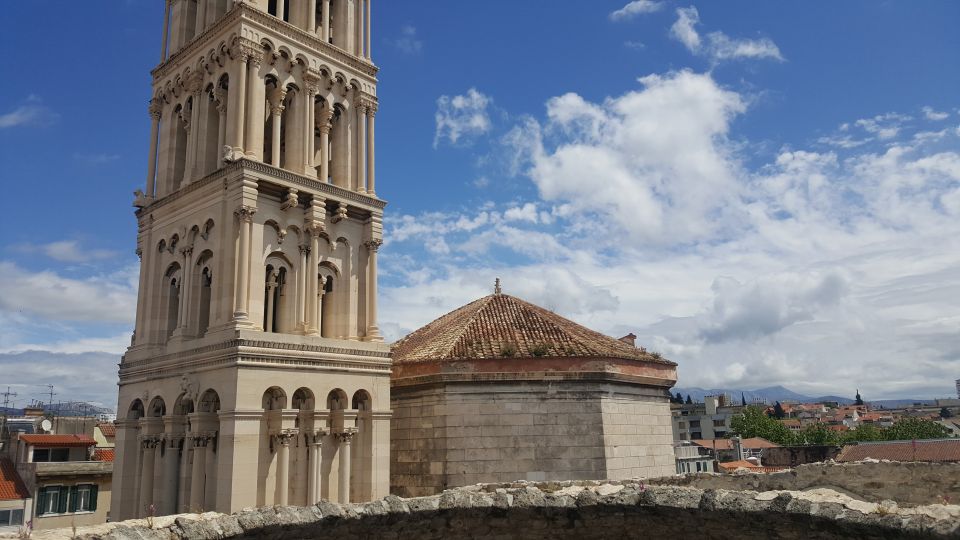
The heart of this tour is the walk around Diocletian’s Palace, the UNESCO-protected complex in the Old Town. This is the part that turns Split from a beach stop into a place with layers you can track with your eyes.
What makes the palace area especially valuable on a guided walk is that it’s easy to get lost in open spaces, entrances, and overlapping structures. With a licensed guide, you’re given a set of landmarks to anchor your attention—so by the time you hit the major points later, you already know where you are and what you’re looking at.
You’ll also get explanations that connect the past to today. The tour is specifically positioned to help you learn about both old and contemporary Split, which is exactly what you want in a city where the ruins are not off to the side—they sit inside the everyday city fabric.
St. Duje, Peristyle, Jupiter’s Temple, and Vestibul—what each stop teaches
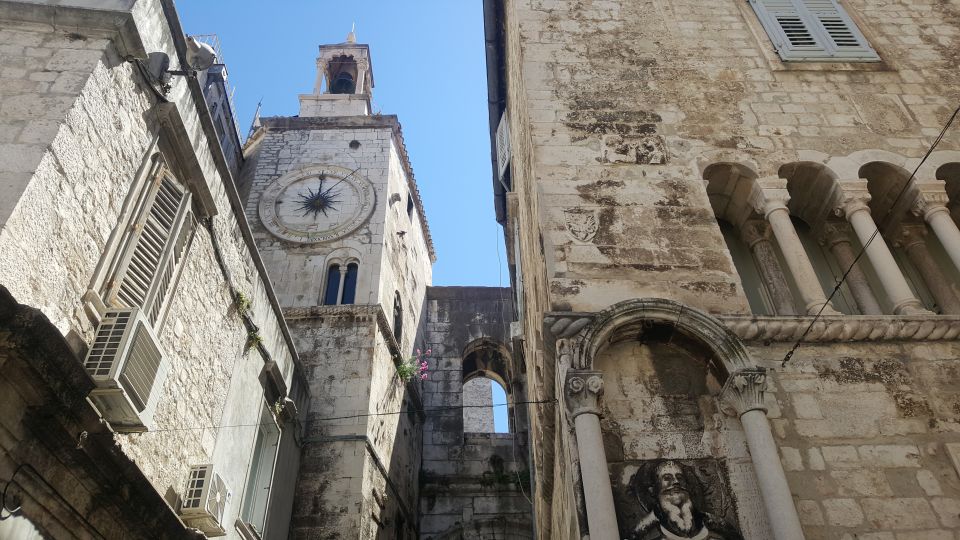
This route moves through a classic “see it, then understand it” set of sights. The key is that you’re not just told names; you’re taught what each spot represents in the broader story of the palace and the Old Town.
Cathedral of St. Duje
The Cathedral of St. Duje is one of Split’s most important visual anchors. Even if you’ve only seen a quick photo, the guided angle helps you understand why it’s a must-stop symbol in the city center rather than just another church on a walking day.
Peristyle
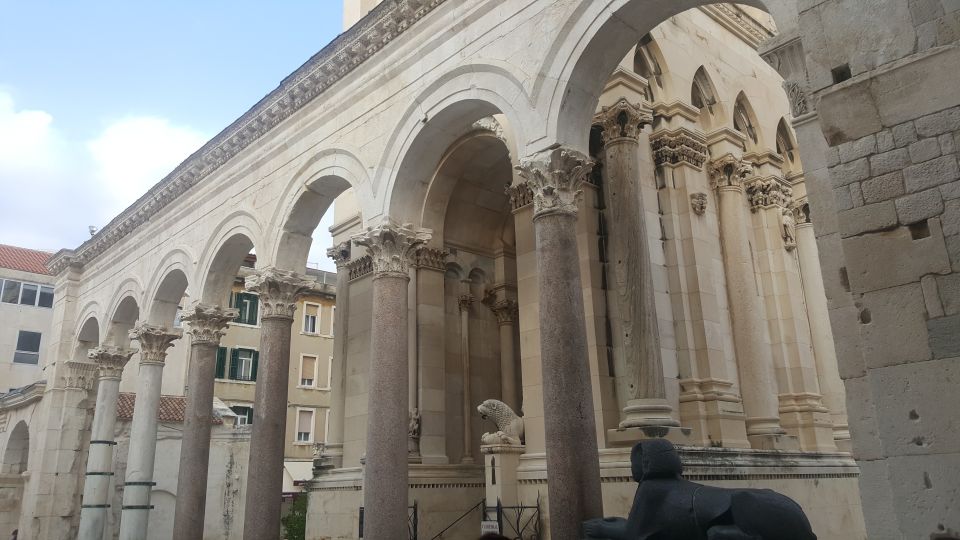
Next comes the Peristyle, a space that helps you grasp the palace layout. On your own, it’s easy to treat it as a pretty courtyard; with the guide, it becomes a reference point for how the palace worked as a designed, intentional environment.


Jupiter’s Temple
At Jupiter’s Temple, you’ll get a real sense of how Roman-era features survived into modern street life. If you’ve got even mild interest in how ancient cities functioned, this is the stop where the walk starts clicking as a system, not a random collection of stone.
Vestibul
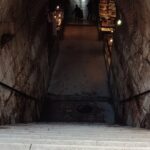
The Vestibul is the kind of stop that can feel abstract unless someone points out what makes it significant. A guide helps you connect what you see on the ground to what the palace spaces were meant to do, so you’re not walking past details without realizing they’re telling you something.
Golden Gates and Grgur Ninski statue—human scale in stone
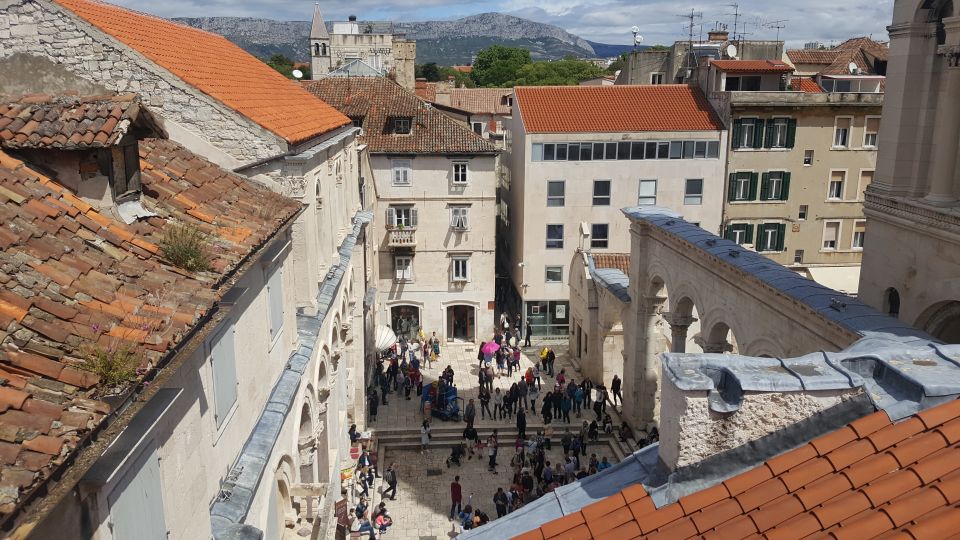
The Golden Gates and the Grgur Ninski statue add two different flavors to the walk: architecture and personality.
The Golden Gates are a standout because they look like a formal entrance to a key part of the palace. With a guide, you’ll understand what makes it special beyond the name—how it fits into the palace story you’re building one stop at a time.
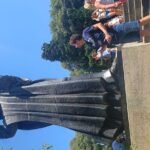
Then you pivot to the Grgur Ninski statue, which brings the tour back to human presence. Statues like this are great on a short tour because they give your eyes a clear focal point, and the guide’s context helps you appreciate why this figure belongs in the middle of your route through heritage space.
Pjaca and Fruit Square—ending in the part of town you’ll use
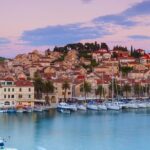
After the palace core, the tour shifts toward the public squares that make Split feel like a real working city. You’ll see Pjaca and Fruit Square, which are exactly the kind of stops that help you plan the rest of your day.
This matters because a 1.5-hour tour can do more than sightseeing. It can help you decide where to wander next: where you might grab a snack, where the central pedestrian flow naturally takes you, and how the Old Town “feels” once you’ve walked the heritage spine.
One of the nicest perks is that your guide is also set up to answer questions about other activities around the city center after the tour. If you want your afternoon to feel intentional—rather than random wandering—that’s a practical advantage.
Duration, pace, and value: is $28 a good deal?
At $28 per person for about 1.5 hours, the price makes sense if you value context. You’re not paying for a long museum visit; you’re paying for a guided route through multiple landmark points in the heart of the city, with a licensed professional translating what you’re seeing.
This is also where the short duration is a feature, not a bug. In a destination where travel time and logistics add up, 90 minutes is often the sweet spot for getting your bearings, collecting key sights, and leaving room for you to explore at your own pace afterward.
Two practical notes that affect value:
- Tickets and entrance fees are not included, so some sights may cost extra if you decide to go inside after your guided view.
- Because it’s a walking tour around major outdoor landmarks and palace areas, it’s best for people who enjoy seeing a lot without needing hours at each single spot.
If you’re traveling in the off-season, there’s another value angle: the tour can still run with very small groups. That can turn this from a standard group walk into a more conversational experience, especially when your guide loves the city and the subject.
Languages, guide style, and what to do with your questions
The tour runs with a live guide in Spanish and English. That’s important because it means you won’t miss the nuance if you’re more comfortable speaking to a guide in your language.
I also like that the tour is designed around questions. Your guide isn’t just delivering facts while you follow along; the format encourages you to ask about additional activities in the center afterward. That’s the kind of help that can save you time, especially if it’s your first day in Split and you’re trying to avoid dead ends.
From guide examples like Anna and Victoria G, the common thread is clear: the best moments are when the guide makes the Roman-era setting feel connected to everyday life in Split now.
Who this Split walking tour suits best
This is a great fit if you:
- want an organized introduction to the Old Town without spending your whole day in one place
- enjoy architecture and heritage, especially Roman-era spaces
- like having someone explain what you’re seeing at each stop so your photos and memories make more sense
It’s less ideal if you’re hoping for a long, inside-everything itinerary. Since tickets/entrance fees aren’t included, and the walk is only 1.5 hours, you’ll likely want to plan a follow-up experience after the tour if you’re especially interested in going deeper.
It also suits people who don’t want to take on Split’s layout alone. Starting near the National Theatre and ending back there means it’s easy to return later, regroup, and continue on without major navigation stress.
Should you book this Walking Tour Split?
Yes—if your goal is smart orientation and you want to understand what you’re looking at in Split’s most famous areas. For $28 and about 90 minutes, you get a licensed guide, the UNESCO Diocletian’s Palace area, and a clear sequence of landmark stops that connect heritage to daily city life.
Book it especially if it’s your first time in Split or if you want your next hours planned with local guidance. Skip it only if you already have a strong plan to visit specific interiors and you’d rather spend time alone at your own pace—because this tour is designed to teach you the city’s layout and meaning, not to replace longer ticketed visits.
FAQ
What is the duration of the Walking Tour Split?
The tour lasts 1.5 hours.
Where do I meet for the tour?
Meet in front of the National Theatre in Split, at Trg Gaje Bulata 1, 21000, Split, Croatia.
Where does the tour end?
The activity ends back at the meeting point.
What’s included in the price?
It includes a licensed tour guide, a walking tour around Split city center, and insurance.
Are entrance tickets included for sights?
No. Tickets and entrance fees for sights are not included.
What languages is the live guide available in?
The guide is available in Spanish and English.
What’s the cancellation policy?
Free cancellation is available up to 24 hours in advance for a full refund.