REVIEW · SPLIT
Evening Group Walking Tour – Split Old City Diocletian’s Pal
Book on GetYourGuide →Operated by Dubrovnik Local Guide · Bookable on GetYourGuide
Split looks best when the day cools. This evening walking tour is built for the old city’s most famous core: Diocletian’s Palace. You’ll move through the same streets and set pieces that helped turn this area into an easy UNESCO World Heritage visit, all with a local guide speaking English.
I especially like the way the route hits big-ticket stops in one smooth hour: Peristyle Square and the Cathedral of St. Duje give you clear landmarks fast. I also like that the tour isn’t just surface viewing; it includes palace details like the Temple of St. Jupiter and even a look down into the underground cellars.
One drawback to consider: one hour is a sprint. If you want to linger in only the palace itself, you’ll likely want a longer, more focused tour.
In This Review
- Key things to notice before you go
- Why an evening walk works in Split’s Old City
- Meeting point by the big red Split sign
- How the 70-minute pace is likely to feel
- Diocletian’s Palace: the real reason Split is on so many lists
- Peristyle Square: where the palace shows off
- Cathedral of St. Duje: Roman walls with later purpose
- Temple of St. Jupiter: a different kind of ancient stop
- Underground cellars: where the palace feels practical
- Price and value: about $21 for a licensed guide
- English guiding quality and group dynamics
- What I like most about this tour’s “highlight-first” design
- Who this tour suits best (and who should rethink it)
- Should you book this Evening Diocletian’s Palace walk?
- FAQ
- How long is the Evening Group Walking Tour?
- What are the main sights included?
- Is the tour guided in English?
- Where do I meet the tour?
- How much does it cost?
- Can I cancel if my plans change?
- Is it a good choice if I want to avoid hot daytime temperatures?
Key things to notice before you go

- Cooler evening timing helps you enjoy the palace without frying in peak heat
- Peristyle Square is treated like the main stage, not a quick photo stop
- Cathedral of St. Duje connects the Roman complex to later eras you can still feel today
- Temple of St. Jupiter adds another layer beyond the cathedral-and-courtyard circuit
- Underground cellars bring a different mood: darker, quieter, and more “palace behind the scenes”
- English live guiding means you can ask questions and get context while you walk
Why an evening walk works in Split’s Old City
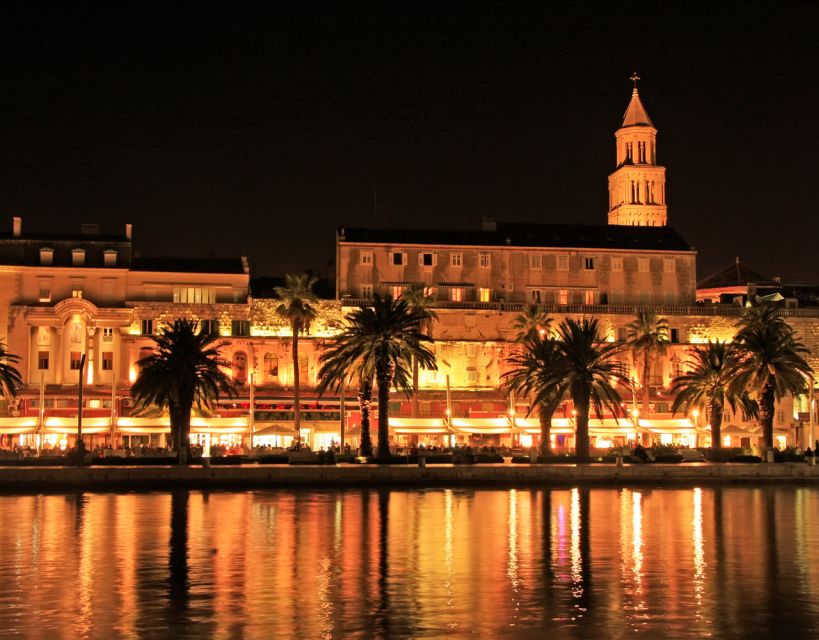
Split’s old core is compact. That’s great—until it’s hot. This is why I like the evening format. The temperature usually feels more forgiving, so you can actually enjoy standing in place to read details, not just race past them.
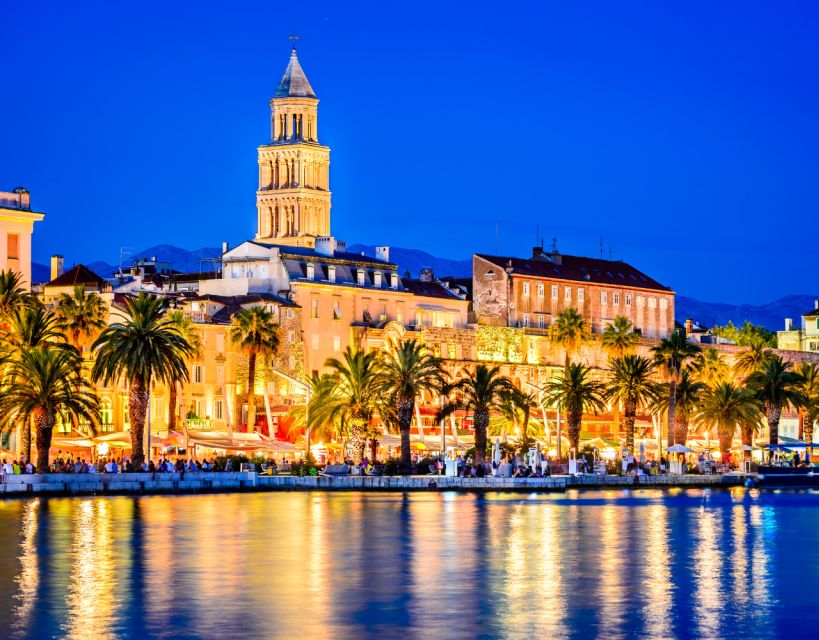
The other win is atmosphere. Diocletian’s Palace is impressive in daylight, but at night it’s easier to see the “palace as city” idea. You’re walking through spaces that still function as part of Split, not a museum floor. That small shift makes the stories land better, even if you only have about an hour.
You can also read our reviews of more walking tours in Split


Meeting point by the big red Split sign
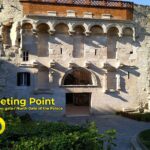
The meeting point is simple: next to the big red sign that says Split. Arrive a few minutes early so you’re not hunting your group while the sun is dropping and everyone else is already in motion.
This matters more than you’d think, because your time on the ground is short. The tour is designed to pack the highlights into roughly 70 minutes with the guide, so a late start can cut into the stops you came for.
How the 70-minute pace is likely to feel
Think of this as an orientation plus highlights tour. The format is a group walking tour through the old part of Split, centered on Diocletian’s Palace. In that timeframe, you’ll get context as you go—enough to connect what you’re seeing with why it exists—without trying to cover every nook.
That can be a blessing if you want momentum. In 1 hour, you’ll come away with mental anchors: square, cathedral, palace spaces, and at least a glimpse into what’s below street level. But it also means there’s little slack. If your ideal visit is slow and detailed, you may find the pace a bit tight.
Diocletian’s Palace: the real reason Split is on so many lists
Diocletian’s Palace isn’t just a site. It’s a structure that helped shape the city that grew around it. The tour focuses on that 1,700-year-old palace complex, now part of Split’s daily landscape.
What you’ll like here is that the palace doesn’t stay theoretical. You walk through the actual layout elements that made the empire’s presence tangible: grand public spaces, religious landmarks, and practical areas like underground chambers. Even if you don’t consider yourself a history person, you’ll be able to connect form to function—where you’d expect crowds, where you’d expect worship, and where you’d expect storage.
Peristyle Square: where the palace shows off
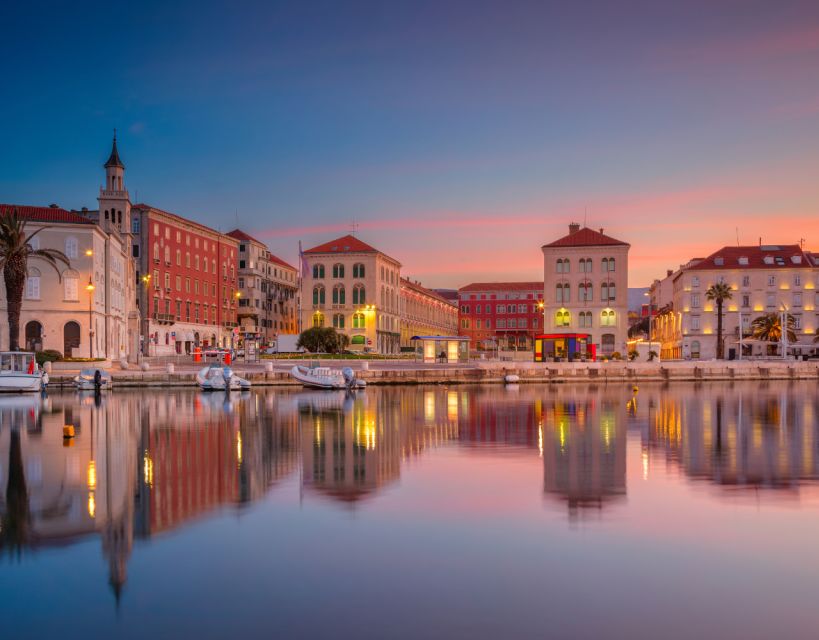
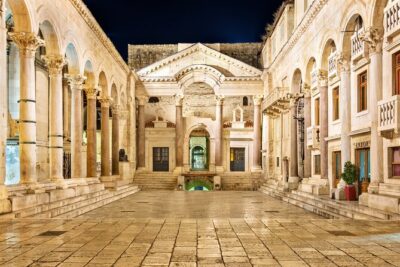
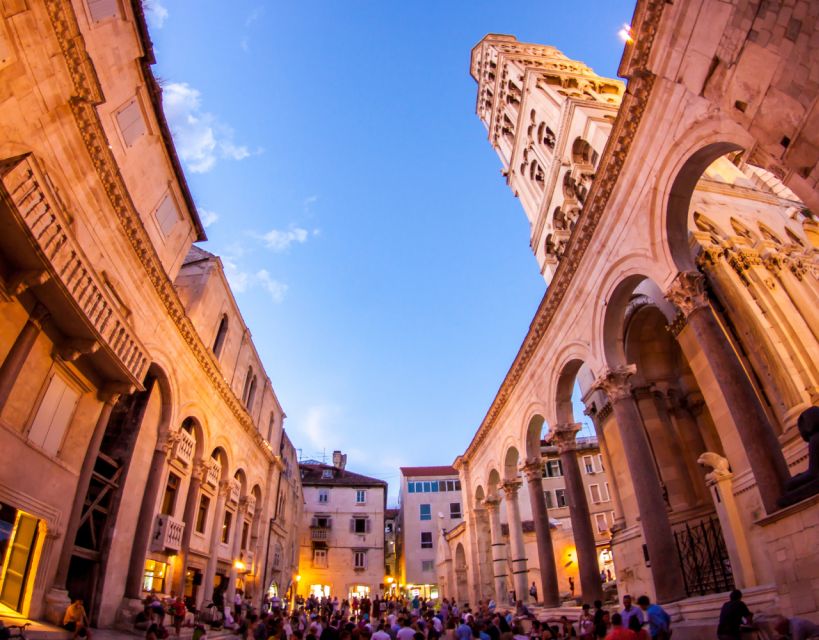
Peristyle Square is one of those places that instantly makes the scale click. It’s open, iconic, and it’s exactly the kind of spot where a guide can help you read the space instead of just admire it.
In a short tour, Peristyle is a smart anchor. It gives you a “center of gravity” for the entire palace layout, so the later stops feel more connected. You’re not just collecting monuments—you’re learning how the palace organizes daily movement and power.
If you’re taking photos, plan to do it here. If you only have time for one key composition, this is the one that usually delivers.
You can also read our reviews of more city tours in Split





Cathedral of St. Duje: Roman walls with later purpose
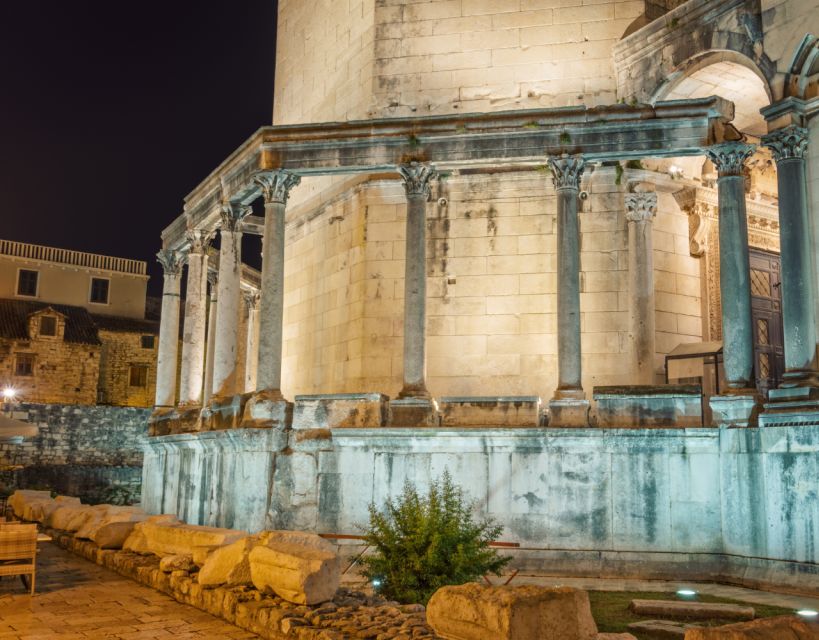
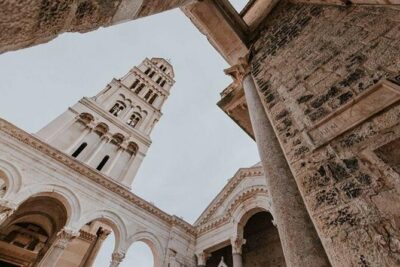
The Cathedral of St. Duje is one of the tour’s top highlights, and for good reason. In this part of Split, you can still sense how the meaning of spaces changes over time. The cathedral sits within the larger Diocletian’s Palace story, giving you a clear example of how an imperial complex became part of a living city’s religious life.
This stop is valuable even for first-timers because it explains why the palace isn’t frozen in ancient time. It’s a layered site, and the cathedral is a visible, walk-up way to feel that layering.
If you like your history with strong “so what” meaning, this is where it shows. A good guide can connect what you see now—cathedral and surroundings—to how the site was used in different eras.
Temple of St. Jupiter: a different kind of ancient stop
The tour includes the Temple of St. Jupiter, which adds variety to the classic Diocletian’s Palace route. Instead of only focusing on the square and the cathedral, this point helps you broaden the palace’s religious and architectural story.
Why this matters in a one-hour experience: it prevents the tour from feeling like a one-note circuit. You’re still within the palace area, but the architectural vibe and the point of focus shift. That keeps you engaged and helps you remember more than just one pretty highlight.
Underground cellars: where the palace feels practical
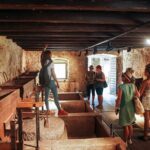
The inclusion of the underground cellars is a major plus. Street level is grand and scenic, but cellars are where you understand the palace as infrastructure: storage, service spaces, and the less romantic but very real side of daily life.
Even if you only get a brief look, going below ground changes the mood. It also gives the tour a nice balance: you’re seeing both the public face and the more hidden layers of the complex.
This is also a spot where a guide’s pacing matters. You’ll want to pause and listen. The value is in the explanations that make the space readable, not in sprinting through it.
Price and value: about $21 for a licensed guide
At $21 per person for around an hour, the value comes from three things you can’t easily replicate on your own without some planning:
- a licensed guide to connect the dots in real time
- a compact route that hits major palace features
- a time-saving way to understand a UNESCO World Heritage area without turning it into an all-day project
If you’d otherwise spend time figuring out where to go and what each stop means, this price often feels fair. And if you’re visiting during the hot season, the evening timing helps you get more out of your visit without suffering through midday heat.
The one thing to weigh: if your budget allows and you’re the type who likes to linger, you may eventually want a longer, palace-focused experience. But as a first orientation that still feels satisfying, this tour hits the sweet spot.
English guiding quality and group dynamics
This tour is run with live English guiding. That’s a big deal in Split, because many visitors want context, not just directions.
From the experience reports I’ve seen, the quality can vary with the guide’s delivery style. Some guides clearly have a practiced script with clear historical detail and engaging delivery. Others have been described as speaking too fast, which can make it harder to follow even if the information is good.
My practical advice: if you care about narration, choose a group time that feels comfortable for you. Don’t assume every guide will match your preferred pace. If you know you struggle with fast spoken English, arrive alert and be ready to ask for a slower repeat if you miss a key point.
What I like most about this tour’s “highlight-first” design
A lot of walking tours in historic cities go either way: they’re either too generic or too detailed to finish in time. This one tries a third approach: highlights first, meaning included.
You get major stops like Peristyle Square and Cathedral of St. Duje, plus extras like Temple of St. Jupiter and the underground cellars. That mix makes it easier to leave with a mental map.
You also get the benefit of evening comfort. When you’re not battling heat, it’s easier to stand still. Standing still is what turns sightseeing into understanding.
Who this tour suits best (and who should rethink it)
This tour is a good fit if:
- you want a romantic, evening-paced way to see Split’s most famous palace area
- you like guided context, especially around landmark buildings and palace layout
- you have limited time and want the main highlights without planning every step
You might want a different option if:
- you want deep detail and longer time in only one area of the palace
- you prefer slow exploring over a structured route
- you’re sensitive to fast group pacing and want lots of stops at your own rhythm
Should you book this Evening Diocletian’s Palace walk?
I’d book it if you’re visiting Split and want an easy way to understand Diocletian’s Palace in a short evening window. Peristyle Square, Cathedral of St. Duje, and the included palace add-ons like St. Jupiter’s Temple and the underground cellars give you a solid “greatest hits” set, with the comfort of cooler temperatures.
I’d think twice only if you’re the kind of person who needs more than an hour to absorb architecture or you specifically want a longer, palace-only deep dive. In that case, look for a longer option.
If your goal is to get oriented, see the key highlights, and feel satisfied without spending the whole evening planning—this is a strong choice.
FAQ
How long is the Evening Group Walking Tour?
It runs for about 1 hour, with about 70 minutes spent with the live guide.
What are the main sights included?
You’ll see Diocletian’s Palace and key highlights such as Peristyle Square, the Cathedral of St. Duje, the Temple of St. Jupiter, and also underground cellars.
Is the tour guided in English?
Yes. The live guide provides the tour in English.
Where do I meet the tour?
Meet next to the big red sign with the word Split.
How much does it cost?
The price is $21 per person.
Can I cancel if my plans change?
Yes. Free cancellation is available up to 24 hours in advance for a full refund.
Is it a good choice if I want to avoid hot daytime temperatures?
Yes. The tour is described as a good option for avoiding hot summer temperatures so you can enjoy the popular historical sights more comfortably.