REVIEW · SPLIT
Private History Split Walking Tour in Italian – Small group
Book on Viator →Operated by Ancient Tours · Bookable on Viator
Diocletian’s Palace is a puzzle worth solving. This small-group Italian history walk helps you see the palace like it was designed, with stops that connect the big ideas (how Diocletian rose to power) to real places you can point at. I like that the guides are praised for clear Italian storytelling and for weaving in little surprises, like a possible burst of traditional Dalmatian singing at the vestibule. One thing to plan for: parts of the area can mean steps, so it’s not the best fit if you have issues with high steps.
For the money, it’s a smart way to get your bearings in Split fast. You cover the main palace highlights plus key city stops like Riva Harbor and Fruit’s Square (Trg Brace Radic), and most of the sights you stop at don’t require extra admission. The tour is short—about 1 hour 30 minutes—so if you want to linger in shops or go deep into one museum-like area, you’ll still need a second pass on your own.
In This Review
- Key Highlights You’ll Notice Right Away
- Diocletian’s Palace: The Cool Part Is How It Still Works
- Peristyle ulica: Starting in the Palace’s Central Square
- The Vestibulum Stop: Where Power Gets an Atmosphere
- Substructures Under Your Feet: Understanding the Palace Layers
- Golden Gate and Gregory of Nin: The Palace Meets Later Identity
- Riva Harbor and the Bronze Model: Why Split’s Waterfront Matters
- Fruit’s Square (Trg Brace Radic): Venetian Layers and Marko Marulić
- Split Synagogue: Passing By a 16th-Century Reminder
- Price and Tickets: What $69.39 Buys You Here
- What the Best Guides Seem to Do Differently
- When This Tour Is a Smart Match (And When It Isn’t)
- Practical Tips So You Get the Most Out of the 90 Minutes
- Should You Book This Italian Walking Tour in Split?
- FAQ
- How long is the Split walking tour?
- Where does the tour start?
- Is this tour private?
- Is the tour in Italian?
- What’s included in the itinerary?
- Are tickets included?
- Will we visit the museum part of the substructures?
- Is the tour suitable if I have trouble with steps?
- How and when will I receive confirmation?
Key Highlights You’ll Notice Right Away
- Peristyle as your “map”: start from the central square that links almost every major palace area
- Vestibulum and palace soundbites: a stop where you might hear traditional Dalmatian singing
- Golden Gate + Gregory of Nin: the entrance viewpoint that connects palace power to later Croatian identity
- Substructures route without the museum: you get the story underneath without being locked into museum time
- Riva Harbor’s story: you’ll see a bronze model and understand why the promenade matters
- Fruit’s Square meaning: a quick hit of Venetian influence and the importance of Marko Marulić
Diocletian’s Palace: The Cool Part Is How It Still Works
Split’s old core feels like it’s been running on schedule for centuries. Diocletian’s Palace isn’t just ruins and photos—it’s a built layout that still shapes where people walk, gather, and move through town. That’s why this tour works: it doesn’t treat the palace as separate from Split. It treats it as the engine.
You’ll get a guide who knows the sites and knows how to explain them in a way that makes the architecture click. The tone in reviews points to guides who are prepared, easy to like, and strong at telling stories clearly in Italian—names like Maria and Doris show up often in guest feedback.
You can also read our reviews of more walking tours in Split

Peristyle ulica: Starting in the Palace’s Central Square
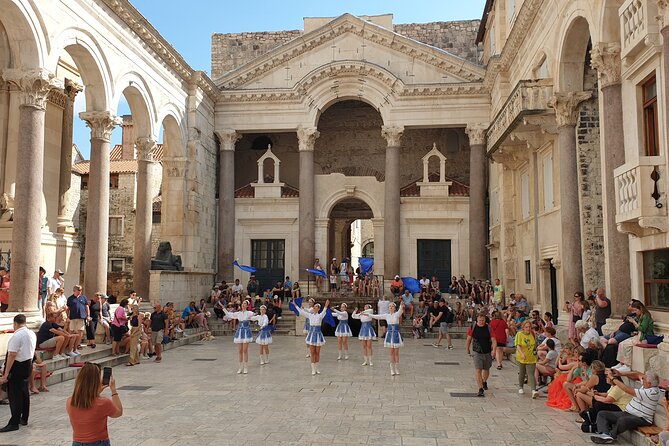
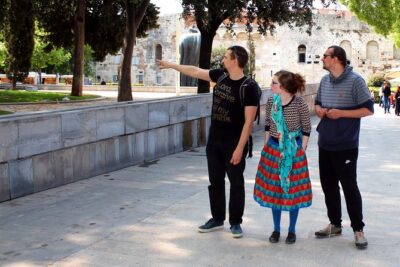
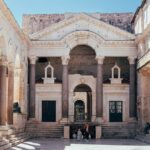
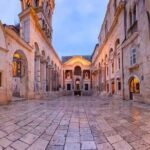
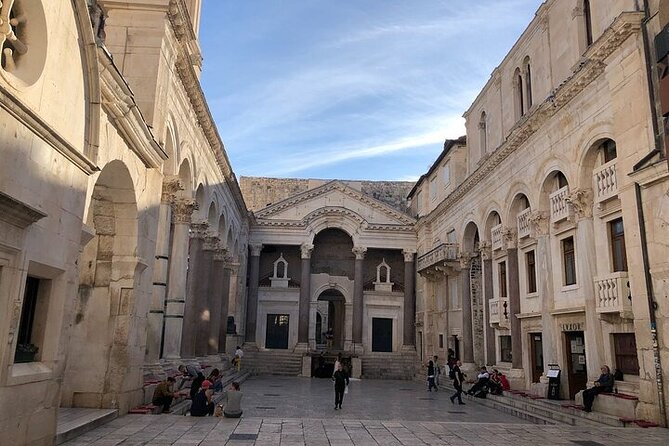
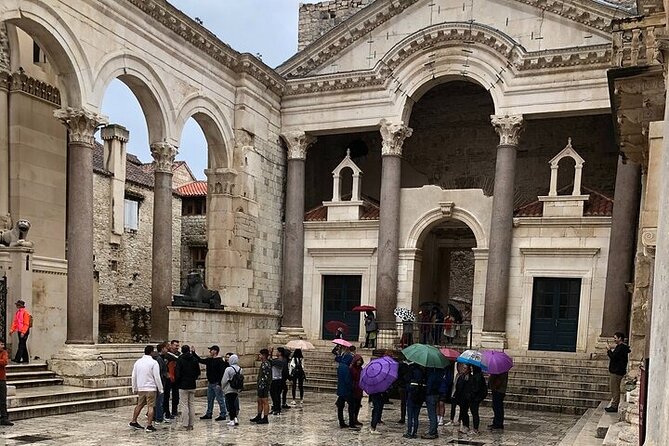
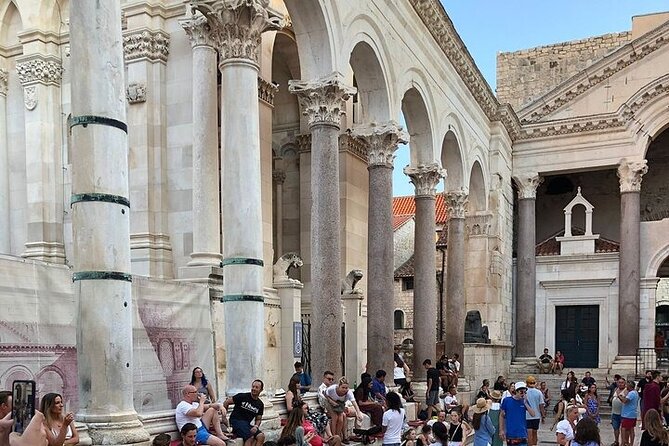
Your walk begins at the Peristyle area (Peristil ulica), the central square of Diocletian’s Palace. This is the best possible first stop because it gives you orientation fast. From here, the rest of the palace makes more sense—you can mentally connect the dots as you move.
The Peristyle isn’t just impressive. It’s practical. It helps you understand how Diocletian’s plan concentrated movement and authority into one core space. If you’ve ever walked through big historical sites and felt lost, this stop is designed to stop that problem early.
Plan for a short stop here—around 15 minutes—so you’ll take in the key views without turning the tour into a slow museum marathon. You’ll also be able to connect what you see later at other gateways and passageways to this exact starting logic.
The Vestibulum Stop: Where Power Gets an Atmosphere
Next comes the Vestibulum of Diocletian’s Palace. This is a smaller moment, but it matters because it’s a shift from “big square” to “threshold.” You’re in the area tied to Emperor Diocletian’s space, and the storytelling focuses on what that meant when the palace was new.
One of the more memorable ideas here is the possibility of traditional Dalmatian singing. Even if it doesn’t happen every time, the tour sets you up to listen for it rather than treat the stop like another photo stop. That kind of attention turns a quick architectural moment into a lived-in cultural beat.
Expect this as a brief stop—about 5 minutes—so it’s more about context than lingering.
Substructures Under Your Feet: Understanding the Palace Layers
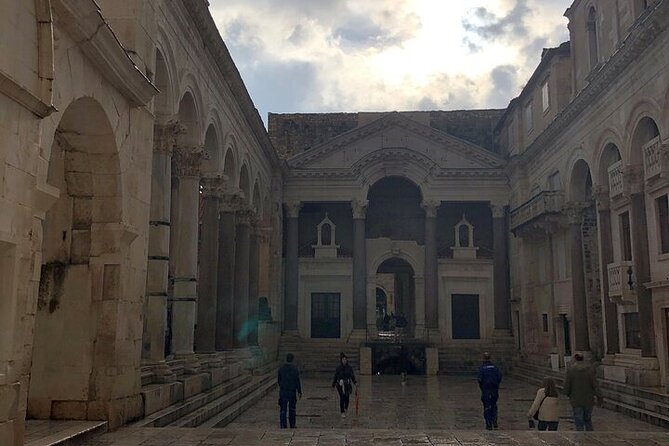
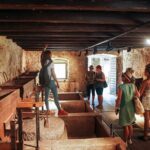
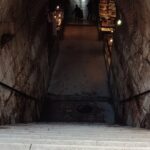
Then you move into the palace substructures. These are the under-areas of Diocletian’s Palace, where you can learn how the construction worked and what those spaces were used for across different eras. The key point is that you’re not just looking at old stone—you’re being shown how the place was built to function.
A big plus for many people: you won’t be visiting the museum part of the substructures during this tour. That means you get the historical and architectural explanation tied directly to the space, and you can decide afterward whether you want to spend extra time in the museum area on your own terms.
This stop works especially well if you like “how things worked” history. If you only want dramatic viewpoints and big walls, you might find this segment a little more technical. But it’s exactly the kind of segment that makes the palace feel like a real machine, not just a backdrop.
Golden Gate and Gregory of Nin: The Palace Meets Later Identity
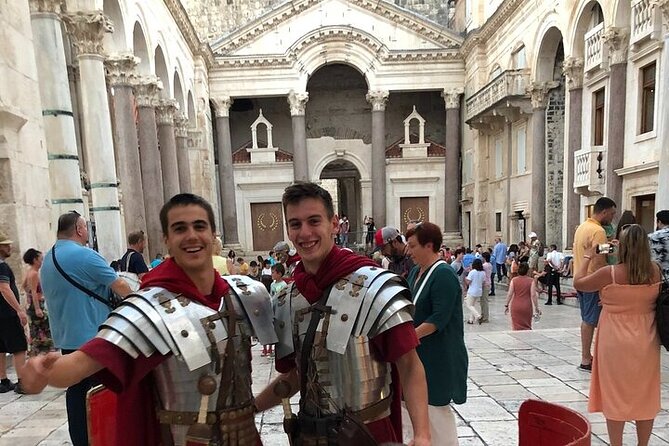
The Golden Gate is one of the main entrances into Diocletian’s Palace, and it’s a strong story pivot. Standing here helps you understand how people moved in and out, and how the palace was designed to control access.
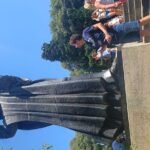
You’ll also see the statue of Gregory of Nin. This is more than a statue stop. The guide’s explanation ties Gregory’s importance to Croatian history and language, showing how the palace’s meaning changed long after Diocletian’s era. It’s a reminder that historic sites don’t stay stuck in one time period—they get re-read by later generations.
This stop is around 10 minutes, so it stays focused on the essentials: the entrance significance and the meaning of the figure at the doorway.
You can also read our reviews of more private tours in Split





Riva Harbor and the Bronze Model: Why Split’s Waterfront Matters
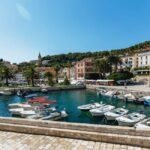
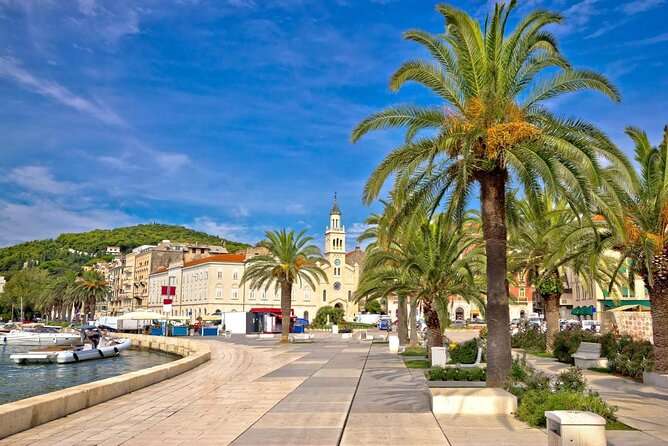
From the palace, you head toward Riva Harbor, a view that feels like the “breathing space” after centuries of walls. You’ll see a bronze model of Diocletian’s Palace, which helps a lot if the real palace layout felt confusing in your head. The model gives you a simplified, visual version of what you just walked through.
Then you’ll learn about the history of Split’s beautiful Riva promenade. This is where the tour helps you connect the palace to the city’s modern life. Split’s waterfront isn’t just scenic—it’s where the city’s energy shows up, and it sits close to where power and movement used to be concentrated.
This stop runs about 15 minutes. You’ll have enough time to look around, take a breather, and reset your perspective before heading back into more historical city stops.
Fruit’s Square (Trg Brace Radic): Venetian Layers and Marko Marulić
Next is Fruit’s Square, known as Trg Brace Radic. This is a compact stop, but it has a strong payoff because it points out how Split’s old layers overlap. You’ll learn about a 15th-century Venetian citadel and why it mattered.
Then the tour focuses on Marko Marulić, described as the father of Croatian literature. That matters because it reframes “culture” as something grounded in place, not just books on a shelf. You’re standing in the city space where local identity gets shaped over time.
This is another brief stop—around 10 minutes. The goal isn’t to memorize dates. It’s to walk away with a few clear anchors that help you read Split even after the tour ends.
Split Synagogue: Passing By a 16th-Century Reminder
You’ll pass by the Split Synagogue, a 16th-century building. The tour includes the history of the Jewish people in Split, which gives the city a fuller picture than palace-only storytelling.
One practical note: admission to the synagogue is listed as not included. So even if you pause to look closely from outside during the pass-by, you’d need to plan extra if you want to go inside.
This stop is about 10 minutes, and it works well as a “cultural balance” point after the palace segments. It widens the story beyond imperial architecture into community history.
Price and Tickets: What $69.39 Buys You Here
At $69.39 per person for about 1.5 hours, this tour is priced like a focused, expert-led way to cover top sites without chaos. The value angle isn’t just the guide—it’s the way the itinerary is structured.
Most of the stops are marked as admission ticket free (including the Peristyle, Vestibulum, substructures areas you visit, Golden Gate area, Riva Harbor stop, and Fruit’s Square). That means you’re paying primarily for interpretation and routing, not a stack of ticket fees for each segment.
The only clear exception listed is the Split Synagogue admission not included. So if synagogue access matters to you, budget for that separately and don’t assume it’s bundled.
You’ll also use a mobile ticket, which keeps things simple on arrival. And because this is a private tour/activity, it’s aimed at your group only, not a big crowd shuffling through at the same pace as everyone else.
What the Best Guides Seem to Do Differently
The strongest theme across feedback is that the guides are not just “explaining facts.” They’re shaping how you see the places. People repeatedly highlight that the guide is prepared and speaks very good Italian, with storytelling that feels engaging rather than read-from-a-card.
You’ll also notice the guide approach is built for clarity. The route is short enough to stay coherent, but varied enough that you don’t get stuck in one architectural mood for the whole time. Palace power, city promenade life, and local literary and religious references are placed side by side so you leave with a wider understanding of Split.
Names that show up in guest feedback include Maria and Doris, and another guide name mentioned is Mia Anica. It’s a good sign that different guides are still delivering the same kind of structure and quality.
When This Tour Is a Smart Match (And When It Isn’t)
You’ll enjoy this most if you want high-impact orientation in a limited amount of time. The itinerary hits core palace spaces (Peristyle, vestibule areas, substructures, Golden Gate) and pairs them with city landmarks like Riva Harbor and Trg Brace Radic.
This tour is also a solid pick if you travel in a small group and want a guide who can tailor pacing slightly to how your group is absorbing information. It’s short enough to handle even a busy day in Split, but structured enough that you’ll feel like you learned something meaningful.
The main caution is the steps issue. It’s specifically noted as not recommended for travelers who have issues with high steps. If you know your mobility is limited, I’d treat this as a signal to choose a different route or confirm with the operator beforehand.
Practical Tips So You Get the Most Out of the 90 Minutes
- Wear shoes you feel steady in. Old-city streets and palace areas are not flat, and the tour includes multiple stops in close sequence.
- Bring your curiosity, not just your camera. The tour is clearly designed around interpretation: why Diocletian rose, what the palace was built to do, and how later figures shaped Croatian identity.
- If you care about the synagogue, plan separately. Admission isn’t included, and this tour is built as a pass-by rather than a full interior visit.
If you’re also planning time for a museum visit in the substructures area, you can do it after the tour. The tour approach leaves you free to choose how much time you want in museum-style space.
Should You Book This Italian Walking Tour in Split?
If you want the easiest path to understanding Diocletian’s Palace without getting lost in your own questions, I think this is a strong booking. The value comes from the structure: the central Peristyle orientation, the palace gateways and under-areas, and the city connections at Riva Harbor and Fruit’s Square—all within a tight 1.5-hour walk.
Book it if you like guided storytelling in Italian and you want a clear, efficient introduction to Split’s layers. Skip it (or at least investigate alternatives) if steps are a major problem for you, or if you’re looking for a long, slow, museum-heavy day. For many first-timers, this is the kind of tour that makes the rest of your Split time much easier to enjoy.
FAQ
How long is the Split walking tour?
It runs for about 1 hour 30 minutes.
Where does the tour start?
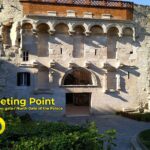
The meeting point is Peristil ulica (Peristil ul., 21000, Split, Croatia).
Is this tour private?
Yes. It’s listed as a private tour/activity, and only your group participates.
Is the tour in Italian?
The tour is described as a Private History Split Walking Tour in Italian.
What’s included in the itinerary?
You’ll visit key areas connected to Diocletian’s Palace (including the Peristyle, Vestibulum, substructures, and Golden Gate) and city highlights such as Riva Harbor and Fruit’s Square. You also pass by the Split Synagogue.
Are tickets included?
Admission tickets are listed as free for several stops in the route. Split Synagogue admission is not included.
Will we visit the museum part of the substructures?
No. The tour visits the substructures areas, but it does not include the museum part. You can visit it after the tour.
Is the tour suitable if I have trouble with steps?
It’s not recommended for travelers who have issues with high steps.
How and when will I receive confirmation?
Confirmation is received within 48 hours of booking, subject to availability.