REVIEW · SPLIT
Private Walking Tour in Split Old Town (ENG, FRA, ITA, ESP)
Book on Viator →Operated by Sanja - Tour Guide in Split · Bookable on Viator
Split’s Old Town starts clicking in under two hours. This private walk with Sanja gives you a clean overview, right down to how Diocletian’s Palace still works today. I love that you also get insider tips on where to eat, drink, and what to explore next. The one thing to watch is that the Substructures have an extra €10 per person entry fee.
You meet at the Riva promenade area (Obala Hrvatskog narodnog preporoda 22) at 9:00am, and you end back there too. Expect 1 hour 45 minutes of steady walking with great views: you start with the Roman palace in one direction, the medieval town in the other, plus Marjan hill/park.
Sanja is a licensed local guide with a Master’s degree, and that credential shows in how she explains things clearly and keeps the pace right. It’s also a good option if you want an organized first pass in the city, but do wear good shoes—this is an old-town circuit with a lot to cover.
In This Review
- Key highlights worth your time
- Riva Harbor: start where the city layout makes sense
- Diocletian’s Palace: walking the 9-acre “already-lived-in” machine
- Substructures inside the palace: the best preserved part costs €10
- Saint Domnius and the emperor’s story you can picture
- Peristyle, Jupiter Temple, and the Golden Gate
- Grgur Ninski to Narodni Trg: medieval squares with Roman backbone
- Fish Market timing, Marmontova Ulica, and Prokurative squares
- Price and logistics: what $156.19 per group really buys you
- Who this tour is best for (and who might skip it)
- Should you book this private Split Old Town tour?
- FAQ
- How long is the Private Walking Tour in Split Old Town?
- What is the price of the tour?
- Where do we meet for the tour?
- Is this tour private?
- What’s included in the tour price?
- Do I have to pay an entrance fee during the tour?
- What if the weather is bad or I need to cancel?
Key highlights worth your time
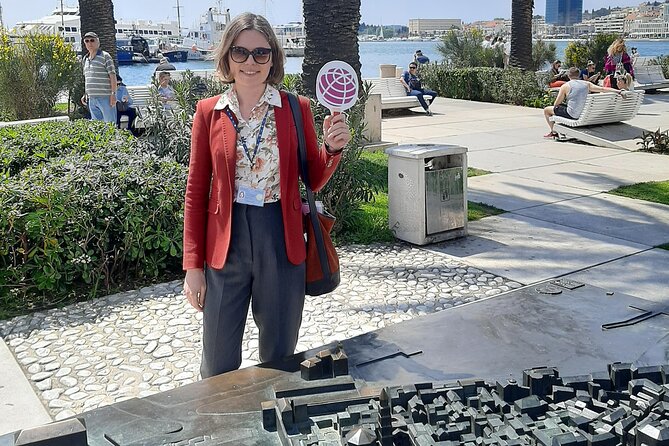
- Private, all-together pacing: Your group stays together, so you can ask questions and move at a human speed.
- Sanja’s guided architecture story: You’ll connect what you’re seeing to how the palace worked, not just when it was built.
- Riva Harbor orientation fast: The tour starts/ends where the views make the layout click.
- One paid stop (Substructures): You’ll know ahead of time where the extra €10 per person goes.
- City layers in one loop: Roman, medieval Venetian-era, French rule, and Austrian-Hungarian periods all show up on the walk.
Riva Harbor: start where the city layout makes sense
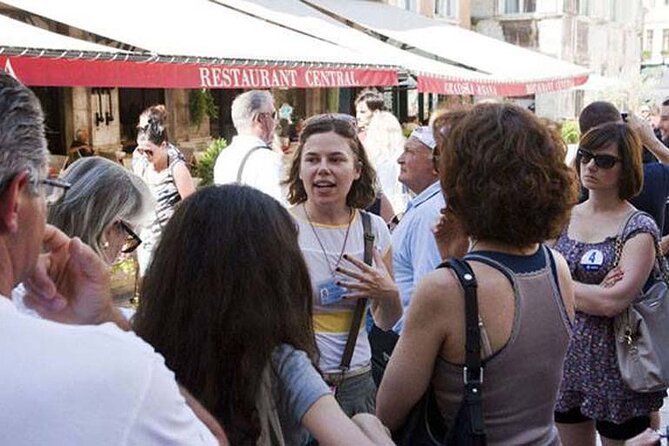
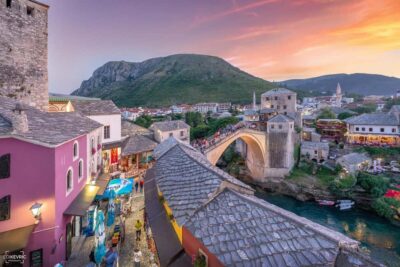
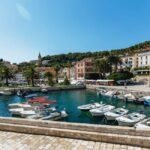
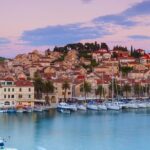
Riva promenade is a smart place to begin, because the view does half the explaining. From here you can see the Roman palace complex in one direction, the medieval town in another, and Marjan hill/park off to the side. It’s a great way to orient your brain before you step inside the maze.
You’ll start with a quick overview of what Split is about—how Diocletian’s Palace shaped the city and how people kept reusing its walls and spaces. And because the tour ends back at the same meeting area, you get a neat loop that feels complete instead of scattered.
Practical note: the tour starts at 9:00am. If you’re the type who likes to get sightseeing done early (good choice), this fits nicely, and it also helps if you’re catching the fish market later, since it’s open only in the morning.
You can also read our reviews of more walking tours in Split

Diocletian’s Palace: walking the 9-acre “already-lived-in” machine
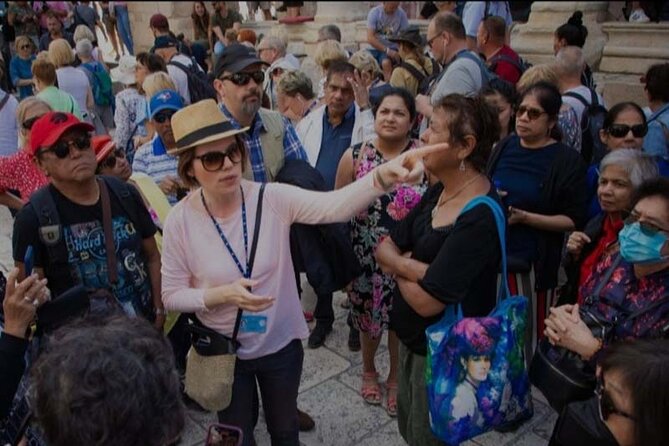
Diocletian’s Palace is the big reason Split exists as a must-see city. The tour treats it like a living layout, covering about 9 acres on foot, with stops inside and out that show how Roman architecture got repurposed for modern life.
What I like here is the way the walking route turns “I recognize this from photos” into “I actually understand why this space was built.” You don’t just look at walls—you see how the palace plan organizes movement, functions, and daily life.
This first palace segment is also your orientation layer. You’ll visit many key areas within the complex, and you’ll get guided context so each next turn feels logical rather than random. When you leave, you’ll have the mental map for the rest of your day—because you’ll know which streets and squares grew out of palace structures.
Substructures inside the palace: the best preserved part costs €10
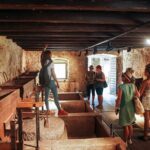
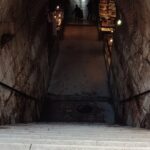
The Substructures are one of those places where you’ll think, okay, this is what people mean when they say best preserved. This is the most valuable area for understanding the construction, architecture, and purpose of the imperial palace.
This stop is an internal visit, and it’s the one extra payment you should plan for: €10.00 per person. Since it isn’t included, I treat it like you’re buying the “real perspective” ticket. If you’re the kind of traveler who likes how buildings work—stairs, chambers, and the practical logic behind them—this is the paid piece that pays off.
If you only skip one thing, it’s this. But if you like architecture even a little, don’t. It’s the stop that helps everything else click.
Saint Domnius and the emperor’s story you can picture

From the palace, you move into the religious and ceremonial side of the story. The Cathedral of Saint Domnius is an external visit, and you’ll see how the cathedral relates to the emperor’s burial site (his mausoleum). It’s a vivid example of how Roman power was transformed into later religious importance—without erasing the original footprint.
Then the route continues with palace life details that are surprisingly easy to visualize once you’re standing there. You’ll get to the Triklinij, the dining hall complex—so you can picture where the emperor’s table would have been, and how state-level hospitality worked.
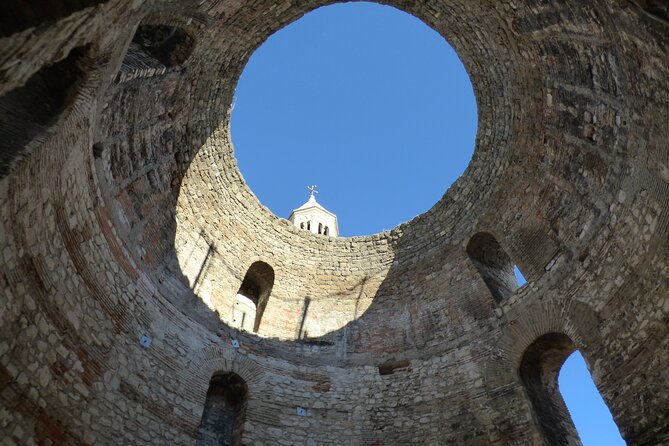
Next up is the Vestibulum of Diocletian’s Palace. This one has a small but cool seasonal detail: during summer months, you might be able to hear traditional Dalmatian singing there, because the acoustics are good. Even if you don’t hear a performance on your day, the space itself is a reminder that these places still serve real cultural functions.
Peristyle, Jupiter Temple, and the Golden Gate
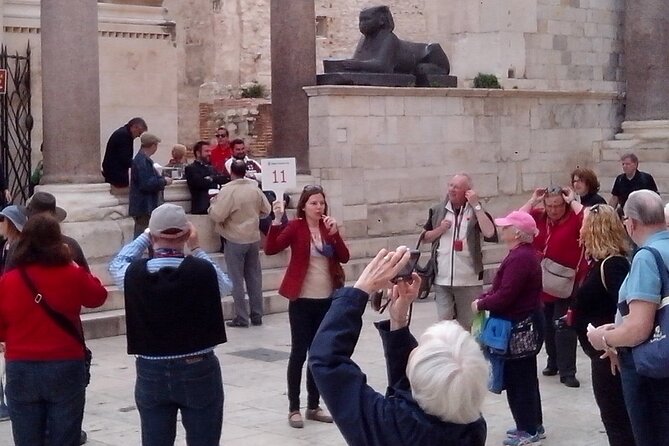
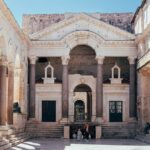
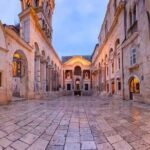
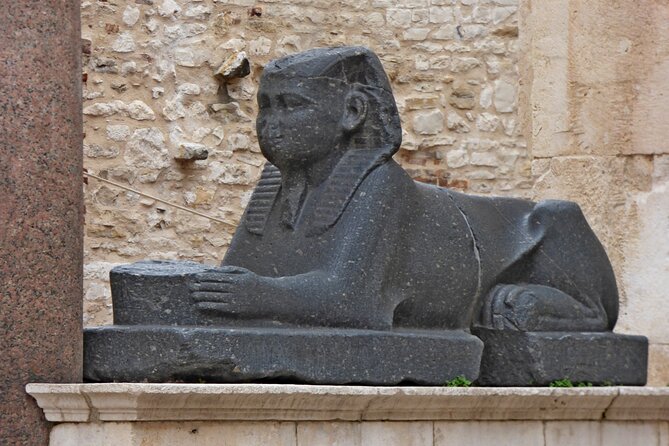
The Peristyle is the imperial square inside the palace—one of the key “big-picture” spots. You’ll talk about why it mattered and you’ll admire views toward the emperor’s mausoleum area (today’s Cathedral with the belltower). You’ll also spot an original Egyptian sphinx, which adds a whole extra thread to the story: the palace wasn’t just local Roman; it borrowed symbols from wider imperial worlds.
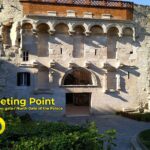
After the Peristyle, you’ll see the Temple of Jupiter from the outside. It’s short, but it helps anchor who was worshipped and what the palace represented in the emperor’s worldview. Then you’ll pass through the Golden Gate, the main gate to the Roman palace, with a chance to view the fortifications from outside.
This is where the tour gives you something beyond “Roman stuff.” The guide connects the palace layout to the city you walk through today, so you’re not just reading history—you’re noticing how old walls still frame your walk.
You can also read our reviews of more private tours in Split



Grgur Ninski to Narodni Trg: medieval squares with Roman backbone
Split’s identity isn’t only Roman. It’s Roman infrastructure plus medieval life layered on top, and this tour keeps you moving through that transition.
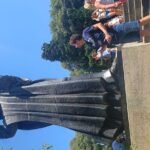
You’ll see the Grgur Ninski Statue, one of the most iconic symbols of Split—big, unmistakable, and placed where it’s easy to recognize as a city landmark. It’s a quick stop, but it gives you an anchor point for the rest of your day, like a visual marker for where you are in the story.
Then you’ll move into Narodni Trg, the medieval main square, where the guide explains what made it important. Nearby, you’ll also look toward the Old Town Hall from the era of the Republic of Venice on Pjaca square. This is a reminder that Split’s history isn’t a single era—it’s a chain of influences.
After that, you’ll reach Fruit’s Square (Trg Brace Radic). This is another “stand and understand the space” stop: you’ll admire the large tower that was part of the medieval town fortifications and learn how noble families shaped the city’s development. You’ll also see the Marko Marulic Sculpture, a quick but meaningful link to Split’s literary fame.
Fish Market timing, Marmontova Ulica, and Prokurative squares
The fish market stop is one of those small timing details that can change your experience. The fish market has been at the same location since the 19th century, and the guide notes it’s open only in the morning. With a 9:00am start, you’re set up well to at least pass by at the right time.
Then the tour shifts to street-level history. Marmontova Ulica was a famous street during French rule in the 19th century, and walking it gives you that street-corridor feeling of how different periods leave different urban vibes.
Prokurative is the next key square, tied to when Split was part of the Austrian-Hungarian monarchy in the 19th century. Even if you’re not a square person, this stop helps you complete the timeline that the palace and medieval core started. It’s the last layer before you return to the Riva promenade with a sense of the whole city.
Price and logistics: what $156.19 per group really buys you
The price is $156.19 per group, up to 15 people, for about 1 hour 45 minutes. That’s a private-tour format, so you’re paying for a guide to run a focused route around your group rather than joining a packed bus-and-walk style group.
For value, I look at three things: (1) do you get a clear first map of the city, (2) does the guide’s explanation improve what you see, and (3) are the extra costs limited and predictable.
This tour scores well on all three. The route covers the palace core and the medieval overlay, so you leave with bearings fast. The guide’s explanation matters because so much of Diocletian’s Palace only makes sense once someone points out how the spaces were used and reused. And the only extra fee called out is the Substructures at €10 per person, which is straightforward and easy to plan for.
One consideration: private doesn’t mean “no walking.” It’s still a walking tour through uneven old-city areas and lots of sight windows. If anyone in your group struggles with walking, I’d plan for slower pacing or consider breaking the day with a different activity after the tour.
Who this tour is best for (and who might skip it)
I think this private walking tour fits best if you want a strong “first day structure” in Split. If you love architecture, history you can actually see, and a route that helps you move without guesswork, you’ll enjoy the way the palace story unfolds into the medieval squares and later layers.
It’s also a smart fit for families and mixed ages because the pacing is managed, and the guide can adjust the way information lands as you walk (useful when you’ve got different attention spans in one group).
If you’re the type who hates guided time limits and prefers roaming solo with a map, you might find this format a bit “planned.” The tour is also weather-dependent, so if you’re traveling in a period when rain is likely, keep your expectations flexible.
Should you book this private Split Old Town tour?
Yes, if you want your first visit to Split to feel organized and meaningful. You’ll get an insider walk that connects Roman power, medieval city life, and later rule periods into one readable route, led by Sanja with a Master’s degree and strong English. The tour’s layout is efficient: you start at Riva with orientation and end back there with a sense of completion.
Book it especially if you’re curious about Diocletian’s Palace beyond the obvious views—because the Substructures are the kind of stop that turns questions into answers.
Just remember the one extra cost: plan for the €10 per person entrance to the Substructures, and wear shoes that handle old stone.
FAQ
How long is the Private Walking Tour in Split Old Town?
The tour lasts about 1 hour 45 minutes.
What is the price of the tour?
The price is $156.19 per group, up to 15 people.
Where do we meet for the tour?
You meet at Obala Hrvatskog narodnog preporoda 22, 21000, Split, Croatia.
Is this tour private?
Yes. It’s a private tour/activity, and only your group participates.
What’s included in the tour price?
It includes a professional licensed local guide with a Master’s degree, a private tour, and a mobile ticket.
Do I have to pay an entrance fee during the tour?
Yes. The Diocletian Palace Substructures have an entrance fee of €10.00 per person, and that fee is not included.
What if the weather is bad or I need to cancel?
This experience requires good weather. If it’s canceled due to poor weather, you’ll be offered a different date or a full refund. If you cancel for any other reason, it’s non-refundable and cannot be changed.