REVIEW · SPLIT
Split: Group or Private Walking Tour with Art Historian
Book on GetYourGuide →Operated by Aspalathos Guided Tours · Bookable on GetYourGuide
Roman Split comes alive on foot.
This 2-hour walk through Diocletian’s Palace and Split Old Town is guided by art historian Josipa (Aspalathos Guided Tours), so you get more than a list of sights. I especially like how she turns stonework into stories, helping you read the traces of history instead of just watching buildings go by.
The tour also hits the big icons and the lesser-visited corners with no gimmicks, and I like that you still have time to ask questions and get local advice for the best time to explore Split and Croatia. One thing to consider: this experience does not enter paid sites like the Substructures, Cathedral, or the Temple of Jupiter, so you’ll mainly see them from the outside and get tips for visiting later.
In This Review
- Key highlights at a glance
- Why Split’s Roman streets feel different with Josipa
- The 2-hour pacing: seeing palace icons without rushing your brain
- Strossmayer Park and Gregory of Nin: the warm-up before the walls
- Golden Gate to Silver Gate: walking Split like a map
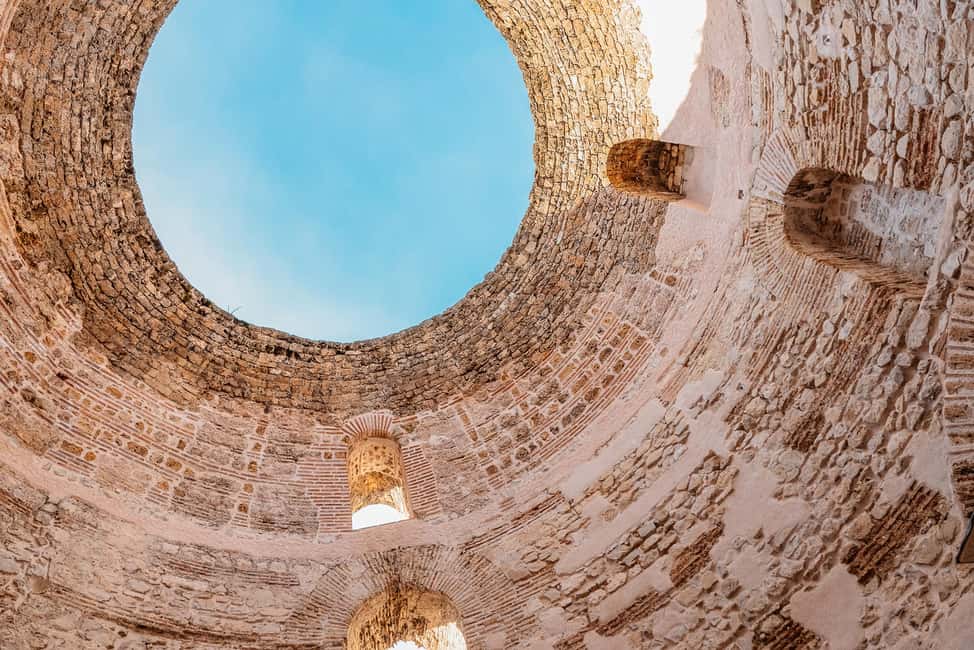
- Inside Diocletian’s Palace: Peristyle, Jupiter’s Temple, and the sphinxes
- Reading the palace rooms: Street Let Me Pass, Vestibul, and Triklinij
- Diocletian’s Cellars and the practical art of seeing without entry tickets
- Riva, city squares, and the fishmarket: where the city actually lives
- Republic Square and Varoš: seeing reuse in real buildings
- Price, value, and who should book this art-historian walk
- Should you book Aspalathos Guided Tours with Josipa?
- FAQ
- How long is the Split walking tour?
- Where do we meet the guide?
- Does the tour enter paid sites inside Diocletian’s Palace?
- What language is the tour in?
- Is it private or small group?
- What happens if it rains?
- Is the tour refundable if my plans change?
Key highlights at a glance
- Art historian Josipa explains architecture like it matters, from Roman to medieval reuse
- Strossmayer Park start sets the stage just above Diocletian’s walls
- Peristyle plus Egyptian sphinxes and the palace’s signature spaces
- Roman streets, gates, and rooms you can actually follow on foot
- Riva, squares, and the fishmarket where Split feels like a working city
- Finishes toward Varoš, one of the oldest areas known for preserved Roman foundations
Why Split’s Roman streets feel different with Josipa
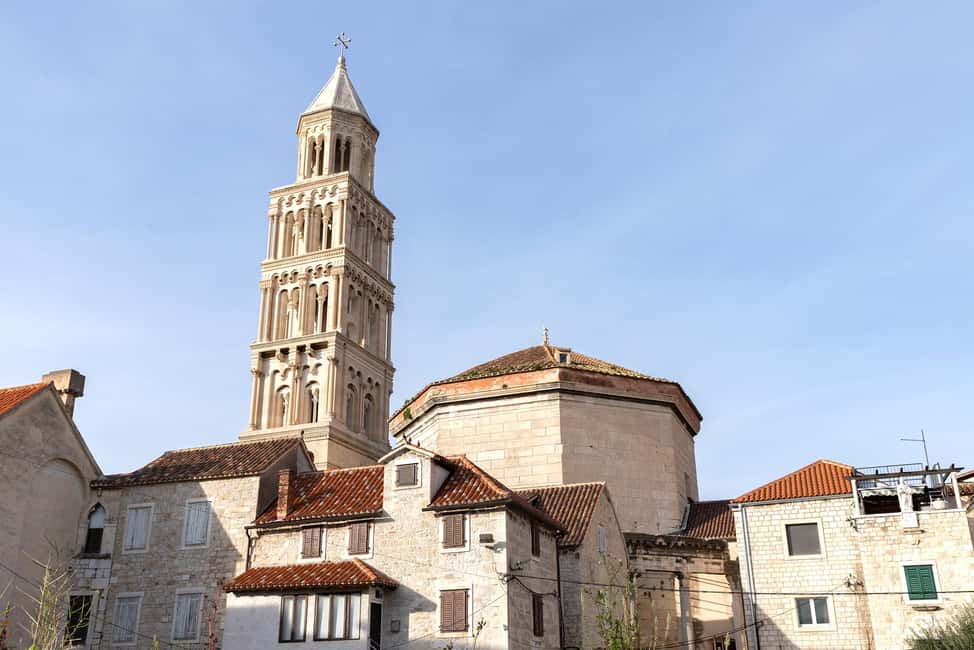
Split is famous for looking old, but that can make it feel like a photo set. Josipa’s approach changes the tempo. You’ll walk through the same streets everyone walks, yet you’ll notice details that make the place feel built by real people, across centuries.
The art-history angle isn’t just academic. Josipa is tied to ongoing archaeological work, and it shows in how she talks about what you’re seeing. She points out how Roman design choices were reused later—sometimes with respect, sometimes out of necessity—so you understand why Split looks the way it does today.
I also like the human side. One English-speaking guide doesn’t always mean a chatty guide. Here, Josipa is friendly and approachable, and she’s comfortable answering a lot of questions as you go. That matters, because in Split the details can be small—shapes in stone, changes in materials, signs of repurposing—and you’ll want someone patient enough to slow down when you’re curious.
Finally, the tour is practical. It’s built for a walk, not a lecture. You get a strong orientation for the city’s layout, and after the two hours, you start spotting landmarks and connections on your own.
You can also read our reviews of more walking tours in Split

The 2-hour pacing: seeing palace icons without rushing your brain
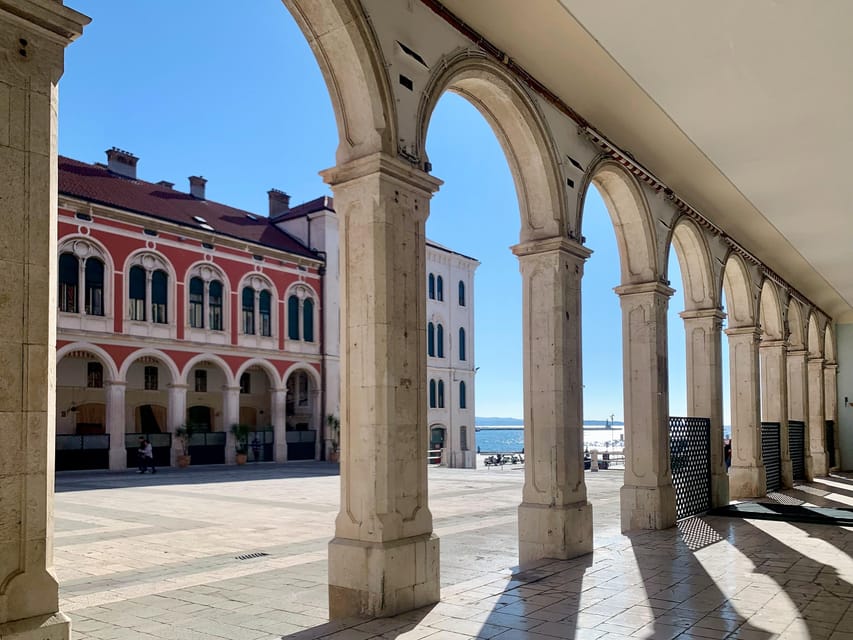
This is a walking tour with a steady, city-center pace. Two hours sounds short, and it is, but it’s enough time to connect the main palace features with the everyday flow of the old town.
You’ll start at Strossmayer Park and work through the Roman core and outward into the lively waterfront and market areas. Along the way, you’ll cover major stops, but the real value is how the guide links them. For example, gates aren’t just gates; they’re part of how the palace controlled movement. Squares aren’t just open space; they’re where different eras left their fingerprints.
A practical note: it runs rain or shine, and there are unavoidable steps. If walking is tricky for you, consider whether this route will be comfortable. Also, if you’re arriving during summer traffic, try to give yourself cushion time—waiting is limited.
Group style is either private or small group. That matters for Split. In a place where the architecture can be intricate, a small group makes it easier to hear explanations and ask questions. If you’re traveling with family or friends who have different interests, a private format can help the guide adjust pace and focus in real time.
Strossmayer Park and Gregory of Nin: the warm-up before the walls

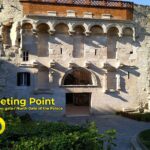
You meet near the fountain in Strossmayer Park, above the Golden Gates area and close to the statue of Bishop Gregory of Nin. This first stretch is a smart move. You’re not thrown immediately into crowds and alleyways. Instead, you get a green pause and a clear vantage for what comes next.
From here, Gregory of Nin is more than a landmark for a quick photo. Josipa uses this point to get you oriented—where you are relative to the palace walls, and why Split’s old streets can feel like they’re built around older geometry.
Then you step into the palace zone proper. The next landmarks—like Golden Gate—help you connect the city’s present street layout to the Roman plan underneath it. Expect the guide to talk about how movement through gates shaped daily life, long before most tourists ever think about “access” in an ancient city.
If you like tours that respect your attention span, this start works. You get context first, so later stops make more sense.
Golden Gate to Silver Gate: walking Split like a map
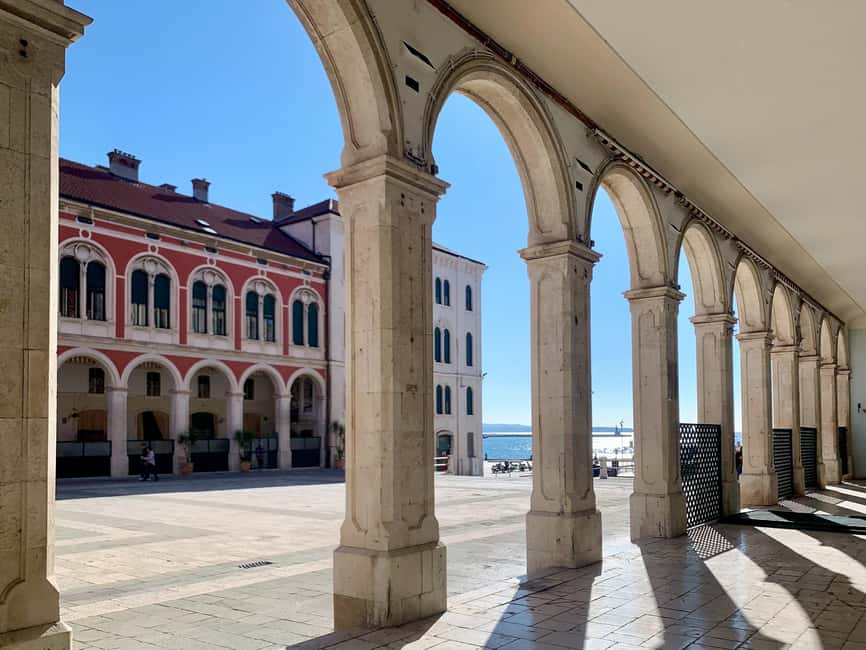
You’ll pass through a sequence of major thresholds and wall-adjacent stops: Golden Gate, then nearby points including Sv. Martin, and later the Silver Gate area.
These stops matter because they show how Split’s walls still organize the walk. Even if you’ve seen Diocletian’s Palace from postcards, it’s different when you’re moving along the edges and seeing where the openings are. You begin to understand that the palace wasn’t a museum shell. It was built to control space—who could enter, how people traveled, and how the city connected internally.
The art historian angle comes through in how Josipa describes materials and reuse. She helps you notice contrasts—where older structures influenced later building, and where later changes are visible in the texture and layout. It’s the kind of explanation that makes you look slower, in a good way.
This is also where you get the “no touristy gimmicks” feeling. Instead of performance-style facts, you get stories that connect architecture to human choices—defense, access, and adaptation across time.
Inside Diocletian’s Palace: Peristyle, Jupiter’s Temple, and the sphinxes

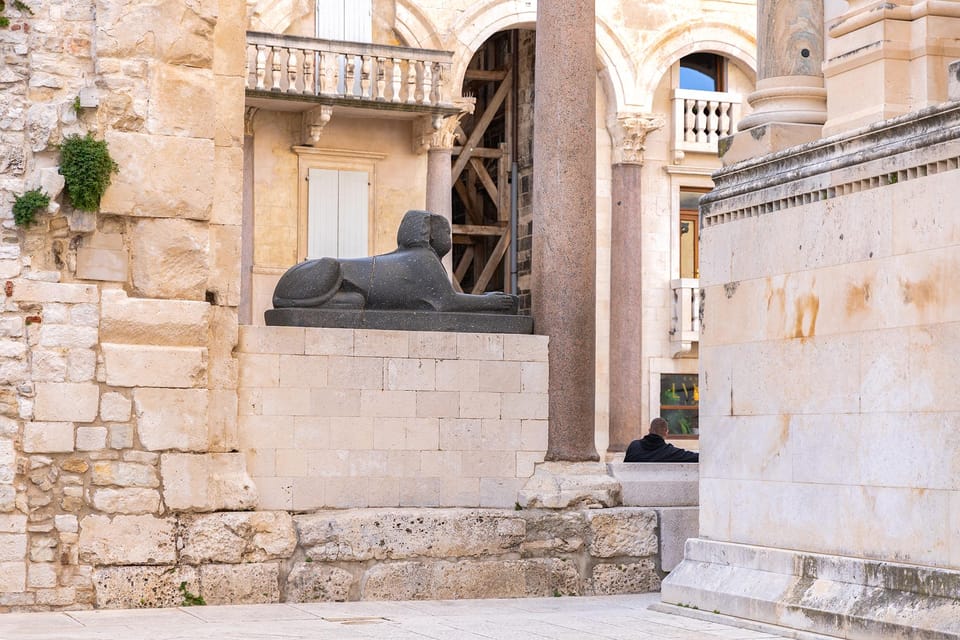
Once you reach Peristil (Peristyle), the tour shifts into must-see territory. Peristyle is one of Split’s core spaces, and Josipa uses it to teach you how to read the palace from the inside.
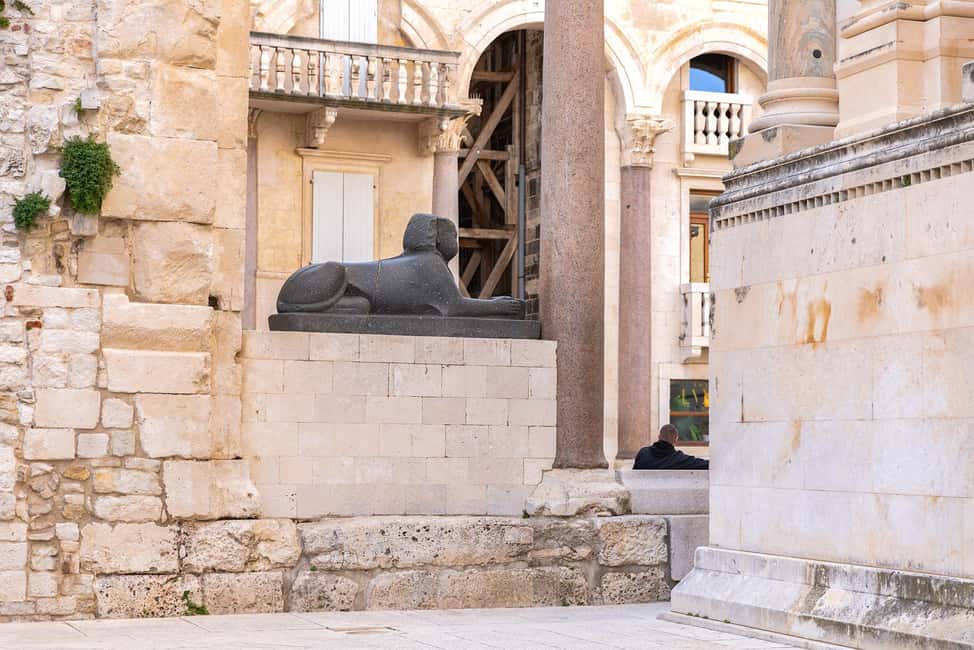
You’ll encounter the Egyptian sphinxes and other palace features that tend to steal attention. But the bigger win is what the guide does after the wow moment. She explains what these elements mean in the broader palace story and why they’re part of Split’s identity rather than random decoration.
Then you’ll move toward the area associated with Jupiter’s Temple. This is one of those places where a guide’s guidance is especially useful because you won’t be entering paid interiors. You’ll see the significant structures from the outside and get an explanation of what you’re looking at and how it fits into the palace layout.
If you’re the kind of person who likes to plan your own follow-up visits, this is ideal. Josipa will give you directions and suggestions for later, so you can decide what’s worth your time and ticket money based on what you learned on the walk.
A key vibe here: you’re learning to see. By the time you leave the palace core, you’ll be able to connect the big open space (Peristyle) to the narrower, more functional rooms that come next.
You can also read our reviews of more private tours in Split






Reading the palace rooms: Street Let Me Pass, Vestibul, and Triklinij
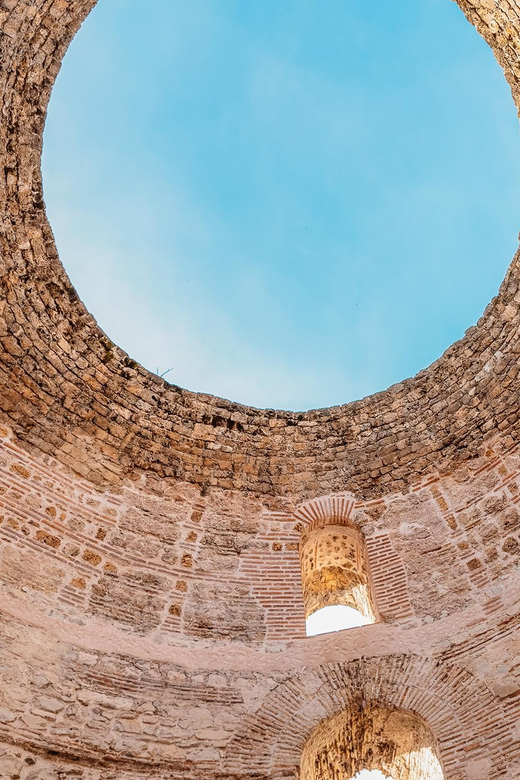
Split’s Roman interior spaces can feel confusing on your own, mostly because everything looks close together but means different things. Josipa fixes that by walking you through the palace’s functional rhythm.
You’ll make stops along the way including Street Let Me Pass, which is memorable partly because it’s so easy to miss as a “destination.” With a guide, it becomes a lesson in how narrow movement corridors shaped the palace experience.
Next is Vestibul and then Triklinij. Even without going inside paid areas, these names help you track what sort of spaces you’re looking at—front-of-house versus more private or specialized rooms. Josipa helps you understand how design choices influenced daily routines, including where people gathered and where they moved through less public zones.
This is a good section for anyone who wants more than Instagram angles. The explanations are built around recognition: once you learn what you’re standing in front of, you’ll keep spotting related clues as you wander the rest of the old town after the tour.
Diocletian’s Cellars and the practical art of seeing without entry tickets
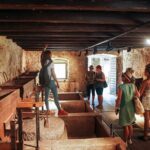
After the palace rooms, you’ll head to Diocletian’s Cellars. This is one of the most talked-about areas in Split, and even though this walk does not include paid entry into interiors, it’s still worth your attention.
Outside views plus context can work surprisingly well. You learn what the cellars are and why they matter, and the guide’s stories give you a mental model to use later if you decide to purchase an add-on ticket on your own.
What I like about this is that it keeps the tour focused on orientation. You’re not spending your two hours queued up at entrances. You’re learning how the complex works in the city, and you’re getting recommendations for the best next step once you’re oriented.
This also reduces decision fatigue. In Split, it’s easy to get overwhelmed by options. Josipa’s guidance helps you choose what to follow up with later, based on the role each site plays in the Roman story rather than sheer popularity.
Riva, city squares, and the fishmarket: where the city actually lives

The tour doesn’t end inside ancient walls. It shifts toward where Split functions today, and that’s a big part of why the walk feels satisfying.
You’ll reach Riva, the waterfront promenade that anchors the city’s public mood. From there, you go into market-square territory: Maketa grada Splita for orientation cues, Fruit Square, People’s Square, and then the Split fishmarket area.
These stops do two useful things:
1) They show you what the ancient palace borders became in later centuries—public space, commerce, and movement.
2) They give you a feel for daily rhythm, which helps you time your own wandering later.
Josipa also offers local advice about the best timing for visiting Split and Croatia. Even when she doesn’t give a strict itinerary for the rest of your trip, you’ll leave with a better sense of when the city feels manageable versus when it’s crowded.
If you love city walks that blend architecture with real life, you’ll appreciate this segment. It turns Diocletian’s Palace from a standalone attraction into the core of a functioning town.
Republic Square and Varoš: seeing reuse in real buildings
The walk finishes back near the starting area, with convenient drop-offs listed around Trg Šperun and Republic Square. You’ll also get the tour’s “different ending” in Varoš, one of the oldest parts of Split.
This matters because Varoš helps you see what the palace look like after it stops being a palace in the classic sense. You’ll spend time around preserved structures—described as 4th-century Roman architecture—and how they’ve been repurposed as the city changed.
By the time you’re here, the earlier stops start paying off. You’ve learned which spaces were built for specific functions, and now you see traces of that logic in later layers. That’s the moment when the city stops being a set of separate sights and starts looking like one continuous build-up of choices.
It’s also where the “new eyes” feeling kicks in. You start noticing details you would have walked past on your own—how walls align, where changes in material show up, and how streets preserve old geometry even as daily life reshapes the use.
Price, value, and who should book this art-historian walk
At $32 per person for 2 hours, you’re paying for an expert art-historian voice plus a route that’s designed for understanding, not checkmark collecting. If you’re visiting Split once and want the quickest path to clarity, this is strong value. You leave with a city map you can interpret, not just a pile of photos.
You’ll get the most from this tour if:
- You like walking and reading a city’s built clues
- You want architecture explained in plain language
- You plan to visit major palace sites afterward and want smarter choices
- You enjoy asking questions and getting thoughtful answers
It’s less ideal if you need fully accessible routes. The tour includes unavoidable steps, and it is not suitable for wheelchair users, and it’s also marked not suitable for people with hearing impairments. If that’s you, it may be better to look for an alternative format.
Also, if you’re expecting ticketed entry into big interiors, adjust expectations. The tour does not enter paid sites. You’ll get stories and guidance for later visits, but you won’t step into every major room during these two hours.
Should you book Aspalathos Guided Tours with Josipa?
Yes, if your goal is to understand Split’s architecture and leave with a sharper sense of the city’s logic. This tour is best for people who want to see the same places you’d find on your own, but with meaning attached—especially Roman layout, later reuse, and why the UNESCO designation fits how the city still works.
Book it if you’re ready to walk, you can handle steps, and you want a guide who talks like an art historian who actually loves the city. Josipa’s friendly, approachable style helps too; the walk stays conversational and question-friendly, which makes the time feel well spent.
Skip it only if you strongly prefer tours that include paid interior access as part of the ticket, or if accessibility needs would make the steps a problem. In that case, you can still enjoy Split, but you’d want a different format.
FAQ
How long is the Split walking tour?
The tour lasts about 2 hours.
Where do we meet the guide?
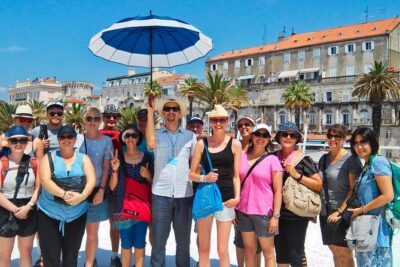
You’ll meet around the fountain in Strossmayer Park (also known as Djardin). Look for Strossmayer Park or Strossmayerova Fountain on your map. The guide, Josipa, will be holding a yellow and blue Aspalathos Guided Tours sign.
Does the tour enter paid sites inside Diocletian’s Palace?
No. The tour does not enter paid sites such as the Substructures, Cathedral, or the Temple of Jupiter. It passes them and includes stories and suggestions for visiting later.
What language is the tour in?
The tour is in English.
Is it private or small group?
You can choose a private tour or a small group option. Both are designed to keep the experience intimate, with time for conversation.
What happens if it rains?
The tour runs rain or shine.
Is the tour refundable if my plans change?
Yes. It has free cancellation up to 24 hours in advance for a full refund.