REVIEW · SPLIT
Split highlights – Evening walking tour
Book on Viator →Operated by TEMPER TRAVEL · Bookable on Viator
Diocletian’s Palace turns magical after dark. This evening walk is built around the Golden Gate and the Palace core at a calmer pace than daytime, then finishes with a wide Marjan view. I really like how the story is tied to what you can see in front of you—like hearing local klapa singing in the emperor’s chambers—and I love the quick orientation it gives you right away. One thing to consider: the Palace area can still get busy in the evening, so the walk feels best when you’re ready to move with other visitors.
For $39.74 per person (about 1 hour 30 minutes to 2 hours), you’re paying for a licensed, English-speaking local guide, a tight route, and a small group limit (max 8). I also like the practical mobile ticket setup, since it keeps you from fiddling with paper while you’re trying to enjoy the views. If you hate walking a bit at night, plan for comfort shoes—there’s a 15-minute on-foot finish to the terrace.
This is a great pick if you’re arriving in Split and want to get your bearings fast, or if you want the “ancient walls + modern city life” mix without doing a full-day slog.
In This Review
- Key highlights worth your attention
- Price and time: what $39.74 buys you in Split
- Meeting at the Golden Gate (and why the start matters)
- The Palace’s Peristyle: center stage of power, worship, and views
- Cathedral of Saint Domnius: the stop you’ll remember
- Vestibulum of Diocletian’s Palace: round hallway, real sounds
- Pjaca and Prokurative: where locals rest, meet, and argue about football
- Riva Harbor promenade: Split’s living room
- Marjan terrace finish: the view you’ll want to linger on
- Guides make or break it: what stood out from real names
- Who should book this evening walk (and who might skip it)
- Practical tips for the best experience
- Should you book this Split evening walking tour?
- FAQ
- How long is the Split evening walking tour?
- What time does the tour start?
- Where do I meet and where does it end?
- Is the tour available in English?
- Is a mobile ticket used?
- Do I need to pay for all stops?
- How large is the group?
- What if the weather is bad?
- Is free cancellation available?
Key highlights worth your attention
- Golden Gate start point: See where Diocletian entered, plus the good-luck bishop statue overlooking the gate.
- Peristyle at night: The spiritual-geographic center of the Palace, with a 3,500-year-old sphinx nearby.
- Saint Domnius area (optional cost): Cathedral of Saint Domnius is a major stop, but the bell tower admission isn’t included.
- Vestibulum + klapa: A round hallway where you can hear local klapa singing while you walk through Diocletian’s Palace chambers.
- City squares and harbor views: Pjaca, Prokurative, and the Riva promenade all show how locals actually use these spaces.
- Marjan terrace finish: A viewpoint that puts the whole of Split at your feet—after a short walk.
Price and time: what $39.74 buys you in Split
This tour costs $39.74 per person and runs about 1 hour 30 minutes to 2 hours, starting at 7:00 pm. That timing matters. You get evening light for photos, cooler air than midday, and the Palace’s atmosphere shifts as tour groups mix with locals walking through the old core.
The value is in the guide and the pacing, not in adding “big ticket” attractions. Most stops are free to enter, and the tour itself is designed as an organized walk-through—so you’re not spending the entire evening deciding where to go next. With a maximum of 8 travelers, you also have a better chance to ask questions without feeling like you’re being rushed into a stampede.
If you’re the kind of traveler who likes history, but hates standing around reading plaques, this format tends to fit well. If you prefer long, quiet time alone inside buildings, you might find the walking segments brisk.
You can also read our reviews of more walking tours in Split

Meeting at the Golden Gate (and why the start matters)
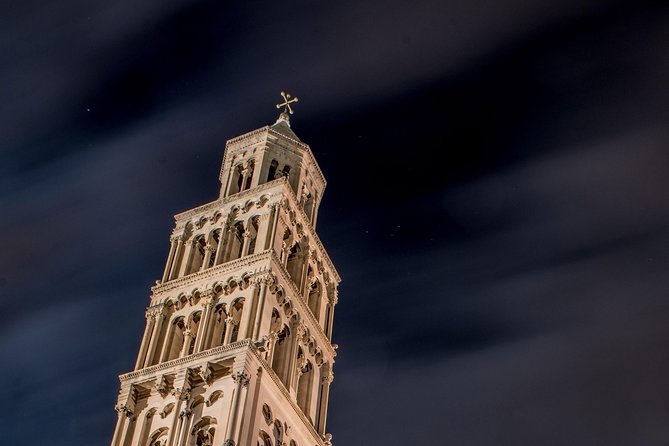
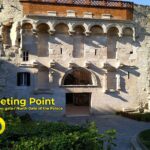
The tour begins at the Golden Gate, at Dioklecijanova 7. Starting here is smart because you’re introduced to Diocletian’s Palace right at its main entrance—so the rest of the evening makes architectural sense instead of feeling like a random sightseeing loop.
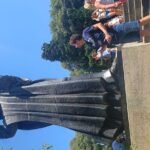
At the Golden Gate, you’ll notice the statue of Croatian bishop Grgur positioned above the gate area, noted as a good-luck stop for passengers. It’s the kind of small detail that gives the Palace a human layer. The gate also sets the tone for the evening: you’re not just looking at old stones—you’re seeing how power, movement, and city life were planned to flow.
Practical note: the Palace area can get crowded after sunset. Going in with a guide helps you keep moving and makes it easier to hear explanations even when people are filtering in from every direction.
The Palace’s Peristyle: center stage of power, worship, and views
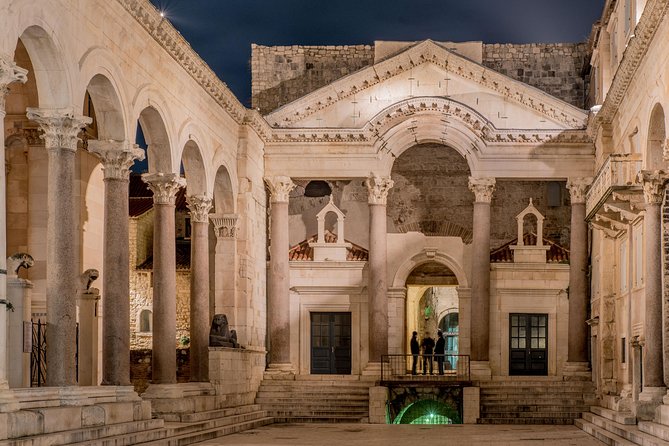
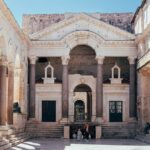
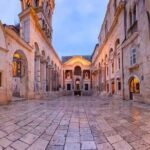
Next comes the Peristyle of Diocletian’s Palace, described as the square’s geographical and spiritual center. This is one of those places where the scale hits you even if you’re not a big architecture person. You’re surrounded by highlights of the city’s historic core, and the open square layout gives you clear sightlines—useful for photos and for understanding how the Palace connected to the rest of Split.
A detail I’d mark as a standout: you’ll see mention of a 3500-year-old sphinx guarding the area. That’s exactly the sort of thing that makes the Peristyle memorable. It’s not just a square; it’s an anchor point for stories that stretch across time.
The main drawback here is also simple: because this is a central stop, it can feel busy. The good news is that you’re not stuck—there’s a natural flow from square to nearby sites, and your guide keeps the pace moving so you can still enjoy it.
Cathedral of Saint Domnius: the stop you’ll remember
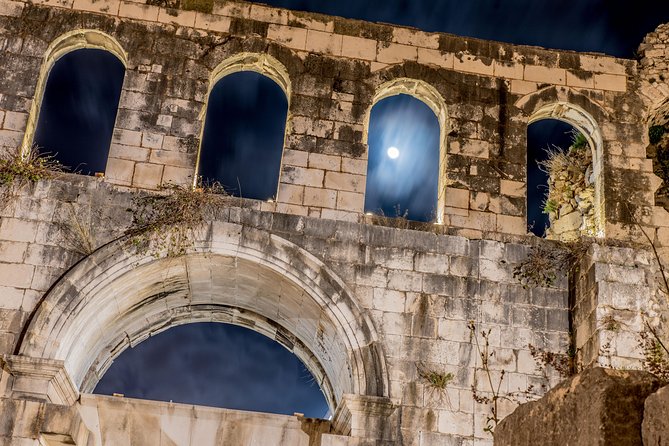
The walk then turns to the Cathedral of Saint Domnius, which is tied to Diocletian’s past as his mausoleum. It’s described as the oldest building in the world that still functions as a cathedral, and it sits in front of a Romanesque bell tower.
This is the stop where you should think about your expectations. You’ll likely get the most out of it if you enjoy seeing how one building can carry different roles across centuries—mausoleum to cathedral—without losing its identity. It’s the kind of place that rewards pausing, even if the tour keeps moving.
One important detail: admission for the cathedral area is not included, at least for the bell tower component noted. So if you’re hoping to go up or pay extra for a closer look, be ready to add that cost on-site.
Vestibulum of Diocletian’s Palace: round hallway, real sounds
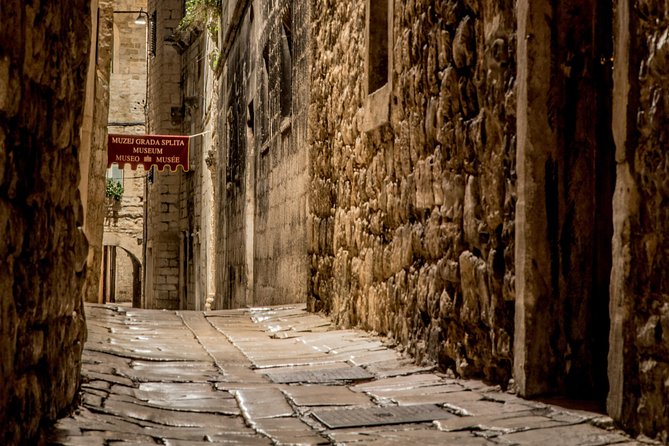
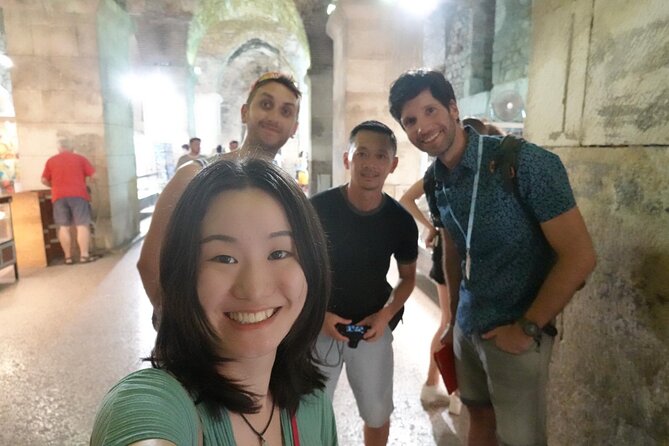
If you want a break from “stone and silence,” the Vestibulum is a great mid-tour moment. This stop takes you into the emperor’s chambers through a striking round hallway (the Vestibule), where you can hear local klapa singing.
That’s not just a charming add-on—it changes how you experience the space. In a Palace setting, having real music in the background turns the architecture into something closer to a living city. It also tends to make the tour feel more personal, since the sound is part of the moment rather than something you read about later.
If you’re traveling with someone who cares less about Roman details, this is often the stop that pulls them in. People naturally stop and listen for a second, and then the guide can connect that sound to the wider setting of Split.
You can also read our reviews of more evening experiences in Split






Pjaca and Prokurative: where locals rest, meet, and argue about football
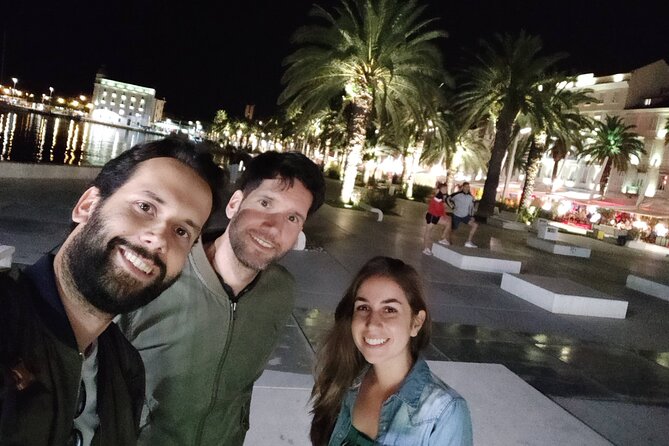
After the Palace core, the tour shifts to how Split operates now. You’ll visit Pjaca, the central stage of city life. Here, the emphasis isn’t on museums. It’s on everyday use: citizens resting, meeting, seeing, and discussing football.
That might sound like a small detail, but it’s a big part of understanding Split. Diocletian’s Palace is extraordinary, yet the city is still a city—people gather in squares because squares work. Having this stop in the middle of your walk helps you connect the old stone to the present-day rhythm.
Next is Prokurative, described as resembling Venice’s St. Mark’s Square, with the harbor view opening up on the south side. This is where you get a more classic “promenade-and-city” feeling, with sightlines toward the water.
If you’re photo-focused, this is a good area to slow down for a moment. If you’re crowd-averse, keep in mind that these are also common meeting spots, so the energy can be high.
Riva Harbor promenade: Split’s living room
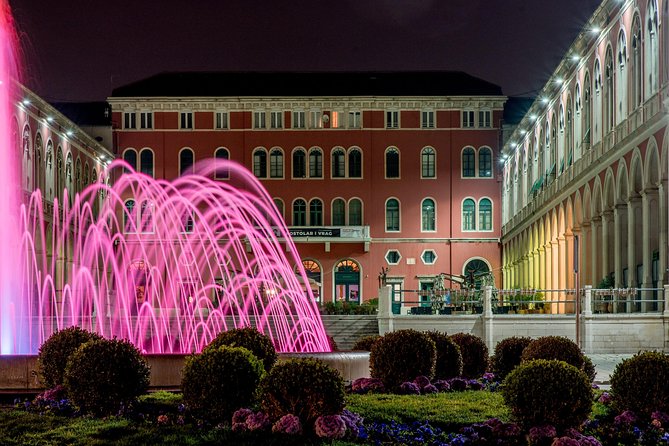
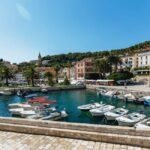
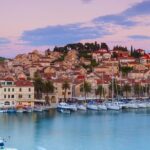
The tour continues to the Riva Harbor promenade, described as Split’s living room and one of its most important public places. If you want proof that Split is not frozen in time, this is it.
The Riva is where everyday street life plays out like a stage production—people walking, pausing, chatting, and creating the atmosphere you remember even if you forget the exact details of every stone.
As a practical matter, the guide’s explanations here can be useful because it’s easy to wander the Riva without understanding where you are in the city. A short walk with context helps you return later on your own with better instincts.
Marjan terrace finish: the view you’ll want to linger on
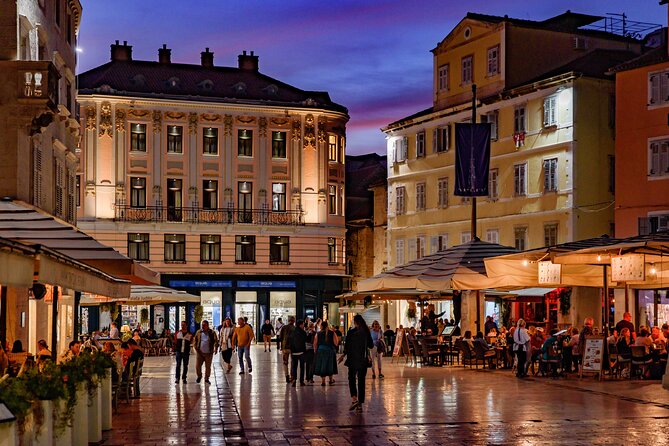
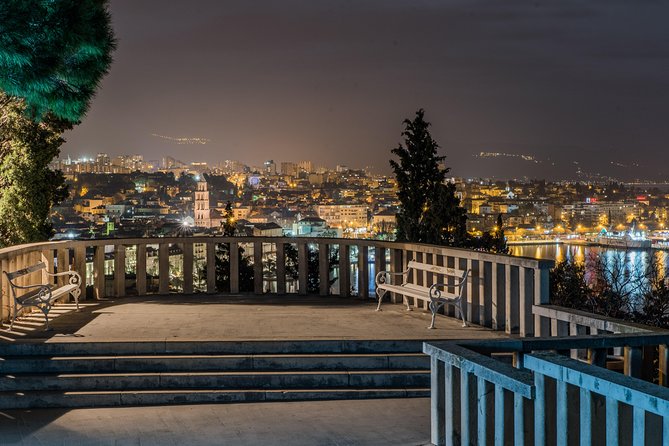
The final stop is Prva Vidilica Na Marjanu, a viewpoint that puts the whole of Split into perspective. It’s a terrace reached with about 15 minutes on foot from the old town.
This part is worth planning for. The viewpoint is the payoff for the entire evening: Palace walls, squares, and harbor lines all make sense once you see how the city spreads out and where the old core sits in relation to the rest. Even if you’re not chasing photos, the wide view tends to reset your brain after historical stops.
The main consideration is comfort. Wear shoes you trust, and be ready for the walk pace to feel like “a bit of exercise,” especially if you’re starting with a day of sightseeing already.
Guides make or break it: what stood out from real names
What consistently elevates this tour is the guide quality. In the feedback, I saw names like Bosko Papic, Pavle, and Luka, and the common thread was the way they connected sites to life in Split, not just dates on a timeline.
One reason it works: the guide doesn’t just point and explain. People noted extra value like excellent restaurant tips and clear answers about history, the Palace, and Croatia. That kind of practical context is gold if you want to eat well and avoid tourist traps without doing hours of research.
Also, small-group format helps. One reviewer even called out being the only booked group, which naturally makes questions and pacing more flexible.
Who should book this evening walk (and who might skip it)
You’ll likely love it if:
- You want a tight introduction to Split in a short window.
- You like history, but you also want modern-city context in the same evening.
- You prefer guided interpretation over wandering aimlessly through the Palace.
You might not love it if:
- You’re looking for a long, slow building visit with lots of quiet time.
- You hate crowds, and you’ll be upset if the Palace area is busy.
- You expect every stop to be fully included without any add-ons (the Saint Domnius bell tower admission is listed as not included).
Practical tips for the best experience
Here are a few things that will make the evening feel smoother:
- Plan on good walking shoes. The route includes some walking within the old core and then ends with a 15-minute walk to the terrace.
- Bring a layer. Evening temperatures can shift, especially near the harbor.
- If you’re interested in climbing or paying at the Cathedral of Saint Domnius area, factor that into your budget since the bell tower admission isn’t included.
- Use the tour as your “orientation evening.” After the walk, you’ll know where to go next without needing a map every five minutes.
Should you book this Split evening walking tour?
If you want a high-value evening that blends Diocletian’s Palace with Split’s everyday public spaces, this is an easy yes. The price is reasonable for what you get: a licensed English guide, a short route that hits major highlights, mostly free entries, and an ending viewpoint that makes the whole city click.
I’d book it especially if you’re short on time, jet-lagged, or unsure where everything is. The only strong reason to hesitate is if you’re extremely sensitive to crowds at night or you dislike walking to viewpoints.
If you can do one “early trip” activity in Split, this is the kind of tour that helps you enjoy the rest of your days more.
FAQ
How long is the Split evening walking tour?
It’s about 1 hour 30 minutes to 2 hours (approx.).
What time does the tour start?
The start time is 7:00 pm.
Where do I meet and where does it end?
You start at Golden Gate, Dioklecijanova 7, Split. The tour ends at Vodoskok, Trg Franje Tuđmana, in front of the fountain at the beginning of Riva promenade.
Is the tour available in English?
Yes. The tour is offered in English.
Is a mobile ticket used?
Yes, the tour offers a mobile ticket.
Do I need to pay for all stops?
No. Most stops list admission tickets as free, but Cathedral of Saint Domnius notes admission ticket not included.
How large is the group?
The tour has a maximum of 8 travelers.
What if the weather is bad?
This experience requires good weather. If it’s canceled due to poor weather, you’ll be offered a different date or a full refund.
Is free cancellation available?
Yes. You can cancel for a full refund up to 24 hours before the experience’s start time.