REVIEW · SPLIT
Split: Old Town Guided Evening Walking Tour
Book on GetYourGuide →Operated by popular tours · Bookable on GetYourGuide
Split looks different at dusk. This 70-minute guided stroll through Split’s Old Town takes you into Diocletian’s Palace and the UNESCO streets, when walking feels easier and the atmosphere is calmer.
I love the chance to see the Diocletian’s Palace complex as part of everyday life, not just ruins behind a fence, and I like that the tour is built for comfort in the evening. One thing to consider: the start location is specific, and finding it can be tricky if you rely on an incorrect map pin.
What really works is how the tour mixes big “Roman palace” moments with smaller, hands-on details. I like how Peristyle Square gives you an open-air landmark, and I enjoy the contrast of exploring below ground in the underground cellars.
Just plan to arrive a few minutes early and locate the right signage at the Split port area. Also note it’s in English, so make sure that matches your comfort level.
In This Review
- Key things that make this Split evening tour worth your time
- Why this evening walk feels so right in Split
- Finding the meeting point at Split port without wasting time
- Diocletian’s Place: walking into a palace that became a city
- Peristyle Square: the open-air highlight you’ll remember
- Going underground: what the cellars add to the palace story
- Temple of St. Jupiter and Cathedral of St. Duje: monuments with a timeline
- How Duje personalizes the route when the group is small
- Price and value: does $20 make sense for 70 minutes?
- What to expect on the ground: pace, language, and the practical reality
- Who should book this tour, and who might skip it
- Should you book the Split Old Town Guided Evening Walking Tour?
- FAQ
- How long is the Split Old Town Guided Evening Walking Tour?
- Where do I meet the guide?
- What language is the tour in?
- What sights are included in the route?
- What’s included in the price?
- Is hotel pickup or drop-off included?
- Can I reserve and pay later?
- What is the cancellation policy?
Key things that make this Split evening tour worth your time
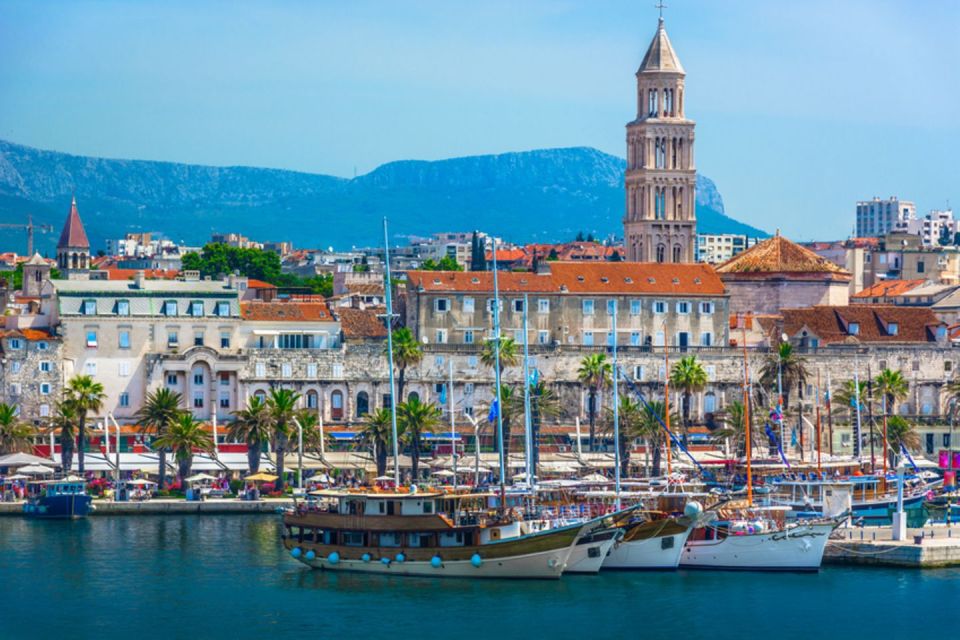
- Diocletian’s Palace in one focused walk: A 1,700-year-old palace complex that now acts like a real neighborhood.
- Peristyle Square at night: A standout public space you’ll understand better after the guide’s framing.
- Underground cellars: You’ll get the why behind the underground spaces, not just the fact they exist.
- Temple of St. Jupiter and Cathedral of St. Duje: Two major religious/monument stops that show how the site evolved.
- Duje can tailor the route: In smaller groups, he’s known to add extra context, including Jewish heritage details.
- Easy evening timing: Designed to help you avoid the harshest summer temperatures while still seeing the highlights.
Why this evening walk feels so right in Split

Split is a city you can rush through, but it rewards slower pacing. This tour is timed for the evening, which is when you’ll usually feel more human after a day of sightseeing. The idea is simple: romantic stroll energy, with less heat pressure, and enough time to still hit the key UNESCO sights.
It’s also a smart length. At 70 minutes, you get interpretation on the big-ticket landmarks without ending up trapped in a long tour when you’d rather wander on your own afterward. You can treat it like a “warm start” to your Split visit, then use the information to explore at your own pace later.
And yes, the route centers on places that people love to photograph—but it’s more than picture stops. The guide’s job is to connect what you’re seeing (palace walls, plazas, cellars) to how the Roman Empire and later centuries shaped the city you walk today.
You can also read our reviews of more walking tours in Split

Finding the meeting point at Split port without wasting time

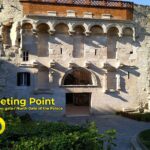
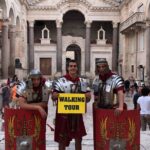
This is one of those tours where being early matters. Your start is at the Split port, at Trg Braće Radić, and you’ll meet in front of a big red sign that reads SPLIT. The guide carries a sign that says My Special Tour, so you’re not just looking for a person in a crowd.
Here’s the practical trick I’d use: don’t trust your phone map pin blindly. Even when you think you’ve got it, you can end up a short walk away at the wrong spot. One bad experience reported a mismatch between the map and the real-world location, and it’s the kind of issue that can cost you the tour if you arrive late.
Good news: the meeting and ending are the same place. That makes your evening logistics easier, especially if you’re already near the port area.
Diocletian’s Place: walking into a palace that became a city

The headline stop is Diocletian’s Palace, described as a 1,700-year-old complex that’s now woven into Split itself. This matters because it changes what you expect to see. You’re not just strolling through archaeological leftovers; you’re walking through walls and spaces that different eras kept using and reshaping.
When you first enter the palace area, the guide’s interpretation can help you “read” the layout. You’ll start noticing how Roman planning created a strong framework—then you’ll see how everyday city life filled in the human scale: streets, passages, and public spaces that keep the area alive.
This is where the tour is strongest for first-timers. If you come in with no background, Diocletian’s Place can feel like impressive stone and confusing corners. With a guide, it clicks into place: where power lived, where ceremonies and movement happened, and why later architecture and churches ended up here.
Peristyle Square: the open-air highlight you’ll remember
After you get oriented in the palace area, you’ll reach Peristyle Square, one of the most important open spaces inside Diocletian’s world. It’s the kind of place where your brain naturally wants to look up, scan the edges, and take in the scale. That reaction is exactly what the guide helps you use.
Think of Peristyle Square as your “pause and understand” moment. The tour frames what the square meant, then you get to experience it as a real space you can stand in, not just a diagram on a screen. In the evening, it can feel calmer and more readable than midday crowds.
Practical tip: if you like photos, this is where you’ll likely want to slow down. The space gives you angles that show both the monumental character and the human surroundings. If you’re planning to explore after the tour, this stop is also a useful mental anchor for orienting yourself back through the Old Town.
Going underground: what the cellars add to the palace story
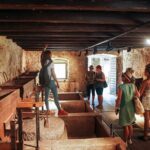
One of the tour’s best “wow for your time” elements is the visit to the underground cellars. Underground stops can go one of two ways on tours: either you see a doorway and get a quick comment, or you actually understand how the space worked.
Here, the underground portion is part of the core promise of the tour. It adds a different dimension to Diocletian’s Palace—proof that the complex wasn’t only about surface-level grandeur. You start seeing how the palace system included spaces designed for storage and supporting functions, with architecture that still shapes how you move through the area now.
And it’s a great contrast against the open squares and church stops. The route makes you shift your attention: light and shadow, air and enclosure, and how stone structures can feel both ancient and oddly practical. It’s the kind of stop that turns “I saw ruins” into “I understand the site.”
You can also read our reviews of more guided tours in Split





Temple of St. Jupiter and Cathedral of St. Duje: monuments with a timeline
This tour doesn’t stick to one era. You’ll also see the Temple of St. Jupiter and the Cathedral of St. Duje, which helps you understand how Split kept reusing important spaces.
The Temple of St. Jupiter gives you the Roman frame: a major cult site within the palace complex. The cathedral stop, on the other hand, is your cue that time didn’t just pass by—it stacked up. Having both in the same walking route makes the evolution easier to grasp, because you’re comparing them face to face within the same half-hour span rather than as separate research projects.
What I like about this approach is that it respects how people actually experience cities. You don’t arrive in one historical chapter; you walk from one setting into the next. By the end, the monuments feel like part of one ongoing city story rather than isolated sightseeing items.
How Duje personalizes the route when the group is small
One guide name you may hear is Duje, and he’s known for adapting the tour in small groups. In one instance, a small group allowed him to adjust the walk and add context about Jewish heritage in the city, plus more specifics about the area’s layout.
That kind of customization matters more than it sounds. A generic tour can feel like you’re collecting facts. But when a guide adds local connections—especially ones that don’t always get attention—you walk away with a deeper sense of what the streets mean.
A fair note: customization depends on group size and timing. You shouldn’t count on extra topic expansions every single time. Still, the fact that Duje can tailor the content at least in some situations is a strong sign the tour isn’t run like a robotic script.
Price and value: does $20 make sense for 70 minutes?
At about $20 per person, this tour is priced like a practical sightseeing shortcut. It’s not “pay and park yourself” tourism, either—you’re walking for 70 minutes, with a guide interpreting multiple major landmarks in a single loop.
To judge the value, focus on what’s included. You get the walking tour and guide, but not hotel pickup and drop-off. That means you’re responsible for getting to the meeting point at Split port on your own, which is totally doable if you’re already near the waterfront.
Where the money makes sense is in the interpretation. Diocletian’s Palace is huge and layered, and without context it’s easy to miss what you’re looking at. If you want the highlights explained—Peristyle Square, underground cellars, and the Temple and cathedral combo—this is a low-stress way to get the story quickly before you do your own exploring.
If you want a long, slow, in-depth history lesson with lots of museum-style time, 70 minutes may feel short. But if you want an efficient and comfortable evening highlight, the pricing matches the format.
What to expect on the ground: pace, language, and the practical reality

This is a walking tour with an English guide, and it’s built for an evening temperature break. The tour length is short enough that it can work even on a day when you’re tired, as long as you’re comfortable walking through old town streets.
The route includes major sites within the palace area and surrounding Old Town zones. That also means you’ll likely be doing a mix of open spaces and narrower walking sections, plus an underground stop that changes the feel of the experience.
One more practical note: since the tour ends back at the start point, plan the rest of your evening around that. If you’re heading out for dinner afterward, staying near Trg Braće Radić and the port area can make your schedule smoother.
Who should book this tour, and who might skip it
This tour is a strong fit if you want a romantic evening walk that still checks the history boxes. It’s also ideal for first-time visitors who feel overwhelmed by Split’s layers and want someone to help you connect the dots quickly.
Book it if:
- You’ll be in Split for a short time and want the palace highlights covered in under two hours.
- You’re trying to avoid the hottest part of the day.
- You like walking tours where the guide helps you understand what you’re seeing, not just where to stand for photos.
You might skip it if:
- You hate walking or you prefer a longer, slower exploration with fewer stops.
- You want a detailed deep-dive at one site, rather than a broad sweep across Diocletian’s Place plus key monuments.
Also, keep your language comfort in mind. The tour runs in English, so that’s your best match.
Should you book the Split Old Town Guided Evening Walking Tour?
Based on what the tour offers, I’d book it if you want a simple, efficient evening intro to Split’s most important UNESCO core. Diocletian’s Palace plus Peristyle Square, cellars, and major monument stops is a lot to pack into 70 minutes, and the evening timing helps make it feel easier on your body.
I would think twice only about one thing: logistics at the start. Make sure you show up at the Split port area near the big red SPLIT sign and look for the guide holding My Special Tour. If you’re unsure, give yourself extra time to confirm you’re at the correct spot.
If you like walking tours with clear highlights and guide-led interpretation, this one is good value for your time.
FAQ
How long is the Split Old Town Guided Evening Walking Tour?
The tour lasts about 70 minutes.
Where do I meet the guide?
Meet at Split port, Trg Braće Radić. You’ll find the group in front of a big red sign that says SPLIT, and the guide will have a sign reading My Special Tour.
What language is the tour in?
The tour is offered in English.
What sights are included in the route?
You’ll see Diocletian’s Palace (Diocletian’s Place), Peristyle Square, underground cellars, the Temple of St. Jupiter, the Cathedral of St. Duje, and more.
What’s included in the price?
The price includes the walking tour and a guide.
Is hotel pickup or drop-off included?
No. Hotel pickup and drop-off are not included.
Can I reserve and pay later?
Yes. You can reserve your spot and pay nothing today.
What is the cancellation policy?
You can cancel up to 24 hours in advance for a full refund.