REVIEW · SPLIT
Walking tour of Split with an Art Historian
Book on Viator →Operated by Aspalathos Guided Tours · Bookable on Viator
Split makes sense after this art-history walk. I like how this route starts with everyday things (like water) and turns them into a clear story of why Diocletian’s Palace still shapes Split. You’ll get an expert guide, a small-group pace, and the kind of street-level context that makes the Old Town feel less like ruins and more like a living city.
What I love most is the small-group feel (max 10 people) and the way art historian Josipa connects Roman layout to modern life. It’s not just facts on stone. You also get practical local moments, like where to stand for great photos, and the classic folklore stops (yes, the Gregory of Nin toe moment is part of the fun).
One heads-up: this is an outdoor walk with unavoidable steps, and it does not include entering paid sites. You’ll see key areas from the outside, then you’ll decide if you want interiors on your own.
In This Review
- Key highlights I’d plan around
- Starting at Strossmayerova Fountain: the water story that powers the palace
- Tower Two and the logic of a Roman plan, not just pretty ruins
- Gregory of Nin’s statue and the Golden Gate approach
- Cardo Maximus, a hidden garden, and the palace gates you’ll actually remember
- The Peristyle courtyard: Saint Domnius and the Robert Adam moment
- Let Me Pass street (Pusti me da prodjem) and Vestibulum photo moments
- Substructures toward the Riva waterfront: the shift from bright to shadowy
- The final stop at the Old Town model: your cheat sheet for the rest of the day
- What $30.23 buys you here: mostly-free sites plus an art historian’s brain
- When this Split walk is the right fit
- Should you book this Split walking tour with Josipa?
- FAQ
- Where does the tour start and end?
- How long is the walking tour?
- Does the tour enter museums or paid sites?
- What language is the tour offered in?
- Will the tour run in bad weather?
- Can I bring a pet or service animal?
Key highlights I’d plan around
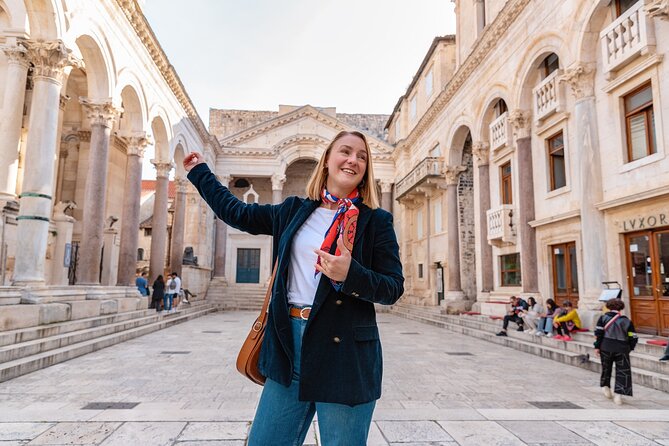
- Art-historian storytelling by Josipa ties architecture, geography, and local culture into one easy-to-follow route
- Mostly free sights mean your money goes to the guide, not a stack of tickets
- Gates and Roman streets make the palace mapable (Cardo Maximus, Peristyle, Decumanus)
- Photo stops with purpose at the Vestibulum area and around the palace entrances
- Off-the-main-path moments like the narrow Let Me Pass street (Pusti me da prodjem)
- Orientation payoff at the end with the Old Town model so you know where to wander next
Starting at Strossmayerova Fountain: the water story that powers the palace
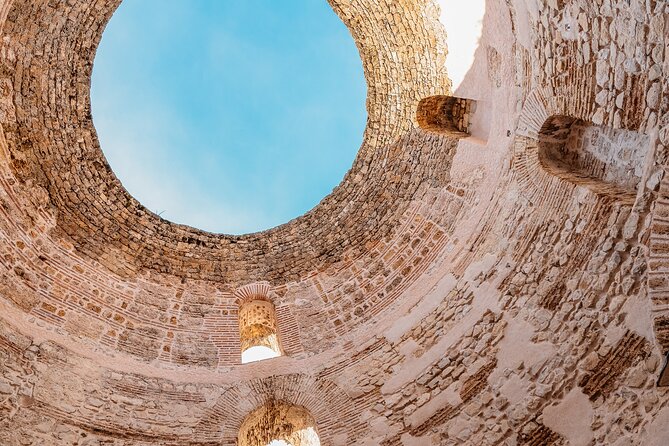
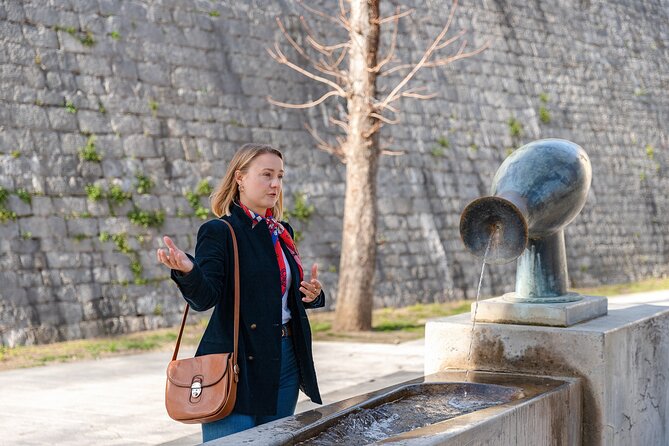
Your tour begins at Strossmayerova Fountain (Ul. kralja Tomislava 12). Expect to meet near the central fountain in Strossmayer Park, locally known as Đardin. It’s a smart start because it reminds you that this palace wasn’t built in a vacuum. Water mattered.
From here, the guide’s explanation frames Split as a peninsula-city shaped by practical Roman engineering. You’re not just walking through pretty greenery. You’re learning how water helped “bring life” to the palace for over 17 centuries. That single theme makes later stops make more sense.
Practical note: the park-to-palace portion sets the rhythm of the walk. If you’ve got sun on your shoulders, this is also a good moment to get your water bottle out early.
You can also read our reviews of more walking tours in Split

Tower Two and the logic of a Roman plan, not just pretty ruins
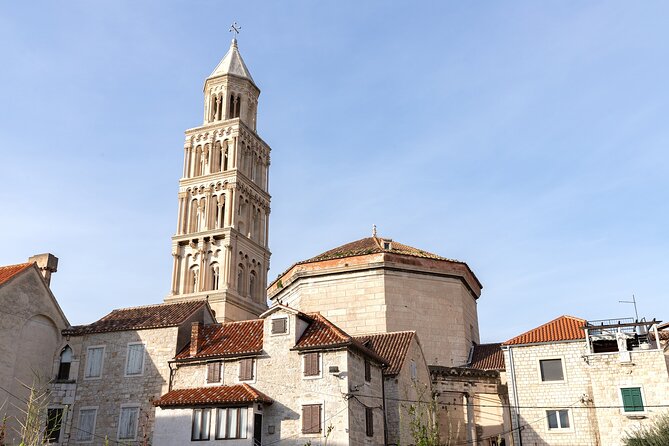
Next up is Tower 2 of Diocletian’s palace. It’s not the most glamorous view on the first pass, and that’s exactly why I like it. Starting with the “less impressive” structure helps you understand what makes Split unique worldwide: the palace isn’t a museum piece. It’s an ancient foundation that later generations built into.
You’ll then move toward the palace’s entrances and major streets. The guide keeps stressing how the Roman plan laid down the city’s bones—north to south, street to gate—so you’re not wandering without a mental model.
This part is short (minutes, not hours), and the payoff is big: once you understand the palace layout, every archway and passage becomes easier to read.
Gregory of Nin’s statue and the Golden Gate approach
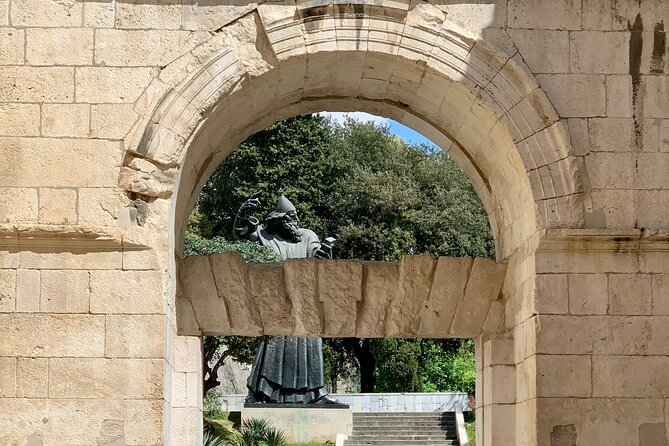
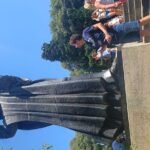
A quick stop at the Gregory of Nin statue gives you a cultural jolt. It’s a huge bronze figure, about 7 meters tall, by the famous Croatian sculptor Ivan Meštrović. And yes, the guide will point out the toe-rubbing tradition for good luck.
What I like here is the way folklore gets tied back to place. The statue isn’t floating in a random square. It’s placed right before you enter the palace area near the Golden or Northern Gate, so the story feels timed. You’re learning before you cross the threshold.
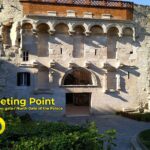
Then comes the Golden Gate. This is the northern entrance to Diocletian’s Palace, one of four entry points. The guide talks history on this structure, then guides you along Cardo, the main Roman street running north to south.
If you want your photos to look like you actually know where you are, this is where the route positioning helps. Stand where the street lines up, not where the crowd funnels.
Cardo Maximus, a hidden garden, and the palace gates you’ll actually remember
As you enter the palace from the Golden Gate, you’ll walk along Cardo Maximus, the major north-south street. This is the route moment that turns “ruins” into “a plan you can walk.”
After that, there’s a short stop described as a hidden garden inside the Diocletian’s Palace. It’s the kind of pause that makes the tour feel like more than a checklist. You get a break in atmosphere while still staying inside the story of how this complex functioned.
Then you reach the Iron Gate. The guide explains why this gate was, in its time, the city’s “platinum” gate—wording that sticks, because it sounds so different from the usual tourism talk. You’re also seeing how value worked in Roman city design: where people entered, what mattered, what got emphasized.
Finally, you’ll get the quick detour toward the Eastern (Silver) Gate. It’s short, but the guide’s on-the-ground explanation is the point. You learn what you’re looking at before you move on.
The Peristyle courtyard: Saint Domnius and the Robert Adam moment
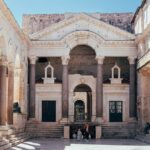
Approaching the Peristyle of Diocletian’s Palace is one of those “oh, right” moments. The grandeur appears as you walk along the Decumanus (east-west main axis). Suddenly, you’re not just walking through corridors. You’re stepping into a monumental courtyard space.
This is where the tour ties the palace origin and later history together. You’ll also learn how Peristyle sits in the bigger Roman-to-medieval-to-modern transformation.
While you’re on the Peristyle, you’ll stop for the Cathedral of Saint Domnius. Important: you will not enter the cathedral. The tour doesn’t include any paid sites. Still, the guide gives you the essential story: it began as a mausoleum for the Roman emperor and became a Christian cathedral.
Right here, the guide also points out a well-known 18th-century comment by Scottish architect Robert Adam, who listed this as one of the most beautiful European monuments. Even without entering, standing in the space makes that statement easier to understand. The cathedral isn’t the whole story. The whole complex is.


Let Me Pass street (Pusti me da prodjem) and Vestibulum photo moments
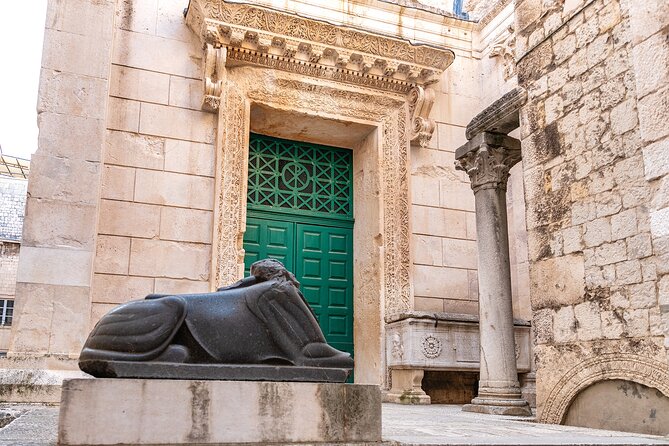
Now you get a fun, very human stop: Let Me Pass Street (Pusti me da prodjem). It’s less than 10 meters long and only 57 centimeters wide, recognized as one of the narrowest streets in the world. It’s also remembered by Split citizens enough that there’s a public monument elsewhere tied to that memory.
This is the part of the walk where you’ll see why the guide’s style works. The facts are cool, but the guide also explains the cultural importance. It turns a gimmick-size alley into a tiny piece of civic identity.
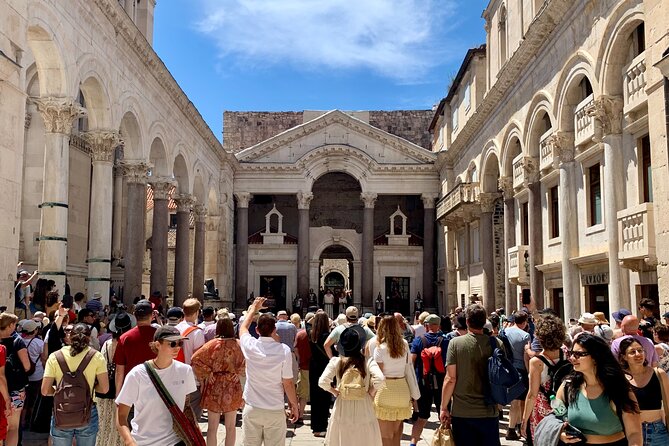
Then comes the Vestibulum of Diocletian’s Palace. This is a popular open-air photo spot, and the guide pauses so you can take pictures in the best angles. The guide also mentions klapa singing, which can happen in that acoustically rich area. You shouldn’t treat it as guaranteed, but if it happens during your time slot, it’s a memorable Split detail.
Even if you’re not into singing, this stop gives you a visual break from the big architectural axes.
Substructures toward the Riva waterfront: the shift from bright to shadowy
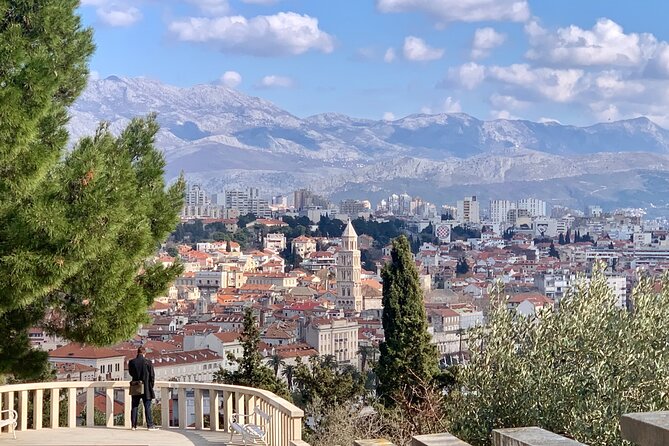
Next you’ll walk through the Diocletian Palace substructures area from the outside, using a shortcut that locals use. The story here is atmosphere. The guide describes the shift from the brighter Peristyle zone into a quieter, darker underlayer before you emerge again.
You won’t explore the substructures in their entirety because access is limited by additional admission fees and time constraints. That’s actually a smart choice for this tour. You get the orientation and the key narrative beats without dragging the walk into a long paid detour.
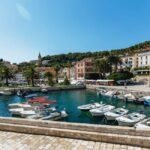
Then you come out at the Riva Harbor area. Riva is part street, part promenade, part square—one of the places people meet and linger. You’ll take a leisurely section of it, then move toward Fruit Square (at least along the approach).
I like that the tour ends with “street life” rather than ending inside more stone corridors. Your brain needs a change of pace before you head off on your own.
The final stop at the Old Town model: your cheat sheet for the rest of the day
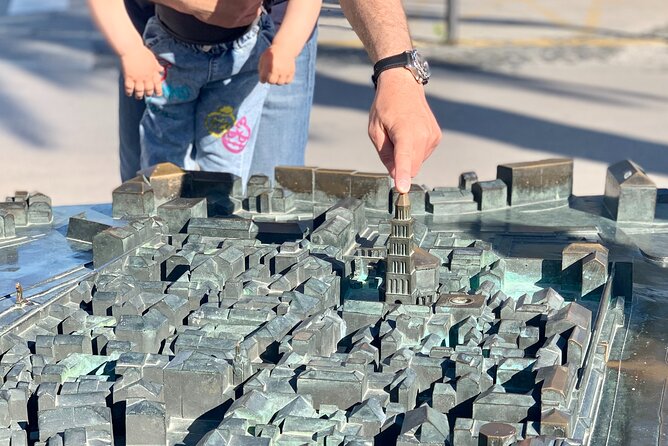
The tour finishes at the bronze model of Split Old Town, near the Riva waterfront (Obala Hrvatskog narodnog preporoda 23). This is a great ending because it gives you a visual map of what you just walked.
At the model, Josipa recaps what you’ve seen and shares her best tips for further exploration. If you’ve ever left a walking tour thinking you need a second tour just to orient yourself, this ending prevents that.
From there, you’re set up to wander: you know where the palace edges are, how the gates relate to the streets, and why certain alleys feel tucked and intentional.
What $30.23 buys you here: mostly-free sites plus an art historian’s brain
At $30.23 per person for roughly 1 hour 40 minutes to 2 hours, this is a strong value—mainly because most stops are free and the tour doesn’t try to turn every minute into a new ticket line.
You’re paying for:
- a guide who can translate Roman architecture into something you can walk yourself
- a route that hits the key gates, streets, and big visual moments
- small-group pacing (max 10), which matters more than people think on tight streets and photo stops
The trade-off is also clear: because it does not enter paid sites, you’re not getting inside the cathedral or fully into the substructures on this ticket. If those interiors matter a lot to you, you’ll likely add them later. If you want the palace story and a confident sense of direction first, this is a good buy.
One more practical note: the tour is typically booked about 25 days in advance, which tells me it’s in demand. If you’re visiting around peak season, I’d reserve early.
When this Split walk is the right fit
This tour is a good match if you want:
- an art-and-architecture approach, not just a casual stroll
- a route that helps you read Diocletian’s Palace instead of getting lost inside it
- photo stops with guidance, plus local folklore details
- a finish that leaves you ready to keep exploring on your own
I’d consider it carefully if you strongly want to enter paid interiors as part of one single tour. The route is built to keep you outside paid sites, so you’ll need a follow-up plan if interiors are your priority.
Most walking is flat, but there are some uneven spots and unavoidable steps. If that’s a concern for you, you’ll want to think about your comfort level before booking.
Should you book this Split walking tour with Josipa?
Yes, if you want a smart first-day anchor in Split’s Old Town. This is the kind of tour that gives you an internal map fast: gates, Roman street lines, the Peristyle scale, and the little cultural surprises like Let Me Pass Street. Josipa’s storytelling style also seems to connect the palace to how people live and remember the place now, not just how it looked centuries ago.
I’d skip it only if you’re aiming for a purely indoor, ticket-heavy day with lots of museum time. This tour is built for the streets and the spaces you can stand in and understand, right away.
FAQ
Where does the tour start and end?
The tour starts at Strossmayerova Fountain (Ul. kralja Tomislava 12, Split). It ends at the bronze model of Split Old Town on the Riva waterfront area (Obala Hrvatskog narodnog preporoda 23, Split).
How long is the walking tour?
It lasts about 1 hour 40 minutes to 2 hours.
Does the tour enter museums or paid sites?
No. The tour does not enter museums or paid sites. Some stops are not entered (like the Cathedral of Saint Domnius and the substructures), since this tour does not include paid entries.
What language is the tour offered in?
The tour is offered in English.
Will the tour run in bad weather?
Yes. The tour will take place rain or shine.
Can I bring a pet or service animal?
Service animals are allowed. The tour is also pet-friendly, but you need to contact the provider before booking so the guide can ensure everyone feels comfortable.