REVIEW · SPLIT
Split Old Town History Walking Tour
Book on Viator →Operated by Gray Line Croatia · Bookable on Viator
Roman ruins meet the sea on foot. Split’s Old Town is one big story you can walk through, starting at the Riva Promenade and moving into Diocletian’s Palace.
I like two things a lot: the tour is guided by a licensed local guide, and many of the best stops are accessible without paying extra entry. You also get that small-group feel (up to 20 people), plus English tours and two departure times to work with your day.
One thing to consider: the route is heavily palace-focused, so if you’re hoping for lots of modern street life or long museum-style time, this may feel a bit “greatest hits” in a concentrated 90 minutes.
In This Review
- Key Highlights to Look for on This Split Walk
- Split’s Old Town, Built for Walking Through Time
- Starting at Obala Hrvatskog narodnog preporoda: Get Your Bearings First
- Stop 1: Diocletian’s World Starts Above—Obala and the Promenade
- Stop 2: Peristyle of Diocletian’s Palace Cellars (The “Under” Story)
- Stop 3: Cathedral of Saint Domnius (A Palace Core Moment)
- Stop 4: Vestibulum and the Dome That Can Sound Like a Stage
- Stop 5: Temple of Jupiter, Now a Baptistery
- Stop 6: Triklinij (Where Roman Banquets Would Have Happened)
- Stop 7: Golden Gate and Gregory of Nin’s Toe-Rub Tradition
- Stop 8: Pjaca (Narodni trg) and the Square That Still Works
- Stop 9: Fruit’s Square (Trg Brace Radic) and Baroque Everyday Life
- Wrapping Up Back on the Riva: A Better Way to End the Day
- Price and Value: Why $30.23 Can Make Sense Here
- Timing, Group Size, and Weather: What to Plan For
- Who This Tour Fits Best (And Who Might Want Something Else)
- Should You Book This Split Old Town History Walking Tour?
- FAQ
- How long is the Split Old Town History Walking Tour?
- What language is the tour offered in?
- Where do I meet the guide?
- Does the ticket include admission to the stops?
- Is food and drinks included?
- Is there a minimum or maximum group size?
- What if the weather is bad?
Key Highlights to Look for on This Split Walk
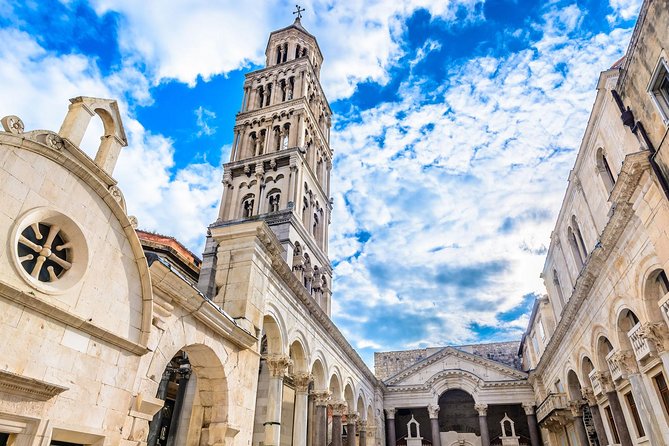
- Diocletian’s Palace cellars show the “underworld” that supported the emperor’s residence above
- Cathedral of St. Domnius adds Roman columns and the mausoleum-to-church story in the same pocket of space
- Vestibulum acoustics can turn a normal stop into a mini concert if klapa singers are performing
- Temple of Jupiter (now a baptistery) includes ancient sculptures and a preserved sarcophagus
- Golden Gate + Gregory of Nin gives you the famous toe-rub tradition for good luck
- Pjaca and Fruit Square round out the walk with squares that still feel like everyday Split
Split’s Old Town, Built for Walking Through Time
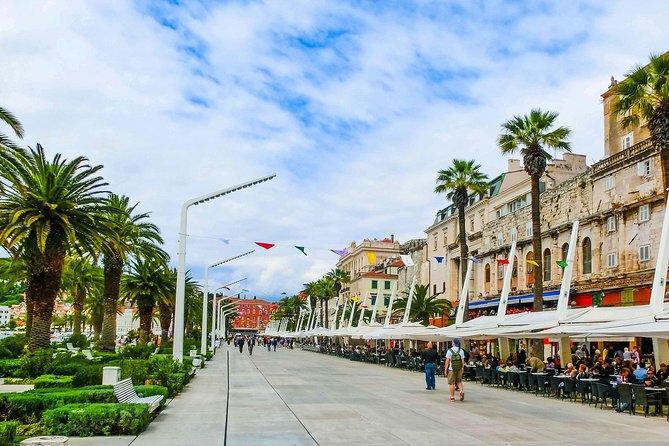
Split is the rare place where history isn’t behind glass. It’s in the street layout, the stone, and the way rooms connect like a maze you can actually navigate on a guided route.
This tour works because it gives you structure fast. In about 90 minutes, you go from the seaside promenade to the heart of Diocletian’s Palace and then out into the city squares, so your brain can map what you’re seeing instead of just collecting photos.
And the guide matters here. On this tour format, the guide is professional and locally licensed, and the experience quality tends to be reflected in names you might hear come up often like Anita, IVA, Toni, Petra, Katarina, and Rocco—people who clearly care about Split and explain it with energy.
You can also read our reviews of more walking tours in Split

Starting at Obala Hrvatskog narodnog preporoda: Get Your Bearings First
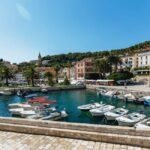
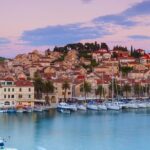
The tour meets at Obala Hrvatskog narodnog preporoda on the Riva Promenade. That’s a smart choice because you start with sea views and the city’s “outside world,” not straight into stone corridors.
From the beginning, you’re set up with context: where things are, what the city’s layout is about, and what you’ll notice once you reach Diocletian’s Palace. I like this because it turns the palace stops from random highlights into a single story you can follow.
Practical win: it ends back at the same meeting point, so you don’t lose time with a separate drop-off.
Stop 1: Diocletian’s World Starts Above—Obala and the Promenade
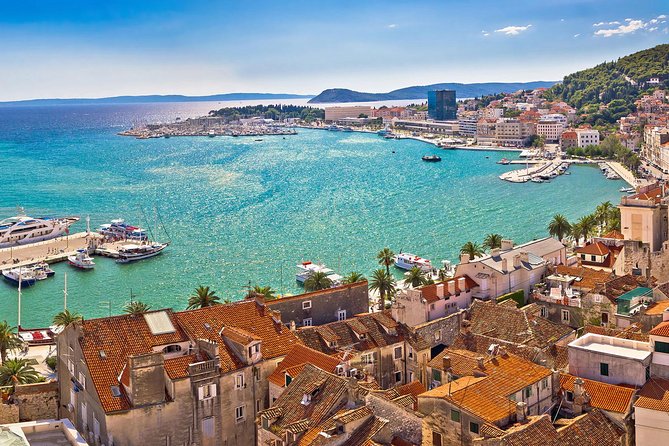
At the waterfront, you get the city’s rhythm. The sea breeze helps too—because once you step into the palace complex, you’ll spend a lot of your time on stone and shaded interiors.
The tour timing is also designed to keep you moving. Plan on 1 hour 30 minutes total (approx.), with short, efficient stops. You’ll see more than you could on your own in the same time, mainly because your guide points out what matters in each setting.
Stop 2: Peristyle of Diocletian’s Palace Cellars (The “Under” Story)
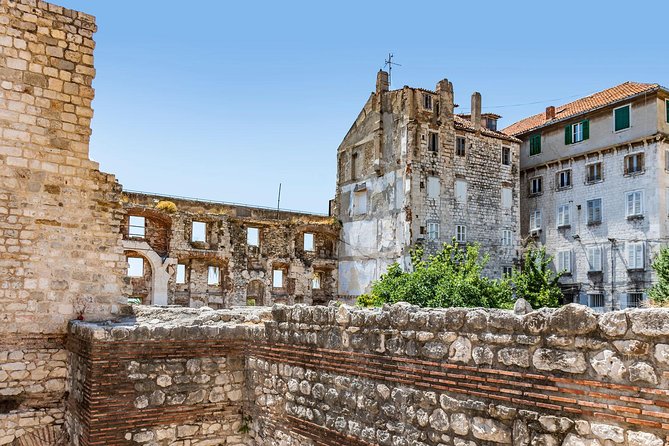
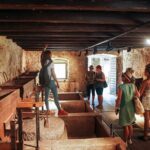
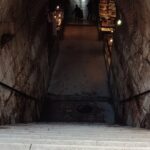
Then you head into the cellars beneath Diocletian’s Palace. This is one of the most memorable parts because you learn what’s easy to miss when you only look at what’s on top.
The cellars are described as substructures that supported the emperor’s residence above, so the story becomes physical. You’re not just hearing Roman names; you’re seeing how the building functioned—where support lived, where space was practical, and how life inside a massive imperial complex worked.
Even if you’re not a “Roman architecture” person, this tends to click fast because it explains purpose. It’s also a nice change of pace from the brighter street sections.
Stop 3: Cathedral of Saint Domnius (A Palace Core Moment)
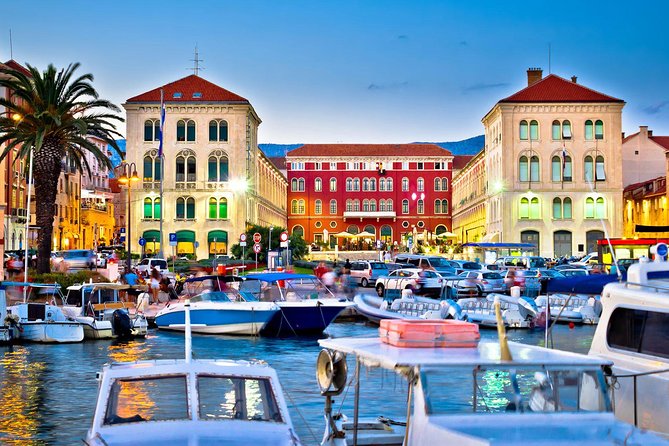
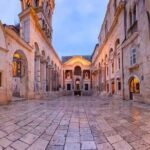
Next comes the Peristyle and Cathedral of St. Domnius. This spot is basically Split at peak focus: Roman columns inside a complex that started as part of an emperor’s world.
What you’re likely to appreciate here is the contrast in roles. The tour frames the cathedral as something tied to the emperor’s mausoleum, which helps you understand why the site carries such weight in the city.
If you like “one location, many eras,” you’ll enjoy this stop. You’ll stand in a space that feels both Roman and later Christian, with the cathedral as the anchor point for that shift.
You can also read our reviews of more historical tours in Split




Stop 4: Vestibulum and the Dome That Can Sound Like a Stage
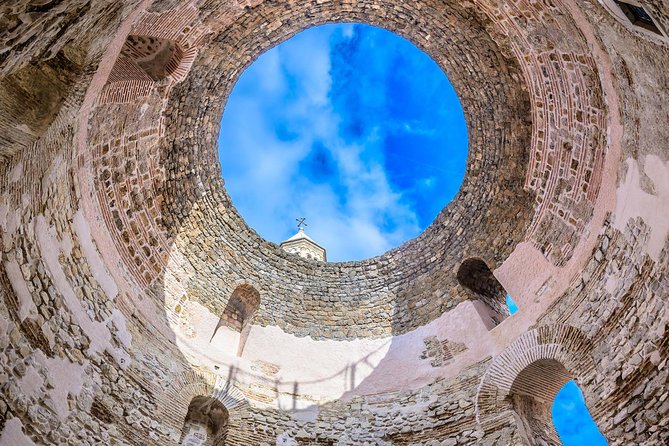
The Vestibulum stop is short but fun. You stand beneath a circular open dome known for impressive acoustics, and the guide notes that if you’re lucky, you might hear traditional klapa singers.
That makes it less of a “check it off” moment and more of a “maybe you’ll catch something special” moment. Even when there’s no performance, you’ll still understand why people treat this kind of Roman space as a natural sound box.
Practical note: since this is a quick stop, it’s not the place for long breaks. Bring your water mentality: sip, don’t snack through the whole tour.
Stop 5: Temple of Jupiter, Now a Baptistery
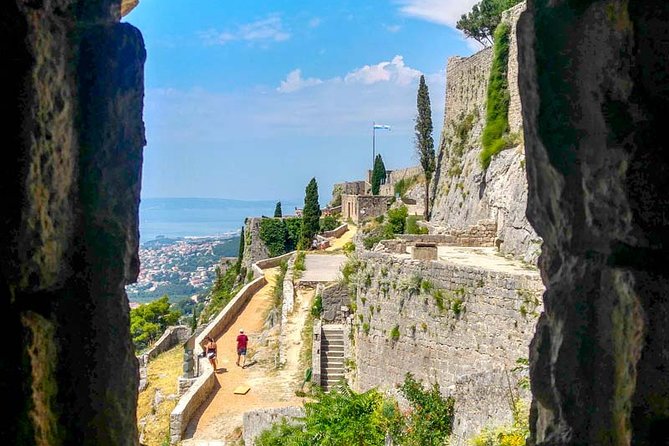
At the Temple of Jupiter, the story flips again. This former Roman temple is now a baptistery, and the tour points out ancient sculptures plus a preserved sarcophagus.
What makes this effective on a walking tour is how it keeps the timeline moving. You aren’t stuck at one “era room.” Instead, you see how later cultures repurposed older structures—still right there, not taught as an abstract idea.
If you enjoy seeing artifacts in context, this is a highlight. The sarcophagus and sculpture details give you something solid to look for while the guide ties it back to daily life and ritual.
Stop 6: Triklinij (Where Roman Banquets Would Have Happened)
Then you move to the Triklinij, described as the place where Diocletian hosted lavish banquets. This stop usually lands well because it turns “history” into something more human.
The guide connects it to Roman dining culture and the idea of imperial luxury. You can look at the space and imagine a meal, even if you’re not trying to picture exact guest counts or menu details.
Drawback to note: it’s a quick stop. If you want a long, detailed reconstruction of Roman banquets, you’ll probably wish you had more time. But for most people, the time pressure is part of the tour’s value.
Stop 7: Golden Gate and Gregory of Nin’s Toe-Rub Tradition
The tour exits through the grand Golden Gate, noted as the biggest of the four palace gates. Outside, it slows down just enough for the famous statue moment: Gregory of Nin, where you rub his toe for good luck.
This is one of those traditions that can feel silly until you do it once and realize it’s part of how locals keep the place alive. It’s quick, it’s memorable, and it gives you a small cultural action instead of another lecture.
Also, leaving the gate gives you that “palace to city” feeling. You’re out in the open again, with more street atmosphere around you.
Stop 8: Pjaca (Narodni trg) and the Square That Still Works
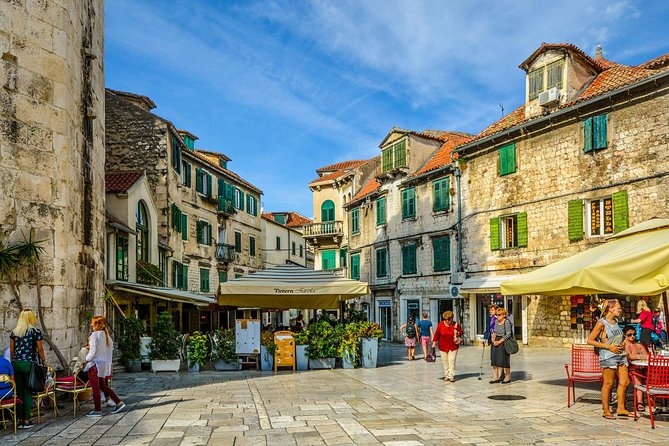
Next is Narodni trg (Pjaca). The tour frames it as a historic square surrounded by charming Venetian-era buildings, with an old city clock and plenty of cafés around.
This stop is valuable because it reminds you that Split didn’t stop being a city after the Romans. The square is still a meeting place, still a place to pause, and still an easy win for orientation.
If you’re short on time on your first day, this is exactly the kind of stop that helps you figure out where to go later for a coffee or a meal.
Stop 9: Fruit’s Square (Trg Brace Radic) and Baroque Everyday Life
The route continues to Trg Brace Radic (Fruit’s Square). The name points to the fruit markets that used to happen here, and now it’s framed by baroque palaces and everyday city life.
This stop is brief, but it’s the right kind of brief. It gives you variety after the palace focus, without turning the tour into a long crawl across the whole old town.
I like places with names that preserve what used to happen there. It makes the square feel like it has a memory, not just architecture.
Wrapping Up Back on the Riva: A Better Way to End the Day
The final leg takes you back to where you started on the Riva. That end matters. It gives you an exit ramp where you can decide what you want next—sunset stroll, a quick snack nearby, or jumping into another part of town while your head is still in history mode.
In a good walking tour, the ending helps you keep moving, and this one does that by returning you to a familiar landmark.
Price and Value: Why $30.23 Can Make Sense Here
This tour costs $30.23 per person for about 90 minutes with a professional licensed local guide. You also get mobile ticketing and English service, with admission ticket free listed for the stops.
That combination is why the price can feel fair. For city-history tours, the “hidden cost” is often museum entry fees. Here, the big-ticket sites on the route are treated as included for you, at least as far as admission is concerned.
What’s not included is the easy stuff—food and drinks. You’ll want to budget for snacks separately, especially if you run tours back-to-back in Split. Still, the walk is short enough that you can comfortably grab something after without losing the day.
Timing, Group Size, and Weather: What to Plan For
This experience is offered in two departure times, which helps you avoid crowd crush if you pick the smarter slot. I’d use that choice as your lever. If you’re the kind of person who hates heat or packed corridors, aim for the later, cooler option when available.
Group size max is 20 travelers. That’s small enough for questions, but still big enough that the tour feels lively. Some days may feel even more intimate than that, so don’t be surprised if you end up in a smaller knot of people.
Weather-wise, the tour says it operates in all weather conditions. At the same time, the cancellation policy notes a requirement for good weather, meaning if conditions are bad enough they may offer another date or a full refund. So, yes: pack for sun and for rain. Split can change quickly.
Who This Tour Fits Best (And Who Might Want Something Else)
This tour is a great match if you:
- want a fast orientation to Split’s Old Town
- love Roman settings and cathedral-era layers
- want insider-style advice on where to eat, drink, and explore from a local guide
- like short stops with a guide tying each place to a bigger story
You might not love it as much if you:
- want long time in one place (the format is compact)
- are hoping for mostly modern neighborhoods rather than Diocletian’s Palace focus
- need wheelchair-friendly access (one comment noted it isn’t suitable for wheelchairs, likely because of historic surfaces and stairs)
Should You Book This Split Old Town History Walking Tour?
I’d book it if you want the easiest way to understand Split without feeling overwhelmed. The route hits the core landmarks people come for—cellars, cathedral, acoustic vestibule, temple-to-baptistery, banquet room, Golden Gate—and then it finishes with the squares where daily life happens.
It’s also a strong value at $30.23, mainly because you’re getting a licensed guide and admission-free access for the key stops. Add in two departure times and a small group cap, and it’s one of the more sensible ways to spend your first day in town.
If you’re the type who needs lots of time to linger, pair this with a longer self-guided walk afterward. But as a focused history sampler you can actually finish with energy, this one is a solid pick.
FAQ
How long is the Split Old Town History Walking Tour?
It runs for about 1 hour 30 minutes.
What language is the tour offered in?
The tour is offered in English.
Where do I meet the guide?
You meet at Obala Hrvatskog narodnog preporoda 21, 21000 Split, Croatia.
Does the ticket include admission to the stops?
Admission tickets are listed as free for the tour stops included in the route.
Is food and drinks included?
No. Food and drinks are not included.
Is there a minimum or maximum group size?
The tour has a maximum of 20 travelers. It also requires a minimum number of travelers and may be canceled if that minimum isn’t met.
What if the weather is bad?
It operates in all weather conditions, but the cancellation policy says if it’s canceled due to poor weather, you’ll be offered a different date or a full refund.