REVIEW · SPLIT
Jewish Heritage & Diocletian’s Palace Private Split Tour
Book on Viator →Operated by Jelena Vrancic Private Tourist Guide · Bookable on Viator
Split has a hidden Jewish layer. This private walk connects Diocletian’s Palace and the Jewish community of Split with specific stops like menorah carvings in the palace substructures and a synagogue visit with a community member. I love how the tour pairs Roman stone with Jewish details you would otherwise miss, and I also like the human part of meeting someone from the community and hearing stories in plain language. One thing to consider: you’ll be on your feet on uneven Old Town streets, so comfy walking shoes matter.
You also get a format that feels calm, not rushed. It’s private, led by a licensed guide (Jelena Vrancic or her team, including guides like Emil, Vinka, and Pero), and the pace can be adjusted when needed, like when a visitor had ambulation problems and the plan was modified. Pickup is offered, and for cruise ship days the guide meets you at the port so you can move straight into the Old Town.
In This Review
- Key things that make this tour worth it
- Split’s Roman Shell with a Jewish Core
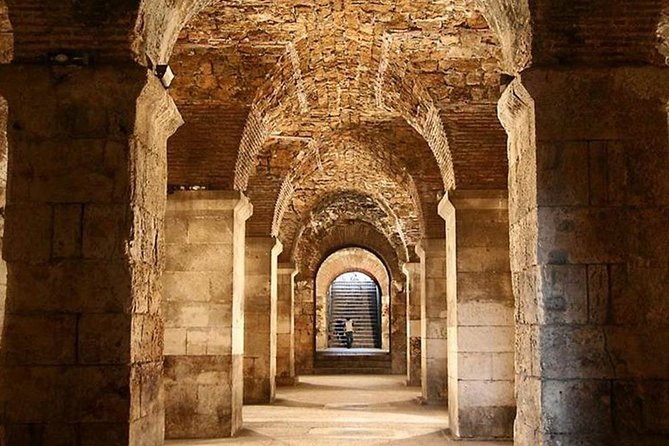
- Diocletian’s Palace Substructures: Menorah Carvings Under the Streets
- Vestibule and Peristyle: Roman Squares You Can Actually Navigate
- Grgur Ninski Statue and the Palace’s Square-to-Street Connections
- The Jewish Ghetto Walk: Synagogue Visit and Community Stories
- Narodni Trg Plaque and Split’s Waterfront Squares Like a Local
- Tour Pace, Footwear, and When the Guide Adjusts
- Price and Value for a 2.5-Hour Private Tour
- Should You Book This Jewish Heritage and Diocletian’s Palace Tour?
- FAQ
- Is this tour private?
- How long is the tour?
- What language is the tour offered in?
- What’s included in the price?
- Do I need to buy tickets separately for the substructures or synagogue?
- Where do you meet, and is pickup available?
Key things that make this tour worth it
- Menorah carvings in Diocletian’s Palace basements tied to Jewish presence in the area
- A synagogue visit inside the historic Jewish ghetto, with time to ask questions
- Meeting a Jewish community member for stories that go beyond dates and plaques
- Roman palace highlights in a tight route: Vestibule, Peristyle, and columns brought from across the empire
- Old Town orientation stops: Riva, Prokurative, Marmontova Ulica, and key squares
- Designed for a short visit window at about 2.5 hours, useful for port days
Split’s Roman Shell with a Jewish Core
Split can feel like it was built in layers, because it was. Diocletian’s Palace still shapes the Old Town streets, but the city also has a Jewish story that runs alongside the Roman one. What makes this tour work is that it doesn’t treat heritage as a separate topic. It links the two, so you start seeing the palace and the ghetto as parts of the same living geography.
I like that the tour gives you concrete details, not vague “old town vibes.” You’ll hear why the Jewish community in Split is described as one of the oldest in Europe, and you’ll connect that to the nearby Roman city of Salona. The timeline you’ll get ranges from Roman-era evidence (roughly 2nd to 3rd century AD) to later centuries when people moved into Diocletian’s Palace after attacks.
It’s also a good fit if you want history that stays human. Several guides on this experience are praised for making the storytelling low-key and fun, not dry. Expect moments where you can pause, look closely, and ask follow-ups instead of just marching on.
You can also read our reviews of more private tours in Split


Diocletian’s Palace Substructures: Menorah Carvings Under the Streets
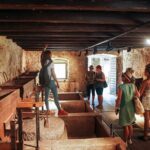
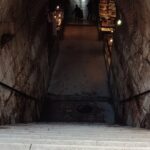
The tour’s first stop is the heart of the “why didn’t I notice this before?” feeling. You’ll start at the Diocletian Palace substructures—the basement-like spaces that sit under the Old Town. This is where the Roman palace stops being a postcard and starts being architecture you can read.
You get a chunk of focused time here (about 45 minutes), and the entry fee for the substructures is included in the tour. The guide ties the setting to the Jewish community of Split, including the idea that Jews lived in the broader area during the Roman period and later shared the path of other Salona residents when they relocated. The story is specific: archaeological findings connected to Salona point to Jewish life alongside Romans, then later movement into Diocletian’s Palace.
The standout detail is the mention of menorah carvings in the basements. That detail changes how you look at the palace. Instead of only seeing imperial power, you see continuity of community life in the same stone shell.
Practical note: substructure spaces can feel cooler and a bit darker than the street level. If you’re someone who likes to take photos, plan for slower movements while you look up close.
Vestibule and Peristyle: Roman Squares You Can Actually Navigate
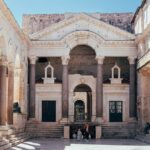
After the substructures, the route moves into the palace’s main interior spaces. First you’ll pass through the Vestibule, a former foyer area of the palace. This stop is short (about 10 minutes), and it helps you understand how visitors and residents would have moved through the complex.
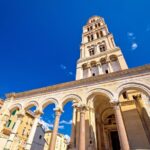
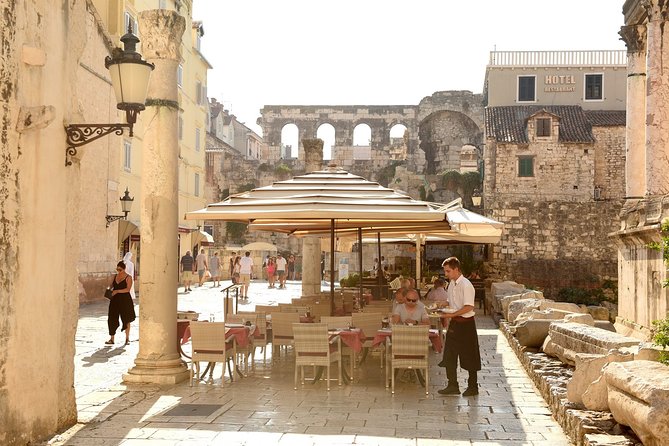
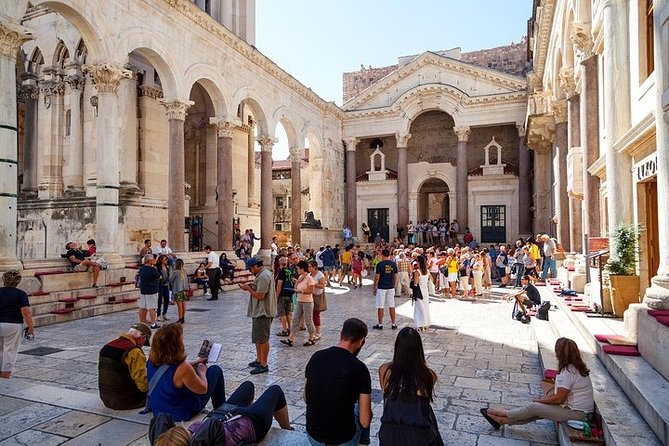
Then you reach the Peristyle, the palace’s main square. You’ll get the basics on how it functioned in Roman life and how it functions today. This isn’t just a pretty courtyard stop. You’ll also notice the tall columns and hear why they were brought from different places across the empire when the palace was built in 305 AD.
This section matters because it gives you orientation. When you leave the palace, the streets and squares around Split make more sense. You stop feeling lost among stone alleys and start feeling like you’re walking a map drawn by Diocletian.
If you’re the kind of traveler who likes “look, then explain,” this middle part hits the sweet spot. Short pauses, clear context, and enough time to notice details.
Grgur Ninski Statue and the Palace’s Square-to-Street Connections
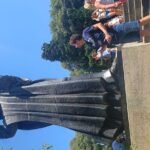
The route keeps moving, but it stays structured. You’ll see the Grgur Ninski statue, a tall sculpture tied to one of Croatia’s well-known church figures (bishop Grgur Ninski). It’s about 10 minutes, and it works as a breather between the palace core and the Jewish ghetto area.
From there, you’ll shift toward squares just outside the palace. One of the nicest in-between moments is Fruit’s Square (Trg Brace Radic), where you’ll learn about Marko Marulić, described as the father of Croatian literature. Even if you don’t know his name going in, this stop gives you a link between Old Town monuments and the modern identity people still carry.
These quick stops are not filler. They set you up to understand what you’ll see next. Split’s Old Town can feel like a funnel: a few key points feed into everything else. The guide uses those points so you don’t just “walk around,” you actually get your bearings fast.
The Jewish Ghetto Walk: Synagogue Visit and Community Stories
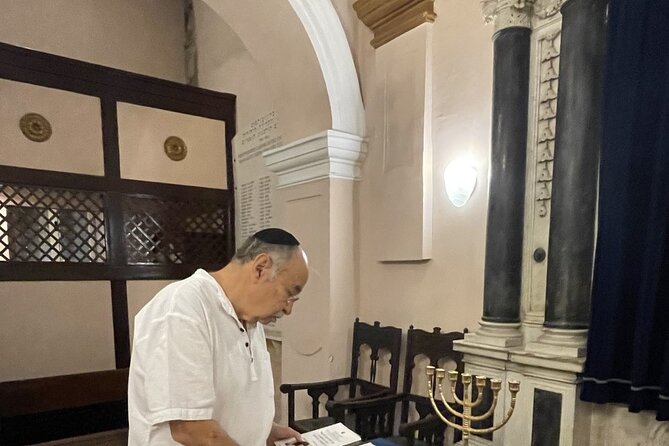
This is the emotional core of the tour. You’ll walk through the Jewish ghetto area, where the guide explains the Jewish presence in Split and how the community shaped civic life over time. The aim here is to help you see the neighborhood as more than a curio.
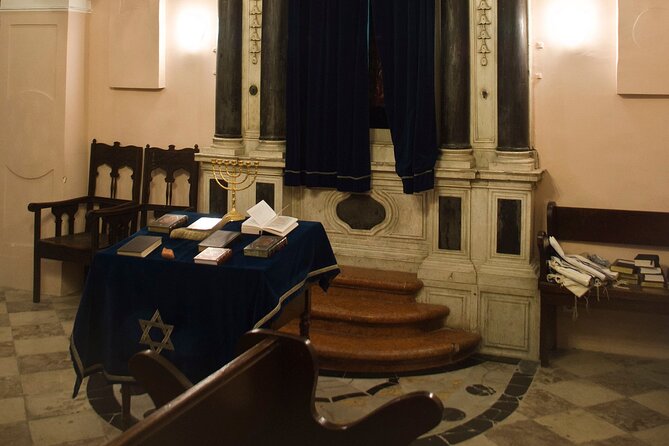
Then you’ll visit the synagogue, with time inside of about 30 minutes. The synagogue stop includes time to meet a community member who shares stories about Jewish life in Split and the people who contributed to the city’s economic and historical development.
In the reviews, the synagogue visit stands out in a very specific way: visitors highlight conversations with the caretaker, Albert. That kind of meet-and-greet changes the feel of the visit. You stop collecting facts and start hearing lived perspective, the kind that doesn’t fit neatly into a guidebook caption.
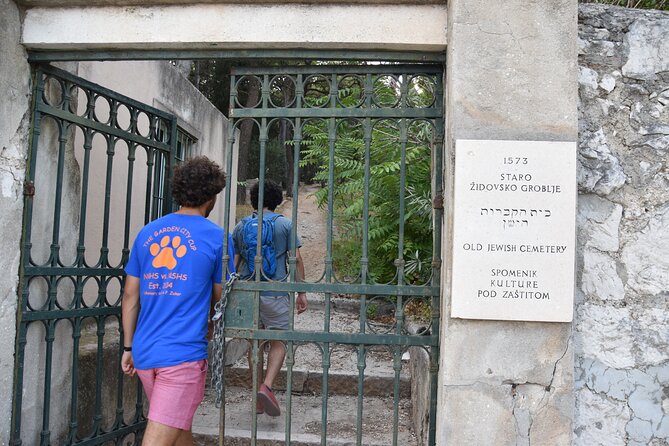
One more detail to flag: the experience is advertised as including a visit to the Jewish cemetery as well as the synagogue. The route description you’ll follow focuses on the synagogue and ghetto walk, so the cemetery piece may depend on how the guide plans access that day. If you want the cemetery as a firm priority, it’s worth asking ahead of time.
Practical note: synagogue access and timing can depend on local schedules. In this type of private tour format, your guide can often adapt within the day’s real constraints, but you still want to arrive ready to respect the setting.
You can also read our reviews of more historical tours in Split


Narodni Trg Plaque and Split’s Waterfront Squares Like a Local
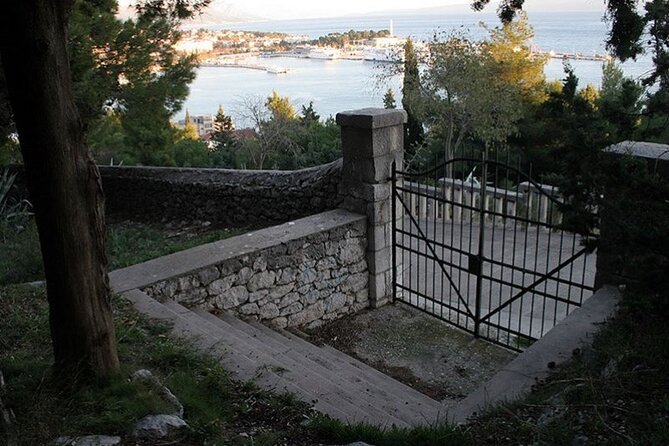
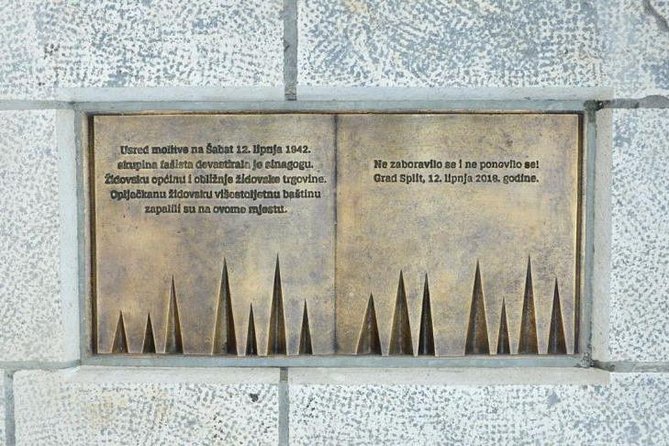
After the ghetto and synagogue, the tour shifts back to the broader Old Town. You’ll reach Narodni Trg, where you’ll learn about a bronze plaque placed to remember the destruction of precious items and archives from the synagogue on June 12, 1942. It’s the kind of stop that hits quietly. The guide ties it to what the city chose to preserve and what was lost.
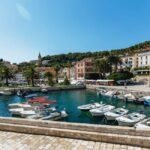
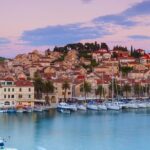
Narodni Trg is also where you get a sense of Split’s visual style, including the Venetian architecture around the main piazza. Then you’ll move toward Riva Harbor, the waterfront that locals call their living room. This is your “feel the city breathe” stretch, with time to take in the cafés and the pedestrian flow.
Next comes Prokurative (also called Republic Square), designed with an architectural feel that people often compare to Venice’s St. Mark’s Square. You’ll learn where the name comes from and that the square is only open on one side, which shapes your view toward the harbor and Riva.
Finally, you’ll reach Marmontova Ulica, another promenade with a familiar daily rhythm. Off the street you can see the fish market area, where locals buy fresh Adriatic fish. The stop is brief (around 10 minutes), but it’s one of those “you’re really here” observations that sticks.
This waterfront run pairs well with the earlier history. The story doesn’t end at the synagogue door. It keeps going into street life, so you leave with both context and atmosphere.
Tour Pace, Footwear, and When the Guide Adjusts
A 2.5-hour private tour can be either a smooth glide or a cobblestone workout, depending on the day and the route choices. Here, you can expect a mix of indoor spaces (substructures and synagogue) and short outdoor segments between landmarks.
If you have walking limits, you’ll want to plan shoes carefully and bring a bit of flexibility. One of the reasons this tour gets strong feedback is that the guide can adjust when needed, including changing the timing for visitors with ambulation problems. That adaptability matters in Split, where one “quick” street can turn into a lot of uneven steps.
Also, the schedule is balanced across your attention span. You get a longer entry time at the substructures, then shorter context stops, then a solid block of time at the synagogue where questions are part of the experience. It’s not a sprint.
If it’s pouring rain, you’ll probably still be moving. You might not love that part, but you do benefit from a guide who can keep the day coherent even when weather changes.
Price and Value for a 2.5-Hour Private Tour
At $187.05 per person for about 2 hours 30 minutes, this is not the cheapest way to see Split’s Old Town. But it’s also not trying to be. You’re paying for a licensed guide, private routing, and—most importantly—entry access that would be harder to coordinate on your own.
What you’re getting for the money:
- Private guide time (only your group)
- Substructures entry fee included
- Synagogue visit included, plus time to speak with a community member
- Pickup offered (when you’re staying in the right area or arriving by ship), so you spend less time figuring out where to meet
For pairs or small groups, private tours can actually become good value when you count the headache removed. In a place like Split, you don’t just want to look at the palace—you want the right interpretation at the right spot. That’s what makes the tour feel worth the price.
If you’re traveling solo and every budget dollar matters, you may compare it to a self-guided palace walk plus a separate synagogue visit. But if you care about the Jewish context and want someone to connect the dots, this format saves time and prevents the “we walked right past the meaning” problem.
Should You Book This Jewish Heritage and Diocletian’s Palace Tour?
Book it if you want Split to make sense as one story. This tour is for travelers who like seeing how architecture holds human events, and how community memory can exist in the same space as imperial stone.
It’s also a smart choice if you appreciate the synagogue experience as a genuine conversation, not just a photo stop. Meeting a Jewish community member—and in particular the caretaker Albert, highlighted by visitors—adds a layer you won’t get from signage alone.
Skip it or ask more questions first if you’re looking for a purely outdoor walking tour with minimal stops. This one includes indoor time and a setting where you’ll want to move respectfully and stay aware of rules. Also, if you have mobility concerns, confirm the pace and route plan with the guide before you arrive.
FAQ
Is this tour private?
Yes. It’s a private tour/activity, and only your group will participate.
How long is the tour?
It runs about 2 hours 30 minutes.
What language is the tour offered in?
The tour is offered in English.
What’s included in the price?
A private guided tour with a licensed guide, the synagogue and Jewish ghetto visit, and the fee for the Diocletian’s Palace substructures are included.
Do I need to buy tickets separately for the substructures or synagogue?
The substructures admission is included. The synagogue stop is listed as an admission-free stop in the schedule, so you typically won’t need to add a separate ticket for that part.
Where do you meet, and is pickup available?
You meet at Obala Hrvatskog narodnog preporoda 23, 21000, Split, usually by the bronze map on Riva. Pickup is offered, including meeting cruise ship guests at the port and arranging pickup at Old Town apartments; for other stays outside the Old Town, meeting is at Riva.