REVIEW · SPLIT
Split: History and Heritage Walking Tour
Book on GetYourGuide →Operated by Ancient Tours Split · Bookable on GetYourGuide
Split reads like a living time machine. This walking tour turns Diocletian’s Palace into a clear story, with Roman, medieval, and Gothic layers you can actually see as you walk, guided by people like Antonella or Nikolas. I love how the guides keep the pace friendly and the facts usable, and I also like the extra Game of Thrones nods that make the old stones feel current.
One heads-up: even with a small-group format, the core of Split can be busy, and you may lose a little time when the group stretches out in crowds. If you prefer moving street-to-street without pauses, plan for that.
In This Review
- Key things I’d bet you’ll enjoy
- Split’s history, explained where you can see it
- Starting at Peristil Square: the easiest way to get oriented
- Diocletian’s Palace: how 1700 years of power still shapes the streets
- Romanesque churches: sacred spaces with a different mood
- Medieval fortifications and Gothic palaces: the city keeps rewriting itself
- Modern shops, ancient walls: the best kind of time travel
- Game of Thrones bonus stops: fun, but still tied to real places
- Your guide: licensed, story-driven, and built for real questions
- What you should bring (and what to skip)
- Timing, pace, and crowd reality in Split’s center
- Who this tour is best for
- Price and value: what $18 buys you in Split
- Final verdict: should you book this walking tour?
- FAQ
- Where does the tour start?
- How much does it cost?
- What’s included in the tour price?
- What’s not included?
- What should I bring?
- Will the tour run in bad weather?
- What languages are available?
Key things I’d bet you’ll enjoy
- UNESCO-protected Roman palace: you get oriented inside Diocletian’s world, not just a photo stop.
- 1700-year contrasts: Roman walls, later churches, medieval fortifications, and Gothic palaces in one walk.
- Story-first guiding: guides connect the dots, including Diocletian’s rise from nobody to a top-level ruler.
- Real city life around the monuments: preserved architecture sitting beside modern shops in the same tight area.
- Game of Thrones locations: optional bonus context for fans who want to spot the show references.
- Multiple language options: Russian, English, German, and French.
Split’s history, explained where you can see it
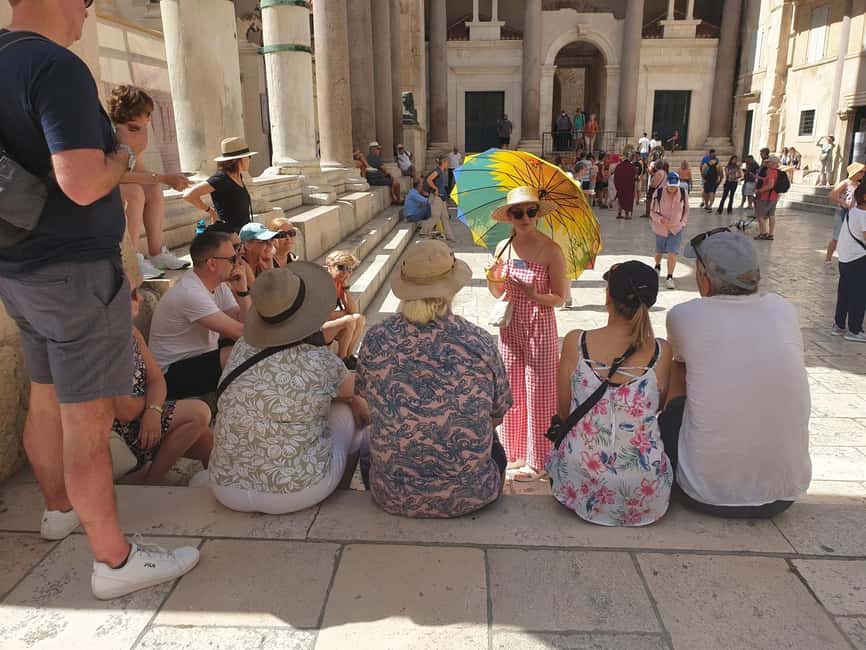
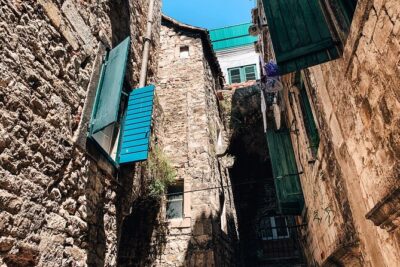
Split’s old core is one of the easiest places to get hooked on history, because the past isn’t behind ropes. It’s built into the street plan, into arches, into church facades, and into tight corners where you can feel how people once moved through the city.
This tour is built for that kind of “walk and understand” travel. For $18 per person, you’re mainly paying for a guided route and expert interpretation, not entrances or meals. That matters because the value here is clarity: the guide helps you read what you’re looking at, so you leave with a mental map you can reuse all day.
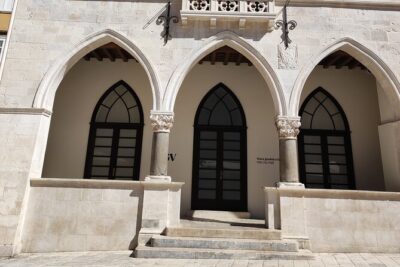
The other big reason I like this approach is that the tour covers more than Roman ruins. You’ll also see Romanesque churches, medieval fortifications, and Gothic palaces, which is how Split earns its reputation for being layered instead of frozen in one era.
You can also read our reviews of more walking tours in Split

Starting at Peristil Square: the easiest way to get oriented
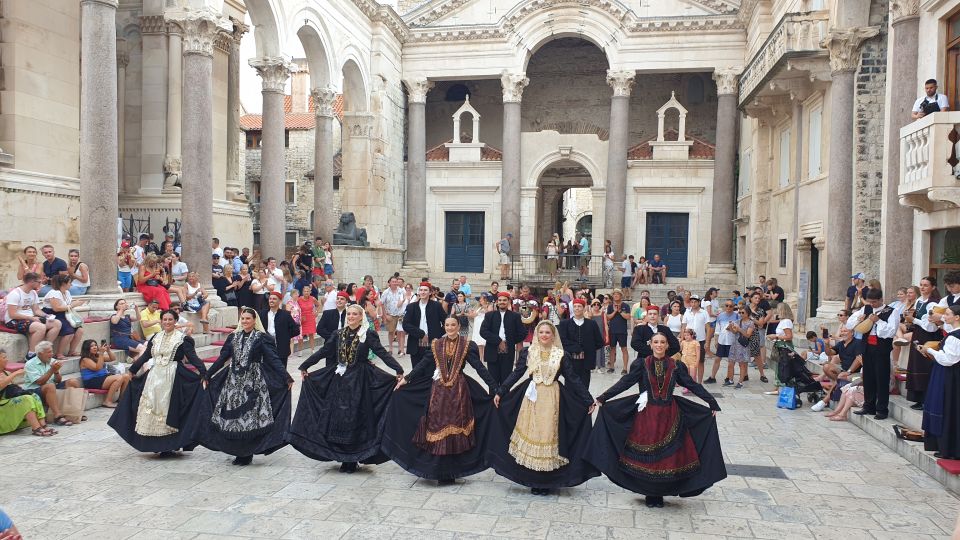
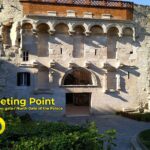
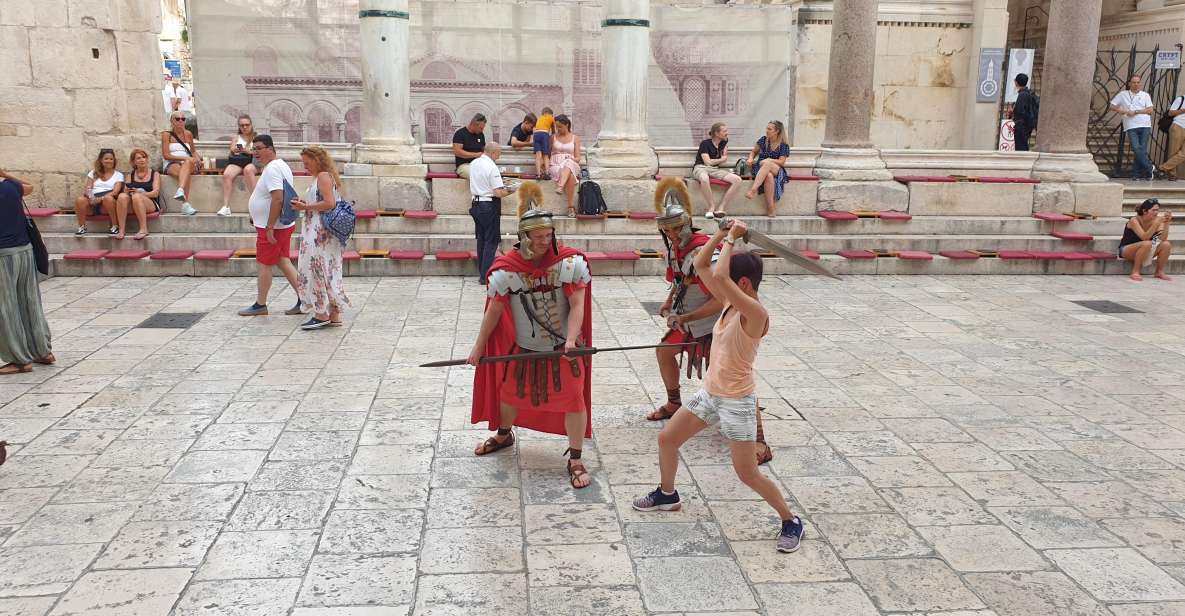
The walk begins at Peristil Square, under the old Roman arch on the north side of Peristyle Square, next to the Tourist Information Office. Look for a yellow T-shirt or a yellow umbrella.
Why that’s useful: Peristil Square is a natural “hub” inside Diocletian’s palace complex. Starting there means you don’t waste time figuring out where the main sights sit, and you can settle into the story quickly—what you see makes sense because the guide gives you context right at the start.
This tour ends back at the same meeting point, which is handy if you plan to continue exploring on your own afterward. You also don’t have to worry about a complicated pickup/drop-off plan since hotel transfer isn’t included.
Diocletian’s Palace: how 1700 years of power still shapes the streets
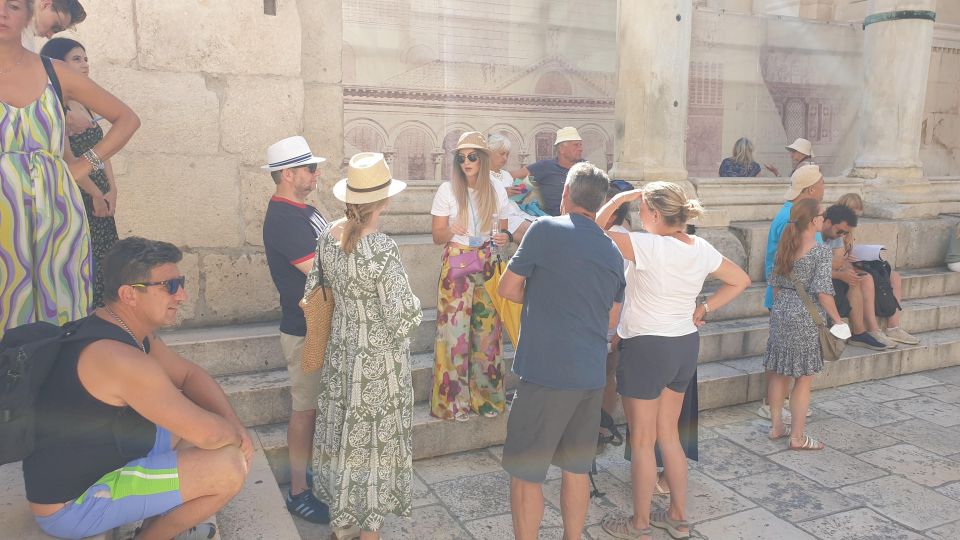
The main event is the Roman palace complex, described as 1700 years old and UNESCO protected. The guide focuses on how the palace worked in its day, what parts remain, and how the city grew around it.
What you’ll get out of this section isn’t just “cool old buildings.” It’s the logic of how one place can be both a fortress and a home base for authority. You’ll hear how Diocletian went from an unknown figure to the most powerful man in the world—an arc that helps you understand why the architecture is so confident.
Even if you’re not a hardcore Roman-history person, this is a smart way to start in Split:
- The palace gives you the skeleton of the city.
- Once you grasp the skeleton, everything else—churches, fortifications, later palaces—fits into the same spatial story.
- You’ll notice preservation that you might miss if you’re just snapping photos.
Also, the architecture here is “fantastically preserved” in the sense that you can walk through spaces that still feel like Roman planning. That makes the guided explanation feel grounded instead of abstract.
Romanesque churches: sacred spaces with a different mood
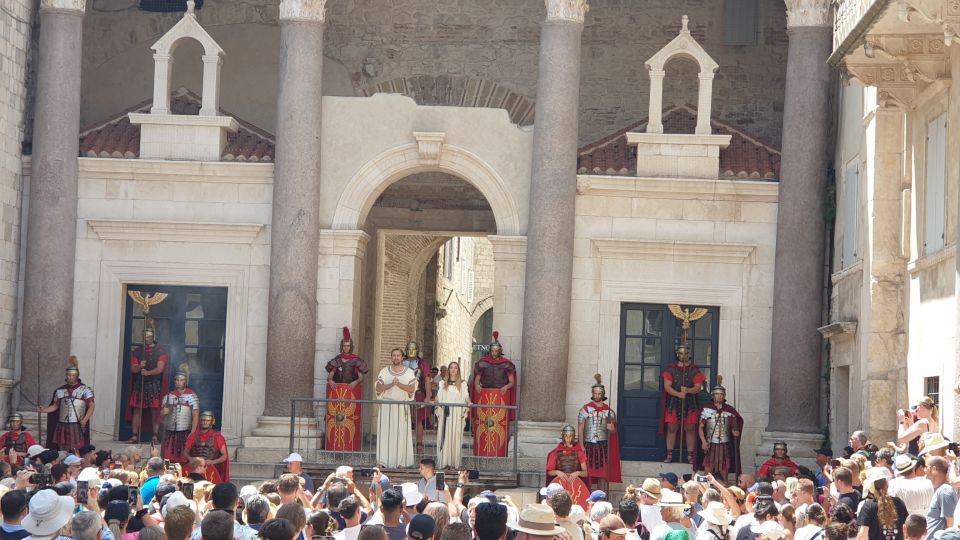
After the palace core, you’ll move into the religious layer of Split, including Romanesque churches. The tour doesn’t treat churches like side quests. Instead, you’ll get the sense that they represent later eras of the city reshaping what earlier Romans built.
Why this stop matters: churches are often where cities show their shifts in culture and priorities. In Split, that means moving from the palace’s political logic to a spiritual and community logic—still within the same compact area.
If you’re traveling with someone who thinks history tours are boring, this is one of the sections that can change their mind. The guide’s job is to keep the facts human—what people likely needed from these spaces, and why the style choices matter.
Medieval fortifications and Gothic palaces: the city keeps rewriting itself
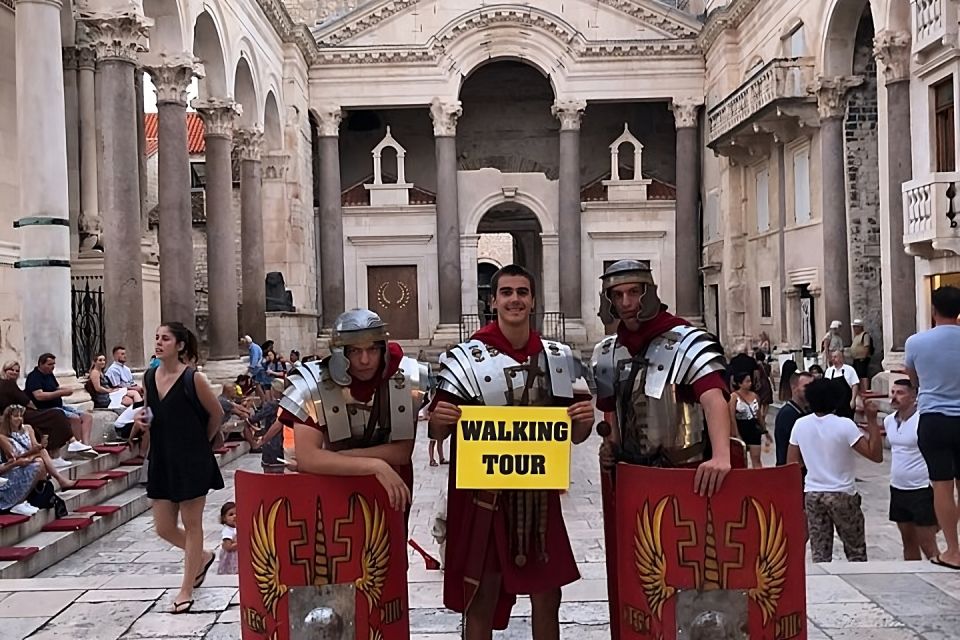
Split didn’t stop at Roman times. In the tour, you’ll also see medieval fortifications and Gothic palaces, which show how later rulers and wealthy residents adapted the old structure into something new.
This is where the city’s layered identity becomes really tangible. Roman stone doesn’t get wiped away; it gets surrounded, re-used, and reinterpreted. Fortifications explain defense and control. Gothic palaces point to power and status in a different language of design.
One nice outcome of covering these periods in the same walking block: you start spotting patterns. You can see how a city grows by adding meaning around older meaning, not by starting over from scratch.
You can also read our reviews of more historical tours in Split





Modern shops, ancient walls: the best kind of time travel
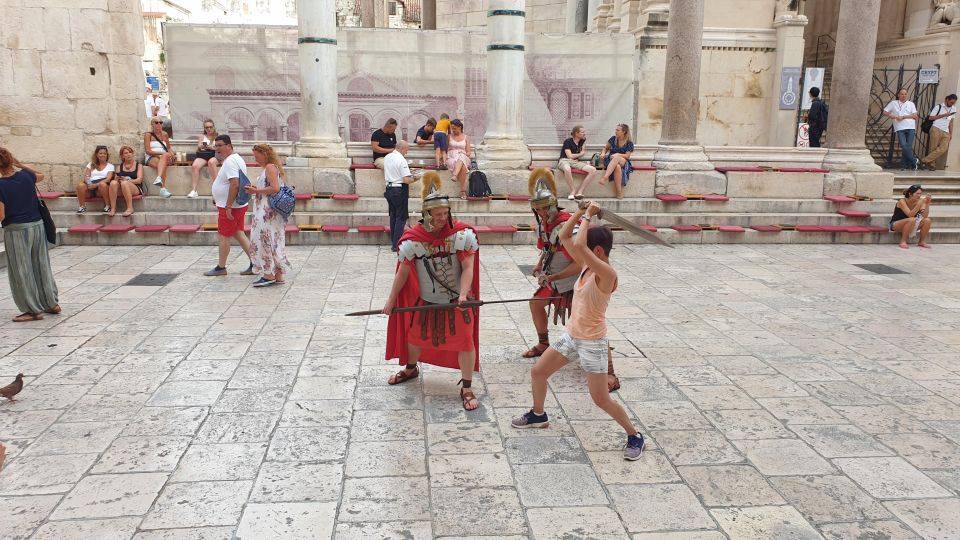
A lot of travel sites give you either ruins far from everyday life or old towns that feel like a theme park. Split’s core is different. You’ll see a “unique combination” of preserved ancient Roman architecture and medieval buildings next to modern shops in the same small, central area.
That’s more than aesthetic. It changes how you experience the place.
- You’re not only looking back.
- You’re watching how residents keep living in an old shell.
- The history doesn’t feel like a museum diorama; it feels like a working neighborhood.
This also means you’ll occasionally run into practical real-world stuff—crowds, people shopping, the rhythm of the day. The guide’s job is to keep you moving through it without turning it into chaos.
Game of Thrones bonus stops: fun, but still tied to real places
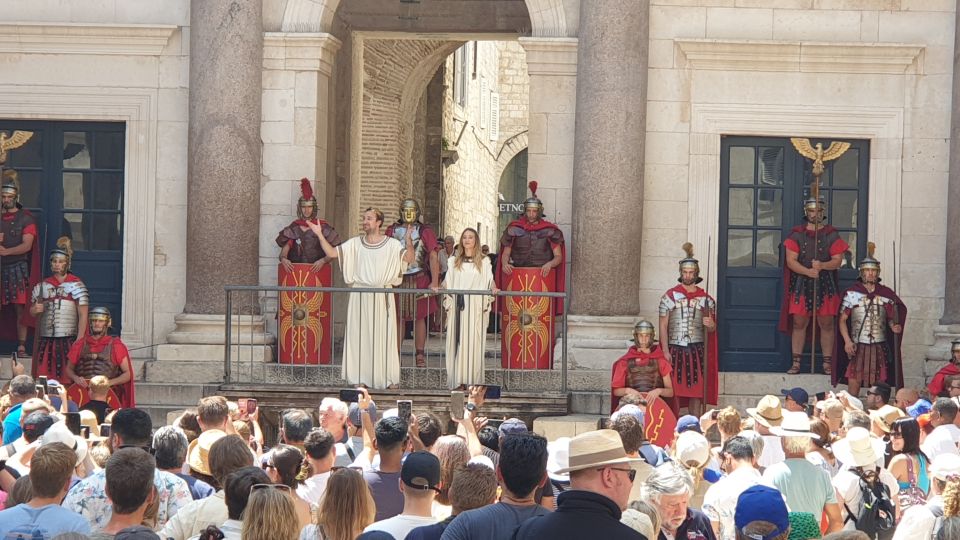
If you’re a fan of the show, you’ll appreciate the Game of Thrones locations bonus information. The key is that these aren’t random brag points. The tour uses them as a way to make you look more carefully at what’s already there.
Even if you’re not into the show, this section can still help you, because it encourages you to notice details in facades, streetscapes, and the way buildings frame scenes.
I’d think of this as a bonus layer of context. The core value stays historical—Romans, churches, fortifications, Gothic palaces—while the show references add extra hooks.
Your guide: licensed, story-driven, and built for real questions
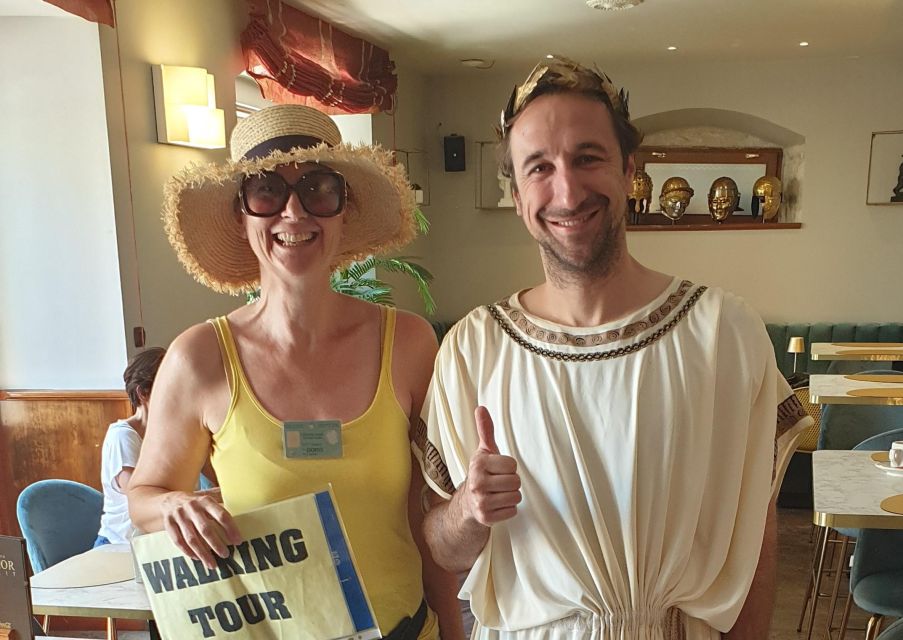
This tour is led by licenced and educated guides. The strongest recurring theme from guide performances is that they explain the past like a story teller, not a textbook.
In the past, guides named Antonella, Nikolas, and Doris (plus several others) have been singled out for:
- keeping explanations entertaining
- answering questions
- talking at a pace that feels comfortable
- using lots of small details you probably wouldn’t notice on your own
One very practical note: on the surface, this is described as a small-group walking tour. In practice, sometimes the group can feel larger in tight areas, and that can create waiting as people catch up through crowds. That doesn’t ruin the tour, but it’s a reason to bring patience if you’re sensitive to delays.
What you should bring (and what to skip)
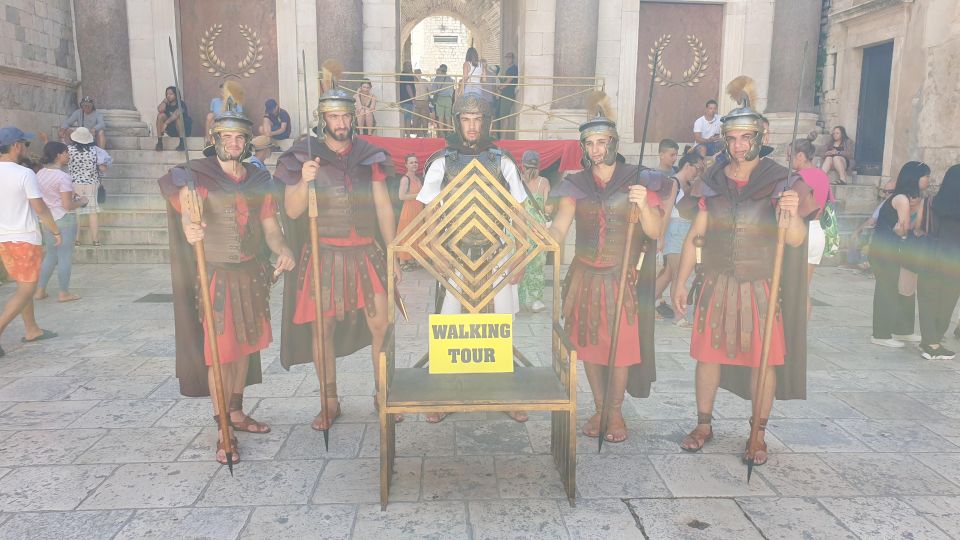
You’ll walk outdoors and the tour runs no matter the weather, so pack for sun and rain. Bring:
- Comfortable shoes
- Hat
- Comfortable clothes
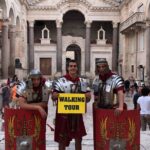
Also, costumes aren’t allowed. That’s mostly about keeping the route manageable and respectful inside a historic core.
Since admission tickets and food aren’t included, plan to handle meals on your own. The good news is that the route returns you to Peristil Square, a convenient jumping-off point for lunch.
Timing, pace, and crowd reality in Split’s center
Split’s old core can get crowded, especially around the most famous architecture. Even though the tour is designed to be smooth, you’ll still be walking inside a busy walking circuit.
Here’s how to make it easier on yourself:
- Start the day with this tour if possible, so you learn the layout before you get pulled into side streets.
- If you’re sensitive to crowds, consider giving yourself extra buffer time after the tour, since the end point is the same place you started and you’ll want an easy exit.
- If you’d like photos, ask the guide before a tight segment where you can safely pause.
The pacing is typically described as entertaining and never boring, with a “perfect amount of time” for the stops. But crowd flow can still affect how quickly you move between highlights.
Who this tour is best for
This tour fits a lot of travel styles because it blends eras without turning into an encyclopedia. It works well if you:
- want context before you wander
- enjoy guided storytelling and fact-based explanations
- like Roman and medieval architecture, not just museums
- want a first, solid orientation to Split’s old center
It’s also great for mixed groups. Even if someone in your group isn’t a history buff, the tour’s tone tends to keep things engaging while still covering real details.
Two “real world” limits from the tour info:
- Not suitable for people with high blood pressure
- Not suitable for hearing-impaired people
That’s worth taking seriously because walking routes involve standing and following a guide through tight spaces.
Price and value: what $18 buys you in Split
At $18 per person, the value is that you’re paying for a guided walk with a licensed guide. What’s not included is just as important: there are no admission tickets, and there’s no food or drinks.
That pricing makes sense if you already plan to explore further on your own. The guide helps you learn what matters so you can decide later what (if anything) you want to pay to see in more depth. It’s like buying a map made of stories.
Final verdict: should you book this walking tour?
I’d book this if your goal is to understand Split quickly and walk away with a mental picture of how Diocletian’s palace shaped everything that came after. The UNESCO Roman palace focus, the Romanesque-to-Gothic layering, and the extra Game of Thrones context make it more fun than a standard old-town stroll.
Skip it (or choose another format) if you can’t handle walking in crowds, if you have high blood pressure, or if you rely on clear hearing to follow explanations. And if you hate waiting for groups in busy areas, go in with patience and expect some slowdown in the tightest sections.
If you want your first day in Split to feel organized, this is one of the simplest ways to get your bearings fast—by learning the city as you walk it.
FAQ
Where does the tour start?
It starts on Peristil Square, under the old Roman arch at the north part of Peristyle Square, next to the Tourist Information Office. Look for a yellow T-shirt or a yellow umbrella.
How much does it cost?
The price is $18 per person.
What’s included in the tour price?
The tour includes a small-group walking tour and a tour guide.
What’s not included?
Admission tickets, food, and drinks are not included.
What should I bring?
Wear comfortable shoes and comfortable clothes, and bring a hat.
Will the tour run in bad weather?
Yes. The tour takes place no matter the weather (rain, sun, etc.).
What languages are available?
The tour is offered in Russian, English, German, and French.