REVIEW · SPLIT
SPLIT-PREMIUM Emperor’s Walking Tour for History Lovers + Museum
Book on Viator →Operated by Walking Tour of SPLIT · Bookable on Viator
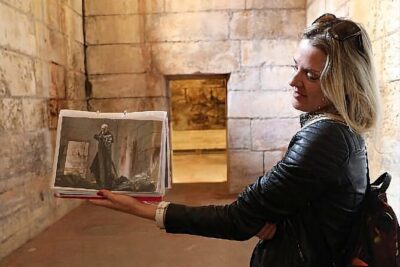
Diocletian’s Palace feels different with a local guide. This Split Old Town walk connects UNESCO Roman ruins to the medieval streets you still see today, including the Golden Gate and the Peristyle heart of the palace. You’ll also get the “why” behind how Split grew, not just a list of names.
What I love most is the small-group size (15 maximum) paired with a licensed resident guide who can answer real questions on the spot. The vibe stays relaxed, so the tour doesn’t feel like a factory line through stone and plaques.
One thing to consider: this is an adults-only group tour, and it’s a real walking experience outdoors, so plan for pace and weather.
In This Review
- Key highlights worth aiming for
- How this 2-hour Emperor’s Walking Tour sets the pace
- Meeting at Riva and starting at the right spot
- Palazzo di Diocleziano: where the story begins inside the UNESCO core
- Old Split and the medieval streets that grew around Roman bones
- Cathedral of Saint Domnius: outside first, then let the guide frame it
- Riva Harbor: the waterfront reset before you hit the palace heart
- The Peristyle and Emperor’s Square: Split’s social center, not just ruins
- Grgur Ninski, Fruit’s Square, and Narodni Trg: history with Croatian culture attached
- Temple of Jupiter, City Clock, and the Golden Gate: the palace as a living machine
- Diocletian Palace Substructures and Vestibulum: best preserved parts, up close
- The extra museum option: Diocletian’s Cellars can be worth it
- Group vs private: adults-only on this one
- Price and value: how $30 stacks up
- Who should book this Split Emperor’s tour?
- FAQ
- How long is the Split Emperor’s Walking Tour?
- What language is the tour offered in?
- Is the tour a group or private experience?
- Is the Museum of Diocletian’s Cellars included?
- Do I need to pay for admissions at the stops?
- Where does the tour start and finish?
- Is the tour refundable if plans change?
- What if the weather is bad?
- Should you book this Emperor’s Walking Tour for history lovers?
Key highlights worth aiming for
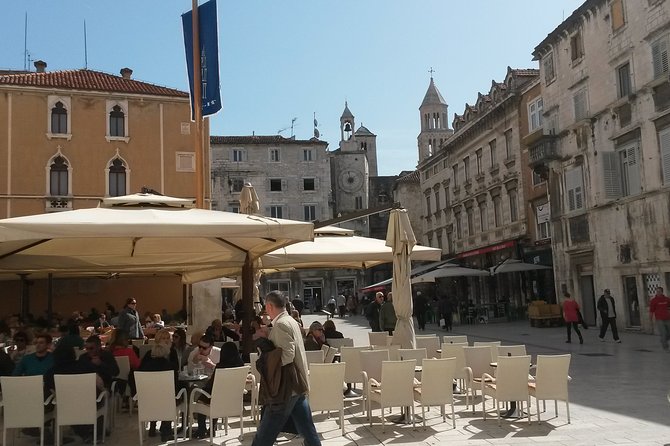
- Diocletian’s Palace with human context: You’re not just looking at walls; you learn what they meant in 305 AD and what changed after.
- Peristyle and the Emperor’s Square focus: The tour places you in the actual center of power and public life.
- Split’s Roman-to-medieval storyline: Old Split streets connect directly back to the palace layout.
- Candid, funny guiding style: Guides like Joško and Daniela bring humor without turning the facts into a show.
- Bonus stops beyond the palace: Riva Harbor, Grgur Ninski, and Narodni Trg add a modern layer to the ancient core.
How this 2-hour Emperor’s Walking Tour sets the pace
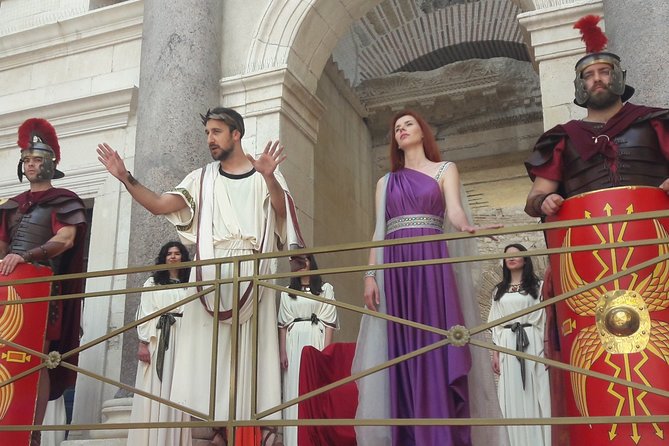
This tour is designed as a fast but not frantic introduction to Split’s most important layers. You’re out for about 2 hours, moving on foot through the palace complex and nearby Old Town streets, with short stops where the guide explains what you’re seeing and how it fits together.
I like this format because Split can feel like one big maze. When someone points out the logic—where power lived, where markets formed, where people gathered—you walk differently. You also get practical orientation for the rest of your trip, especially if you plan to explore on your own later.
The group size matters here. With a maximum of 15, you get more back-and-forth. That shows up in the way guides handle questions and adjust the flow when someone needs a slower moment.
You can also read our reviews of more walking tours in Split

Meeting at Riva and starting at the right spot
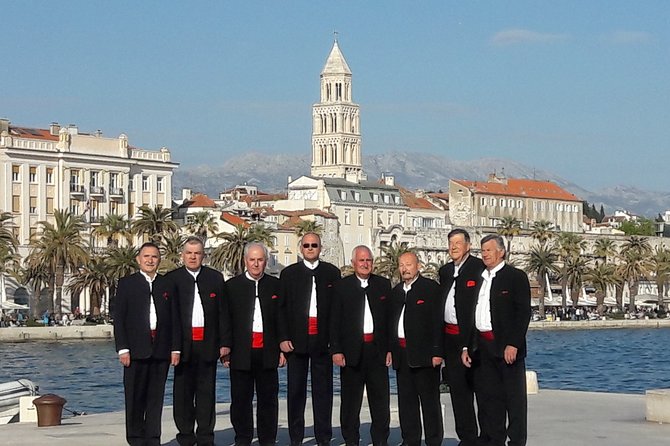
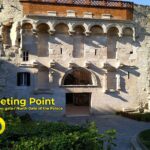
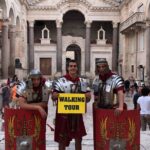
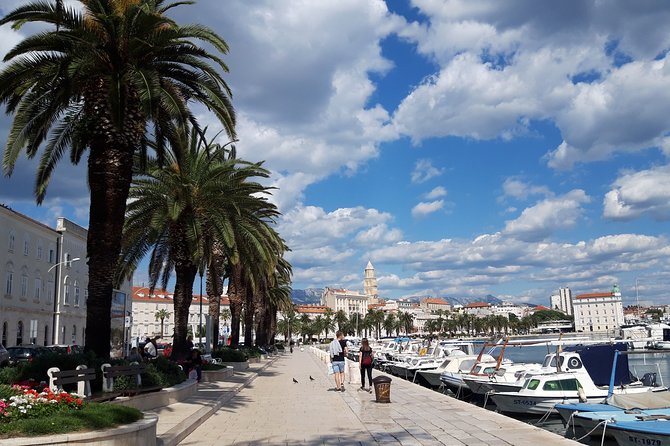
The tour meets at Obala Hrvatskog narodnog preporoda 22, Split, and it loops back to the same point at the end. The walking route starts and finishes at the Main Stage on the Riva promenade, which is useful because Riva is easy to picture and easy to navigate.
Riva is also the perfect warm-up zone. You get waterfront energy right away, then the guide channels you from everyday city life into the Roman machine under Diocletian’s Palace. If you’re arriving by bus or tram, you’ll likely find the area straightforward to reach thanks to nearby public transportation.
If you’re going in peak heat (summer trips can get brutal), do yourself a favor: plan for sun exposure and build in water breaks. Guides have kept tours moving even in very hot conditions, but your comfort still matters.
Palazzo di Diocleziano: where the story begins inside the UNESCO core
You start at Palazzo di Diocleziano, built in 305 AD—the moment when the Roman world leaves a permanent fingerprint in this part of the Adriatic. Much of the magic of Split comes from how the palace didn’t become a dead ruin. People kept living inside it, rebuilding around it, adapting spaces as centuries passed.
Your guide’s job here is to turn the big shapes into a mental map. Expect the palace to stop feeling like “a place with columns” and start feeling like a designed environment: entrances, squares, corridors, and areas that shaped daily routines.
Admission for this first stop is listed as free for the tour time, so you’re not stuck tracking paperwork. The bigger takeaway is that the palace becomes your anchor point for everything else you’ll see later in Old Split.
Old Split and the medieval streets that grew around Roman bones

After the palace foundations, you head into Old Split, where the medieval street pattern wraps around Roman structure. This is the part that helps most people connect what they’ve seen before—maybe from photos—to what exists in real life.
A lot of Split visitors only focus on the palace walls. This tour nudges you to look outward too. Medieval streets, squares, and everyday city corners start to make sense when you know they were shaped by the palace presence.
There’s also a practical benefit: once you understand where the Roman structure sits, you can spot it later when you’re wandering solo. You’ll likely find yourself orienting fast instead of constantly backtracking.
Cathedral of Saint Domnius: outside first, then let the guide frame it
At the Cathedral of Saint Domnius, you’ll see the cathedral from outside during a short stop. That sounds quick, but it works as a breather and a contextual moment. The guide can connect the cathedral’s place in the story of Split without dragging you into a longer detour.
This is useful if you’re on a tight schedule. It gives you a clear landmark you can revisit later if you want more time inside, while keeping the walking flow moving.
If you’re the type who likes to confirm details with your own eyes, you’ll appreciate this “outside first” approach. It sets the stage so that any later indoor visit makes more sense.
You can also read our reviews of more historical tours in Split





Riva Harbor: the waterfront reset before you hit the palace heart
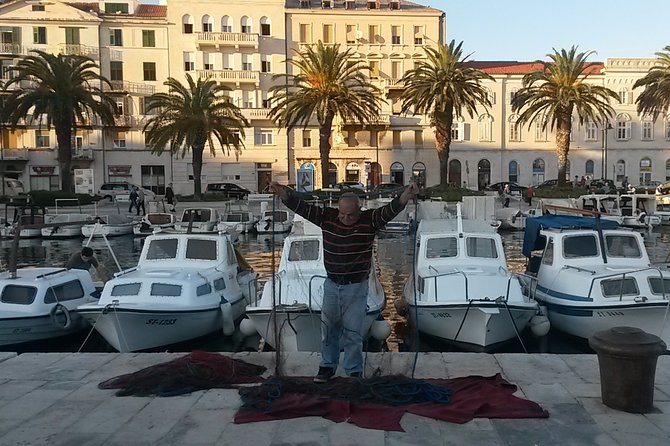
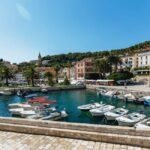
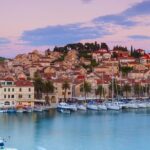
You’ll then reach Riva Harbor, and that’s not just scenery. It’s a mental reset. After dense stone and structured palace spaces, the waterfront reintroduces Split as a living city.
Starting from the Riva promenade helps you understand how people interact with these landmarks today. Even if your main interest is Roman history, seeing where daily life happens makes the whole story feel less like museum time and more like a continuing timeline.
It also helps with momentum. A few minutes by the water can make the next steps easier, especially if your legs are already feeling the Old Town cobblestones.
The Peristyle and Emperor’s Square: Split’s social center, not just ruins
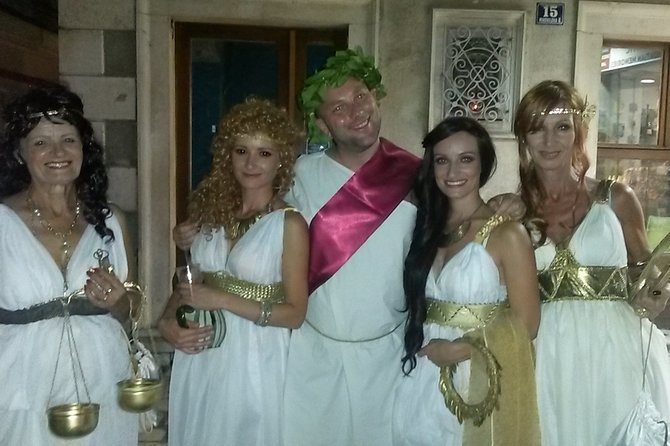
Next up are the Peristyle of Diocletian’s Palace and the Emperor’s Square stops. This is where the palace stops being an architectural artifact and starts acting like the center of public life.
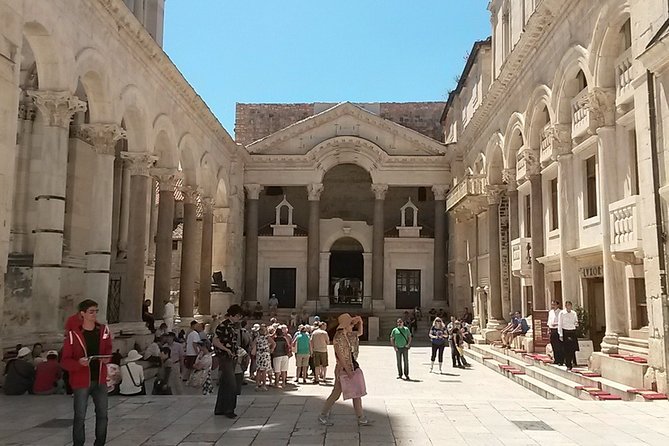
Your guide will point out the heart-and-soul spaces that historically mattered for gatherings and movement. The Peristyle area is famous for a reason: it’s one of the places where the palace’s scale and design click immediately.
I also like how this stop gives you photo-worthy angles without forcing long museum-style pauses. You’re there long enough to understand the space, then you move on before the tour gets heavy.
Grgur Ninski, Fruit’s Square, and Narodni Trg: history with Croatian culture attached
The tour doesn’t stop at Roman-era highlights. It also threads you through key cultural points in Old Split, including:
- Grgur Ninski Statue, where you’ll learn about one of the major historical figures in Croatia
- Fruit’s Square (Trg Brace Radic), tied to the former green market and the statue of Marul, linked with Croatian literature
- Narodni Trg, the big, lively people’s square
This section matters because it prevents the tour from becoming only ancient-city sightseeing. Split didn’t remain frozen after Rome. It kept evolving, and these pauses show you that evolution in human terms: leaders, language, markets, and public identity.
It’s also where the tour becomes fun in a quieter way. You’re still learning, but the setting feels like a real neighborhood, not a scripted timeline.
Temple of Jupiter, City Clock, and the Golden Gate: the palace as a living machine
Then come three stops that feel like a Roman puzzle box: Temple of Jupiter, the City Clock, and the Golden Gate.
At the Temple of Jupiter, you’ll see it from outside, with an optional visit inside if you want to add more time. If you skip the inside moment, you still get the key takeaway: this place was built for Roman religious power, and it’s now part of Split’s everyday geography.
The City Clock stop brings the story forward in time. The clock is about 500 years old and shaped by practical life, not just ceremony. It’s a reminder that timekeeping and daily rhythm became their own kind of civic infrastructure.
Finally, the Golden Gate is one of those moments where you understand why people travel specifically to see it. It’s the main and most beautiful entrance into Diocletian’s Palace, and your guide’s framing helps you see it as more than a pretty facade. It’s a boundary marker between the outside world and the ordered world of the palace.
Diocletian Palace Substructures and Vestibulum: best preserved parts, up close
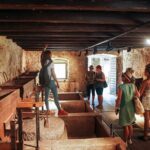
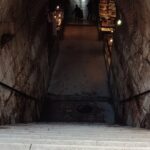
You’ll visit the Diocletian Palace Substructures, described as the best preserved part of the palace. That’s a big deal because the substructures show you how the palace held its ground and how space worked beneath what people see at street level.
Admission for this part is listed as not included, so don’t expect everything here to be free. If you like getting your hands on the physical layers, this stop is often where the palace feels most real.
Right after that, you’ll reach the Vestibulum of Diocletian’s Palace, the main entrance to the emperor’s private residence area. This is a useful stop for understanding hierarchy. The guide helps you connect the route with power and privacy, not just with stone.
If you’re the type who loves “how did they live?” questions, these two stops are the payoff section.
The extra museum option: Diocletian’s Cellars can be worth it
There’s one paid add-on you might consider: the Museum of Diocletian’s Cellars, listed as not included at €10.00 per person.
Whether it’s worth it depends on what you want from your visit. The walking route already gives you the major outdoor landmarks, so the museum can add value if you want more interpretation in a more structured setting. If you’re mostly about open-air orientation for future wandering, you might skip it and spend your time elsewhere in Old Split.
One nice thing is that your tour still works as a complete experience without this museum ticket, so you’re not locked into spending extra.
Group vs private: adults-only on this one
This is a group tour for adults only. That matters if you’re traveling as a family or with anyone under 18. There is a private option listed as for all ages, so if your group includes younger people, you’ll want to choose the private version instead of the adult-only group tour.
For everyone else, the adults-only format can also mean a smoother pace. It’s easier for the guide to keep the content focused and keep the group together without juggling age-range differences.
Price and value: how $30 stacks up
At $30 per person, the price feels reasonable for a history-focused walking tour when you consider what’s included: a licensed resident guide, a customized itinerary, and a route that hits the palace core plus key Old Town landmarks.
A walking tour at this price often risks being too general. This one generally avoids that problem through two factors: the guide-led specificity and the small group cap. You’re not just hearing broad claims about Diocletian’s Palace; you’re getting stop-by-stop explanation tied to what you see in front of you.
You’ll also want to budget a little extra if you decide to do the paid museum. But even if you skip it, you’ll leave with a stronger mental map of Split.
Who should book this Split Emperor’s tour?
Book it if you want a real history walk that treats Diocletian’s Palace as a living structure, not just a photo stop. This is also a good pick if you like guides who use humor to keep momentum, because the tour tends to stay entertaining while still staying factual.
It’s not the best match if you’re mainly chasing modern TV references. There’s a chance you’ll notice Game of Thrones-related locations along the way, but this tour is primarily about Roman and medieval history. Plan to spot those connections yourself instead of expecting a storyline breakdown.
It’s also a smart choice right after arrival. The route gives you orientation, so your later independent exploring gets easier.
FAQ
How long is the Split Emperor’s Walking Tour?
It’s listed at about 2 hours.
What language is the tour offered in?
The tour is offered in English.
Is the tour a group or private experience?
This is the group version for adults only. A separate private tour option is listed as all ages.
Is the Museum of Diocletian’s Cellars included?
No. The museum ticket is not included and is listed as €10.00 per person.
Do I need to pay for admissions at the stops?
Many stops are listed as free for the tour time. The Cathedral of Saint Domnius is outside only, the Temple of Jupiter inside is optional and not included, and the Diocletian Palace Substructures plus the Cellars museum are listed as not included.
Where does the tour start and finish?
It starts and ends back at the meeting point: Obala Hrvatskog narodnog preporoda 22, 21000, Split, Croatia.
Is the tour refundable if plans change?
Yes, it’s listed as free cancellation. You can cancel up to 24 hours in advance for a full refund.
What if the weather is bad?
The tour requires good weather. If it’s canceled due to poor weather, you’ll be offered a different date or a full refund.
Should you book this Emperor’s Walking Tour for history lovers?
Yes, if you want Split to make sense fast. For a fair $30, you get a stop-by-stop route through Diocletian’s Palace and Old Split with a licensed resident guide, plus the added culture stops that keep the story grounded in today’s city.
Skip it only if you’re traveling with anyone under 18 (the group version is adults-only) or if you’re mainly looking for a quick sightseeing loop with minimal talking. This one is built for people who enjoy history, architecture, and the small details that connect centuries.