REVIEW · SPLIT
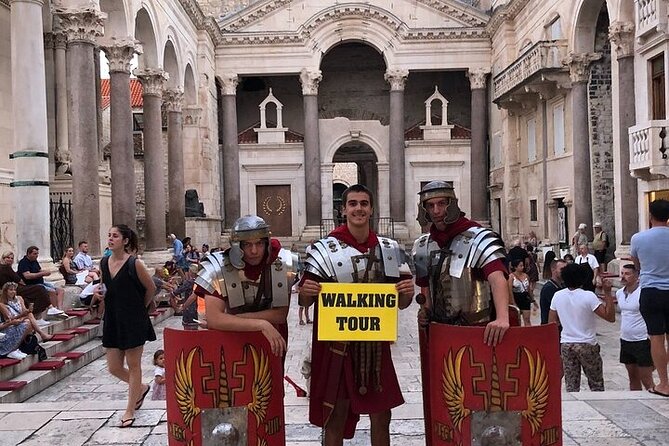
Private History Split Walking Tour in Spanish
Book on Viator →Operated by Ancient Tours · Bookable on Viator
Split feels like a Roman time capsule. This Spanish private walk threads together the big moments of Diocletian’s Palace and the city around it, in about 90 minutes. You get an easy route that starts with orientation and then moves into the stories behind the stone.
I really like how the tour is built for clarity. The Peristyle is your first anchor point, then you fan out to key palace features like the Golden Gate and the substructures. I also love that the guide-style described in reviews is interactive—attentive, good at explaining the emperor’s rise, and comfortable handling questions in Spanish.
One consideration: it is not recommended if you have issues with high steps, since you’ll be moving through historic areas where levels can vary and footing matters.
In This Review
- Key things to know before you go
- Walking into Diocletian’s world (without getting lost)
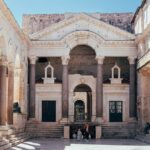
- Stop 1: The Peristyle of Diocletian’s Palace (your orientation hub)
- Stop 1 story tie-in: Jupiter and why Diocletian built his power on faith
- Stop 2: Diocletian Palace substructures (the palace engine room)
- Stop 3: The Golden Gate and Gregory of Nin (power meets identity)
- Stop 4: Riva Harbor and the bronze palace model (history you can visualize)
- Stop 5: Fruit’s Square (Trg Brace Radic) and Marko Marulić (Venetian Split with a literary legacy)
- Stop 6: Split Synagogue (brief, respectful, and not ticket-covered)
- Stop 7: The Vestibulum of Diocletian’s Palace (and a chance at Dalmatian singing)
- Stop 8: Back through the substructures (a second look with better context)
- Price and value: is $63.05 per person a good deal?
- Who this Spanish private tour is best for
- Booking feel: a small tour that’s flexible
- Should you book this private history tour in Spanish?
- FAQ
- How long is the Private History Split Walking Tour in Spanish?
- Is this tour private or shared?
- What language is the tour in?
- Are admission tickets included?
- Where does the tour start and end?
- What kind of walking should I expect?
- When will I receive confirmation after booking?
- Can I get a full refund if I cancel?
Key things to know before you go
- Peristyle first: get your bearings fast before the details start flying
- Roman power story: learn how Diocletian went from nobody to world-ruler status
- Substructures without the museum: you’ll see how the palace worked, then you can choose to add the museum later
- Golden Gate + Gregory of Nin: a palace entrance tied to Croatian identity and language
- Riva Harbor + a palace model: history with a visual reference you can actually keep
- Synagogue pass-by: included as a brief stop, with admission not covered
Walking into Diocletian’s world (without getting lost)
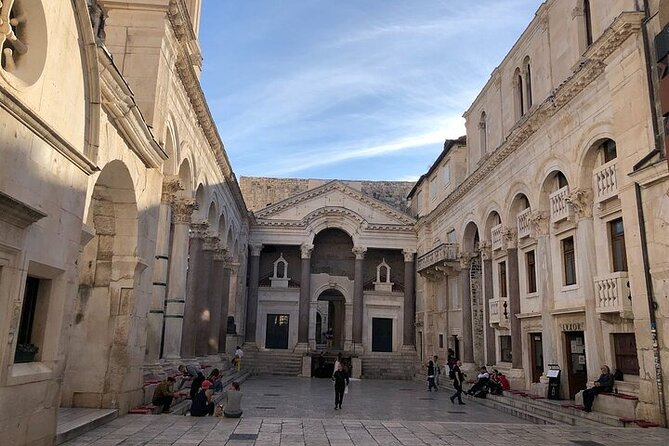
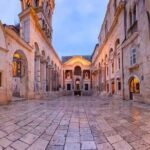
Diocletian’s Palace in Split is not a single monument you visit and then leave. It’s the core of the city—stone corridors, courtyards, entrances, and layers from different eras. That’s why I like that this tour begins at the Peristyle, the central square that connects to a lot of the palace.
In a short 1 hour 30 minutes, the pacing matters. You’re not stuck for hours in one spot. Instead, you get a sequence of stops that keeps your brain oriented: first the layout, then the Roman symbolism, then the engineering under the palace, then the city streets outside the walls.
Because it’s private, only your group participates. That tends to make questions easier and keeps the guide focused on your pace instead of a crowd’s pace. The price is $63.05 per person, and for a private 90-minute history route through multiple major palace areas, that’s a fair trade if you want context rather than just photos.
You can also read our reviews of more walking tours in Split

Stop 1: The Peristyle of Diocletian’s Palace (your orientation hub)
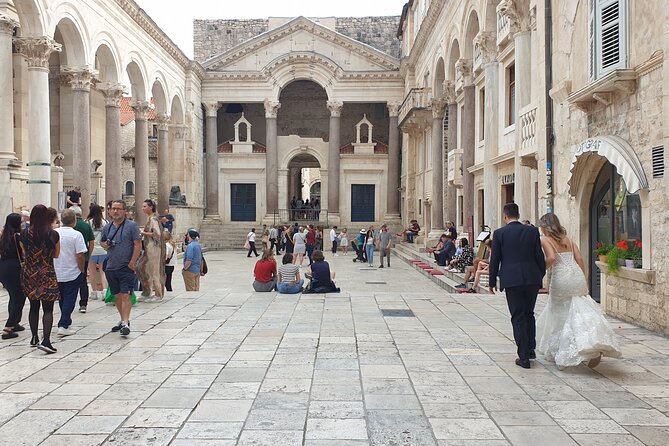
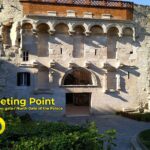
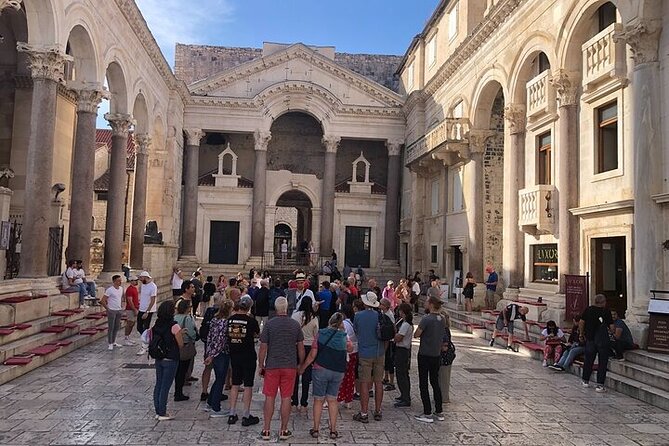
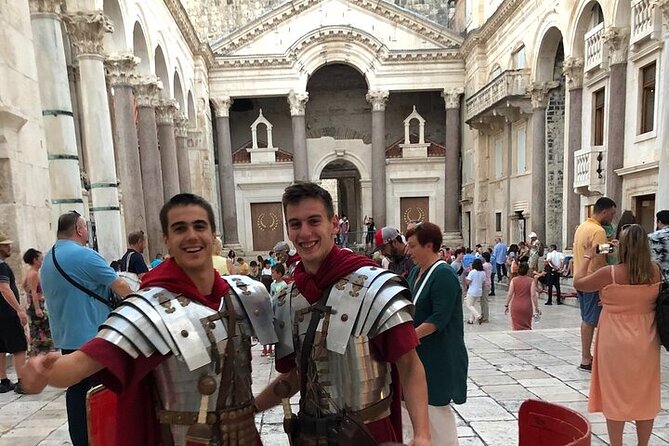
The Peristyle is where you begin, and it’s a smart move. This central square is the kind of place where, even if you’ve never been here before, you can start mapping where everything connects.
From the Peristyle you can reach many other locations in Diocletian’s Palace, so your guide can use it like a classroom blackboard. You’re able to understand how the space is organized before you walk into narrower or more complex areas.
The tour time at this stop is about 15 minutes. That’s enough time to orient yourself and still move on while the story is fresh.
Stop 1 story tie-in: Jupiter and why Diocletian built his power on faith
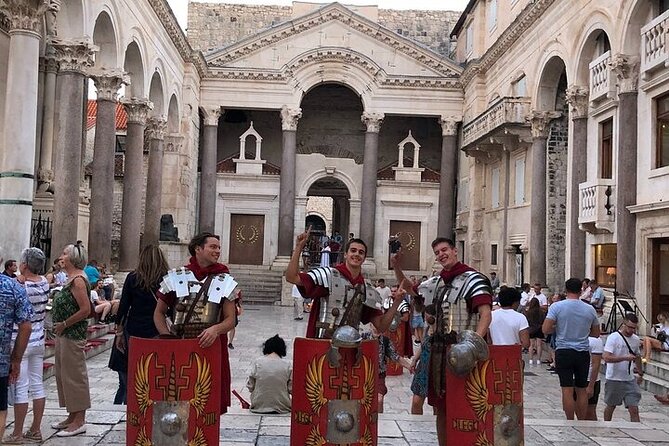
After you’re oriented, you shift into the meaning behind what you’re looking at. One highlighted moment is a Roman temple of Jupiter, presented through the way Diocletian viewed him.
The takeaway is simple and useful: Diocletian didn’t just rule with force. He connected himself to a divine story—Jupiter as his divine father. That’s the kind of detail that helps the palace make emotional sense, not just architectural sense.
Stop 2: Diocletian Palace substructures (the palace engine room)
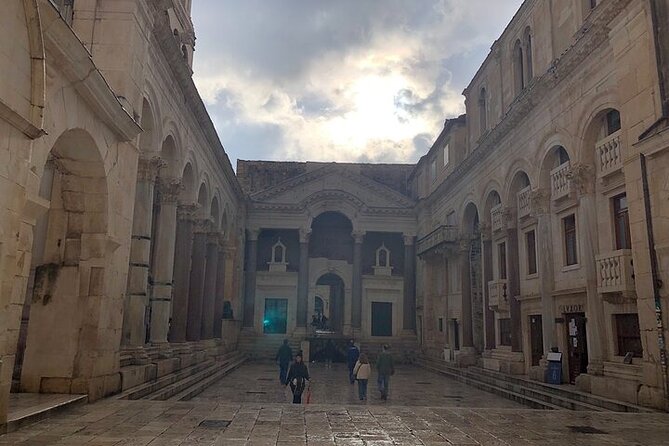
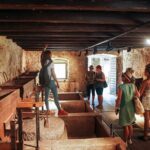
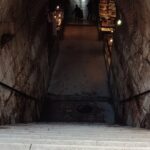
Next up: the substructures. This is where a lot of visitors feel the “palace” becomes more than surface-level sightseeing. You see parts associated with construction and function over the ages, not just pretty facades.
The tour notes that you won’t visit the museum portion during this walking segment. That’s actually a good structure. You get the core idea of what these areas were and how they relate to palace life, without the time cost of a full museum add-on.
At this stop, the time is about 10 minutes. If you want, you can visit the museum later on your own. This approach often gives you a better experience than rushing through everything together—because once you understand the basics from the guide, the museum stops being random rooms.
Stop 3: The Golden Gate and Gregory of Nin (power meets identity)
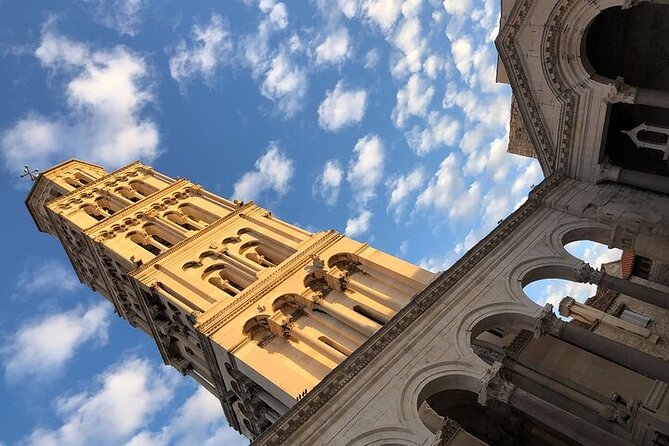
Then the tour brings you to the Golden Gate, the main entrance of Diocletian’s Palace. Entrances are always good for story because they show what a place wanted to communicate: authority, visibility, control.
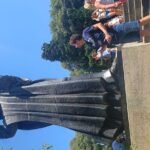
Here you’ll also see the statue of Gregory of Nin. The important part isn’t only the statue itself. Your guide ties it to why Gregory matters to history and language—so the palace isn’t just Roman. It becomes Croatian, too, through the people and traditions who shaped what came after.
This stop runs about 10 minutes. It’s short, but the point is that you’re getting a “what this means” moment right when you’re looking at one of the most iconic entrances.
You can also read our reviews of more private tours in Split




Stop 4: Riva Harbor and the bronze palace model (history you can visualize)
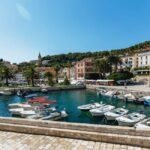
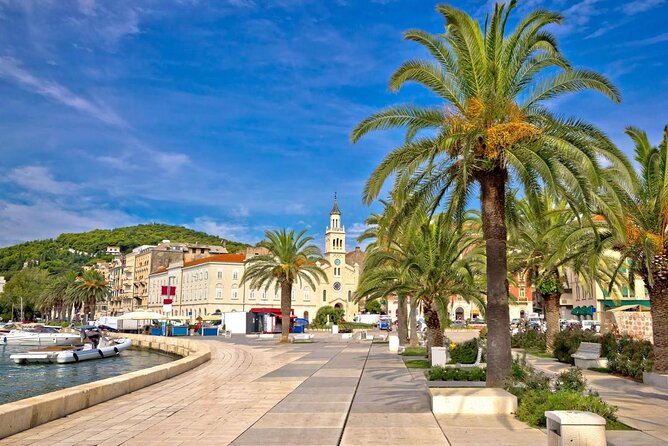
After the palace entrances and sacred symbolism, you move toward the city side of the story. At Riva Harbor, you’ll see a bronze model of Diocletian’s Palace.
That model matters more than you might think. When you’ve just walked through real spaces, a scale model helps you connect the dots—where sections sit relative to each other and why certain areas feel close even when they weren’t meant for daily wandering.
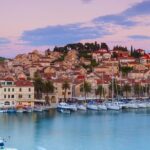
Your guide also explains the history of Split’s Riva promenade. It’s a nice contrast: Roman power inside the palace, then the later life of the city’s waterfront.
Time here is about 15 minutes, giving you a bit of breathing room to absorb the views and the idea behind the model.
Stop 5: Fruit’s Square (Trg Brace Radic) and Marko Marulić (Venetian Split with a literary legacy)
Next is Trg Brace Radic, often referred to as Fruit’s Square. This stop shifts you from Roman traces to later European layers.
You’ll learn about a 15th-century Venetian citadel connected to this area. That helps you understand why Split doesn’t read as one single era. It reads as a palimpsest: Romans, then Venetians, then new identities that grew from what was already there.
The other key thread at this stop is Marko Marulić, described as the father of Croatian literature. If you’ve ever wondered how cultural identity survives through stone cities, this is your answer. The city’s streets and monuments aren’t only political—they’re also cultural memory.
Time here is about 10 minutes. The stop is quick, but it gives you a landmark to remember long after you’ve left.
Stop 6: Split Synagogue (brief, respectful, and not ticket-covered)
You’ll pass by the Split Synagogue, a 16th-century site. The guide will cover the history of Jewish people in the city of Split.
Two practical notes from the tour data: this is a pass-by stop, and admission isn’t included for this part. So don’t treat it like a guaranteed inside visit on this walking segment.
Even so, it’s a valuable inclusion. It widens the story beyond empire-to-medicines-to-city-life, and it reminds you that Split’s history is also community history.
Stop 7: The Vestibulum of Diocletian’s Palace (and a chance at Dalmatian singing)
The tour finishes (and re-centers) on another interior-feeling moment: the vestibule area associated with Emperor Diocletian.
This stop is brief—about 5 minutes. But you’re told you might hear traditional Dalmatian singing. That’s not something I’d count on as a sure thing, but it’s the kind of local touch that can make an otherwise Roman-technical walk feel human.
If you catch it, you’ll feel why this palace still matters in everyday culture, not only as an artifact.
Stop 8: Back through the substructures (a second look with better context)
Then there’s another segment through Diocletian Palace substructures again, with about 10 minutes noted.
On the surface, that might look repetitive. In practice, it often works because you’ve now seen the entrances, the civic landmarks, and the symbolic bits. Coming back into the substructures after those stories can make the engineering make sense in a new way.
It’s the difference between seeing the palace as a photo backdrop versus understanding it as a system.
Price and value: is $63.05 per person a good deal?
At $63.05 per person for about 90 minutes, the value depends on what you want from Split.
If you’re the kind of traveler who likes details—why a place was built, how it functioned, how later generations rewired its meaning—this price starts to look smart. You’re getting a private guided thread through multiple major components: the Peristyle, the Golden Gate area, the substructures, and nearby civic landmarks like Riva and Fruit’s Square.
Also, most of the specific stops are listed as free for admission on the tour’s schedule. That reduces the chance you’ll feel nickeled-and-dimed during your walk. The main exceptions to watch for are the synagogue stop, plus anything not visited as part of the walking portion.
In plain terms: this isn’t just a “point at the building” tour. The cost makes sense when a guide’s explanations improve your understanding of what you’re already seeing.
Who this Spanish private tour is best for
This is a strong fit for you if:
- you want a structured orientation in Diocletian’s Palace without spending a whole day
- you like Roman-to-Croatian connections, not only one era
- you care about history explained in Spanish and you want time for questions
- you enjoy short, meaningful stops more than long museum hours
It may be less ideal if:
- you have trouble with high steps or uneven historic surfaces
- you want a lot of indoor museum time, since the substructures museum portion is not included in this walking plan
Because it’s private, families and friend groups can also request pacing that feels right. Just be realistic about moving through older streets and palace corridors.
Booking feel: a small tour that’s flexible
The tour is led by an educated guide with solid local knowledge, and the style comes through in reviews: Spanish communication is described as good, and the guide stays attentive to questions.
It’s also set up with a mobile ticket, and there are group discount options listed. You’ll get confirmation within 48 hours of booking, subject to availability.
And because the tour requires a minimum number of travelers, there’s a chance it could be adjusted or refunded if that minimum isn’t met. When that happens, you’re offered a different date or a full refund, which at least keeps you from getting stuck.
Should you book this private history tour in Spanish?
I’d book it if you want a guided path through Diocletian’s Palace that makes the place click quickly. The best part is the mix of major visual stops with real context: Jupiter’s symbolism, Diocletian’s rise, the Golden Gate and Gregory of Nin, and the way Split’s later identity shows up in the same stone city.
Skip it if you already know the palace well and just want independent wandering. Also skip it if stairs are a concern for you, since it’s not recommended for travelers with issues handling high steps.
If you fall in the middle—curious, short-on-time, and hungry for meaning—this is exactly the sort of tour that turns a few beautiful stops into a story you’ll remember.
FAQ
How long is the Private History Split Walking Tour in Spanish?
It runs about 1 hour 30 minutes.
Is this tour private or shared?
It’s private. Only your group participates.
What language is the tour in?
The tour is in Spanish.
Are admission tickets included?
No admission tickets are included. Many of the scheduled stops are listed as ticket-free, but the synagogue stop says admission isn’t included, and the substructures museum portion is not visited on the tour.
Where does the tour start and end?
It starts at Peristil ul., 21000, Split, Croatia. It ends not far from where it started, near Diocletian’s Palace, and the guide can take you back to the Peristyle if you ask.
What kind of walking should I expect?
It’s a walking tour through historic palace areas. It’s not recommended for travelers who have issues with high steps.
When will I receive confirmation after booking?
You should receive confirmation within 48 hours of booking, subject to availability.
Can I get a full refund if I cancel?
Yes. You can cancel for a full refund up to 24 hours before the experience’s start time. Canceling less than 24 hours before doesn’t get refunded.