REVIEW · SPLIT
Private History tour – small group
Book on Viator →Operated by Ivan Fistanić · Bookable on Viator
Split turns into a story in 2 hours. This private small-group history tour uses a trained historian, Ivan Fistanić, to guide you through the Diocletian’s Palace complex and the surrounding streets that explain how Split changed from Roman to Christian times. I love the tight walk plan that hits the palace highlights in a logical order, and I also like that you get context for what you’re seeing rather than just a list of names. A possible drawback: you won’t go inside the Cathedral of Saint Domnius or the Temple of Jupiter, so this is more of a strong “view and understand” route than a museum-style visit.
The format is simple: a central start, easy pacing, and plenty of stops where you can look up, compare buildings, and ask questions. You’ll also deal with fewer ticket headaches since many key areas are free, with just a couple of notable exceptions. One more thing to consider: the tour requires good weather, so if it’s rained out you’ll need to shift dates or take a refund.
In This Review
- Key highlights you’ll actually feel on the ground
- A private Split history walk that makes Diocletian’s Palace click
- Where you start: the easy meeting point and a smooth rhythm
- Golden Gate: your fast orientation into Diocletian’s Palace
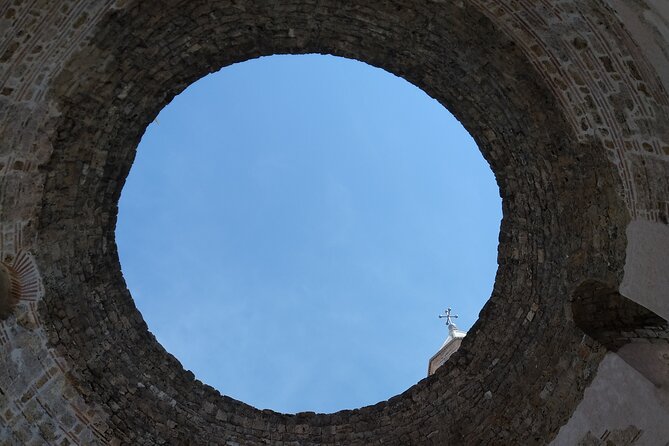
- Peristyle and the palace cellars: where the story changes from Roman to Christian
- Cathedral of Saint Domnius: Roman survival, even while staying in use
- Temple of Jupiter: best-preserved late Roman, later turned into a baptistery
- Vestibulum and Diocletian’s private space: seeing power before the public
- Riva Harbor: the living promenade that still mirrors the palace
- Fruit Square and Pjaca: two squares, two eras of public life
- Gregory of Nin statue: the landmark with a built-in superstition
- Price and value: what $238.28 per group really means
- Tickets, entrances, and what to expect about inside access
- What kind of traveler this fits best
- Should you book this Private History tour in Split?
- FAQ
- How long is the Private History tour?
- How much does the tour cost?
- Is this a private tour?
- Where is the meeting point?
- Do we get a mobile ticket?
- Which major sights are included?
- Are entrance tickets included?
- What if the weather is bad?
- Is free cancellation available?
Key highlights you’ll actually feel on the ground
- Master’s-degree history guidance with Ivan Fistanić so you’re not stuck with generic explanations
- Cellar-to-peristyle storytelling that connects Roman function to later Christian changes
- Golden Gate to Gregory of Nin in one flow for fast orientation in the old town
- Best-preserved late Roman views at the Temple of Jupiter and standout sightlines around the palace
- A street-level city history route that includes Riva, Fruit Square, and Pjaca, not just monuments
- Quick souvenir moment with the Gregory of Nin toe-rub tradition for an easy bit of local fun
A private Split history walk that makes Diocletian’s Palace click
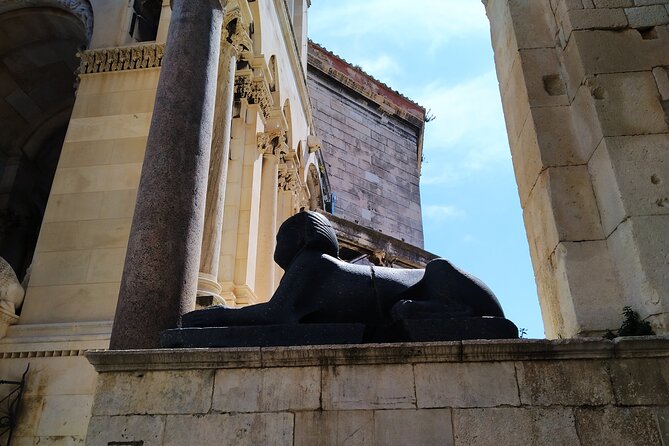
Split can feel like an overload: stone everywhere, names everywhere, and Roman details hiding in plain sight. This tour keeps it human. You move on foot through the main palace structures and the key squares nearby, with time built in to stop, look, and understand why the buildings are where they are.
What I like most is the way Ivan Fistanić connects design to daily life. You’re not just seeing ancient walls; you’re getting the “why” behind them—where power was placed, how spaces were used, and how later eras repurposed what Rome built.
This is also a good-value setup for groups, because the price is per group (up to 10 people). If you travel with friends or family, that can turn a guided walking tour into something that costs less per person than you’d expect.
You can also read our reviews of more private tours in Split

Where you start: the easy meeting point and a smooth rhythm
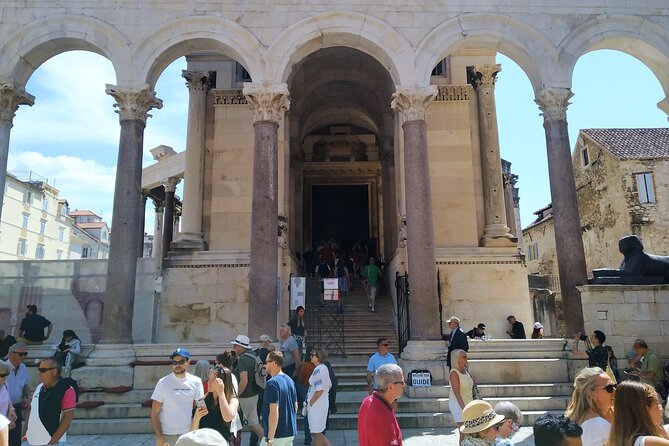
Tours live or die on the first five minutes. This one starts at Ul. kralja Tomislava 15 and then settles you into the palace area and the old-town streets without making you hunt for your bearings.
Once you’re moving, the route has a steady rhythm. You’ll spend about 1 hour 30 minutes to 2 hours total, with a series of short stops that feel manageable—even if you’re not “walking for fun” all day. It’s built for people who want an efficient introduction without sprinting between sights.
Also, you get a mobile ticket, and confirmation happens at booking. That means less paperwork and more time for coffee and people-watching.
Golden Gate: your fast orientation into Diocletian’s Palace
The walk begins at the Golden Gate, the main entrance to Diocletian’s Palace. It’s one of the four main Roman gates, and Ivan uses it as your starting point to explain how the palace connects to the wider Roman world.
A detail worth paying attention to: the gate sits on the road north toward Salona, described as the capital of the Roman province of Dalmatia and Diocletian’s birthplace. That small geographic link helps you understand Split as part of a bigger Roman system, not just an isolated set of ruins.
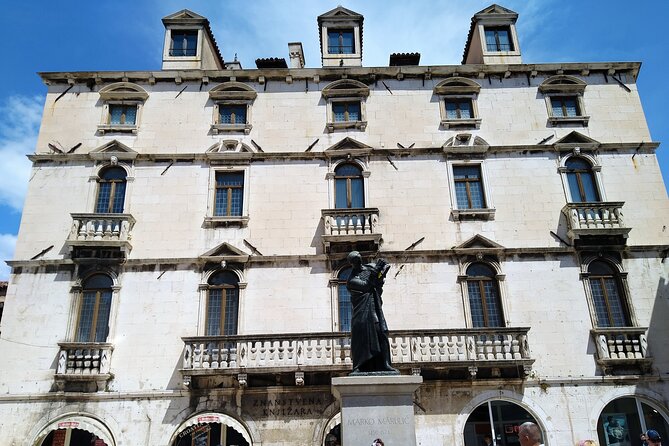
You’ll also get a useful visual comparison right away. The Golden Gate is opposite the famous Gregory of Nin monument, so you can quickly learn how modern Split landmarks line up with ancient palace entries.
Time on this stop: about 15 minutes.
Admission: free.
Peristyle and the palace cellars: where the story changes from Roman to Christian
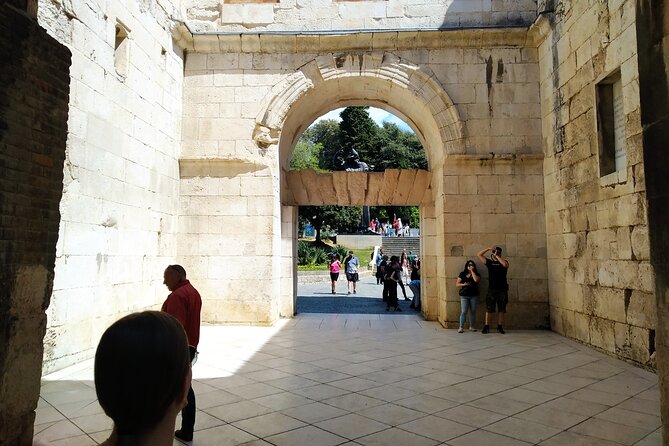
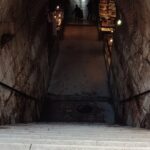
The tour really gains momentum at the Peristyle of Diocletian’s Palace. Before you step out into the open square, you go into the cellars area where Ivan explains how the palace spaces were used during different periods.
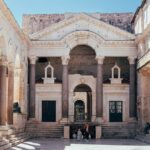
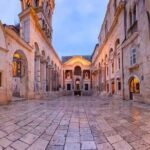
Then you reach the Peristyle, the open imperial square framed by monumental arcades. This is one of those moments where good guiding makes a huge difference. You’re not just staring at columns—you’re learning how the square works as a central hub, how it’s oriented toward the imperial loggia, and why that mattered for authority and public life.
One of the best parts here is the “transitions” theme. Ivan explains how building functions and everyday life shifted as Christianity expanded. You start noticing that Roman architecture didn’t just disappear—it was reused, reinterpreted, and re-labeled over time.
Time on this stop: about 15 minutes.
Admission: free for the listed area stops.
Cathedral of Saint Domnius: Roman survival, even while staying in use
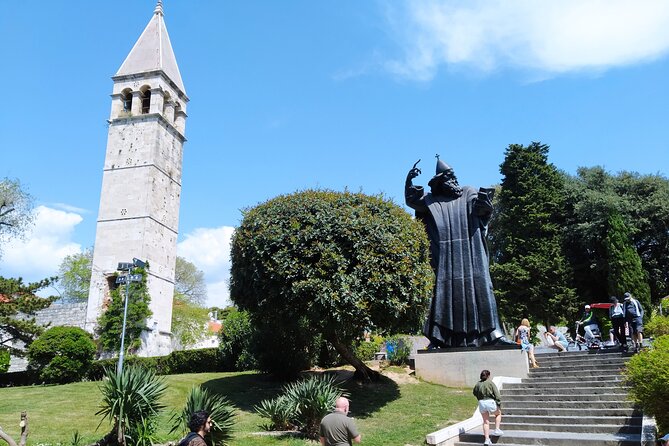
Next up is the Cathedral of Saint Domnius. From the Peristyle, it’s hard to miss. Ivan points out the significant parts of the cathedral and shares the story behind what you’re seeing.
The key thing to know: you won’t enter inside. Still, the explanation is valuable because the cathedral is described as one of the best-preserved Roman structures in Split and it’s still in use today. Even from outside, you can connect the building’s continued life to the larger idea of reuse that runs through the palace story.
If you’re the kind of traveler who wants inside access only, this is where you might feel the limitation. But if you enjoy seeing how Roman design persists through centuries, this stop lands well.
Time on this stop: about 10 minutes.
Admission: not included.
You can also read our reviews of more historical tours in Split


Temple of Jupiter: best-preserved late Roman, later turned into a baptistery
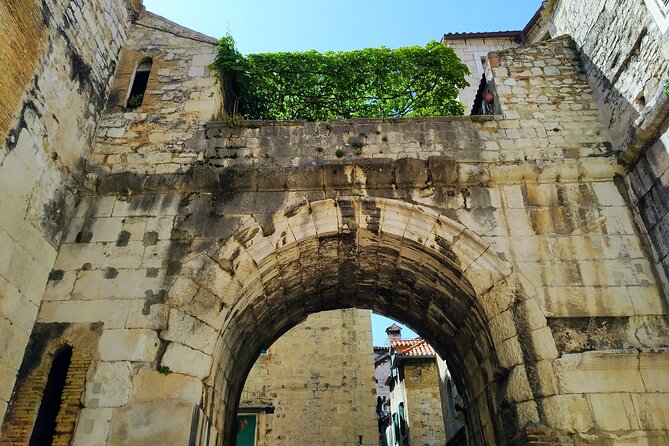
The Temple of Jupiter is one of the best-preserved late Roman temples in the world, and the tour makes a smart point with its location. It was placed to represent the divine link between Diocletian and Jupiter—connecting the emperor’s rule to the Roman god of the sky and thunder.
Then the story shifts again in the Middle Ages. The temple was converted into a baptistery dedicated to St. John the Baptist. Even if you don’t go inside, hearing that adaptation while standing near the structure helps your brain stop treating it like “just another ruin.”
Time on this stop: about 10 minutes.
Admission: not included.
Vestibulum and Diocletian’s private space: seeing power before the public
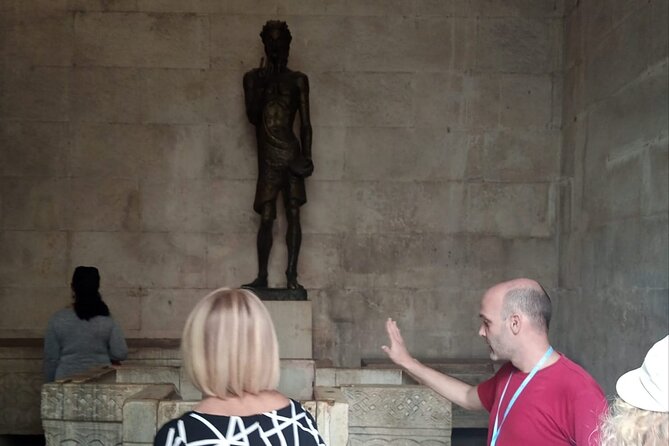
At the Vestibulum of Diocletian’s Palace, you’re moving into the pre-entrance area tied to Diocletian’s private chambers. Ivan explains what it looked like and what its function was, which matters because it frames the palace not only as spectacle but also as controlled access.
One detail that makes this stop interesting: from here, you also check up Triclinium. In other words, you’re getting a glimpse of the setting where social and ceremonial life would have taken place, not just the outer walls and big squares.
Time on this stop: about 10 minutes.
Admission: free.
Riva Harbor: the living promenade that still mirrors the palace
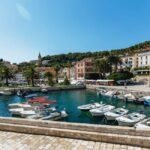
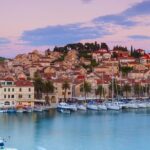
The tour connects the palace to the city’s daily rhythm at Riva Harbor. This is the meeting point where locals and visitors mix, and it’s Split’s main promenade.
Ivan uses Riva as a reminder that Split isn’t frozen in time. He explains how the promenade was built over the centuries and why it became central for locals. From here, you also get a good view of the southern wall of Diocletian’s Palace, which helps you “read” the palace from the city side rather than only from within its walls.
If you want a quick sense of where to stroll on your own later, Riva is the place to learn first.
Time on this stop: about 10 minutes.
Admission: free.
Fruit Square and Pjaca: two squares, two eras of public life
From Riva, the tour shifts into old-town public space with Fruit Square (Trg Brace Radic). The name you’ll hear is picturesque, but the real story here is the layers of defense and trade. The square is outside the palace area, and it’s dominated by remains of a 15th-century Venetian fort.
Ivan points out the significant monument in the middle of the square and ties it to the surrounding sights. Even if you don’t know the exact details yet, you’ll feel the logic: this place wasn’t only scenic—it was functional.
Time on this stop: about 20 minutes.
Admission: free.
Then you reach Pjaca, the city square in front of the old Town Hall area, outside the palace’s western wall. This spot has been a main square since medieval times, and you can see a 14th-century Town Hall plus other interesting structures. It’s one of the best places to pause and let the city scale sink in after all the palace architecture.
Time on this stop: about 10 minutes.
Admission: free.
Gregory of Nin statue: the landmark with a built-in superstition
No Split first-timer route feels complete without Grgur Ninski (Gregory of Nin). The statue dominates the area and is one of Split’s most recognizable landmarks, and the tour uses it as a closing highlight.
Ivan shares facts about Gregory of Nin, including the story tied to him and the highest monument in Split dedicated to his name. You’ll also learn who sculpted the monument—Ivan Mestrovic—and yes, there’s a fun local tradition: rub the statue’s toe for good luck.
That might sound like silly tourist folklore, but I like it anyway. It gives you a quick, physical action that makes your last stop memorable, right when your brain wants a takeaway.
Time on this stop: about 10 minutes.
Admission: free.
Price and value: what $238.28 per group really means
The tour costs $238.28 per group, and the group can be up to 10 people. In plain terms, the value depends on how many people share the group price.
If you’re traveling in a small group (say 2–4 people), you’ll pay more per person than a group of 8–10. If you’ve got a family or group of friends and can fill closer to the maximum, the cost becomes easier to justify—especially since most stops are free and the guidance is built around understanding the sites, not rushing through them.
The tour also lasts about 1 hour 30 minutes to 2 hours, which is a good use of limited sightseeing time. And because it’s private (your group only), you’re not competing for attention when you ask questions.
Tickets, entrances, and what to expect about inside access
This tour includes a mobile ticket, and confirmation comes at booking. For the sights, many stops are listed as free, including Golden Gate, Peristyle, Vestibulum, Riva Harbor, Fruit Square, Pjaca, and Gregory of Nin.
Two notable exceptions: admission is not included for the Cathedral of Saint Domnius and the Temple of Jupiter. Also, you should assume you won’t be entering those spaces during this tour because the plan specifies that you’ll view and learn from key parts outside.
So if your dream is photo time plus guided context without waiting in lines, this works well. If you want guaranteed inside access for every major monument, you’ll want a different kind of ticketed tour.
What kind of traveler this fits best
This is a smart match for:
- First-timers in Split who want Diocletian’s Palace context fast
- People who prefer a walking route with short stops instead of a long day of museum hours
- History-minded travelers who like when architecture is explained through function and change over time
- Small groups that want a private guide without mixing with other languages or interests
It’s less ideal if you’re only interested in entering buildings and spending time inside. The cathedral and temple are treated as understanding stops, not inside visits.
Should you book this Private History tour in Split?
Yes, if you want a guided “get it” moment in Split’s Roman core. This tour’s strength is the way it builds a coherent picture: start at Golden Gate, shift into the Peristyle and cellars, connect Roman structures to later religious changes, then end with the city’s squares and the Gregory of Nin landmark. The route is short enough to do even with a packed day, but structured enough to leave you feeling oriented.
Book it especially if you value clear answers. Ivan Fistanić leads with a history-focused approach, and the tour is built for questions rather than silence. The main reason to hesitate is simple: if you want inside access to the cathedral and the temple, this plan won’t fully satisfy that goal.
FAQ
How long is the Private History tour?
It lasts about 1 hour 30 minutes to 2 hours (approx.).
How much does the tour cost?
The price is $238.28 per group, up to 10 people.
Is this a private tour?
Yes. It’s a private tour/activity, and only your group participates.
Where is the meeting point?
The tour starts at Ul. kralja Tomislava 15, 21000 Split, Croatia.
Do we get a mobile ticket?
Yes, the tour includes a mobile ticket.
Which major sights are included?
You’ll visit Golden Gate, the Peristyle (including time in the cellars area), the Cathedral of Saint Domnius (view only), the Temple of Jupiter (view only), the Vestibulum (private chambers area, with a look toward Triclinium), Riva Harbor, Fruit Square, Pjaca, and the Grgur Ninski statue.
Are entrance tickets included?
Some stops are listed as free, including Golden Gate and the Peristyle area. Admission is not included for the Cathedral of Saint Domnius and the Temple of Jupiter.
What if the weather is bad?
This experience requires good weather. If it’s canceled due to poor weather, you’ll be offered a different date or a full refund.
Is free cancellation available?
Yes. You can cancel up to 24 hours in advance for a full refund.