REVIEW · SPLIT
Split & Diocletian Palace Historical Walking Tour
Book on Viator →Operated by Ancient Tours · Bookable on Viator
Split’s Roman heart makes sense fast on foot. This 1.5-hour walking tour is built to help you connect the dots inside Diocletian’s Palace and along Split’s waterfront, without feeling rushed. You start at the Peristyle, then move through the palace substructures, key entry points, and famous nearby stops like the Riva promenade and Marko Marulić’s square.
What I like most is the way it balances “big picture” storytelling with spots where you can get up close—especially for photos—while still covering several top landmarks. I also like that you can choose a small group (max 5) for a more personal pace, or go with the larger option if that’s what fits your day. One thing to factor in: a couple of stops don’t include admission, so bring a little extra cash or be ready to pay on-site if you want every option the guide points out.
In This Review
- Key takeaways before you lace up
- The 90-minute palace circuit that actually helps you navigate
- Starting at the Peristil ulica: why the Peristyle is the right first stop
- Inside the palace substructures: seeing the foundation work
- Riva Harbor and the south wall: palace power meets the sea
- Fruit’s Square and Marko Marulić: the city layers over Rome
- The last remaining Roman temple area: a quick stop, big symbolism
- Vestibulum and Triklinij: how the emperor moved and lived
- Venetian-era museum and the cathedral in the mausoleum
- Grgur Ninski statue and the Golden Gate: language, entrance, and identity
- Riva Harbor again and the palace bronze model: why the second look matters
- Price and value: what you’re paying for (and what’s extra)
- Group size and hearing your guide: the practical comfort factor
- Should you book this Diocletian’s Palace walking tour?
- FAQ
- Where does the tour start and end?
- How long is the Split & Diocletian Palace Historical Walking Tour?
- What language is the tour offered in?
- Is there a small-group option?
- What’s included in the tour price?
- Are admissions included for every stop?
- Do you visit the museum part of the substructures?
- Are there morning and afternoon tours?
- Is mobile ticketing used?
- What’s the cancellation policy?
Key takeaways before you lace up
- Peristyle first: the palace’s central square makes the rest of the complex easier to understand.
- Substructures without the museum detour: you’ll learn the foundation and functions, with museum time left for later.
- You see palace + city in one loop: Riva Harbor and Fruit’s Square connect the emperor’s walls to daily Split life.
- Highlights at the gates: the Golden Gate and Gregory of Nin statue help you read the palace’s entrances.
- A few paid extras: Golden Gate and a bronze model step aren’t included, so plan for that.
- Small-group option available: max 5 means more time for questions and better attention to details.
The 90-minute palace circuit that actually helps you navigate
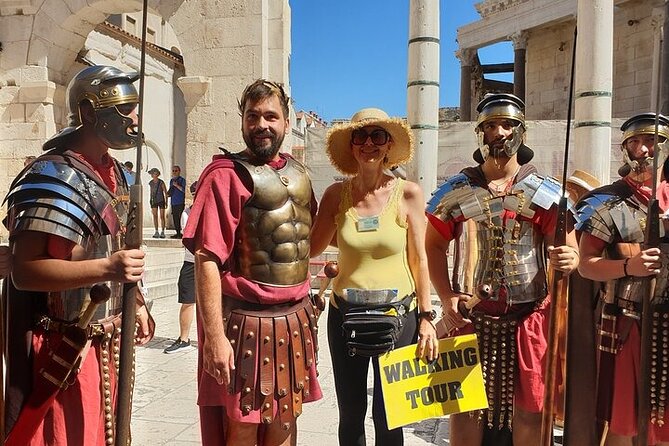
This tour is short enough that you stay focused, but long enough to get beyond postcard-level “wow.” In about 1 hour 30 minutes, you cover major palace anchor points and several connected city stops, all while a guide gives context that turns walls and corridors into a story.
The real value is how the route teaches you the palace’s logic. Start in the central space, then work outward through circulation areas, entrances, and the emperor’s personal zones. By the time you reach the gates and waterfront, you should feel like you’re reading the site—not just wandering it.
You can also read our reviews of more walking tours in Split

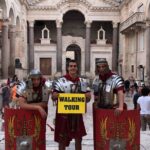

Starting at the Peristil ulica: why the Peristyle is the right first stop
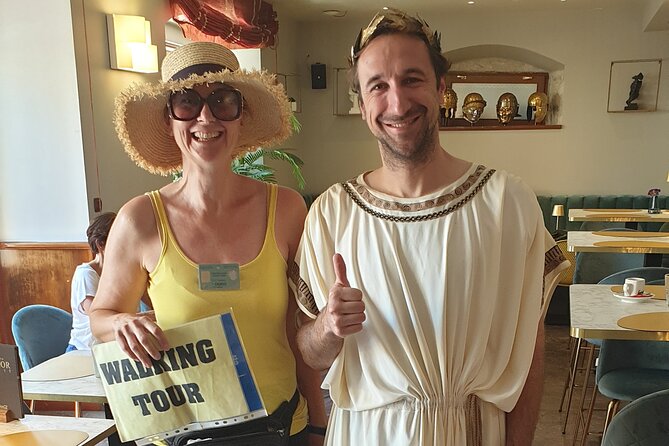
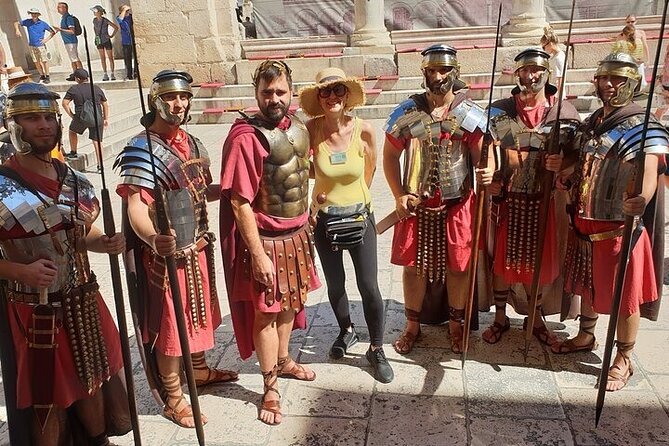
The tour begins at Peristil ul. in Split, and your first major stop is the Peristyle of Diocletian’s Palace. This is the central square that connects to many of the palace’s other key locations, so it’s the perfect starting point to mentally “map” where you are.
If you only remember one thing from this tour, make it this: once you understand the Peristyle, the palace stops feeling like a maze. You’ll also get a better sense of how visitors flow through the complex, which matters because today Diocletian’s Palace isn’t a dead ruin—it’s a working, lived-in part of Split.
Inside the palace substructures: seeing the foundation work
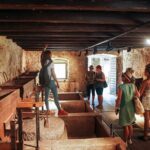
Next you move into the Diocletian Palace Substructures, where you’ll go through the central hallway and see the key information about the palace’s construction and how the foundation areas functioned over time. This is one of those “wait, that’s under everything?” moments. It adds depth fast.
Important detail: the tour doesn’t include the museum part of the substructures, but you can visit it afterward on your own. That’s actually useful. You get the guided explanation during the tour window, and you decide later whether you want to spend more time with museum exhibits.
A nice pacing note: this segment is about learning, not sprinting. It fits well if you want context without the “stand for 20 minutes staring at a label” vibe.
Riva Harbor and the south wall: palace power meets the sea
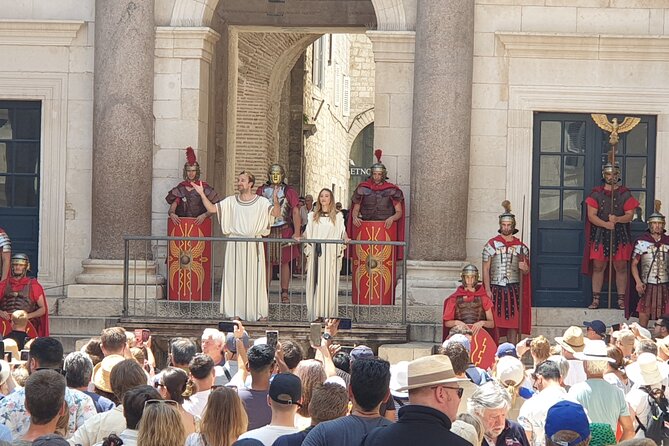
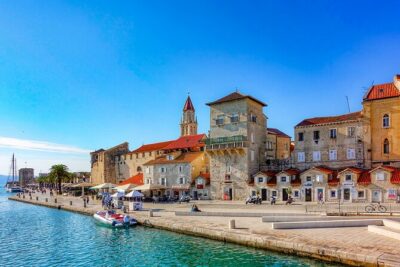
From the palace interior you shift toward the city edge at Riva Harbor. You’ll learn about the waterfront of Split and the south wall of the palace, which is a big clue to how Diocletian’s complex related to maritime life.
This is where the tour stops being only about ancient architecture. You start seeing why people built a fortress-like residence where they did: control, connection, and protection. Standing near the harbor also gives you an easier time picturing how the palace would have felt when the sea was part of daily movement and supply.
Fruit’s Square and Marko Marulić: the city layers over Rome
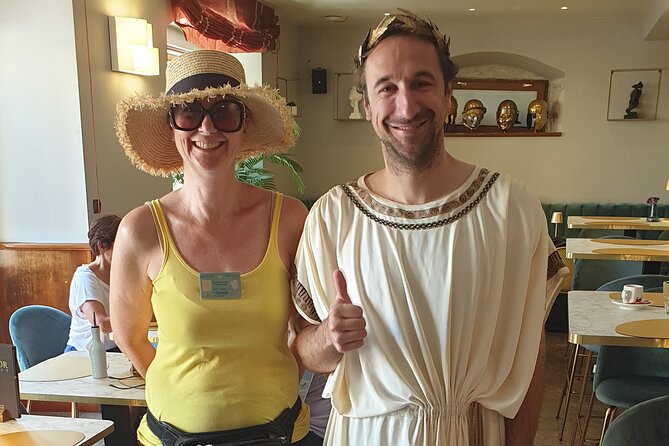
At Fruit’s Square (Trg Brace Radic), the tour links the palace to the later Venetian-era layer of Split. You’ll see the sculpture of Marko Marulić, and the stop works because it breaks the tour’s “just palace” rhythm.
This moment helps you notice something important: Split doesn’t treat Diocletian’s Palace as an isolated relic. It’s integrated into urban life, with later generations adding their own symbols and meanings right alongside Roman remnants.
You can also read our reviews of more historical tours in Split





The last remaining Roman temple area: a quick stop, big symbolism
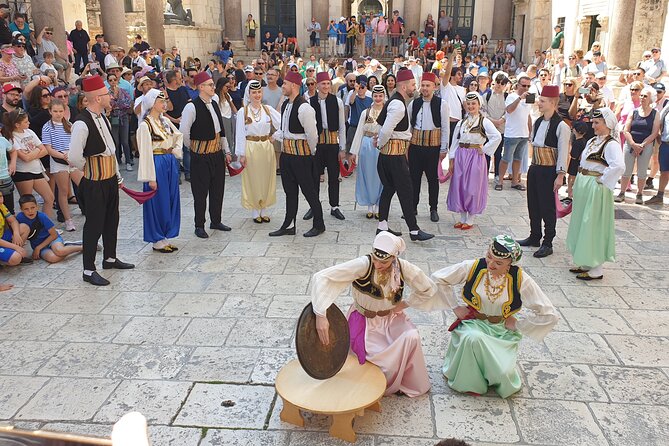
You’ll also pause at the last remaining ancient Roman temple in the palace. Even without long museum-style time, a stop like this matters because it reminds you that the palace wasn’t only military and residential. There was religious and ceremonial intent baked into the design.
Because the tour time is tight, treat this stop as a “spot check.” Stand there long enough to look, then let the guide’s context do the heavy lifting. If you’re the type who wants more time at temples, plan extra self-guided time after your tour ends.
Vestibulum and Triklinij: how the emperor moved and lived
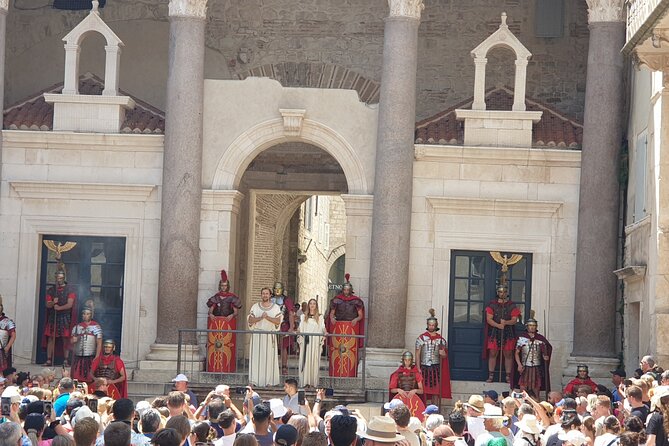
Two short palace stops pack a lot of meaning: the Vestibulum of Diocletian’s Palace and the Triklinij.
At the vestibule, you’re looking at the entrance hall of Diocletian’s personal quarters. You’ll learn about the vestibule of emperor Diocletian, and there’s also a chance of hearing traditional Dalmatian singing. Even if you don’t catch singing, the stop is still useful because it shows how entry spaces signaled status—who belonged where.
Then comes Triklinij, the remains (with a partial reconstruction) of Diocletian’s personal walkway and dining hall. This is the tour’s “human scale” segment. You’re not just staring at stones; you’re imagining daily routines—arrival, movement, and shared meals—inside a space built for a ruler’s life.
Venetian-era museum and the cathedral in the mausoleum
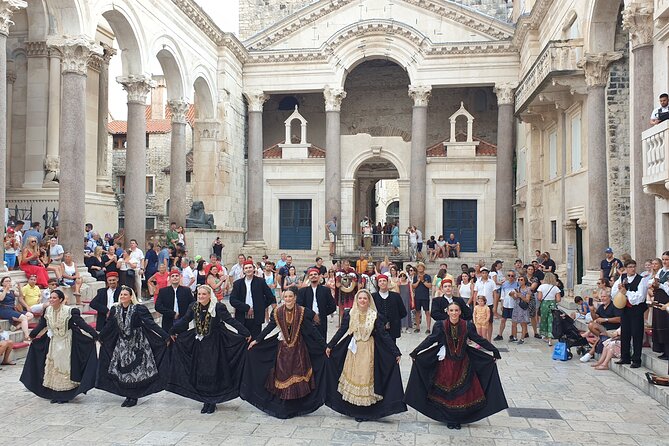
As the route continues, you’ll reach a 15th-century Venetian palace that is now the museum of the City. This is a good tempo shift. The palace ruins explain the Roman foundation, and then the later building reminds you that Split kept evolving instead of freezing in time.
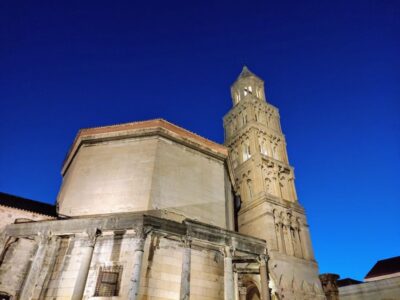
Finally, you’ll see the cathedral in the mausoleum of emperor Diocletian. That combination—mausoleum + cathedral—creates a powerful sense of continuity and change. You’re standing in a place that has had multiple roles across centuries, which is a big part of why Diocletian’s Palace still feels relevant instead of museum-closed.
Grgur Ninski statue and the Golden Gate: language, entrance, and identity
After that, the tour moves to Split’s “modern meaning” markers inside the palace grounds.
You’ll stop for the Grgur Ninski statue made by Meštrović, placed in front of the north gate of Diocletian Palace. This isn’t random decoration. It ties the physical site to Croatian language history through Grgur of Nin, a figure important enough that the tour spends real time on his meaning.
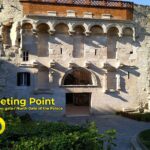
Then you arrive at the Golden Gate, described as the main entrance of Diocletian’s Palace. The guide explains the entrance and you’ll see the statue of Gregory of Nin again in the context of why he matters. Here’s the practical part: admission for the Golden Gate isn’t included, so decide in advance if you want to pay at that moment or focus on viewpoints outside the paid area.
Riva Harbor again and the palace bronze model: why the second look matters
Later, there’s another stop by Riva Harbor, this time featuring a bronze model of Diocletian’s Palace. This is one of the best tools on the tour because models can fix what your brain missed while walking—especially when you’re tracing how corridors and entrances connect.
However, admission for this part is not included. If you’re the kind of traveler who loves visuals and wants the model to finish the “map” in your head, keep that in mind so you aren’t surprised by extra charges on-site.
Price and value: what you’re paying for (and what’s extra)
At $156.17 per person for about 90 minutes, this isn’t a bargain-basement walk. You’re paying for an educated guide plus a route designed to hit multiple palace and city highlights quickly.
The best value comes from two things:
- Most stops are free entry, so you’re not paying repeatedly just to see basic landmarks.
- You’re getting interpretation. A guided route here is worth it because Diocletian’s Palace can feel confusing if you’re only self-guiding.
What could reduce value for some people is that a couple of paid-admission items do exist—specifically around the Golden Gate and the bronze model area. Also, the substructures tour doesn’t include the museum portion, though you can visit it afterward on your own.
Group size and hearing your guide: the practical comfort factor
You have two group options: small group (max 5) or a regular tour (max 20), with the overall cap at 20. In a site like this, smaller groups usually mean better attention and less waiting around for the slowest photo moment.
One more comfort tip: in older stone spaces and busy entrances, guides can be hard to hear if you’re standing too far back. If you want a smoother experience, try to position yourself where you can clearly see and hear the guide from the start.
Should you book this Diocletian’s Palace walking tour?
Book it if you want an easy way to learn the layout fast. This tour is built for getting your bearings and understanding what you’re looking at—Peristyle first, then substructures, then entrances and personal spaces, ending with the parts that help you visualize the whole complex.
Skip it or consider another option if you strongly prefer to maximize paid-entry sites during the same outing. Because the Golden Gate and bronze model areas require extra admission, you’ll need to decide on the spot whether those are must-dos for you.
If you love a short guided overview that helps you plan the rest of your day around Split’s waterfront and palace ruins, this one fits nicely.
FAQ
Where does the tour start and end?
The tour starts at Peristil ul. (21000) in Split and ends back at the same meeting point.
How long is the Split & Diocletian Palace Historical Walking Tour?
It lasts about 1 hour 30 minutes.
What language is the tour offered in?
The tour is offered in English.
Is there a small-group option?
Yes. You can choose a Small group Tour (max 5) or a Regular Tour (max 20).
What’s included in the tour price?
You get an educated guide and the tour runs as a group experience (with the option for small group). Most listed stops do not require admission fees.
Are admissions included for every stop?
Not all of them. Some areas are listed as admission ticket free, while Golden Gate and the bronze model area are listed as admission ticket not included.
Do you visit the museum part of the substructures?
No. The tour goes through the substructures for key information, but it won’t visit the museum part, which you can visit later on your own.
Are there morning and afternoon tours?
Yes. Morning and afternoon tours are available for flexibility.
Is mobile ticketing used?
Yes, the tour includes a mobile ticket.
What’s the cancellation policy?
You can cancel for a full refund up to 24 hours in advance of the experience start time.