REVIEW · SPLIT
Split: Diocletian’s Palace Private walking tour
Book on GetYourGuide →Operated by Split Guide · Bookable on GetYourGuide
Ancient walls still hold daily life. Inside Diocletian’s Palace, this private walk connects Roman power, sacred spaces, and the city you see today. You’re not touring an empty monument. You’re walking through a place that still matters to locals.
I especially like how the route hits the palace’s big story points fast, with Peristyle and the North Gate at the center of it. I also like the way the guide turns architecture into meaning, like explaining Diocletian’s worship as Jupiter’s son and why the North Gate mattered to the Roman city.
One drawback to plan around: church services or events can affect which parts you can enter, and the site is only partially wheelchair accessible. The tour can be adjusted, but it’s smart to share accessibility needs up front.
In This Review
- Quick hits you will actually feel on the walk
- Diocletian’s Palace as a living site, not a shut-in museum
- Meeting at the bronze Split model on Riva
- Peristyle: where Diocletian was worshipped as Jupiter’s son
- Split Cathedral: from pagan mausoleum to Christian landmark
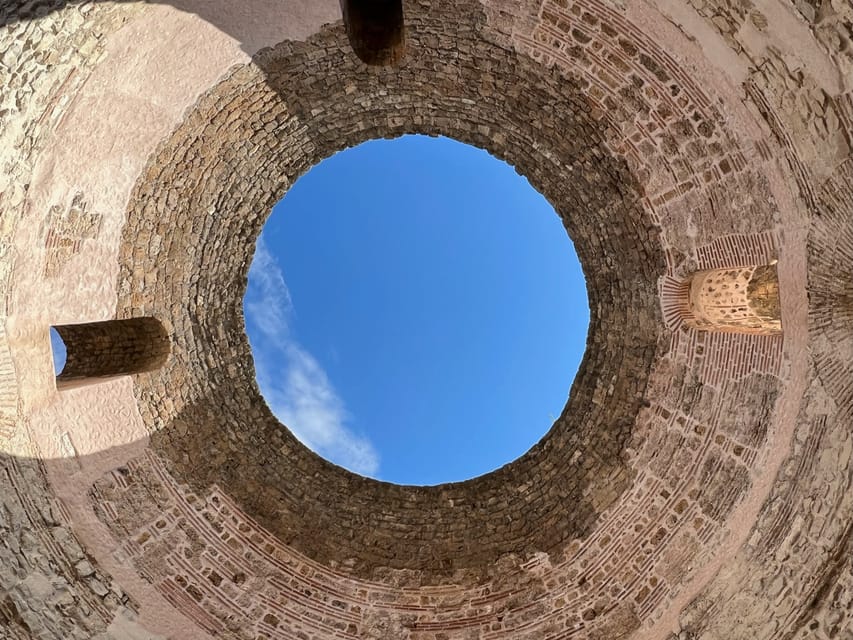
- The Vestibule: Diocletian’s grand entrance to his private chambers
- North Gate and Porta Aurea: the most important Roman city gateway
- Price and value: is $135 per person worth it?
- What makes this tour work well on the ground
- Language support and guide style (yes, it matters)
- Who should book this private Diocletian’s Palace tour
- Should you book this Diocletian’s Palace private walking tour?
- FAQ
- FAQ
- Where does the tour start?
- Does the tour end at the same place it starts?
- How large is the group?
- What are the main things you will see?
- Is the site wheelchair accessible?
- Can the itinerary change?
- What languages are available?
- How much does it cost?
- Can I pay later and cancel?
- Is the tour private?
Quick hits you will actually feel on the walk
- Private group up to 10 means fewer bottlenecks and more time for your questions.
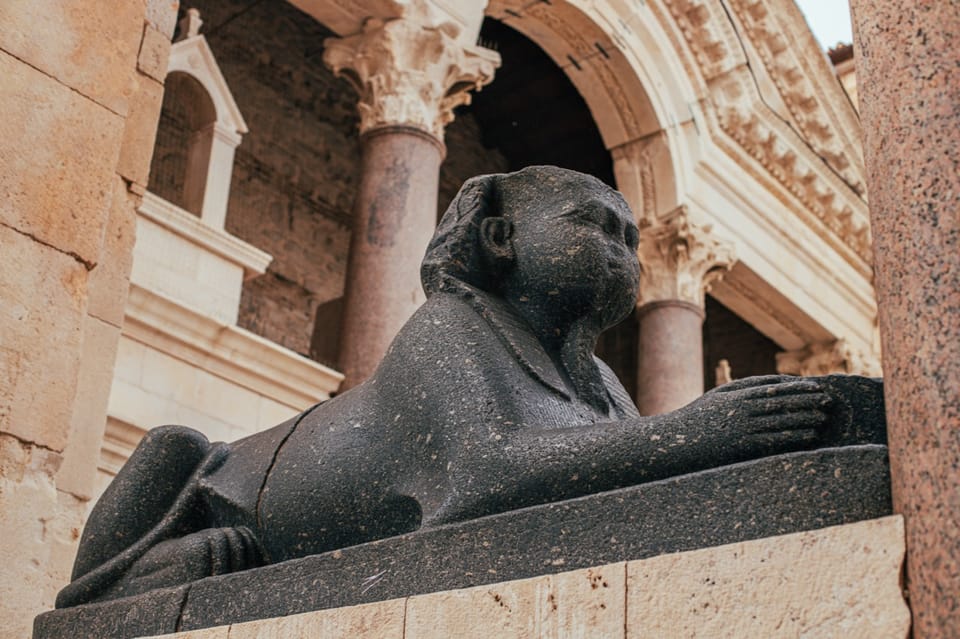
- Peristyle and Jupiter’s son gives you a clear reason why this space mattered to Diocletian.
- Split Cathedral as a former mausoleum shows how religious power can overwrite older sacred space.
- Vestibule of the private chambers explains how entrances signaled status and access.
- North Gate / Porta Aurea ties city movement to Roman architecture, not just pretty stones.
- Church of St. Martin inside a guard corridor turns a dramatic walk into a small, unexpected stop.
Diocletian’s Palace as a living site, not a shut-in museum
Diocletian’s Palace in Split is famous because it’s old. It’s also famous because it’s still used. Your walk follows that reality: you’ll see how people continue to live inside Roman walls, while the palace still functions as a public landmark.
That difference matters. In a museum, you can look but not really sense the place. Here, you’re moving through spaces that were designed for power, worship, and daily movement. It’s easier to understand why the palace worked for an emperor and why it still works for a city.
And because this is a private tour with a maximum group size of 10, your guide can set the pace and focus on the parts that interest you most. This is a good choice if you want a guided hit list without feeling herded.
You can also read our reviews of more walking tours in Split

Meeting at the bronze Split model on Riva
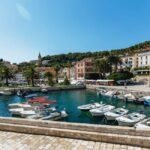
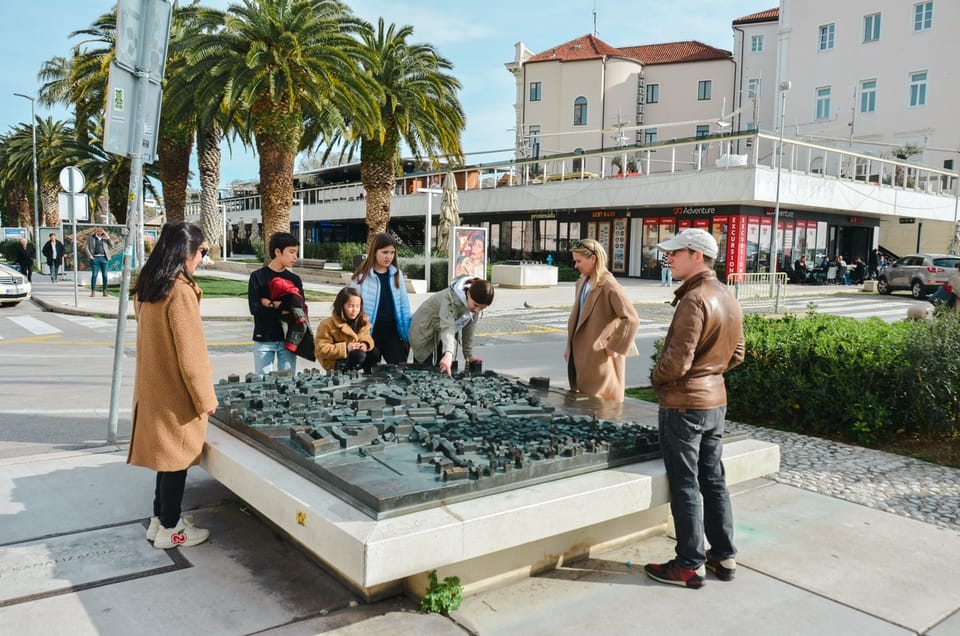
The tour starts at the bronze model of the city of Split, at the eastern end of the promenade Riva. That’s a practical choice for getting oriented quickly, because you begin with a city-wide visual before stepping into the palace itself.
If you like starting with context, you’ll appreciate that the meeting point is not random. You’ll get your bearings for the city center layout, then transition straight into Diocletian’s Palace and its inner structure.
The tour also ends back at the meeting point. That keeps things simple at the end of your day, especially if you’re planning dinner afterward.
Peristyle: where Diocletian was worshipped as Jupiter’s son
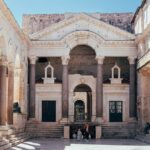
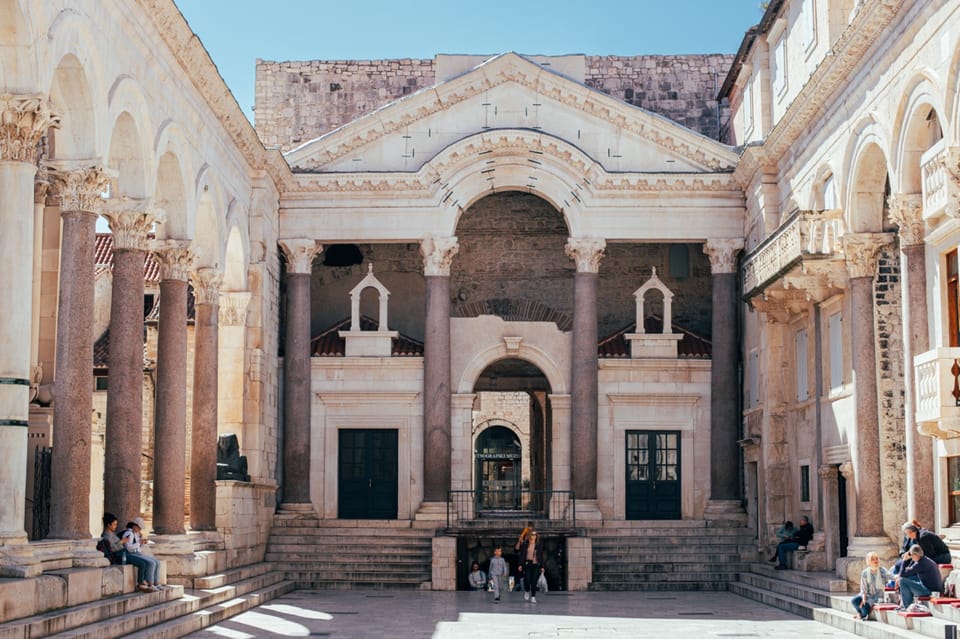
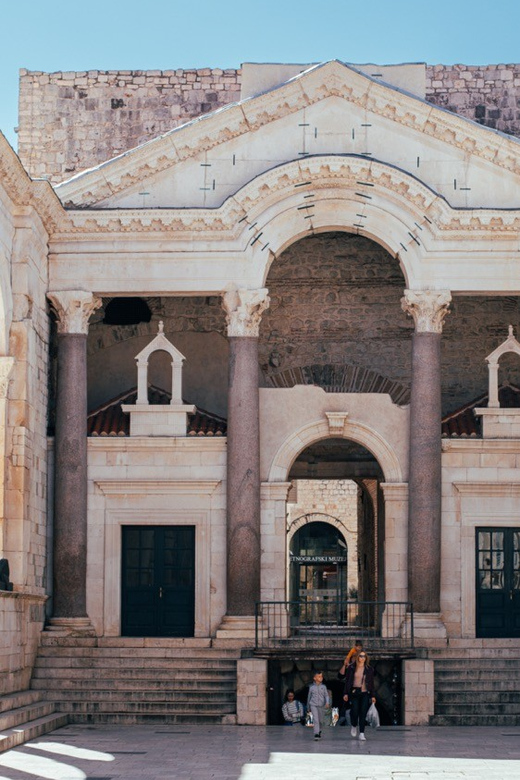
The Peristyle is one of the most important stops, and for good reason. This is where Diocletian was worshipped as Jupiter’s son, so it’s not just a courtyard you walk through. It’s a space that explains how rulers linked themselves to the divine.
Your guide frames it as an important meeting place during Diocletian’s era. The key idea is that this area helped the emperor connect with his subjects through ritual and symbolism. You’ll be looking at the physical setting with a new lens: not only where people stood, but why they stood there.
What I like about this stop is that it gives you a clear storyline. When you understand that the Peristyle functioned like a stage for the ruler’s sacred role, the rest of the palace becomes easier to “read.”
Practical note: if you prefer religious-themed sightseeing, this stop will land well. If you’d rather focus purely on Roman architecture, ask your guide to keep the explanation anchored in how the space was designed for those meetings.
Split Cathedral: from pagan mausoleum to Christian landmark
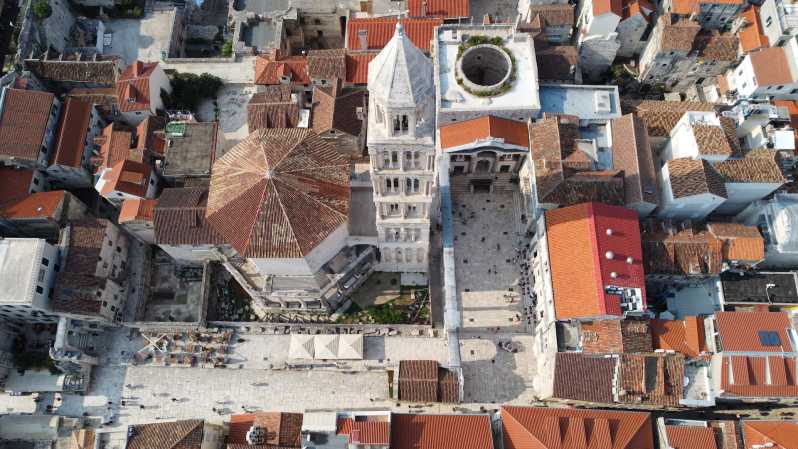
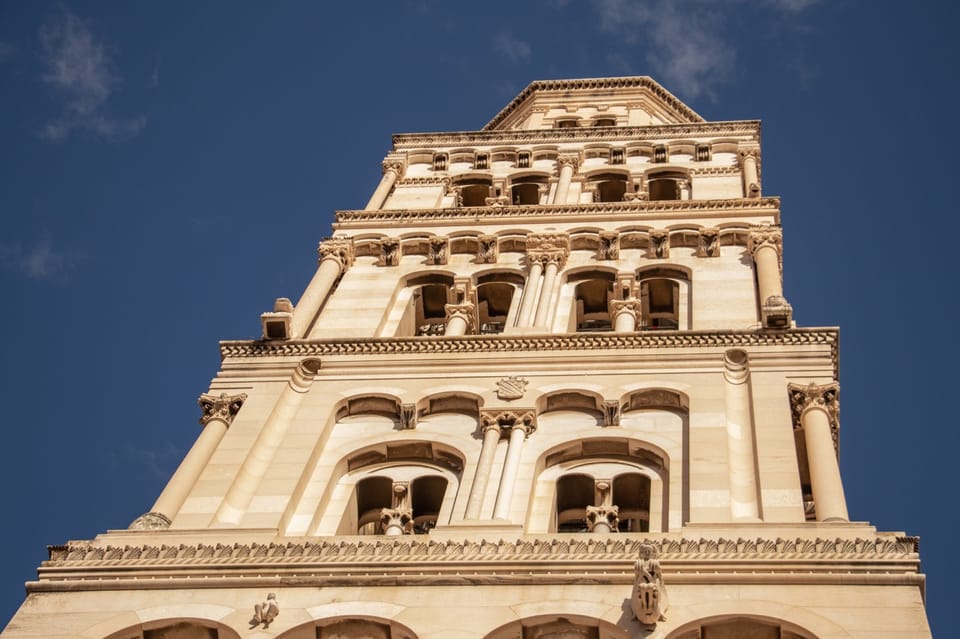
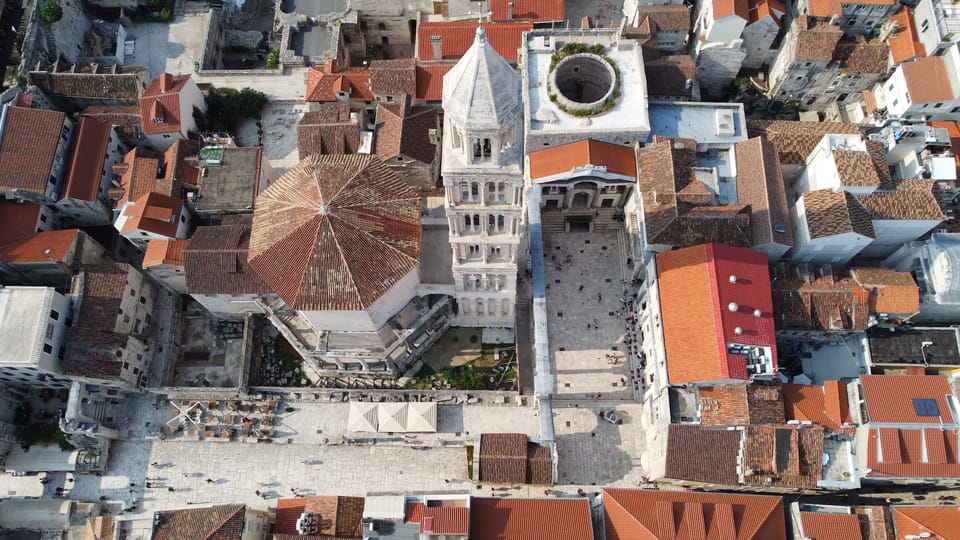
Another highlight is Split Cathedral, which was once the mausoleum of Emperor Diocletian. Then, as Christianity spread, the emperor’s remains vanished and the structure changed roles. The palace didn’t just get reused. It got reinterpreted.
On this tour, you’ll uncover that transformation and explore the cathedral’s meaning through both its past and its present. You’ll also get a chance to admire the exterior, which is often the easiest way to appreciate the scale and presence without rushing inside on a tight schedule.
This is a powerful stop because it shows how old authority doesn’t disappear. It gets repurposed. If you enjoy seeing how layers of faith and politics shape a single building, you’ll find this part especially satisfying.
A small consideration: sometimes church services can limit what you can access or see. In that case, your guide adjusts the route to keep the experience moving.
The Vestibule: Diocletian’s grand entrance to his private chambers
Next up is the Vestibule, described as the grand entrance to Diocletian’s private chambers. This is the kind of stop that can feel abstract unless someone explains why it matters.
Here’s what you’re looking at through the tour’s framing: the vestibule served as a gateway to the emperor’s personal quarters. It also welcomed dignitaries from far and wide, meaning this was not a casual walkway. It was designed for arrival, status, and controlled access.
This stop makes the whole palace feel more human. Instead of thinking only about courts and temples, you start picturing how visitors entered and how power was staged at the threshold.
If you like political architecture, this is the portion that will help you connect details in your mind. Even if you never remember every element, you’ll remember the role of that space: this is where people approached Diocletian.
You can also read our reviews of more private tours in Split





North Gate and Porta Aurea: the most important Roman city gateway
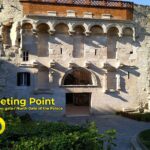
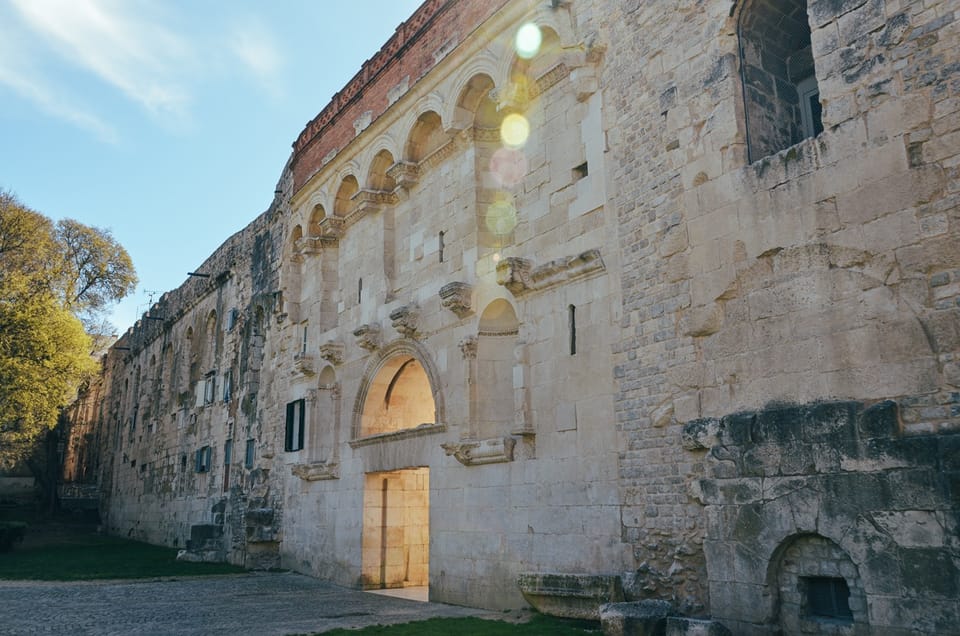
The North Gate is treated as the most important city gate during the Roman era, and it also has another name: Golden Gate, or Porta Aurea. That naming tells you a lot. If a gate becomes “golden,” it suggests prestige, control, and an official role in the flow of the city.
On your walk, you’ll explore what made it important in the Roman city and how its legacy carries forward. The guide’s explanation helps you see the gate as more than an entrance in stone. It functioned as a statement about Roman order and how the city organized arrival and movement.
Then comes a clever bonus: inside the former guard corridor stands the city’s smallest church, the Church of St. Martin. That shift from guard space to worship space is the kind of layered reuse that makes Diocletian’s Palace so rewarding to tour with context.
If you enjoy surprises in historic sites, don’t skip this part. The St. Martin stop is small, but it adds variety to the walk and gives you a breather after heavier Roman-imperial themes.
Price and value: is $135 per person worth it?
The price is $135 per person for a private guided walking tour designed for groups up to 10. That number is not the lowest ticket in town, so the value question is fair.
Here’s where the value comes from. You’re paying for a guide to connect multiple high-impact sites in a single flow: Peristyle, Split Cathedral, Vestibule, North Gate, and the Church of St. Martin. If you’re visiting Split with limited time, that kind of guided focus can be worth more than wandering alone and guessing what matters.
You’re also paying for “private” in the real sense: a smaller group and a customizable experience. If you care about history but don’t want to spend your whole day studying maps, this approach can feel efficient without rushing.
My take: if you’re traveling with a small group and want a structured highlights route through the palace, the cost feels easier to justify. If you’re on a tight budget, you might compare it to self-guided time, but you’d be giving up the meaning-making that turns these stones into a story.
What makes this tour work well on the ground
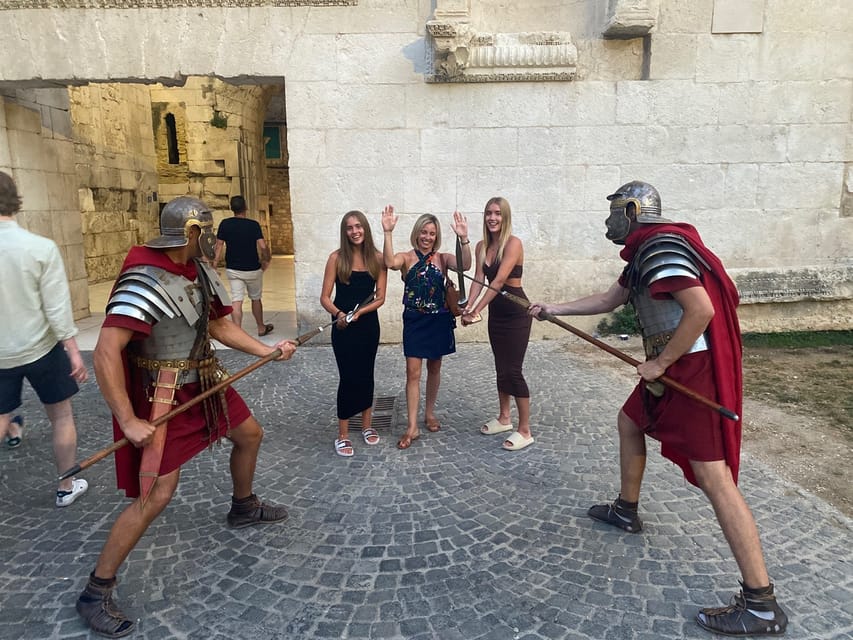
This experience is built around being flexible, and that flexibility shows up in two ways.
First, your tour is individually customizable. That means your guide can shape the emphasis, so you can spend more time where you’re most curious, rather than forcing every stop to feel identical.
Second, some sights may not be accessible due to events or church services. If that happens, the program changes slightly. So you should go in with the mindset that the tour will adapt, not that every single entrance is guaranteed.
As for comfort and movement, the site is partially not wheelchair accessible. The tour can be adapted for special needs if you tell the provider in advance. If accessibility is a factor for you, it’s worth planning early so your guide can adjust the route.
Language support and guide style (yes, it matters)
This tour is offered in French, German, and English. Having your guide speak your language is one of those “small” things that actually changes everything, because the palace is full of details that only make full sense when explained clearly.
One guide name you may hear is Dana, who gets singled out for enthusiasm. That kind of energy matters on a walking tour, because it keeps the story moving and helps you connect the stops instead of treating each site as a separate postcard.
If you like a tour where the guide actively explains meaning rather than just reading facts, this is the format to choose. A strong guide makes the difference between seeing architecture and understanding it.
Who should book this private Diocletian’s Palace tour
This works best if you fit one of these profiles:
- You want a focused overview of Split’s most important palace landmarks without building the route yourself.
- You like stories that connect pagan and Christian layers, like the mausoleum-to-cathedral transformation.
- You enjoy architectural meaning, especially the ruler-cult idea behind the Peristyle and the political importance of the North Gate.
- You value small-group touring, where you can ask questions and not feel swallowed by crowds.
It’s also a solid pick if you want to get your bearings quickly for the rest of your day in Split, since the walk is designed around key “anchor” points.
Should you book this Diocletian’s Palace private walking tour?
If your goal is a high-quality highlights route through Diocletian’s Palace with clear explanations of what you’re seeing, I think this is a strong booking. The combination of major stops like the Peristyle, Split Cathedral, Vestibule, and North Gate gives you a complete story arc in one walk.
But book with eyes open: church services and events can affect access, and the site is only partially wheelchair accessible. If you’re okay with minor changes and want guided meaning fast, this tour is worth the $135 per person.
FAQ
FAQ
Where does the tour start?
It starts at the bronze model of the city of Split at the eastern end of the promenade Riva.
Does the tour end at the same place it starts?
Yes. The activity ends back at the meeting point.
How large is the group?
The tour is designed for a group of maximum 10 participants.
What are the main things you will see?
You’ll visit highlights including the Peristyle, Split Cathedral, the Vestibule, the North Gate (Porta Aurea/Golden Gate), and the Church of St. Martin inside the former guard corridor.
Is the site wheelchair accessible?
The site is partially not wheelchair accessible, but the tour can be adapted to participants’ special needs if you inform the provider in advance.
Can the itinerary change?
Yes. Some sights cannot always be visited due to events or church services, and the program may be slightly changed.
What languages are available?
The tour is available in French, German, and English.
How much does it cost?
The price is $135 per person.
Can I pay later and cancel?
You can reserve & pay later, and you can cancel up to 24 hours in advance for a full refund.
Is the tour private?
It’s a private guided walking tour.