REVIEW · SPLIT
Split: Private Walking Tour in the Historical Town Center
Book on GetYourGuide →Operated by Sanja - Tour Guide in Split · Bookable on GetYourGuide
Split makes sense fast with a local guide. This private walking tour packs Split’s highlights into a smooth loop, starting at the water and moving through Diocletian’s Palace and the neighborhoods that grew around it. You’ll come away knowing what you’re looking at, not just where to stand.
What I like most is the way the guide ties architecture to power and everyday life, from the Roman emperor’s palace to later Venetian, French, Austro-Hungarian, and Yugoslav rule. I also like that you’re not rushing past big names; you get the key stops like Peristil, St. Domnius Cathedral, and the main squares outside the palace, plus a helpful set of tips for the rest of your stay. The only real consideration: the palace Substructures/Basements require an entrance fee that isn’t included.
In This Review
- Key things to know before you go
- Starting on Riva: The easy meeting point and the game plan
- Diocletian’s Palace: Where Roman walls become daily life
- What you’ll learn to look for
- Peristil and St. Domnius: Split’s center of gravity
- Why this stop matters
- Jupiter’s Temple (external): A quick stop with the right perspective
- Palace gates and Golden Gate: Reading the defensive design
- Substructures (Basements): The one extra fee stop that earns its place
- The medieval neighborhood outside the palace: Squares that explain politics
- How to make the squares feel real
- The Jewish ghetto and active synagogue: A small stop with weight
- Finishing on the Riva: A practical landing place for your next hours
- Guide quality that shows: Sanja and the clarity factor
- Price and value: Why $153 per group can make sense
- Who should book this private Split walking tour?
- Should you book it?
- FAQ
- Where is the meeting point?
- How long is the tour?
- Is this a private tour?
- How many people can be in a group?
- What languages are offered?
- What’s included in the price?
- What is not included?
- Is the Jupiter’s Temple stop included in the tour?
- What if I need to cancel?
- Is the tour wheelchair accessible?
Key things to know before you go
- Private pace for up to 15 people, so you can hear explanations and ask questions without a crowd squeeze
- Diocletian’s Palace inside-and-out approach, mixing Roman walls with medieval lanes
- Basements/Substructures stop, with a separate entrance fee you’ll want to budget
- Short, targeted highlights, including Peristil, St. Domnius, the Golden Gate, and Jupiter’s Temple area (external)
- A real guide, not a scripted walk, with clear explanations in English and multiple European languages
Starting on Riva: The easy meeting point and the game plan
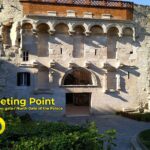
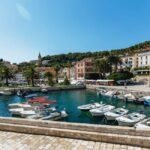
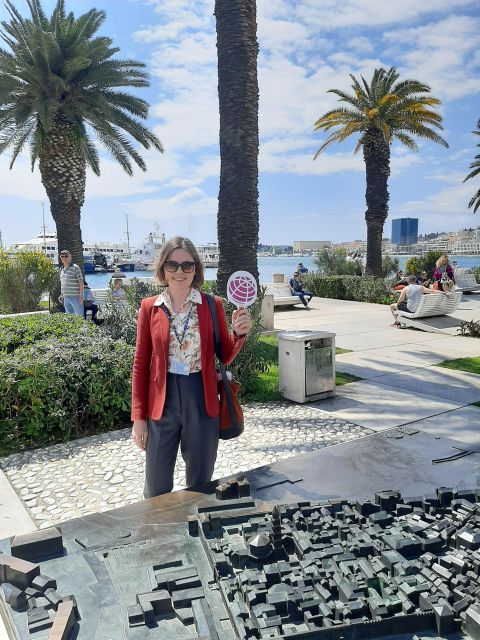
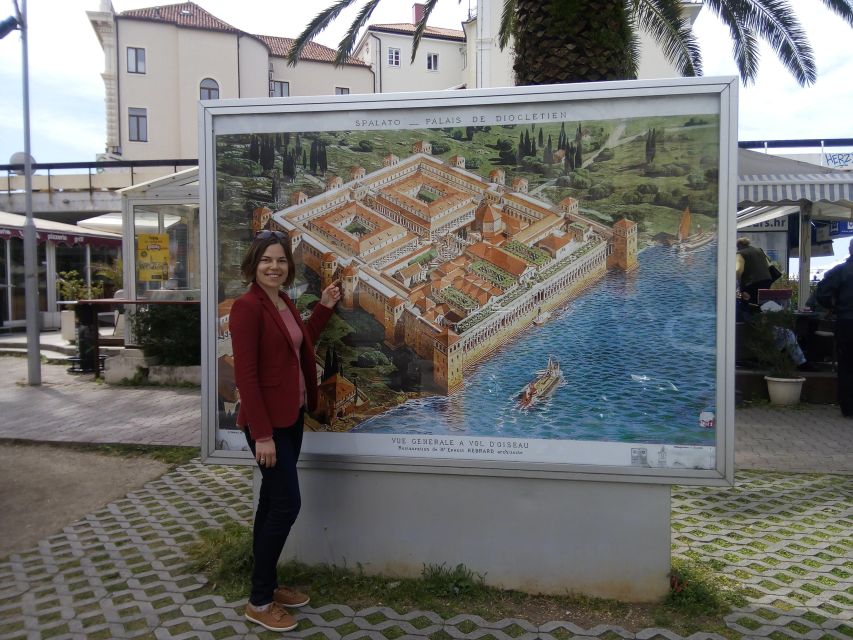
Your walk begins on the Riva promenade by the sea, at the bronze model of the historical core of Split. It’s in front of the south entrance to Diocletian’s Palace, which is a smart detail because it sets you up for the main event right away.
The first payoff of this tour is orientation. Split’s old town can feel like a maze, but starting at the model helps you build a quick mental map. From there, your guide leads you into the streets and squares with a clear plan: Roman foundation first, medieval neighborhoods next, and finishing back at the waterfront where the air and views make the whole walk feel like it has an ending.
This tour lasts about 1 hour 45 minutes. That’s long enough to cover the major sights in a sensible order, but short enough that you’re not exhausted before dinner.
You can also read our reviews of more walking tours in Split

Diocletian’s Palace: Where Roman walls become daily life
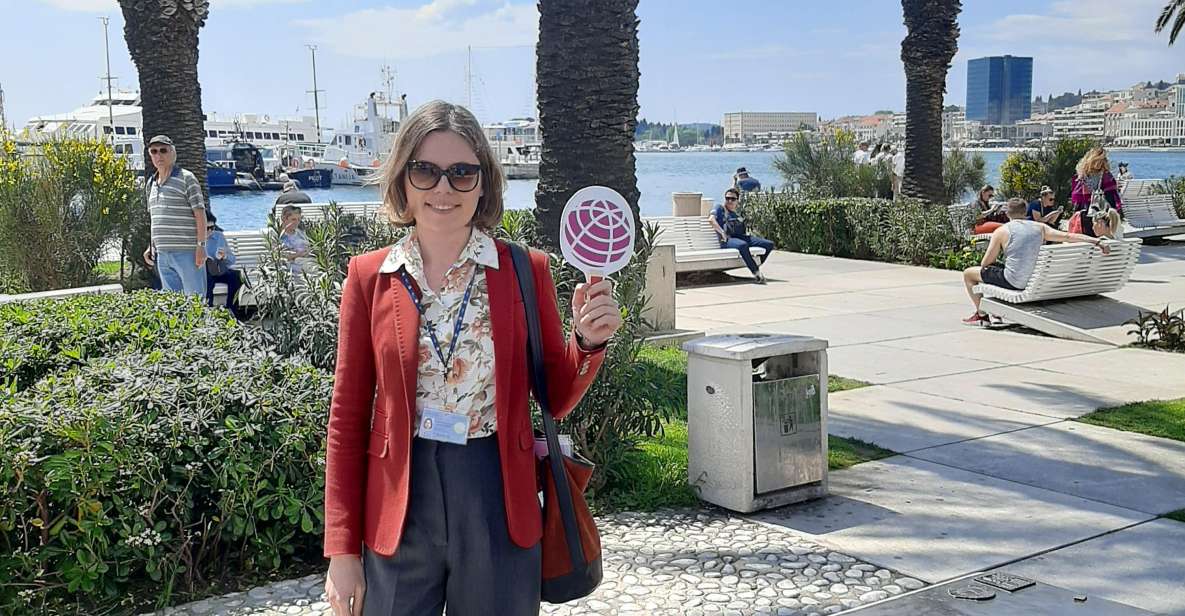
Most visitors see Diocletian’s Palace from the outside and think they understand it. You don’t. The palace is massive, layered, and full of surprises. This is where the tour earns its keep.
You start with the oldest part of town: the palace itself. Your guide walks you through the palace’s medieval neighborhood that developed inside the Roman structure, which is a mix of styles you can actually read with your own eyes once someone explains how the layers happened. You’ll spend about 30 minutes here, which is a good length for this kind of place: enough time to notice the patterns, not enough time to feel trapped in a museum mode.
What you’ll learn to look for
Even without memorizing dates, you’ll pick up practical visual clues. Roman-era architecture tends to be heavy, ordered, and built around the idea of walls with purpose. Inside the palace, later settlement adapted those bones into smaller homes and streets. That’s why the palace doesn’t feel like a dead ruin. It feels like a working neighborhood built on an old foundation.
One more thing: you’re not just passing through. You’re being shown what matters, including the palace’s main open space and gate structure later on.
Peristil and St. Domnius: Split’s center of gravity
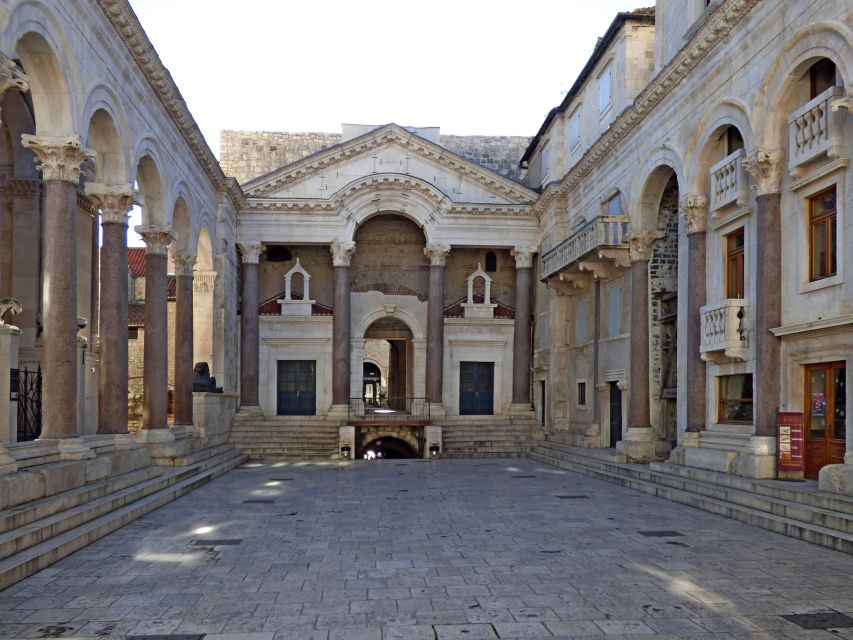
After you’ve soaked in the palace walls and interior lanes, the walk moves to Peristil, the palace’s central courtyard. Expect about 10 minutes here. It’s one of those spaces where, if you get it right, everything clicks: you see how the palace functioned and why this courtyard became the organizing heart of the town.
From there, you visit St. Domnius’s Cathedral, also known as the Mausoleum of Diocletian. The cathedral stop is guided for about 10 minutes, which means you’ll get context without losing your energy to long waits or slow pacing.
Why this stop matters
St. Domnius isn’t only a landmark; it’s a lesson in how places change jobs over time. You’ll come away understanding how something built for one purpose becomes a centerpiece for later worship and community life. That makes it easier to interpret the rest of Split, because you start thinking in layers rather than in single eras.
You can also read our reviews of more private tours in Split





Jupiter’s Temple (external): A quick stop with the right perspective
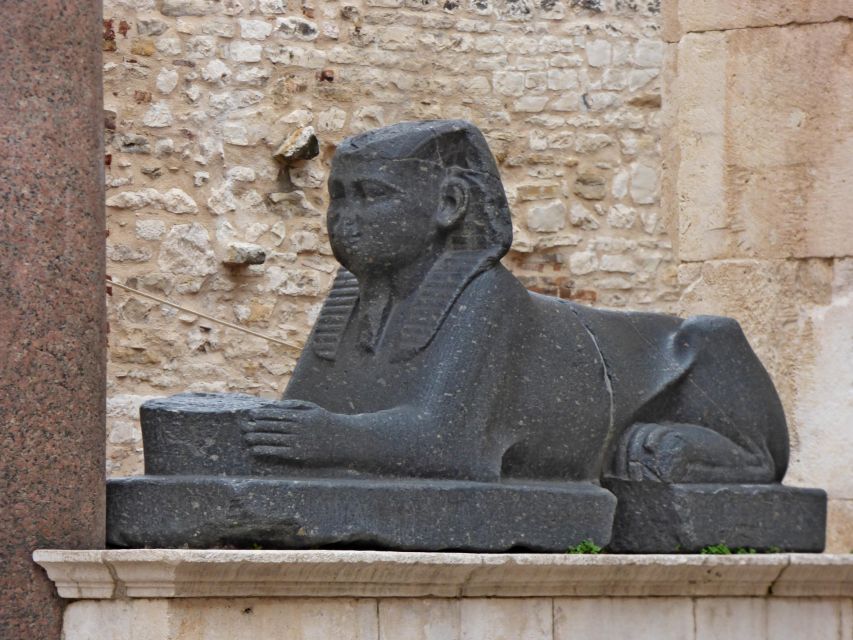
Next up is Jupiter’s Temple, sometimes referenced in relation to the baptistery area. You’ll see it as an external visit only, with no entrance fee required for this part.
This is a shorter pass-by type stop (about 10 minutes total for the guided look and explanation), but it’s still valuable. External viewing means you focus on shape, placement, and how the structure sits in the palace layout—rather than getting stuck inside a small space.
Palace gates and Golden Gate: Reading the defensive design
Split’s palace walls have four gates, and part of the walking route includes gate focus, including the Golden Gate. Your guide points out how the gates connect the palace to the rest of the city, and why entrances matter when you’re trying to understand a fortified complex that later became a living town.
You’ll spend around 10 minutes on this segment, which is long enough to connect the gate idea to what you saw earlier. You start to notice the logic: where movement is allowed, where boundaries are drawn, and how people would have passed from palace to city.
Substructures (Basements): The one extra fee stop that earns its place
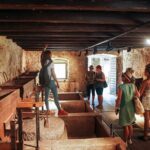
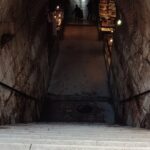
This is the most important “budget heads-up” on the tour. You’ll visit the palace Substructures, sometimes called the Basements. The entrance fee is not included, so plan for that.
Why might it be worth paying extra? Because these spaces help you understand the palace as an engineering system, not just a surface-level monument. Roman power wasn’t only about grand facades—it was about control of space, storage, and movement. Basements give you a different viewpoint on the palace story.
If you’re the kind of person who likes seeing how buildings work behind the scenes, this stop will feel like the perfect bridge between Roman construction and the town’s later evolution.
The medieval neighborhood outside the palace: Squares that explain politics
After the palace core, the tour shifts to the medieval neighborhood that grew outside Diocletian’s walls. This is where Split feels more like a city of streets and daily rituals, not just a landmark complex.
You’ll hit several famous squares:
- Pjaca (People’s Square)
- Fruit Square
- Prokurative
This second half is guided and takes you through about 15 minutes for People’s Square and 10 minutes for Fruit Square, plus additional walking time between stops. The value here is that the guide doesn’t treat squares as postcard backdrops. You’ll learn how the city’s socio-political lifestyle shifted under Venetian, French, Austro-Hungarian, and Yugoslav rule.
How to make the squares feel real
When someone explains how different governments shape street life, you stop seeing architecture as decoration. You start seeing it as rules: where markets go, how public spaces function, and why certain buildings and street layouts feel built for gatherings.
That’s the kind of mental upgrade that helps you enjoy Split long after the tour ends.
The Jewish ghetto and active synagogue: A small stop with weight
One of the more meaningful parts of this walk is a visit to a former Jewish ghetto area with a synagogue that is still active. Even if you’re not going inside (the tour description doesn’t promise an interior visit here), the presence of an operating synagogue in a historic neighborhood gives you a tangible sense of continuity.
This is about respect and context. You’ll get explanation tied to the neighborhood’s place in the city’s story, and you’ll likely notice how quieter lanes can carry more meaning than the big scenic stops.
Finishing on the Riva: A practical landing place for your next hours
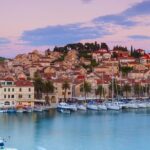
The tour ends back where it starts: on the Riva promenade by the sea. That’s not an accident. Finishing waterfront means you naturally switch from walking and interpreting to relaxing and planning.
If you’re using the tour as your first or second day orientation, the wrap-up helps. You’ll know what you saw, what’s still worth a return trip, and where to head when you want a slower pace.
The best part? You don’t leave with only facts. You leave with a sense of the city’s logic, so you can explore without feeling like you’re wandering randomly.
Guide quality that shows: Sanja and the clarity factor
The standout theme from the guide experience is clarity and strong communication. Sanja, the guide, is described as excellent with explanations in languages such as French, and the way she answers questions is part of why people rate this tour so highly.
One pattern you should expect: the guide keeps history understandable. You won’t need a textbook to get the point. Architecture is explained in plain terms and tied to what you’re actually seeing in front of you—palace structure, courtyard layout, and how later eras reshaped the space.
If your priority is a tour that feels personal and easy to follow, this format tends to deliver. It’s also a good sign that private groups of small size still get an intimate pace, with time to ask things that pop up while you’re walking.
Price and value: Why $153 per group can make sense
The price is listed as $153 per group up to 15 people, for about 105 minutes. That matters because this isn’t priced like a solo ticket where you pay the full amount per person no matter what.
For a small group (friends, family, or a couple), this can be a good value because you’re buying:
- a licensed local guide with a Master’s degree,
- a structured walk that hits the main stops,
- and the kind of local interpretation that helps you get more out of the rest of your day.
Also, only one major attraction type has an extra cost: the Substructures entrance fee. Everything else in the tour flow is handled through guide-led access and external viewing where specified.
In other words: you’re paying for guidance and time, and you’re only paying extra for one specific paid site component.
Who should book this private Split walking tour?
This tour is a great match if you want:
- a first-day orientation through the palace core and the big squares
- a guide-led understanding of how different rulers and eras shaped street life
- a private pace where you can ask questions without a crowd pushing you along
- a short, efficient walk that still feels substantial
It may not fit as well if you need wheelchair access. The tour is not suitable for wheelchair users, so plan a different option if mobility is a factor.
It’s also best for people who enjoy walking enough to cover palace courtyards, cathedral areas, and multiple squares in about two hours. If you want a longer, slower day, you might combine this tour with more time on your own afterward.
Should you book it?
Yes, you should book this if you want Split’s old town to feel understandable quickly. The combination of Diocletian’s Palace, Peristil, St. Domnius, the external Jupiter area, and the medieval squares outside the palace is a smart way to cover the places that shape the city’s identity.
I’d especially recommend it if you like guided context—because the tour doesn’t just point at monuments. It helps you connect them to the city’s political and architectural layers. And if you’re a small group, the per-group pricing makes the cost feel less like a “tour surcharge” and more like buying time with a real local expert.
If you’re likely to skip the Basements due to the extra entrance fee, factor that in. But if you’re curious how the palace worked underneath, that additional stop can be the difference between seeing Split and truly understanding it.
FAQ
Where is the meeting point?
You meet on the Riva promenade by the sea, by the bronze model of the historical core of Split. It’s in front of the south entrance to Diocletian’s Palace.
How long is the tour?
The tour runs for about 105 minutes (roughly 1 hour 45 minutes).
Is this a private tour?
Yes. It’s a private group tour.
How many people can be in a group?
The price is listed as per group up to 15.
What languages are offered?
The live guide offers tours in English, Italian, French, and Spanish.
What’s included in the price?
The tour includes a professional licensed local guide with a Master’s degree, and the private tour format.
What is not included?
Entrance fees for the palace Substructures (Basements) are not included.
Is the Jupiter’s Temple stop included in the tour?
Yes, it’s included as an external visit and does not require an entrance fee.
What if I need to cancel?
There is free cancellation up to 24 hours in advance for a full refund.
Is the tour wheelchair accessible?
No, it’s not suitable for wheelchair users.