REVIEW · SPLIT
Split: Walking tour of Split with a ‘Magister’ of History
Book on GetYourGuide →Operated by HISTORY TOURS SPLIT, vl. Toni Šare · Bookable on GetYourGuide
Roman walls in Split tell a story fast. This walking tour of Split’s Old Town is built around Diocletian’s Palace, then moves outward through Medieval and Venetian layers, all explained by Toni, a local born and living his life in Split with a Master’s degree in history and an ex-teacher style of storytelling. Expect a tour that turns stone into timelines, not just snapshots.
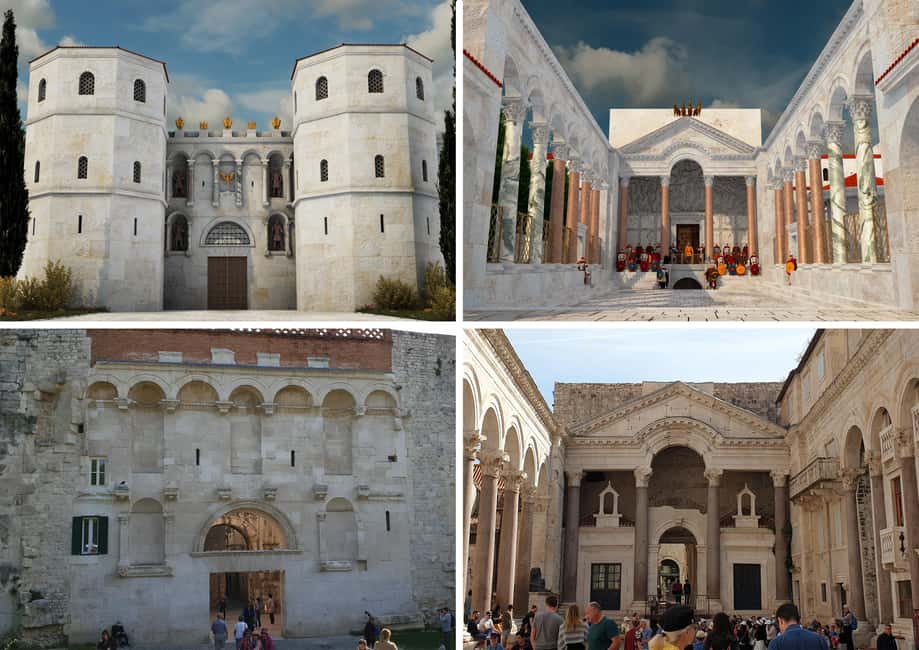
I particularly love how history is visual here. Toni uses 3D reconstructions to show what the palace’s most iconic structures may have looked like in their original form, which makes the current ruins way easier to understand. I also like the pace: the route is structured so you’re not only walking, you’re also pausing in the cellars/basement halls to ask questions and reset your focus.
One consideration: this is rain or shine and it’s a walking route through uneven historic surfaces. It’s not suitable for wheelchair users, and people over 95 may have trouble with the length and the amount of walking.
In This Review
- Key things that make this tour worth your time
- Start at the Bronze Gate on the Riva
- Bronze Gate to Cellars: the story goes underground
- Diocletian’s Palace core: Peristyle and the icons you can finally place
- Questions at the right moments: how Toni keeps the group engaged
- Passing by major Roman landmarks: Cathedral of Saint Domnius and Jupiter’s Temple
- Bishop Gregory of Nin and the palace quarter’s street-level reality
- Out through the Silver and Golden Gates, ending at the seaside exit
- Price and value: what $33 buys you in real experience
- What to bring and how to plan your day
- Who this tour suits best
- Should you book it?
- FAQ
- How long is the Split walking tour with Toni?
- Where does the tour meet?
- Is the tour in English?
- What’s included in the price?
- Do we enter paid sites or museums?
- Are food and drinks included?
- Is it okay if it rains?
Key things that make this tour worth your time
- Toni, a local history MA and former teacher who explains with real context, not memorized facts
- 3D reconstructions (including hand-made visuals) that help you “see” the palace as it once was
- A Roman-to-modern route that includes Medieval and Venetian traces beyond the palace walls
- Questions are part of the format, with short pauses to keep the group involved
- Practical crowd awareness, where you may be steered toward quieter moments when possible
Start at the Bronze Gate on the Riva
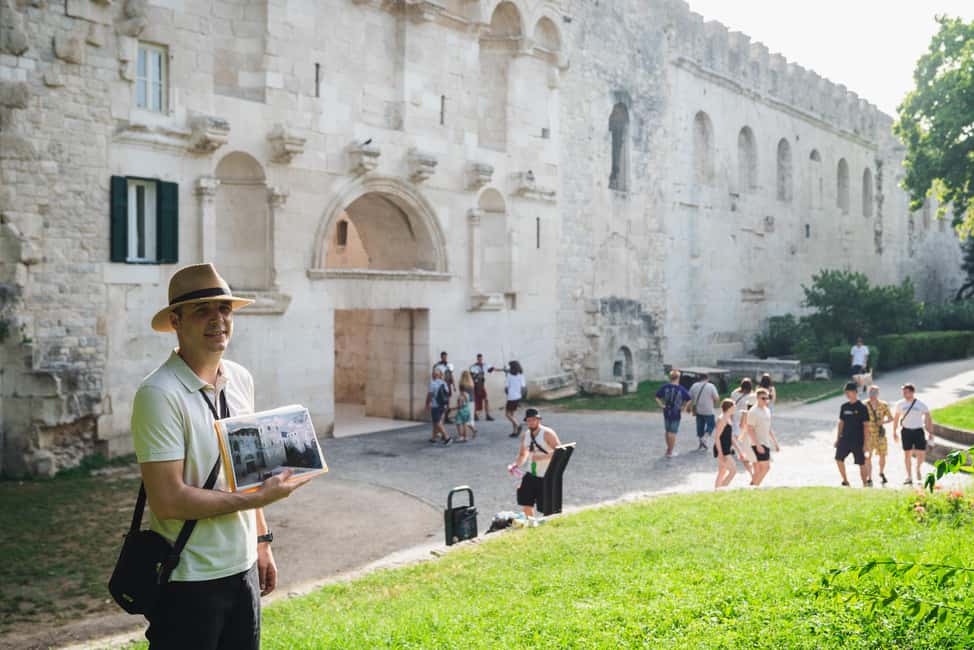
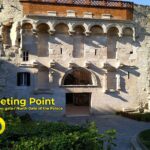
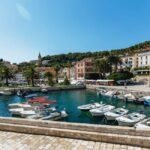
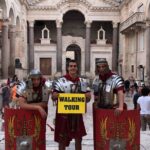
The tour begins at the Bronze Gate (also called the Brass Gate) of Diocletian’s Palace, right down by the seafront promenade known as the Riva. If you orient yourself first by finding the waterfront, the meeting point is an easy next step. The exact address is Obala Hrvatskog narodnog preporoda 22.
What I like about this start is that it instantly frames the palace as part of daily life, not something sealed off behind ropes. You’re standing at one of the key entries where visitors naturally stream past, which makes it a smart place to begin the “how the city formed” story.
Also, because the tour is only 110 minutes, starting at a clear, central entrance helps you feel anchored fast. You’ll spend your energy understanding what you’re seeing rather than hunting for a landmark.
You can also read our reviews of more walking tours in Split

Bronze Gate to Cellars: the story goes underground
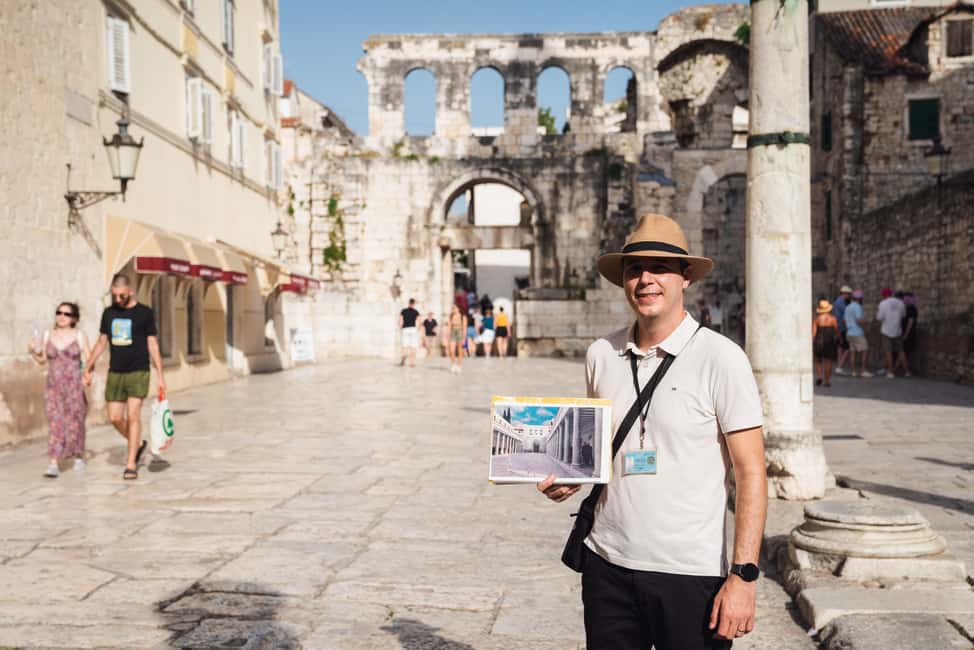
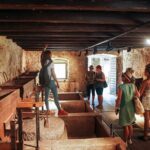
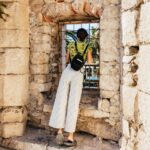
After a short guided intro near the gate, you move toward Diocletian’s Cellars, where you get a look at how this Roman complex worked as more than a palace facade. The tour’s format includes a pass-by portion here, and then a brief pause in the basement halls where questions are encouraged.
This stop matters because the palace isn’t just impressive in daylight. Toni’s teaching style is especially effective underground, where the architecture helps you grasp how daily functions and storage were organized. When you’re surrounded by Roman-made space that still has structure, it’s easier to imagine how power and comfort were engineered here.
A practical point: the route is compact, but you should be ready to walk continuously. Wear shoes that handle stone well, and bring something to drink because food isn’t included.
Diocletian’s Palace core: Peristyle and the icons you can finally place
The heart of the tour is the Diocletian’s Palace, guided for about an hour. This is where the tour becomes much more than a route through ruins. You’ll learn how Split’s Old Town grew directly from the palace complex, and why this walled core is the origin point for the city you see today.
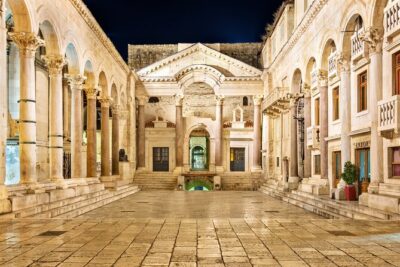
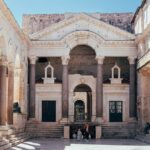
Next comes the Peristil (Peristyle), the palace’s dramatic open square that feels like the palace’s public living room. With the square in front of you, Toni points out major landmarks you can relate to visually, including the Mausoleum of Diocletian, the Temple of Jupiter, and the Vestibule. The trick is that the explanations don’t float above the stones. They tell you what you’re looking at and what each space likely meant.
Then you’ll head to the Vestibul, followed by the Triklinij, where the emphasis stays on “what this room was for” and how it fits the palace’s larger layout. Even if you think you already know Split, I find this section is where things click, because you’re not just hearing dates. You’re getting a guided way to connect functions, placement, and Roman design.
If you want to understand why people keep calling this place iconic, you’re in the right spot. The Peristyle and adjacent structures are the kind of spaces where 3D reconstructions stop being a gimmick and start being a map.
Questions at the right moments: how Toni keeps the group engaged
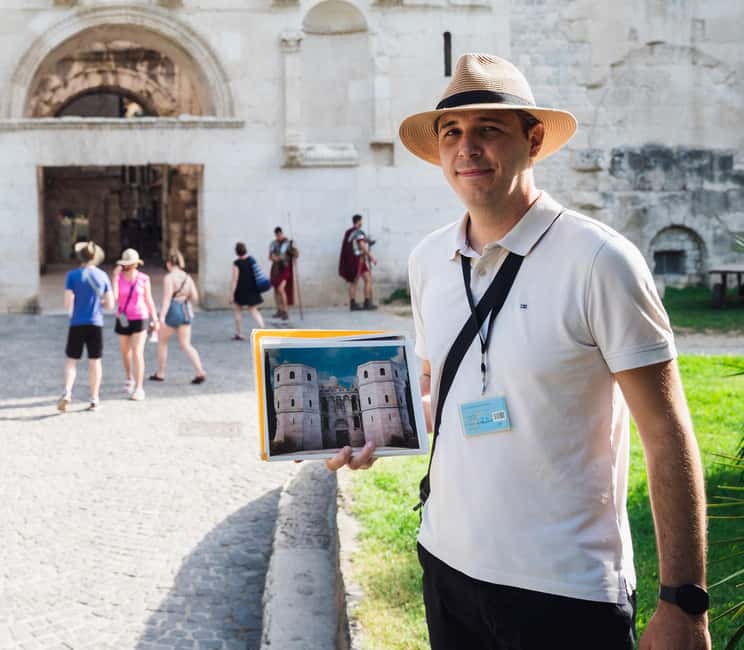
This tour is explicitly designed around dialogue, not monologue. You’ll be encouraged to ask questions, and the pacing includes short opportunities to stop and regroup, especially around the palace’s basement and key interiors/exterior nodes.
Toni’s approach also helps because he’s local. His explanations don’t treat Split like a finished museum piece. The way he connects Roman spaces to later Medieval and Venetian building patterns makes the city feel like it evolved in real time, not in chapters locked in a textbook.
From the way people describe his teaching background, he also tends to answer with clarity and with a sense of what’s firmly known versus what’s interpreted from surviving evidence. That honesty matters in a place where ruins invite imagination. It keeps the story fun without turning it into fan fiction.
Passing by major Roman landmarks: Cathedral of Saint Domnius and Jupiter’s Temple
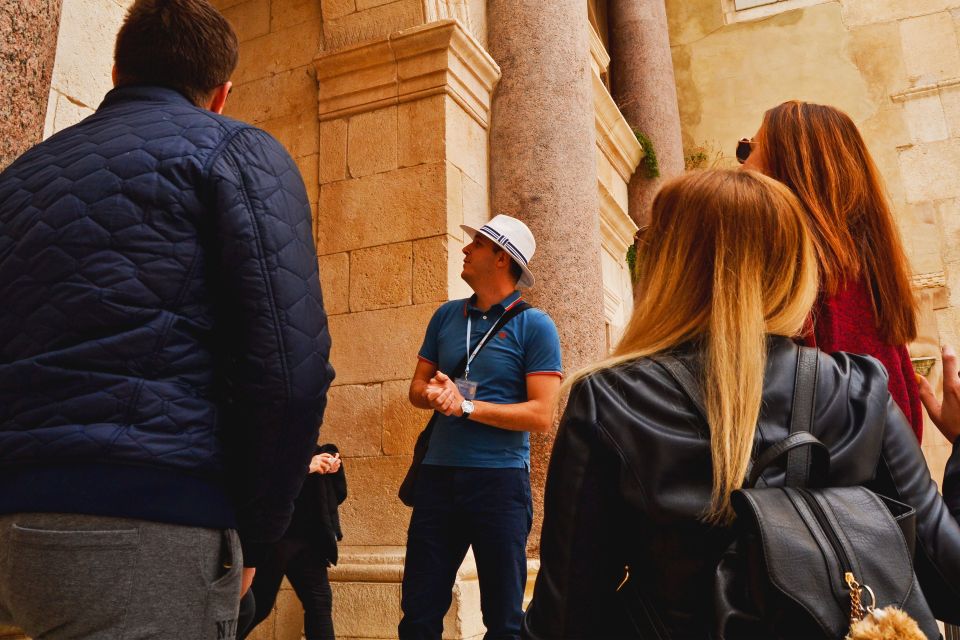
You’ll pass by the Cathedral of Saint Domnius and the Temple of Jupiter area as part of the palace-to-town flow. These aren’t long “sit and read” moments. Instead, they work as orientation points, helping you connect the palace core to the wider historic city fabric.
What I like here is the rhythm: you get architectural focus in the palace rooms, then quick anchor landmarks that show how Roman structures remained relevant as the centuries moved on. The cathedral stop is especially useful if you’re trying to understand how the Roman footprint stayed in use and kept shaping what came next.
And because the tour isn’t restricted to museum entry, you can walk away with a mental map that still works when you wander on your own. You’ll know what to look for and which details are worth closer attention.
You can also read our reviews of more historical tours in Split



Bishop Gregory of Nin and the palace quarter’s street-level reality
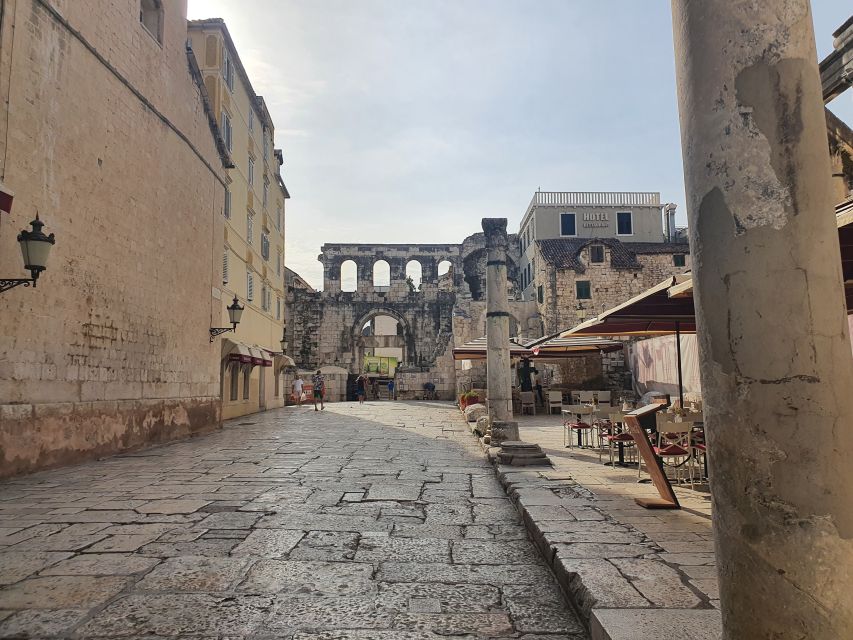
As you move through the palace area toward Piazza Square, you’ll see the iconic statue of Bishop Gregory of Nin visible along the North Wall of the palace. This is one of those Split moments where Roman architecture meets later civic and cultural identity.
Why this works on a history walk: it reminds you that the palace is not a dead relic. The same walls that shaped Roman power later became a stage for the city’s public life. When you spot Gregory of Nin, you’re seeing the modern city claim space inside an old framework.
This kind of street-level detail also helps you when the walking starts to feel dense. You get a recognizable marker, then you can reconnect it to the earlier palace story.
Out through the Silver and Golden Gates, ending at the seaside exit
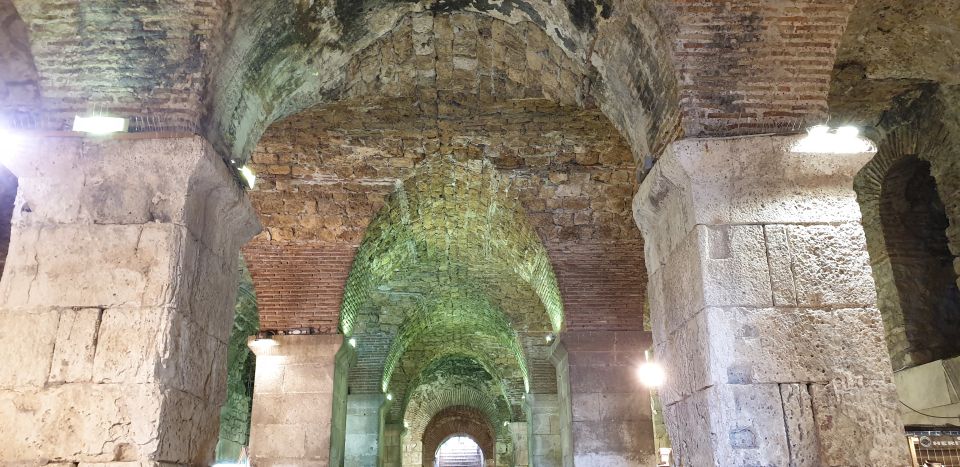
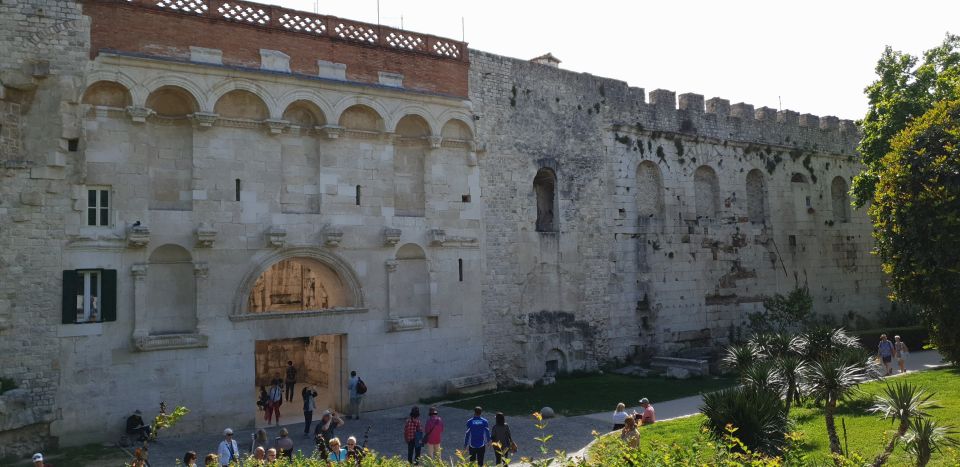
The tour continues toward the Silver Gate, then through to the Golden Gate where you’ll finish. These gates aren’t just “pretty architecture.” They’re part of the logic of movement and access that Roman planners built into the complex, and that later generations reused as the city expanded.
Finishing at the Golden Gate is also practical: it keeps you near the palace edge where you can flow into the rest of Old Town. If you want to keep exploring after the 110 minutes, ending at a major threshold helps you transition quickly instead of starting over.
As for the bigger story, this final segment is where the route’s earlier promise shows: you’re leaving the Roman core and stepping toward the layers that shaped Split into the modern city you’re standing in. It’s a walk that helps you feel the timeline, not just hear it.
Price and value: what $33 buys you in real experience
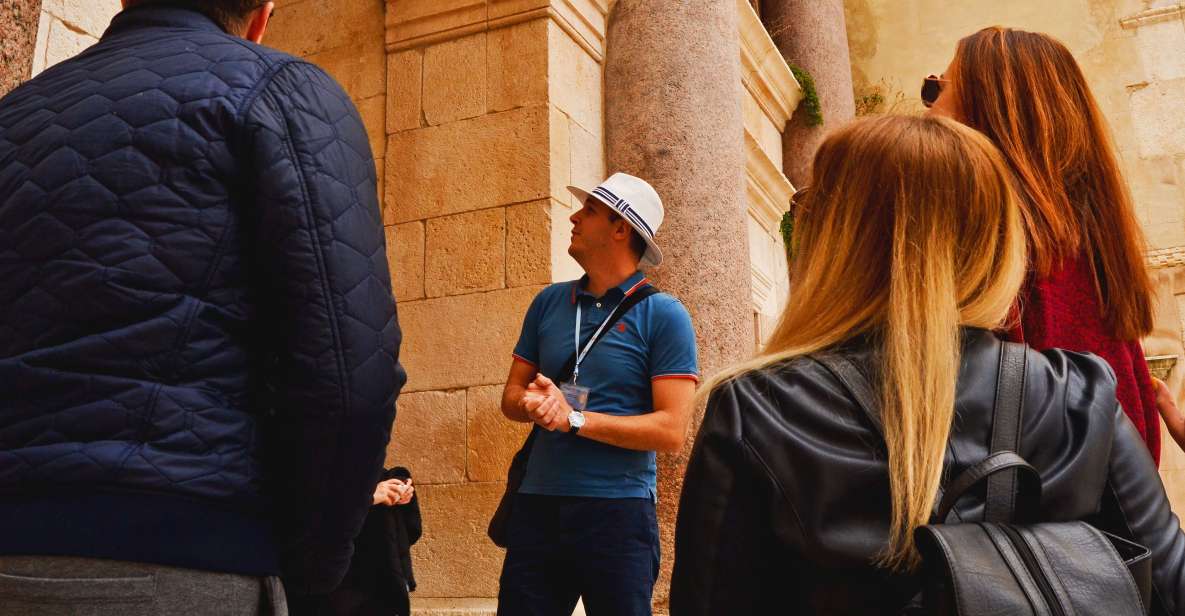
At $33 per person for 110 minutes, you’re paying for interpretation and structure, not just sightseeing time. The biggest value driver is the guide himself: Toni brings an MA-level background in history and teaching experience, which shows in the way he organizes the narrative and keeps you asking questions.
You’re also getting 3D reconstructions included, which is a cost-saving bonus compared with tours that rely only on verbal description. In a place where many visitors can’t easily picture the past, these visuals do real work. They help you understand what you’re seeing right now, which often improves the rest of your day in Split.
One more value point: the tour doesn’t require paid museum entry. Diocletian’s Palace does not require any admission for this experience, and the tour avoids paid sites and museums. So your money goes into a guided walk rather than extra tickets.
What to bring and how to plan your day
Bring drinks, since food and drinks aren’t included. Because the tour runs rain or shine, pack accordingly and wear shoes that can handle historic stone and stairs.
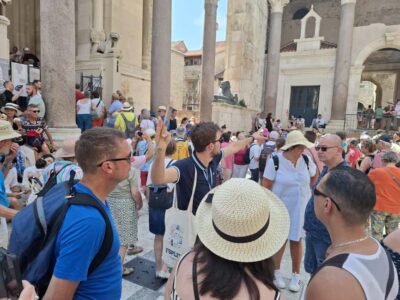
Timing matters too. Several guide notes from real tour experiences point to a simple strategy: take the earlier time slot if you can. The palace area can get busier as the day goes on, and finishing sooner means you’re less likely to feel rushed.
This tour is also not for everyone on the mobility spectrum. It’s not suitable for wheelchair users, and people over 95 may find the walking and older surfaces difficult.
Who this tour suits best
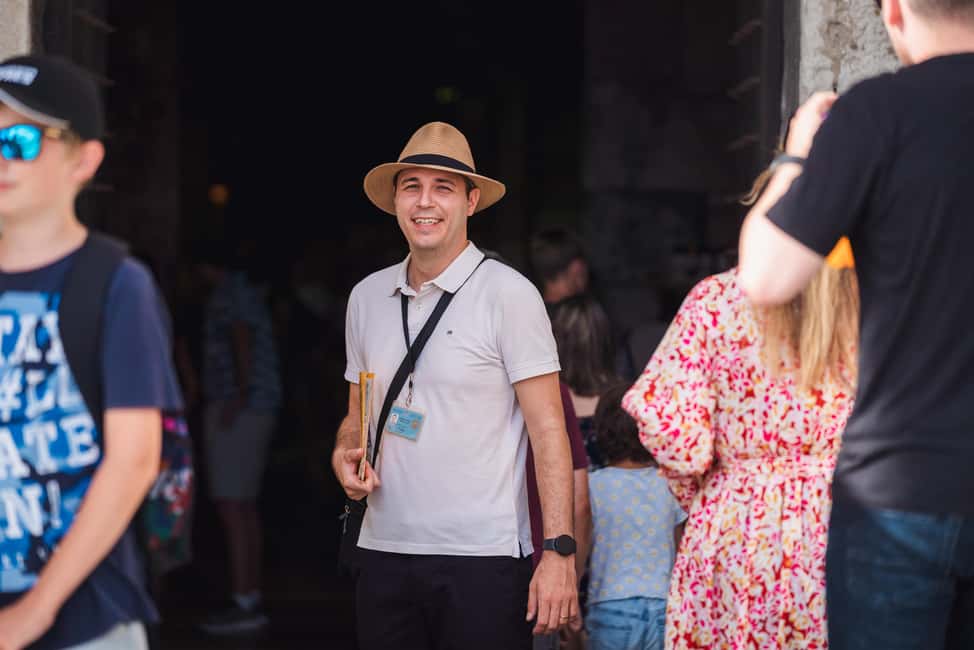
This is the right kind of tour if you want more than a photo walk. You’ll enjoy it if you like architecture, timelines, and places where layers of history sit on top of each other. It also seems to work well for mixed ages, including families who want a structured way to understand Split’s big landmark.
It’s not the best fit if you mainly want quiet strolling, or if you’re looking for a museum-heavy experience with long indoor stays. You’ll be outside most of the time, and the focus is on walking and guided explanation.
If you’re visiting Split for a short stay and want to understand Diocletian’s Palace as the origin point for everything else, this is a smart “first meaningful history” move. Afterward, your independent wandering becomes less random.
Should you book it?
Yes, if you want a structured walking tour that turns Diocletian’s Palace into a clear story, with 3D reconstructions that help you visualize the past. Book it if you like asking questions and want a guide who can connect Roman design to later Medieval and Venetian changes, right up to the present city.
Skip it if you need fully flat, wheelchair-friendly routes, or if you know you’ll struggle with outdoor walking in the elements. Also skip it if you prefer minimal guidance and would rather “discover” everything without interpretation.
If you’re aiming to truly understand Split’s old core and you like history that feels connected to real streets, this is a strong choice.
FAQ
How long is the Split walking tour with Toni?
It lasts 110 minutes.
Where does the tour meet?
Meet at the Bronze Gate (Brass Gate) of Diocletian’s Palace, near the Riva (seafront promenade). The address given is Obala hrvatskog narodnog preporoda 22.
Is the tour in English?
Yes, the tour is English.
What’s included in the price?
The tour includes the guide and 3D reconstructions of sites.
Do we enter paid sites or museums?
No. The tour does not enter paid sites or museums. Entering Diocletian’s Palace does not require any admission for this tour.
Are food and drinks included?
No. Food and drinks are not included, so you should bring drinks.
Is it okay if it rains?
The tour runs rain or shine.