REVIEW · SPLIT
Split Walking Tour with History Professor
Book on GetYourGuide →Operated by Lanterna · Bookable on GetYourGuide
Split’s past walks right beside you. This small private group tour with Mario turns Diocletian’s Palace into a clear timeline, and then keeps going through medieval and modern Split with the stuff you usually miss on your own. I like that you get both big landmark moments and the smaller “how this place actually worked” details.
I also like Mario’s style: he teaches like a true history professor, with jokes, quick explanations, and plenty of back-and-forth so you stay switched on. One consideration: this is a walking tour that isn’t suitable for wheelchair users, and the schedule is paced for a steady two hours on foot.
In This Review
- Key Highlights You’ll Feel in Split
- Meeting at the Brass Gate: Where Split’s Story Starts
- Diocletian Palace Substructures: The Part Most People Skip
- Peristyle and Vestibule: Courtyard Power and Palace Rhythm
- Cathedral of Saint Domnius and the Temple of Jupiter: Sacred + Strategic
- The Golden Gate: A Defensive Detail With Movie Energy
- From Grgur Ninski to Marmontova Ulica: Statues, Streets, and Local Life
- Prokurative and Fruit’s Square: Closing With a Sense of Split Today
- What Makes Mario’s Teaching Style Work (and Why It Matters)
- Price and Value: Is $23 Worth 2 Hours in Split?
- Who This Tour Fits Best (and Who Might Want Another Option)
- Should You Book This Split Walking Tour?
- FAQ
- How long is the Split walking tour?
- Where do we meet the guide?
- What sights are included on the walk?
- What’s the tour language?
- Is admission included for the Cathedral of Saint Domnius and the Temple of Jupiter?
- Is the tour suitable for wheelchair users?
- What should I wear or bring?
- Is free cancellation available, and is pay later offered?
Key Highlights You’ll Feel in Split
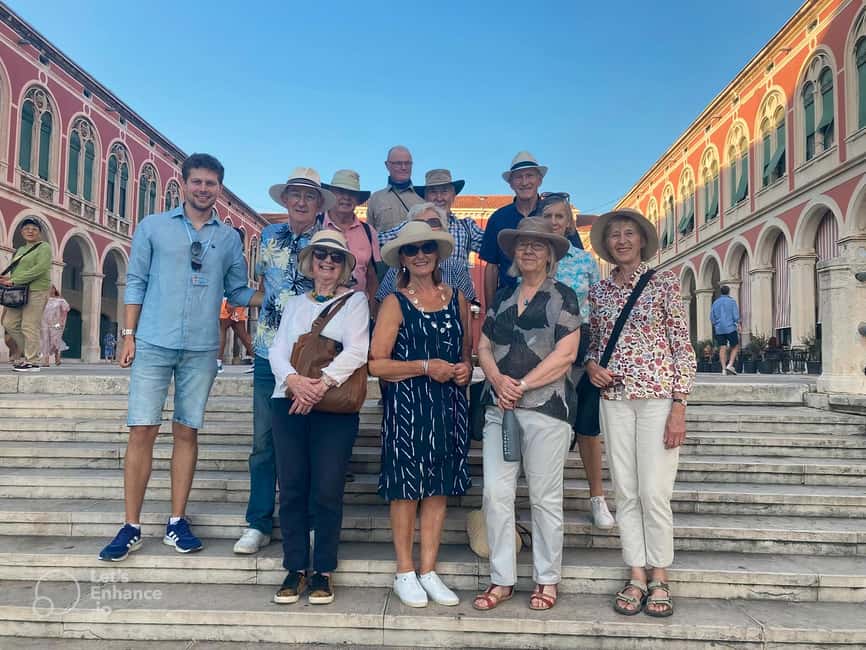
- Small private group time: fewer people, more interaction, easier questions for Mario
- Roman palace to later Split: you connect Diocletian’s world to medieval and modern influences
- Game of Thrones locations, without the gimmick: you see why the settings look the way they do
- A sequence of “you are here” stops: Riva Harbor model, substructures, Peristyle, Vestibule, then onward
- Streets with layers: you walk from the Golden Gate area to Marmontova Ulica and into Fruit’s Square
Meeting at the Brass Gate: Where Split’s Story Starts
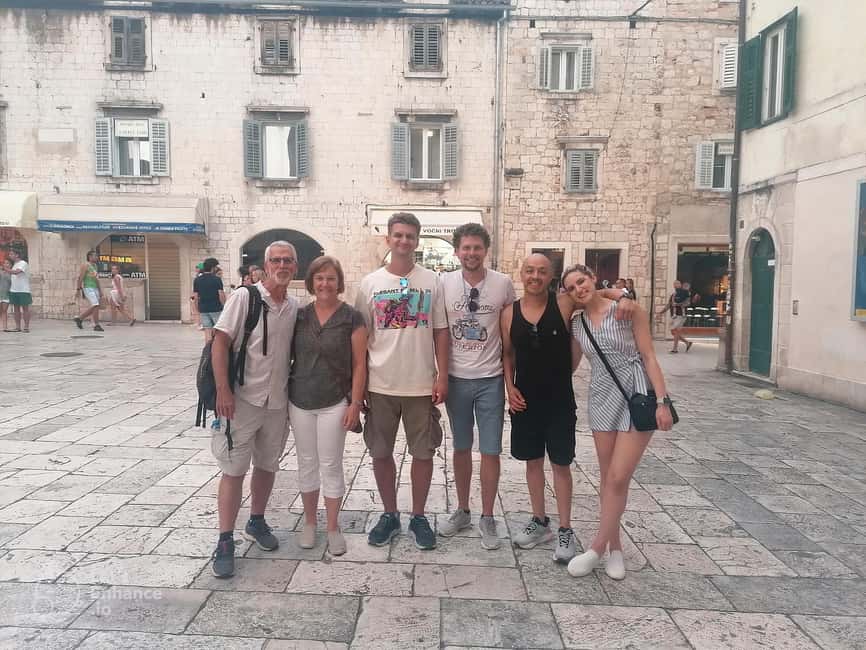
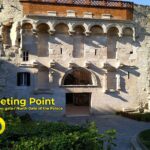
You’ll meet the guide next to the Brass Gate of Diocletian’s Palace, which is a smart way to start. Even if you’ve seen pictures of Split’s Old Town, standing here helps you understand where the palace actually sits in the city, rather than treating it like a lone monument.
The tour begins at a model of the historical core of Split at Riva Harbor. That little intro matters more than it sounds. It gives you a mental map before you start moving, so each stop later feels connected instead of like random sightseeing.
From the start, you’re not just touring. You’re learning how a place changes over centuries: Roman foundations, later use, and the city’s shifts under different powers. Mario keeps the mood friendly and asks the group questions, which helps you pay attention when the explanations get more detailed.
You can also read our reviews of more walking tours in Split

Diocletian Palace Substructures: The Part Most People Skip
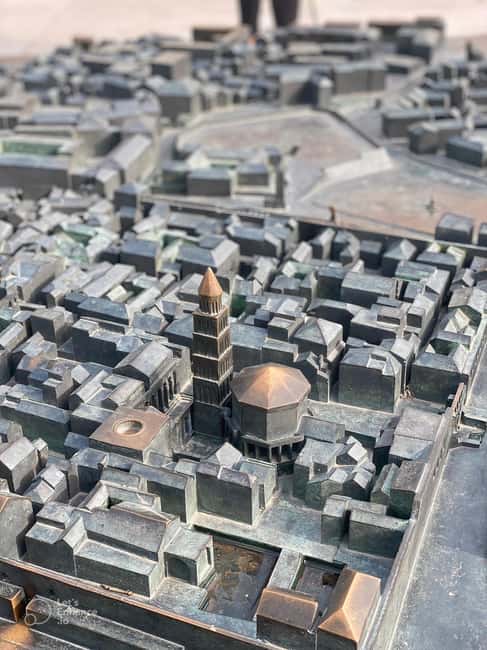
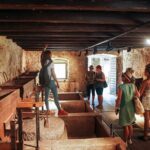
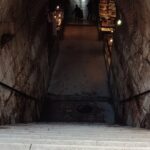
One of the best parts of this walk is how it doesn’t stop at the obvious showpiece. You’ll get to the Diocletian Palace Substructures early, with a short time stop built in so you can focus without feeling rushed.
Why this is worth your time: substructures are where the palace gets real. Instead of only seeing polished floors and dramatic arches, you get a sense of the engineering and the hidden structure. This is the kind of place where your brain starts linking what you’re seeing to how the palace supported life above.
You’ll learn what’s under the surface, then you’ll watch how the tour rises up into the more famous interior spaces. Even if you’ve heard about Diocletian’s Palace before, approaching it from below (literally) gives you a different understanding.
If you’re the type who likes photos, you’ll get them here too. But the payoff is deeper than the angle. You’ll leave with a better sense of how Roman Split was built to last.
Peristyle and Vestibule: Courtyard Power and Palace Rhythm
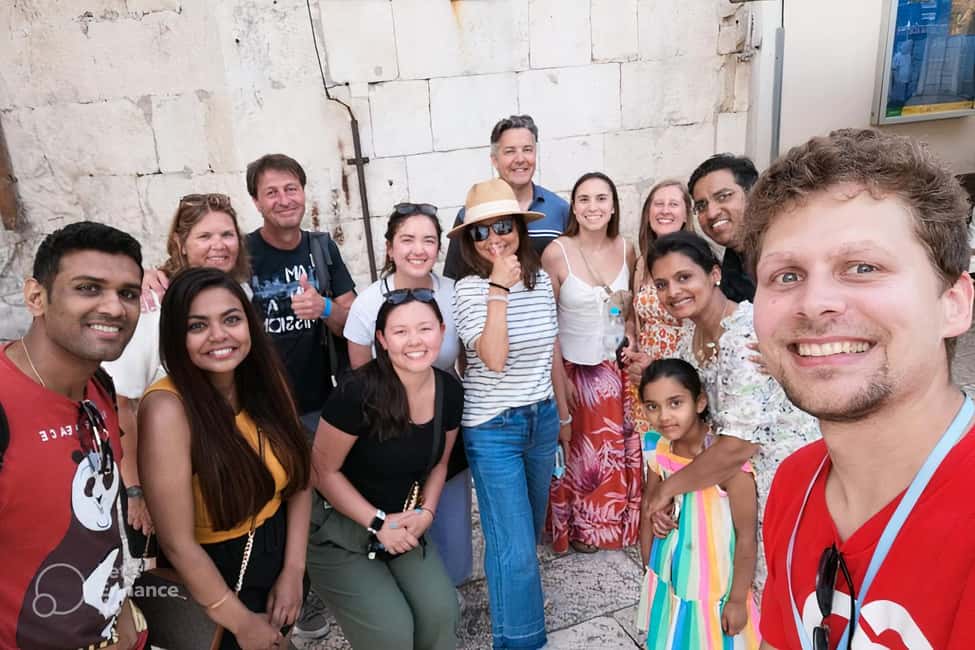
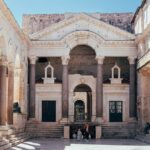
Next up are two classic palace spaces: the Peristyle and the Vestibule. These stops are short enough that the pace stays lively, but long enough for you to notice what makes each area feel distinct.
The Peristyle is the palace’s open courtyard area. It’s where you can feel how movement, space, and status worked together. Mario’s explanations help you read the layout like a timeline: what you’re seeing reflects how the palace functioned, not just how it looks today.
Then you move into the Vestibule area, which feels more like a transition space between the grand and the practical. This is where I think the tour does something smart: it links spaces by purpose, so you’re not just collecting names of locations. You’re understanding why certain parts mattered.
You’ll probably find yourself slowing down here, because once you grasp how each space connects, the details start snapping into place. That’s the big win of this guided approach.
Cathedral of Saint Domnius and the Temple of Jupiter: Sacred + Strategic
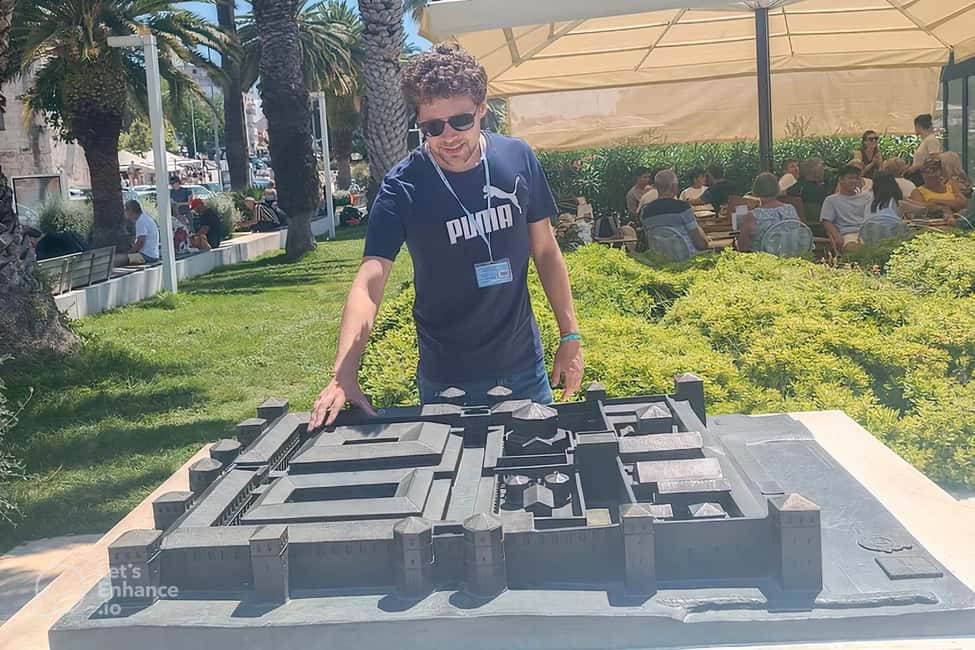
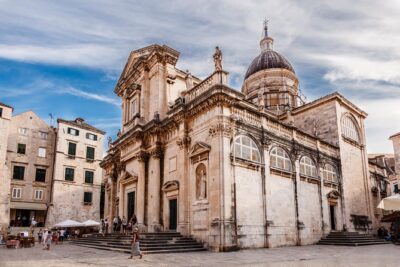
After the palace interiors, the tour shifts into landmarks that show how Split kept reusing important spaces across time. The Cathedral of Saint Domnius is one of the highlights, and you’ll stop for about 20 minutes. Admission to the cathedral is not included, so plan on paying that separately if you want to go in.
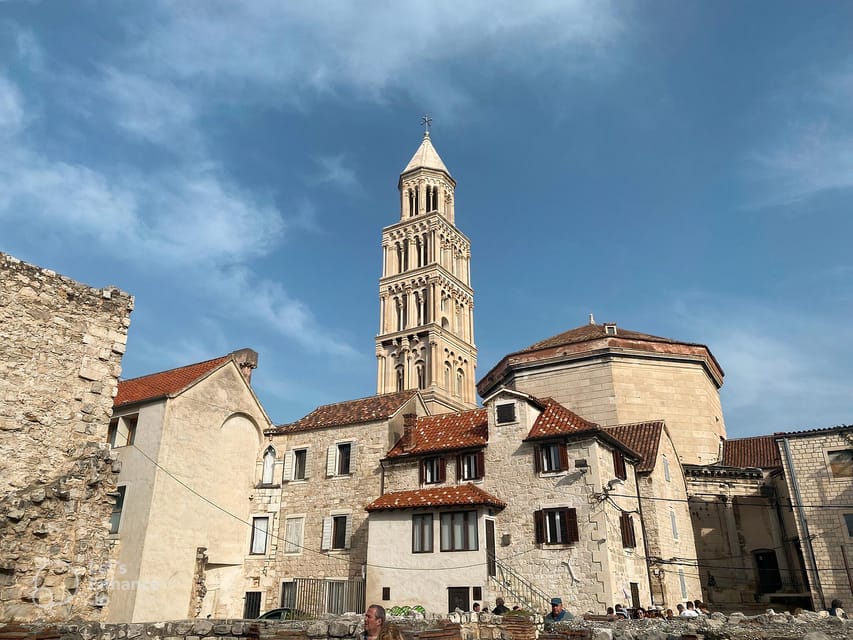
Even if you only look from the outside, this stop helps you understand why the cathedral became such a center. It represents how religious and civic life latched onto older structures and layouts. The Roman backbone of the city didn’t vanish. It just kept getting layers added.
You’ll also visit the Temple of Jupiter area with a stop time of around 10 minutes, and admission is also excluded. Again, the real value here is perspective. You’re not only seeing ruins; you’re learning how people interpreted and reused Roman landmarks later.
If you like history, this part delivers. If you prefer scenic and atmospheric stops, it still works because the settings are dramatic, and Mario frames what you’re looking at in a way that’s easy to follow. You won’t feel like you’re decoding Latin on a walking tour, either.
The Golden Gate: A Defensive Detail With Movie Energy
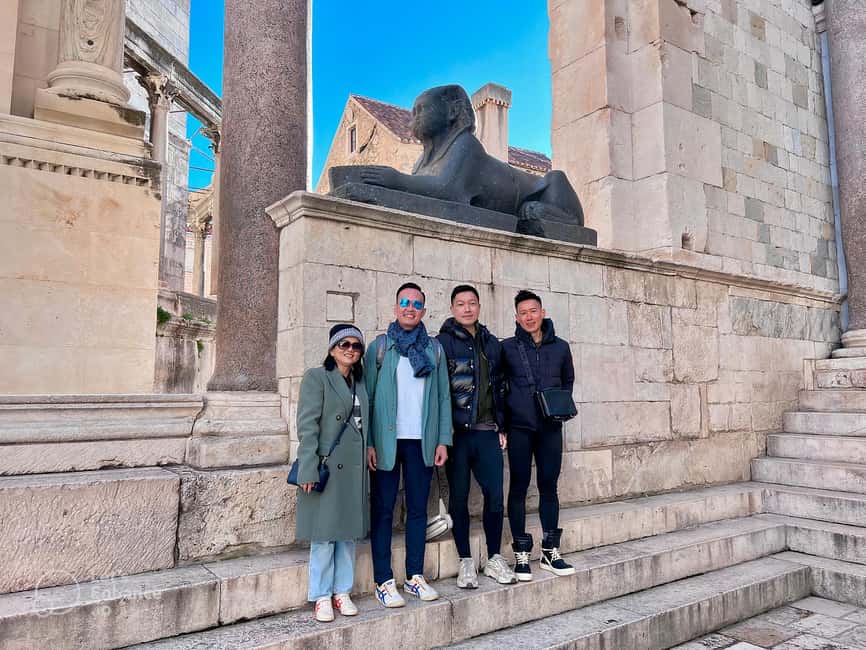
The Golden Gate stop is another turning point because it connects palace architecture to the feeling of a real working city. This is one of those locations where the structure looks symbolic, but Mario explains how gates and access points controlled movement and security.
And yes, this is also where Game of Thrones fans tend to perk up. The tour links the filming interest to the real-world reasons the setting looks the way it does: Roman lines, tight streets, and a city center built for long-term strength rather than modern convenience.
You’ll get a satisfying mix here: you’ll see the landmark, you’ll get the story, and you’ll understand how it fits into the broader layout. It’s the kind of stop that makes you look twice at a place you might otherwise walk past.
You can also read our reviews of more historical tours in Split




From Grgur Ninski to Marmontova Ulica: Statues, Streets, and Local Life
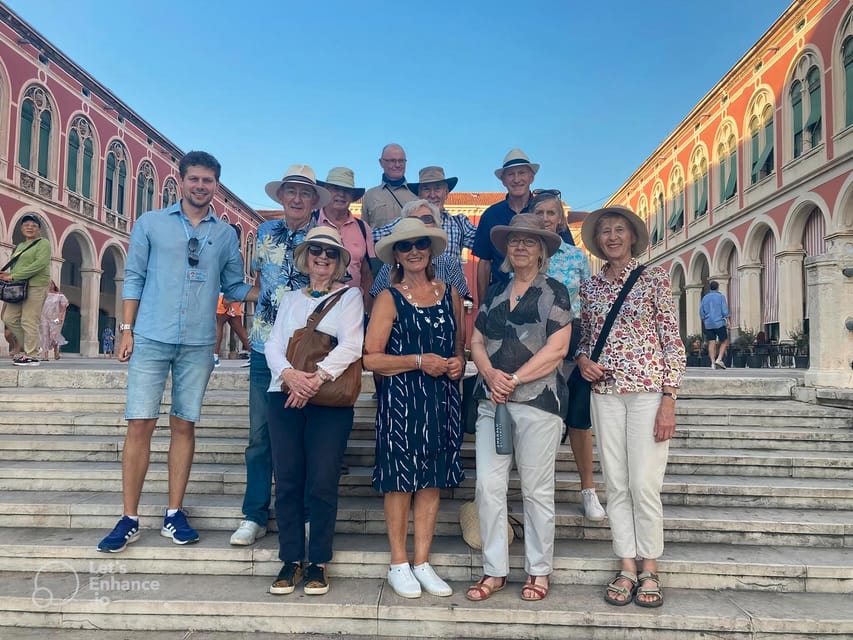
After the big palace-adjacent sights, you start walking through the more lived-in rhythm of Split. First, there’s time with the Grgur Ninski Statue. This stop is about 10 minutes, and it’s a good breather after the Roman structures.
Why this matters: a statue stop can feel like filler on a fast tour, but here it works because it’s a bridge. Mario connects symbols in the city to the people and the changing identity of Split over time.
Then you move onto Marmontova Ulica, again with a short, focused stop. This is where you feel the shift from palace and cathedral zones into street-level city life. The tour uses these streets to show how different external influences shaped the city over centuries.
You’re also getting that local-life angle: not just what happened, but how the city has been used and remembered. If you enjoy walking through places rather than staring at a single monument, this is where your attention stays comfortable.
Prokurative and Fruit’s Square: Closing With a Sense of Split Today
The last stretch leans toward a more modern feeling while still keeping the historical thread. You’ll visit Prokurative, with about 10 minutes there, then head to Fruit’s Square (Trg Brace Radic) for roughly 15 minutes.
This ending is practical. By the time you reach these areas, you’ve already built your mental map of how the palace shaped the city. Now you can look at today’s streets with a new lens: you see how old power centers influence the present layout and public space.
Fruit’s Square is especially useful as a final stop because it encourages you to reset. Instead of squeezing in one last monument, you get a place where you can sit for a minute, people-watch, and take in the city’s pace after all the architecture.
If you’re planning food after the tour, this is a great location to break away and start choosing a direction. Just keep your comfortable shoes on for the rest of the day.
What Makes Mario’s Teaching Style Work (and Why It Matters)
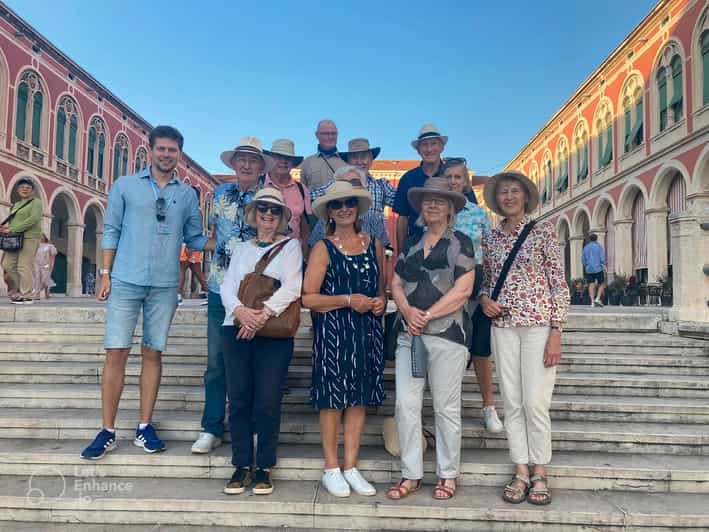
The biggest reason this tour gets strong ratings is not any single building. It’s the way Mario puts the pieces together so your brain can hold them.
You’ll notice three things during the walk:
- He explains the palace spaces with clear purpose, so names don’t blur together.
- He keeps you active by encouraging questions and interaction.
- He uses humor without turning the whole thing into a comedy show.
That sounds like personality talk, but it changes the experience. When you’re learning in a lively way, you remember what you saw and you can spot similar patterns elsewhere in Split.
Also, this is a tour you can enjoy even if you’re not a hardcore history person. The pacing is structured, and each stop has an obvious role in the story. You won’t spend the whole time listening. You’ll also be looking, walking, and adjusting your understanding as you go.
Price and Value: Is $23 Worth 2 Hours in Split?
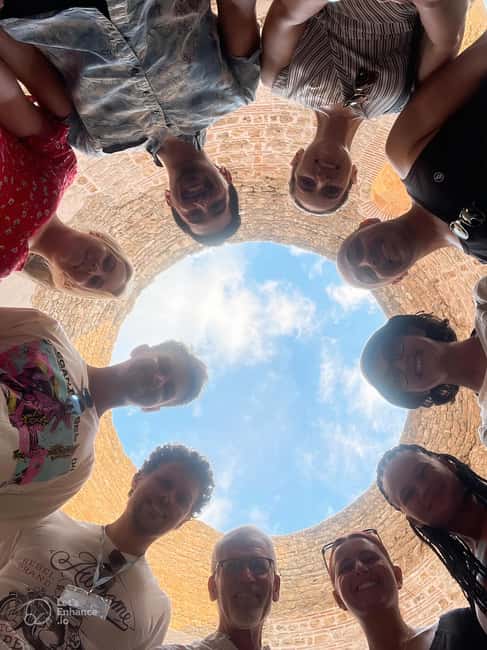
At $23 per person for a roughly 2-hour walk (with a highlight noting about 2 hours and 15 minutes), you’re paying for something more than entry tickets. You’re paying for an expert guide who can connect Diocletian’s Palace to medieval and modern Split, while also showing you Game of Thrones locations and local legends.
The big value trade-off: admission isn’t included for the Cathedral of Saint Domnius and the Temple of Jupiter. So if you plan to go inside, budget a bit extra. But even if you don’t, the guided explanations of why these places matter still pay off.
The time also helps. This isn’t a half-day commitment. It’s a focused window that gives you a strong foundation for the rest of your trip. If you want to return later and explore on your own, you’ll know what to target because you’ll understand the layout.
If you’re traveling solo and want to feel oriented fast, this is a good use of your first or second day in Split.
Who This Tour Fits Best (and Who Might Want Another Option)
This tour is a great match if you:
- want the history of Split explained in plain language
- like walking through Old Town with a map in your head
- enjoy architecture but don’t want to guess the story behind every door and arch
- are a Game of Thrones fan who wants the real locations connected to Roman and later history
It’s also appropriate for all ages, which makes it easier to plan if you’re traveling with mixed generations. The one major mismatch is accessibility: it’s not suitable for wheelchair users, so plan a different option if mobility is a concern.
Should You Book This Split Walking Tour?
Yes, if your goal is to understand Split fast and see the city through multiple centuries. I’d book it when you want more than a checklist: you want to walk out with a story you can retell, plus a better sense of where everything sits in relation to Diocletian’s Palace.
Book it particularly if you like interactive guiding. Mario’s mix of humor, clear explanations, and group engagement is the kind of approach that keeps history from feeling like a lecture.
Skip it if you need an accessibility-friendly route, or if you only want places with included entry and don’t want to think about extra admissions at the cathedral and temple.
FAQ
How long is the Split walking tour?
It lasts about 2 hours, with the tour highlights noting around 2 hours and 15 minutes.
Where do we meet the guide?
The guide waits next to the Brass Gate of Diocletian’s Palace.
What sights are included on the walk?
You’ll stop at the Riva Harbor historical core model, Diocletian Palace substructures, Peristyle, Vestibule, Cathedral of Saint Domnius, Temple of Jupiter, Golden Gate, Grgur Ninski statue, Marmontova Ulica, Prokurative, and Fruit’s Square (Trg Brace Radic).
What’s the tour language?
The live guide offers the tour in English.
Is admission included for the Cathedral of Saint Domnius and the Temple of Jupiter?
No. Admission is excluded for both the Cathedral of Saint Domnius and the Temple of Jupiter.
Is the tour suitable for wheelchair users?
No, it is not suitable for wheelchair users.
What should I wear or bring?
Bring comfortable shoes and comfortable clothes, since this is a walking tour.
Is free cancellation available, and is pay later offered?
Yes. You can cancel up to 24 hours in advance for a full refund, and you can reserve now and pay later.