REVIEW · SPLIT
History & Cultural Walking Tour of Split and Diocletian’s Palace
Book on Viator →Operated by Ancient Tours · Bookable on Viator
A walk through Diocletian’s Palace turns a pile of stone into a living story. In about 90 minutes, you’ll connect the palace to today’s Split—UNESCO center included—and you’ll do it with a real guide, not a script.
What I like most is the focus on the exact places that shape the city: the Peristyle as your “map” inside the palace, and the Golden Gate area where you learn why a statue and a person matter to Croatian identity.
One possible drawback: this is a walking tour, and it’s not recommended if you have trouble with high steps.
In This Review
- Key highlights worth showing up for
- Why this Diocletian’s Palace walk is such a smart first night
- Peristyle Square: the palace hub you’ll want to picture
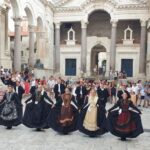
- Vestibulum and the chance of traditional singing
- Substructures: the palace functions you can actually walk through
- The Golden Gate and Gregory of Nin: why an entrance can teach language
- Riva Harbor and the bronze model that makes the palace real
- Fruit’s Square (Trg Brace Radic): Venetian walls and a writer
- Passing the Split Synagogue: a brief, respectful history note
- Guides make this feel personal in a good way
- Price and value: $22.98 for palace orientation that pays off later
- Timing, meeting point, and what to wear for stone-and-steps
- Should you book this Split history and culture walking tour?
- FAQ
- How long is the History & Cultural Walking Tour of Split and Diocletian’s Palace?
- What language is the tour offered in?
- How much does the tour cost?
- How big is the group?
- What parts of the tour include admission fees?
- Does the tour visit the museum part of the palace substructures?
- Where does the tour start?
- Is the tour suitable if I have trouble with stairs or high steps?
- Can I cancel for a full refund?
- Are service animals allowed?
Key highlights worth showing up for
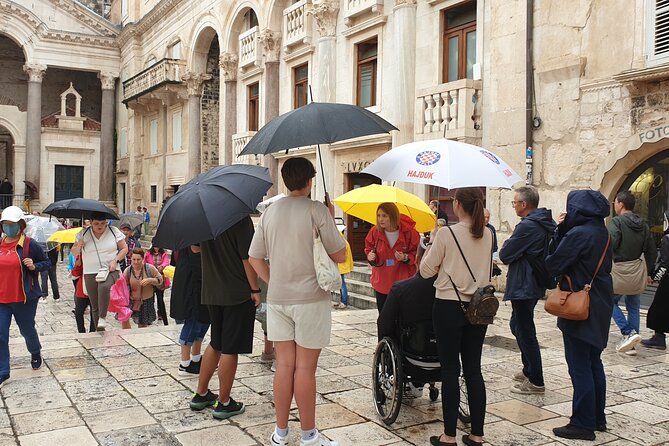
- Small group (max 15) means more back-and-forth with your guide
- Diocletian’s Palace core sites: Peristyle, Vestibulum, substructures, Golden Gate
- Riva Harbor stop includes a bronze model moment, so you get the big picture
- Fruit’s Square + Marko Marulić ties architecture to Croatian literature
- Split Synagogue is only passed, and admission is not included
Why this Diocletian’s Palace walk is such a smart first night
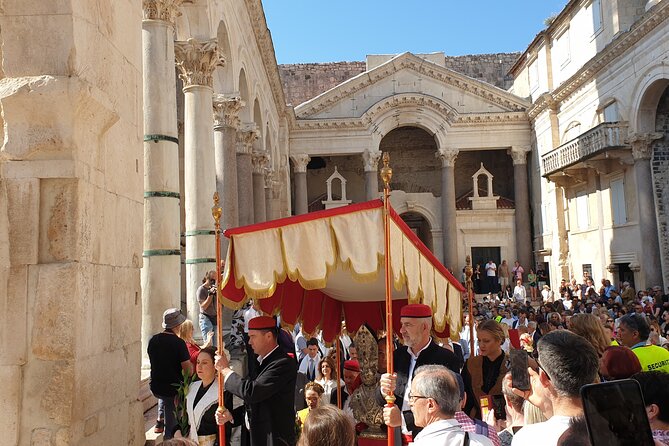
Split can feel like two places at once: a modern coastal town with cafes and ferries, and an old city built around one massive Roman presence. This tour helps you connect those dots fast.
It’s also a great length. Ninety minutes means you get orientation without feeling like you’ve signed up for a half-day commitment. And because it stays small—up to 15 people—you’re more likely to get direct answers when you ask questions about what you’re seeing.
You’ll also get that “please tell me what this means” feeling in the best way. The guide points you toward the palace spaces you’d otherwise wander past with no context. Even history buffs tend to enjoy it because the tour keeps things concrete: where things are, what they were for, and how those meanings still show up in Split today.
You can also read our reviews of more walking tours in Split

Peristyle Square: the palace hub you’ll want to picture
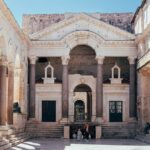
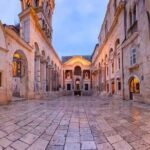
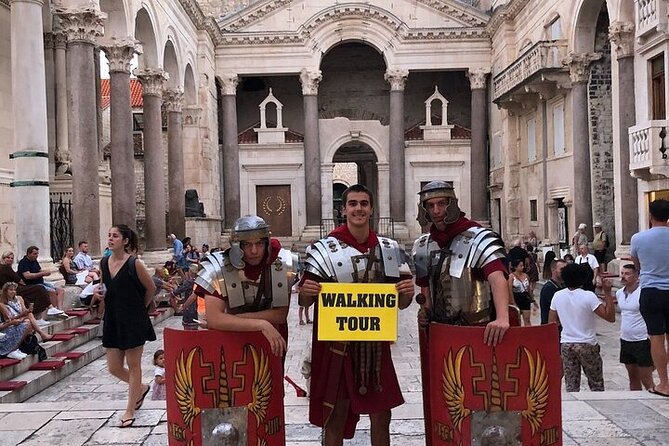
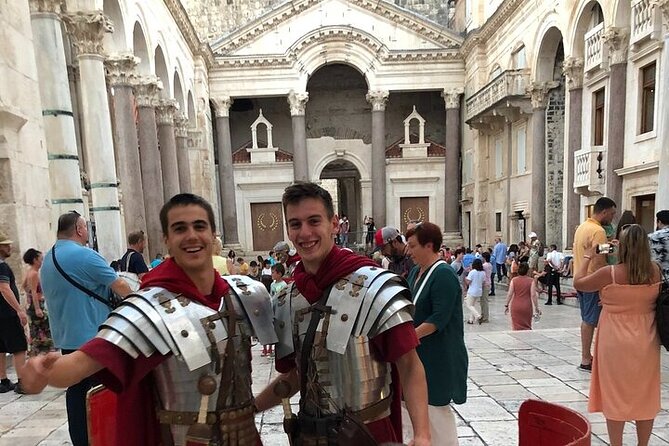
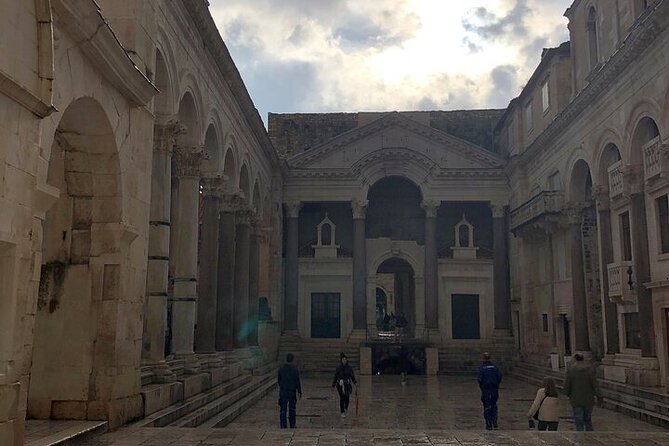
Your tour starts in the Peristyle area, the central square of Diocletian’s palace. This is one of those places that makes the whole complex click. Stand here and suddenly you understand why people describe the palace like a mini-city—because from this central point, you can get to almost all the key locations.
The Peristyle stop is about 15 minutes, and it’s free of any admission ticket requirement. For me, the value is that it sets your “mental map.” Later, when you walk through narrow passages and under arches, you’ll recognize where you are relative to the center instead of just following signs.
If you’re arriving in Split on your first day, this is the kind of start that helps you plan the rest of your sightseeing. You’ll walk away knowing what to circle on your own later.
Vestibulum and the chance of traditional singing
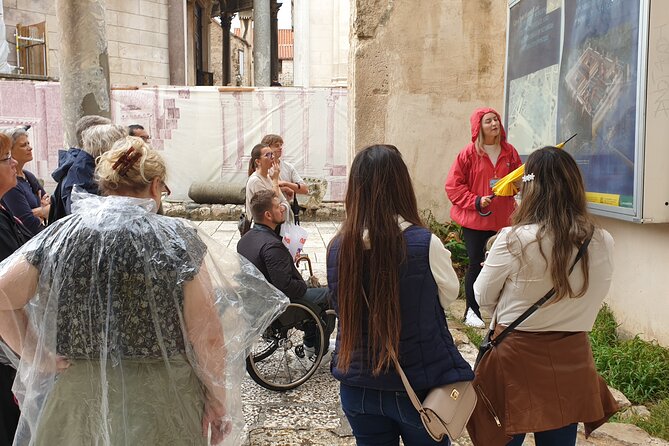
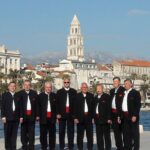
Next up is the Vestibulum of Diocletian’s palace. This is a short stop (about 5 minutes), but it’s a good one because it’s a story stop. You learn about emperor Diocletian’s vestibule and what you’re looking at, and there’s even potential for traditional Dalmatian singing here.
That “wait, did we just hear music in the middle of Roman stone?” moment is exactly why I like guided walks in historic centers. It makes the space feel less like a photo spot and more like a place with living culture.
Even if you don’t catch singing, the stop still works because it’s tied to interpretation—what you see and why it mattered. Short tours can feel rushed, but this one keeps the pace steady.
Substructures: the palace functions you can actually walk through
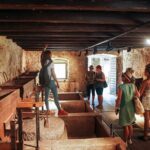
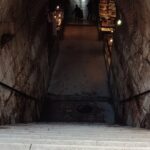
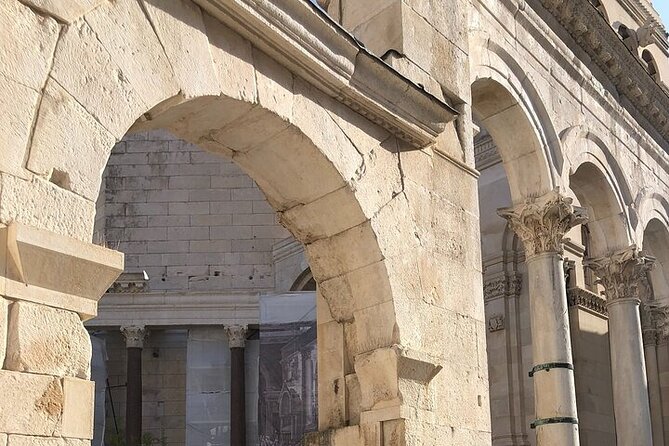
The tour then moves into Diocletian palace substructures. This is where the experience becomes more physical. You go through the under-level passage areas and learn about how they were built and what roles they played across the ages.
This stop lasts about 10 minutes and also doesn’t require admission ticket for the tour itself. One important note: the tour does not include the museum part of the substructures. You can visit that museum later on your own if you want more detail.
So think of this as the “see it, understand it, decide if you want more” section. If you love archaeology and want to go full nerd, you’ll probably add the museum visit after. If you’re more interested in getting the big picture, you’ll feel satisfied without needing extra ticket time.
The Golden Gate and Gregory of Nin: why an entrance can teach language
The Golden Gate is the main entrance of Diocletian’s palace, and it’s another stop that pays off fast. You learn about the gate itself and you’ll see the statue of Gregory of Nin.
Here’s the part I find genuinely useful: you also learn why Gregory’s importance connects to Croatian history and language. That’s not just trivia. It helps you understand why certain figures are celebrated in public spaces, and why people still reference them when talking about identity.
This stop is about 10 minutes and is free of tour admission fees. You won’t leave with a full lecture—but you’ll leave with a mental hook. Later, when you notice more street-level references around town, you’ll know what they’re pointing to.
You can also read our reviews of more historical tours in Split


Riva Harbor and the bronze model that makes the palace real
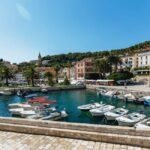
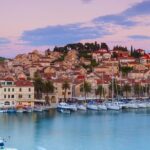
Next is the Riva Harbor area. You get to see a bronze model of Diocletian’s palace here, which is a clever move in a walking tour.
When you’re surrounded by walls and arches, it can be hard to understand the palace’s overall shape. A model helps you stop guessing and start recognizing. It turns the palace from “a lot of stuff I walked through” into “a place with form and layout.”
The stop is about 15 minutes, and it’s also free for the tour. You’ll also learn about the history of Split’s Riva promenade. That’s the bridge between Roman-era complex and today’s waterfront life—past meeting present, without the tour losing focus.
If your schedule is tight, this is a nice moment to breathe and take in the harbor area while the guide wraps up the palace story.
Fruit’s Square (Trg Brace Radic): Venetian walls and a writer
Fruit’s Square, known as Trg Brace Radic, is where the tour widens slightly beyond the palace. You’ll learn about a Venetian citadel dating to the 15th century and connect it to Marko Marulić, described here as the father of Croatian literature.
This stop is around 10 minutes and free. I like it because it prevents the tour from becoming only Roman content. Split didn’t stop developing after Diocletian. The city layer-cakes over time, and you can feel it when someone points out how later eras left their marks.
If literature is your thing, this is the perfect quick hit. If it’s not, it’s still a good reminder: cultural identity in Croatia isn’t just about monuments—it’s also about authors and language.
Passing the Split Synagogue: a brief, respectful history note
The tour includes a pass-by of the Split Synagogue, a 16th-century site. The tour provides context about the history of the Jewish people in Split, which helps you see the area as part of the city’s broader human story, not only its major architectural landmarks.
One key practical point: synagogue admission is not included. You’re also not going inside as part of the tour, based on the information given. So treat this stop as orientation and context. If the synagogue is important to you, you’ll want to plan a separate visit later.
Guides make this feel personal in a good way
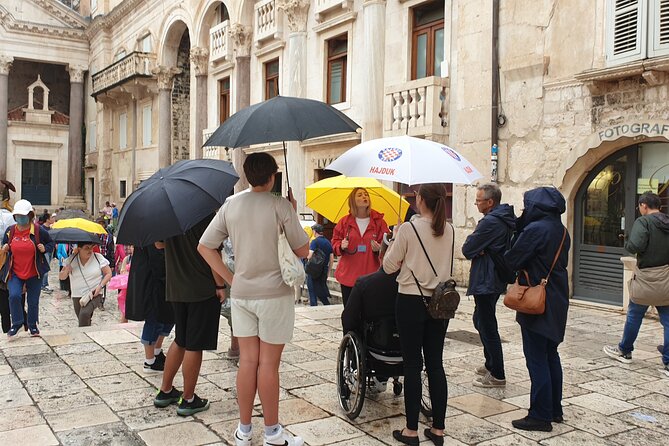
What really pushes this tour into the “book it” category is the guide experience. The tour runs with an educated guide who can connect dots and answer questions.
Several guide names come up with standout impressions. Darko is mentioned for being engaging and for making a 90-minute walk feel packed with detail without losing your attention. Ante, also referred to as Anthony, comes up for going above and beyond to make people feel welcome and for showing beyond-the-scenes historical spots. Ivana is noted for bringing history alive clearly and for using Q&A to help you remember what you learned.
The common thread is how they shape the pacing. Even with a fixed sequence of stops, the guide keeps it lively—sometimes with humor and with small cultural moments like the chance of Dalmatian singing or klapa singing.
Price and value: $22.98 for palace orientation that pays off later
At $22.98 per person for about 1 hour 30 minutes, this is priced like an effective orientation tour rather than a premium, all-access museum day.
Here’s how I think about value:
- You’re getting a guided route through high-impact locations inside Diocletian’s Palace and right next to the places you’ll likely revisit on your own.
- Most stops are free of admission ticket requirements for the tour portions.
- You’re traveling in English with a small group that tops out at 15.
You can spend more and still miss context. Here, the cost is mostly for the guide and the route logic—getting you from point A to point B in a way that actually teaches you what you’re seeing.
Timing, meeting point, and what to wear for stone-and-steps
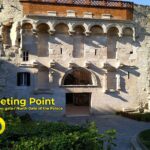
You’ll meet at Peristil ulica, Peristil ul., 21000 Split, Croatia, and the tour ends back at that same meeting point.
Because it’s a walking tour inside and around historic stone areas, footwear matters. This experience is near public transportation, which is convenient if you’re juggling buses or ferries on the same day. But it’s also not recommended for travelers who have issues with high steps. So if stairs are a problem for you, choose carefully.
For most people, it’s a manageable length and scale. For anyone who wants to slow down and take photos, the small group size helps because you can ask the guide for a moment to get the right angle.
Should you book this Split history and culture walking tour?
I’d book it if you want fast, practical context for Split’s most famous landmark: Diocletian’s Palace. It’s especially worth it as a first-choice orientation on your first evening or first morning, when you most need a mental map.
I’d pass or look for a different option if:
- you want a museum-heavy experience (the museum part of the substructures isn’t included here)
- you have difficulty with high steps
- you already feel fully confident about what you’re seeing and just want unstructured strolling (this tour is guided for a reason)
If you’re the type who likes to understand what you’re looking at—Peristyle to Golden Gate to the cultural stops beyond—this is a strong value. It turns “I saw the palace” into “I get what it is and why it mattered.”
FAQ
How long is the History & Cultural Walking Tour of Split and Diocletian’s Palace?
It lasts about 1 hour 30 minutes.
What language is the tour offered in?
The tour is offered in English.
How much does the tour cost?
The price is $22.98 per person.
How big is the group?
The group size is limited to a maximum of 15 travelers.
What parts of the tour include admission fees?
The tour lists admission ticket free for the Peristyle, Vestibulum, Diocletian Palace substructures, and the Golden Gate and Riva Harbor stops. Split Synagogue admission is not included.
Does the tour visit the museum part of the palace substructures?
No. The tour goes through the substructures, but it does not include the museum part. You can visit the museum after the tour.
Where does the tour start?
The meeting point is Peristil ulica, Peristil ul., 21000, Split, Croatia.
Is the tour suitable if I have trouble with stairs or high steps?
It’s not recommended for travelers who have issues with high steps.
Can I cancel for a full refund?
Yes. You can cancel for a full refund if you cancel at least 24 hours in advance of the experience’s start time.
Are service animals allowed?
Yes, service animals are allowed.