REVIEW · SPLIT
History Split Walking Tour in German – Small group
Book on Viator →Operated by Ancient Tours · Bookable on Viator
Diocletian’s palace never stays still.
This German small-group walk turns Split’s stone labyrinth into one clear story: how Diocletian rose from nobody to the most powerful man in the world, and why his palace still shapes the city.
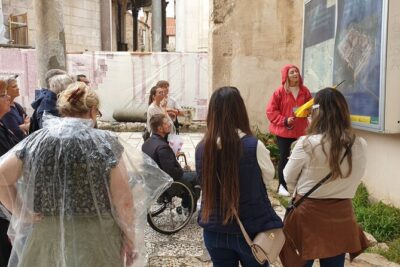
I love the way the guide links each stop to a bigger picture, starting with the Peristyle and ending up at the Golden Gate and the Gregory of Nin statue. I also like the tight pacing: short visits at key spots so you get plenty of explanation without feeling dragged along. One drawback: it’s a walking tour and it’s not recommended for travelers who have issues with high steps.
In This Review
- Key highlights you’ll care about
- A 90-minute German walk through Split’s Roman core
- Starting at Peristil ulica: where you meet and how the route works
- Stop 1 at the Peristyle: your quick orientation to the whole palace
- Stop 2 in the vestibule: emperors, atmosphere, and possible singing
- Stop 3 through the substructures: construction and how the function changed
- Stop 4 at the Golden Gate: Gregory of Nin and the palace as a living symbol
- Stop 5 at Riva Harbor: a bronze palace model and the seaside promenade story
- Stop 6 in Fruit’s Square (Trg Brace Radic): Venice influence and Marko Marulić
- Stop 7: the Split Synagogue you pass by (and the ticket detail that matters)
- The guide matters: Antonella and Josip set the tone
- Price and tickets: what $165.08 gets you in real terms
- Who should book this tour, and who should skip it
- Practical tips before you go
- Should you book this History Split Walking Tour in German – Small group?
- FAQ
- Is this tour in German?
- How long is the tour?
- How many people are in the group?
- Where does the tour start?
- Where does the tour end?
- Are tickets included for all stops?
- Is the tour a good fit if I have trouble with high steps?
- Do I need to print anything for the ticket?
- Can I bring a service animal?
- What’s the cancellation situation?
Key highlights you’ll care about
- Small group (max 20): easier questions and less crowd pressure.
- German-language tour: explanations are built for German speakers from start to finish.
- Covers the palace plus nearby Split: you learn the main monuments and the surrounding city vibe.
- Free entry for most stops: the key palace areas are marked ticket-free for this tour flow.
- Possible traditional Dalmatian singing: you may hear it at the vestibule area.
- Ends near the start: the guide can help you back to the Peristyle if you want.
A 90-minute German walk through Split’s Roman core
If you only have a short window in Split, this tour is a smart way to get oriented fast. You’re not just looking at impressive ruins; you’re learning how the palace was designed and how it functioned over time, right inside the part of town people still use.
What makes it especially appealing is the focus on cause-and-effect. The guide doesn’t treat Diocletian’s Palace like a pile of old rocks. They connect the spaces you stand in to why the man had power, and how Split grew around that plan.
And yes, it’s German. That matters, because the tour’s storytelling and the little language tie-ins (like Gregory of Nin’s importance) land better when you’re following the details in your own language.
You can also read our reviews of more walking tours in Split

Starting at Peristil ulica: where you meet and how the route works
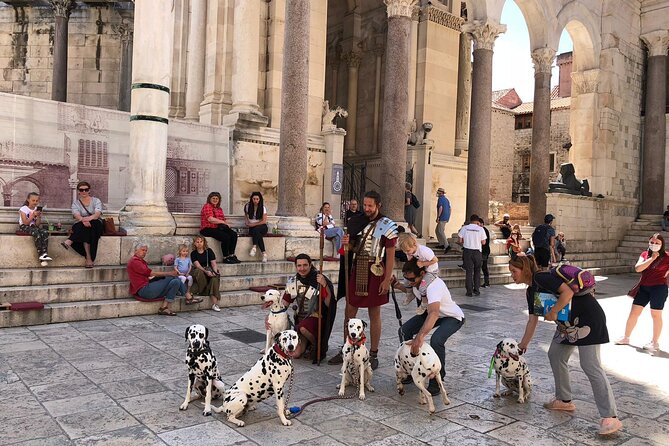
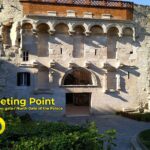
You meet at Peristil ulica, 21000 Split. The route is designed so you mostly stay in and around Diocletian’s Palace, meaning you spend your energy on walking and learning, not constant transit.
The tour runs about 1 hour 30 minutes. That’s the sweet spot for people who want highlights without turning the whole morning into a long archaeology seminar.
It also ends not far from where it starts. The guide can take you back to the Peristyle area if you ask, which is handy when you want to continue exploring on your own right afterward.
Stop 1 at the Peristyle: your quick orientation to the whole palace
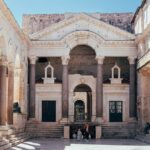
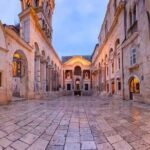
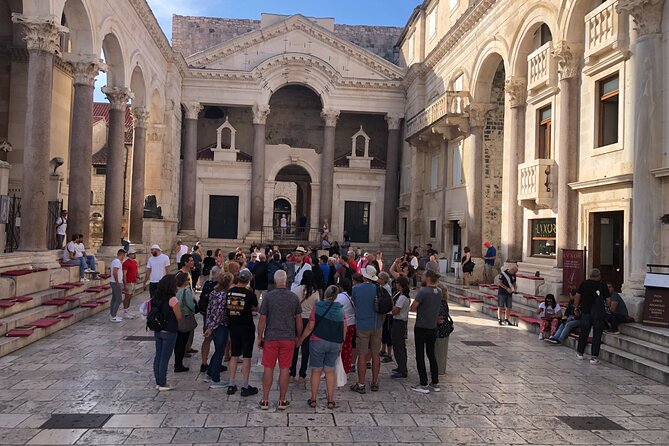
You start at the Peristyle of Diocletian’s Palace, the central square. This is where you get the big-picture orientation, because from here you can reach many other locations within the palace.
You’ll spend about 15 minutes here. That time isn’t random. It’s the anchor stop that helps everything else make sense, especially the way the palace layout directs movement and attention.
This is also where you’ll hear the story thread of Diocletian’s rise. Instead of memorizing facts, you get a mental map: what the space was for, and why it mattered to the emperor’s idea of power.
Stop 2 in the vestibule: emperors, atmosphere, and possible singing
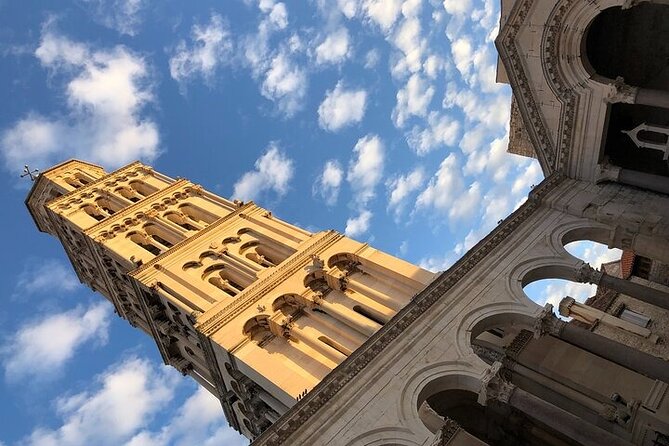
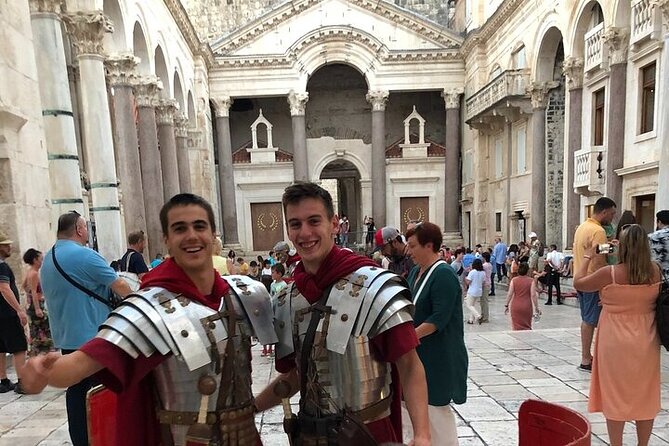
Next up is the Vestibulum of Diocletian’s Palace. You’re seeing the vestibule associated with Emperor Diocletian, and the guide connects it to the history of the palace through this smaller, more intimate space.
Expect about 5 minutes here. That’s brief by design, but it works because this stop is about mood and meaning, not long museum-style narration.
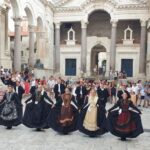
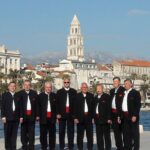
There’s also a real potential bonus: you might hear traditional Dalmatian singing in this area. If it happens, it adds texture to what you’re learning, turning the palace from silent stone into a living cultural setting.
Stop 3 through the substructures: construction and how the function changed
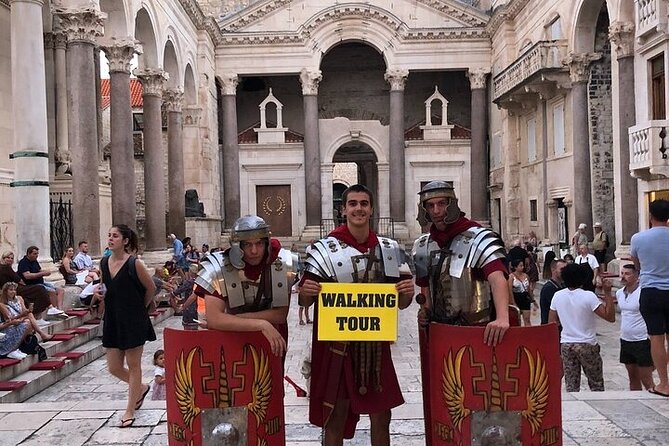
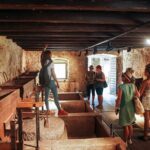
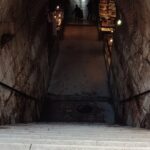
Then you move into Diocletian Palace Substructures for about 10 minutes. This section is about the palace’s construction and how the substructures served different roles over time.
A useful detail: you won’t visit the museum part of the substructures during the tour. That’s good if you want the overview now and the option to go deeper later at your own pace.
This stop is where the tour earns its keep for history-minded visitors. You get an explanation of what’s underneath and why it’s there, instead of only seeing the grand public areas above.
You can also read our reviews of more historical tours in Split


Stop 4 at the Golden Gate: Gregory of Nin and the palace as a living symbol
At the Golden Gate, you hit one of the most meaningful transitions in the whole walk. This is the main entrance to the palace, and the guide ties it to the palace’s importance and the history you can’t ignore in Split.
You’ll spend around 10 minutes here. The statue of Gregory of Nin is part of the story, and the guide explains his importance to history and language. That language connection is a highlight for me because it links the monument to everyday identity, not just Roman-era facts.
It’s also a great photo stop, but the real value is how the guide explains why this gateway still matters in the way people talk about Split’s past.
Stop 5 at Riva Harbor: a bronze palace model and the seaside promenade story
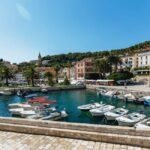
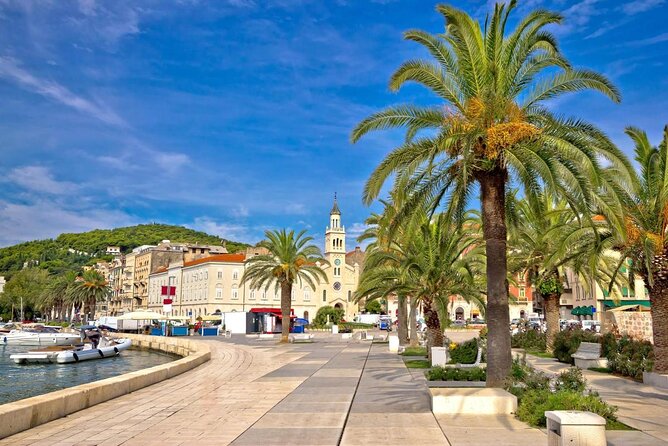
From the palace entrance area, you head to Riva Harbor for about 15 minutes. Here you see a bronze model of Diocletian’s Palace, which helps the earlier walking map snap into place.
This part of the tour is about scale. Standing at the model after you’ve walked through the palace makes the layout easier to picture, especially if you like to understand what you’re looking at rather than only read about it later.
You also learn about the history of Split’s Riva promenade. Even if you’re mostly here for the Roman layer, this stop adds context for the modern city experience—how the old palace story sits beside the waterfront life.
Stop 6 in Fruit’s Square (Trg Brace Radic): Venice influence and Marko Marulić
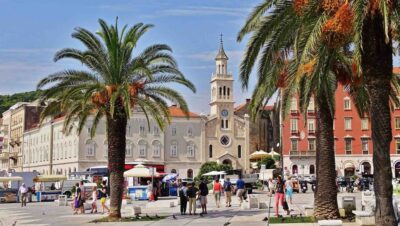
Next is Fruit’s Square (Trg Brace Radic), around 10 minutes. This is where the tour expands beyond purely Roman-era focus and pulls in later influences.
You’ll learn about a 15th-century Venetian citadel tied to this area. Then the guide brings in Marko Marulić, described as the father of Croatian literature. If you care about how culture develops over centuries, this stop gives you a satisfying switch from emperors and architecture to writers and language.
It’s also a good mental reset between the palace concentration and the final heritage stop near the synagogue area.
Stop 7: the Split Synagogue you pass by (and the ticket detail that matters)
The last stop is the Split Synagogue, which you pass by for about 10 minutes. You’ll learn about the history of Jewish people in Split, and you get context for the building’s presence in the old town.
One practical point here: the synagogue admission is not included. The tour notes that the synagogue ticket is not included, so if you want to go inside afterward (if it’s open), you’ll need to handle that separately.
Also note the tour timing: you won’t spend the whole tour in a museum setting. This is a guided pass-by with explanation, leaving space for you to decide what to do next.
The guide matters: Antonella and Josip set the tone
This tour leans hard on interpretation, and the guide is the engine. The guides are described as well educated and liked, with a strong sense of humor and a willingness to answer questions.
In particular, Antonella stands out in the guide stories you can expect from this operator. Guests specifically call out that she was informative, intelligent, and entertaining, and that she stayed open to questions.
Josip is also mentioned as a lively German-language guide who gave clear insights into historical Split. If you like your history straight, with a bit of personality, this style tends to fit.
Ask questions at stops. Because the tour is short, the best use of the guide is during your walk—when you’re standing where something used to mean something.
Price and tickets: what $165.08 gets you in real terms
At $165.08 per person, this isn’t a bargain-basement activity. But you’re paying for a focused 90-minute guided route in a dense area, plus a small-group format with up to 20 travelers.
You also get real value in the ticket structure. Many of the key palace-related stops are listed as admission ticket free for the tour flow, including the Peristyle, vestibule area, substructures (tour portion), Golden Gate area, and Riva Harbor. The main exception in the itinerary is the synagogue, where admission is not included.
Two more practical value notes:
- You get a mobile ticket.
- There’s group discount available.
If you’re the kind of traveler who hates wasting time figuring out what to see and where to start, a guided route like this often pays off fast. You walk in with a plan, and you leave with a mental map you can keep using as you wander.
Who should book this tour, and who should skip it
You should book if:
- You want German explanations of Diocletian’s Palace without getting lost in the details.
- You like tours that cover the big palace highlights plus nearby Split in one compact timeline.
- You prefer an organized route that still leaves you free to explore after.
You might want to skip or choose something else if:
- High steps are a problem for you. The tour notes it isn’t recommended when that’s an issue.
- You only want a deep museum visit. This is a highlights-and-stories format, not a long indoor deep dive.
This works well for first-time visitors who want orientation, and also for repeat visitors who want a sharper story thread.
Practical tips before you go
A few things will make the walk smoother:
- Wear comfortable shoes. It’s a walking tour in an old-site area where surfaces and steps can vary.
- Come with questions. The guides are set up to handle them, and the tour is short enough that questions can change what you notice next.
- Plan to add time afterward. Because it ends near where you started, you’ll be able to continue on foot with less friction.
Also, it’s near public transportation, and service animals are allowed. You’ll want to bring your expectations in line with the format: quick stops, clear explanations, and the option to expand afterward (like the substructures museum portion).
Should you book this History Split Walking Tour in German – Small group?
I’d book it if you want an efficient, story-driven way to understand Diocletian’s Palace and how it connects to Split’s later layers. The combination of a small group size, German-language delivery, and a stop-by-stop route that covers the Peristyle, vestibule area, substructures, Golden Gate with Gregory of Nin, Riva Harbor, Fruit’s Square, and the synagogue pass makes it a high-clarity option.
If stairs are an issue, don’t force it. But if you can handle a walking tour, this is a strong way to get your bearings fast and leave with more than a list of sights.
FAQ
Is this tour in German?
Yes. The tour is listed as History Split Walking Tour in German.
How long is the tour?
It runs about 1 hour 30 minutes.
How many people are in the group?
The tour has a maximum of 20 travelers.
Where does the tour start?
The meeting point is Peristil ulica, 21000, Split, Croatia.
Where does the tour end?
It ends not far from where it starts. The guide can take you back to the Peristyle if you ask.
Are tickets included for all stops?
Most stops are marked as admission ticket free, but the Split Synagogue admission is not included.
Is the tour a good fit if I have trouble with high steps?
The tour is not recommended for travelers who have issues with high steps.
Do I need to print anything for the ticket?
No. The tour includes a mobile ticket.
Can I bring a service animal?
Yes. Service animals are allowed.
What’s the cancellation situation?
You can cancel for free up to 24 hours in advance for a full refund. If you cancel less than 24 hours before the start time, the amount paid is not refunded.