REVIEW · SPLIT
Split: History Walking Tour of the Old Town
Book on GetYourGuide →Operated by HI-story HiSTORY · Bookable on GetYourGuide
Split’s old town has a way of grabbing you fast. This walking tour is built around Diocletian’s Palace and the UNESCO-listed Roman core, with story-driven stops from the Golden Gate to the Riva waterfront. I love how it mixes big architecture with small, human details, and I especially like the guide-led humor and riddles that make the place feel alive. The main drawback is simple: you’re on your feet for about 90 minutes, so it helps to show up with real walking shoes and water.
What makes this tour extra fun is the contrast. You’ll hear serious history about Emperor Diocletian and the city’s evolution, then you’ll step into the cellars where Game of Thrones imagery is part of the storytelling. I also like that you end with a practical day-plan—recommendations for what to do next, where to eat, and even which islands to consider. If the heat is intense, the schedule can feel long, but the guide’s pacing and shaded spots along the way make a difference.
In This Review
- What You’ll Notice Right Away
- Key Highlights Worth Planning For
- A 90-Minute Walk Through Diocletian’s Palace World
- Golden Gate to Peristyle: The Roman Set Pieces You’ll Recognize
- Temple of Jupiter and the Sphinx Entrance Story
- Diocletian’s Cellars: Game of Thrones Meets Roman Stone
- Pjaca and Voćni trg Squares: Where Split Lives Now
- Ending at the Riva: Palm Trees, Sea Air, and a Real Day Plan
- Price and Value: Is $41 a Smart Buy?
- Who This Tour Fits Best (And Who Might Not Love It)
- Should You Book This Split Old Town History Walking Tour?
- FAQ
- FAQ
- How long is the Split Old Town History Walking Tour?
- Where does the tour start and where does it end?
- What sites are included during the walk?
- Is the tour guided, and what languages are offered?
- Does the tour include Game of Thrones references?
- Is pickup available?
- What should I bring with me?
- What are the booking and cancellation options?
What You’ll Notice Right Away
You’ll start at the Golden Gate area, then move through the palace landmarks in a logical loop: Peristyle, key ceremonial spaces, and the Jupiter Temple zone. Along the route you’ll cover places like Mausoleum, the Vestibule, People’s Square (Pjaca), and Fruit Square (Voćni trg), before finishing at the palm-lined Riva promenade. The tour is led by a local licensed guide in English or Spanish, and it can run as a private group.
One more thing: guides often bring extra tools to keep it clear, like photos and maps, and they ask questions to keep you engaged. Names you might see in previous tours include Nina, Maya, Marc, and Marko—and their common thread is making history feel like a story you can follow.
Key Highlights Worth Planning For
- Golden Gate to Peristyle: see the Roman palace plan in a walkable order
- Temple of Jupiter and the Sphinx story: a dramatic entrance moment that’s easy to remember
- Diocletian’s Cellars: dark, cooler spaces tied to both Roman life and pop-culture references
- Squares that show daily Split: Pjaca and Voćni trg keep it from feeling like only ruins
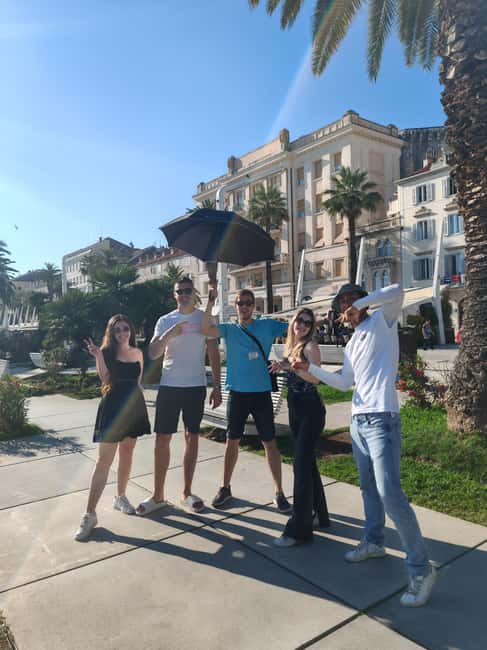
- Finish at the Riva: you leave with a neighborhood-based game plan for the rest of your day
You can also read our reviews of more walking tours in Split


A 90-Minute Walk Through Diocletian’s Palace World
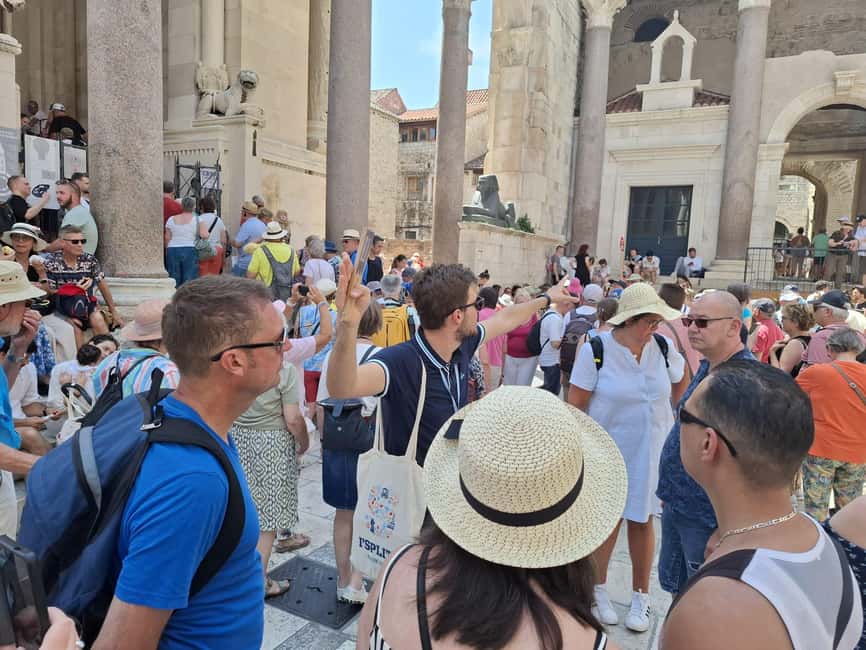
Split’s old town works best when you understand the layers. One minute you’re looking at Roman stone; the next you’re walking through a city that grew around it. This tour is timed to help you catch that idea quickly—about 90 minutes of guided movement, not a full-day marathon.
The big win is the structure. You’re not just seeing one monument and moving on. The tour guides you from the Golden Gate into the palace core, so you can connect what you’re looking at with how it all functioned. That makes the “wow” factor last longer, because you’ll recognize patterns in the architecture as you go.
Also, the guide is local and licensed. That matters in Split, where the same street can hold Roman details, medieval changes, and modern life stacked on top of each other. A good guide helps you filter what’s important and what’s just noise.
Practical note: wear comfortable shoes. The old town has uneven surfaces, and the walk adds up even if each stop is short. Bring water, plus a hat and sunscreen if you’re coming in summer.
Golden Gate to Peristyle: The Roman Set Pieces You’ll Recognize
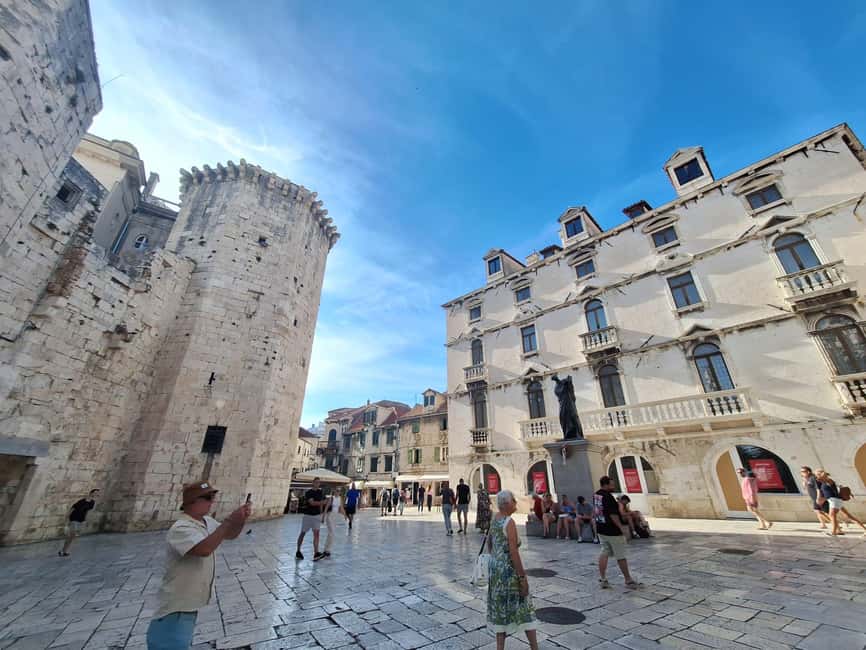
The tour kicks off near the Golden Gate, a classic entrance to the palace complex. From the start, you’re guided through how the city was shaped by Emperor Diocletian’s vision—an ancient city-palace protected under UNESCO.
From there you’ll head toward the Peristyle area. This is one of those spots where you can feel the scale instantly. It’s not just a pretty courtyard; it’s where you can picture movement, ceremonies, and daily palace rhythm. Your guide’s job here is to translate stone into behavior: who would pass where, why spaces mattered, and how the palace became part of a living city rather than a sealed-off relic.
Then you’ll connect to nearby highlights like the Mausoleum and other ceremonial spaces that sit within the palace story. The tour keeps each stop bite-sized: short guided moments that still give you enough context to understand what you’re seeing.
What I like about this part of the walk is how it makes the geography click. Once Peristyle is in your head, the rest of the old town feels less like wandering and more like navigating a map you didn’t know you had.
Temple of Jupiter and the Sphinx Entrance Story
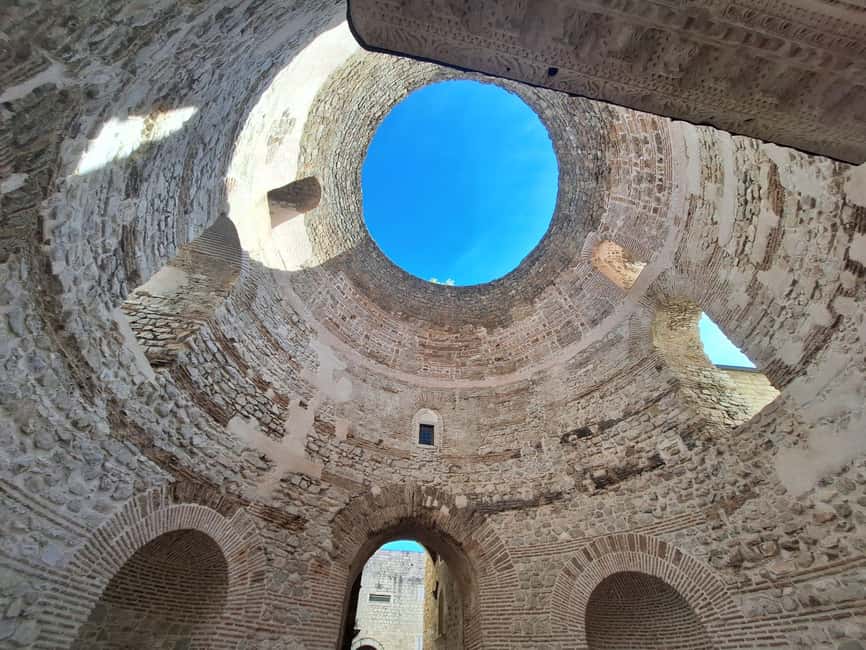
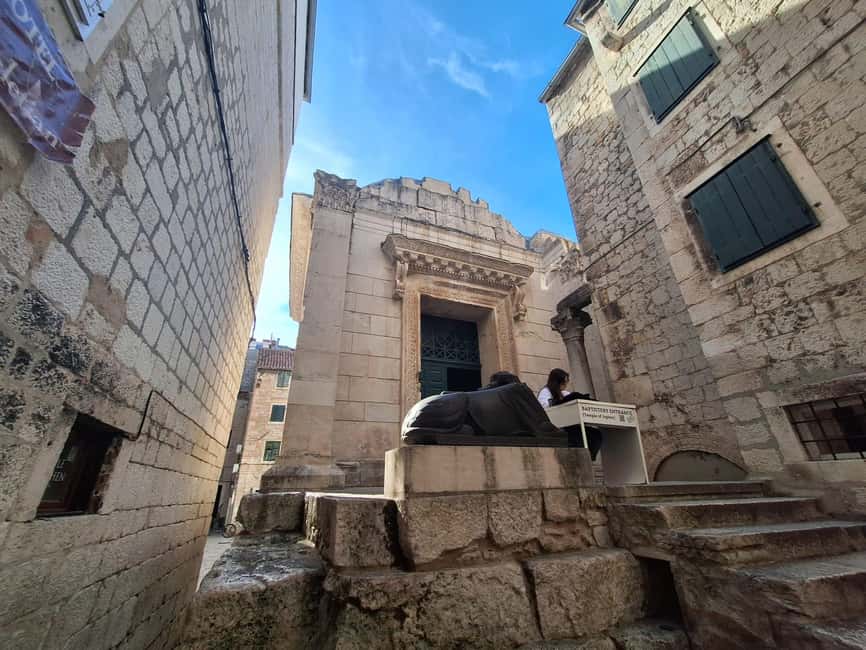
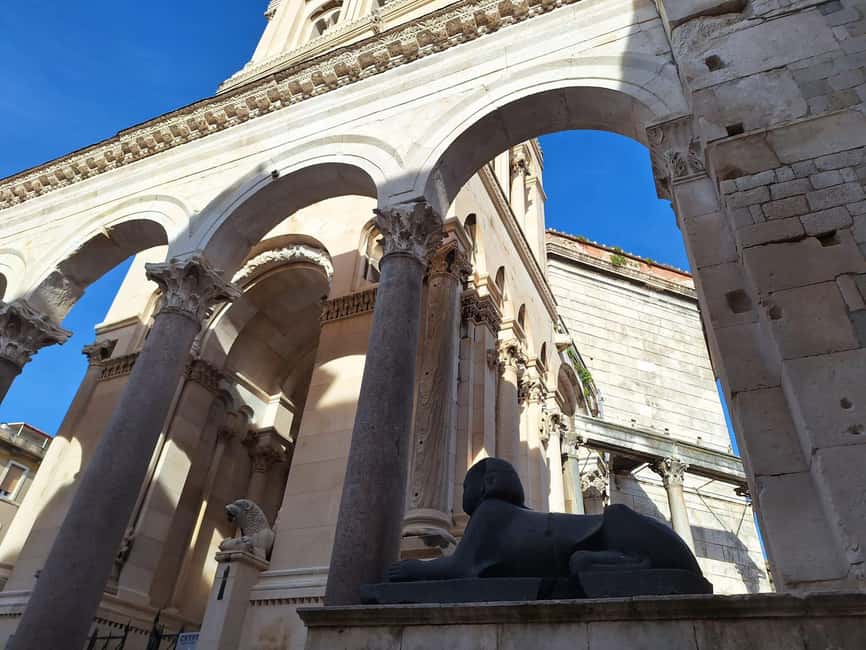
A key stop is Jupiter’s Temple, and the tour leans into the drama of the place. The guide points out a headless Sphinx that guards the entrance, plus the idea of riddles and playful mystery attached to this area. Even if you’re not into myths, these moments help you remember locations, because your brain tags them as distinct stories.
You’ll also see the Vestibule, another stop that’s easy to miss if you’re going solo. Guided attention is the difference between skimming details and understanding why a space is shaped the way it is. The guide helps you read the architecture like a sentence: entrances, thresholds, and the way people would have moved through the palace world.
One thing that makes this tour feel different is that it doesn’t treat Diocletian as a distant figure. You’ll hear colorful, human storytelling about him—like the kind of anecdote that helps you remember an emperor’s reputation even when the details blur over time. It’s history with a wink, not a textbook lecture.
If you like learning in small bursts, this segment is strong. The temple area is visually intense, and your guide keeps it organized so you don’t lose the thread.
Diocletian’s Cellars: Game of Thrones Meets Roman Stone

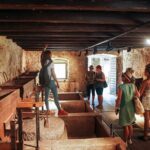
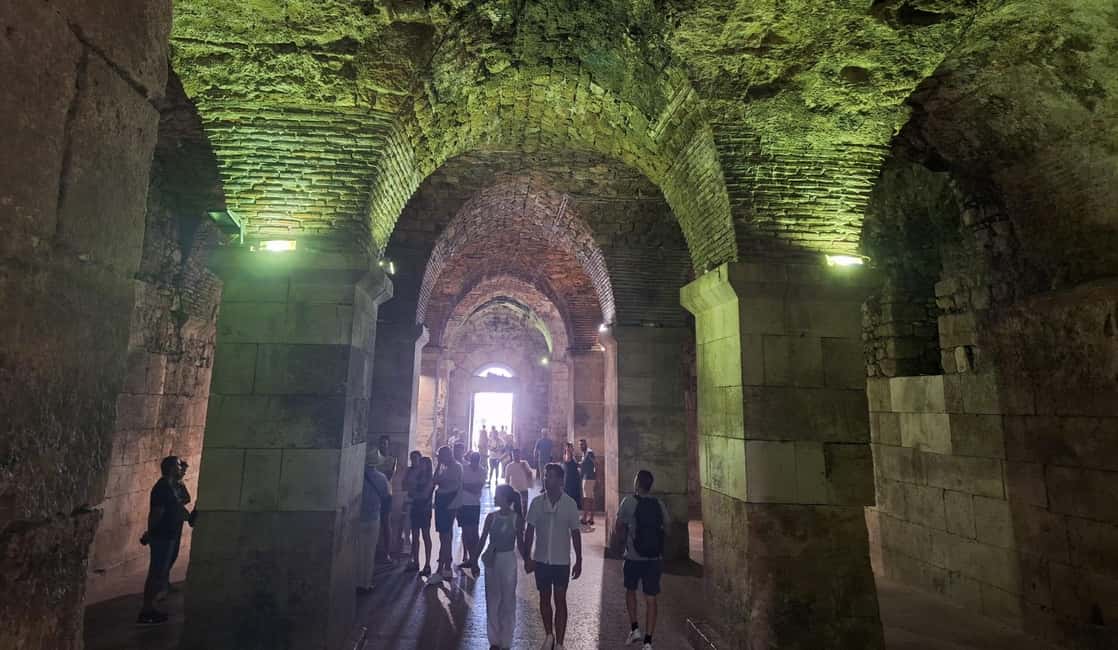
The tour’s most memorable physical experience is the Diocletian’s Cellars. You’ll go underground and into the palace’s darker, cooler spaces. Even when you’re not chasing the pop-culture layer, cellars are a big deal in Split because they show you the palace as a functioning system—not just a monument.
This stop includes a direct Game of Thrones reference: the cellars where Daenerys Targaryen’s dragons were chained. You’ll also hear other pop-culture bits tied to fighters and battles. The point isn’t to turn Split into a theme park—it’s to use familiar images as shortcuts for understanding real historical space.
Expect the vibe to shift. Underground, the air feels different, and the tour usually becomes more focused and atmospheric. Some guides also build in crowd control and time-saving choices; one previous group noted that the guide knew how to manage the line and crowd flow, which helps you feel like you’re getting more out of your time.
If you get the chance to move through at a good pace, you’ll appreciate an extra detail from past tours: fresh water tied to an ancient aqueduct system. That’s the kind of moment that makes the Roman engineering feel practical instead of abstract.
You might also hear references to a human mousetrap and the general theme of trick and test—fun language that helps describe how tightly the space can guide movement. It’s playful, but it also underlines a serious idea: these spaces were built with purpose.
You can also read our reviews of more historical tours in Split






Pjaca and Voćni trg Squares: Where Split Lives Now
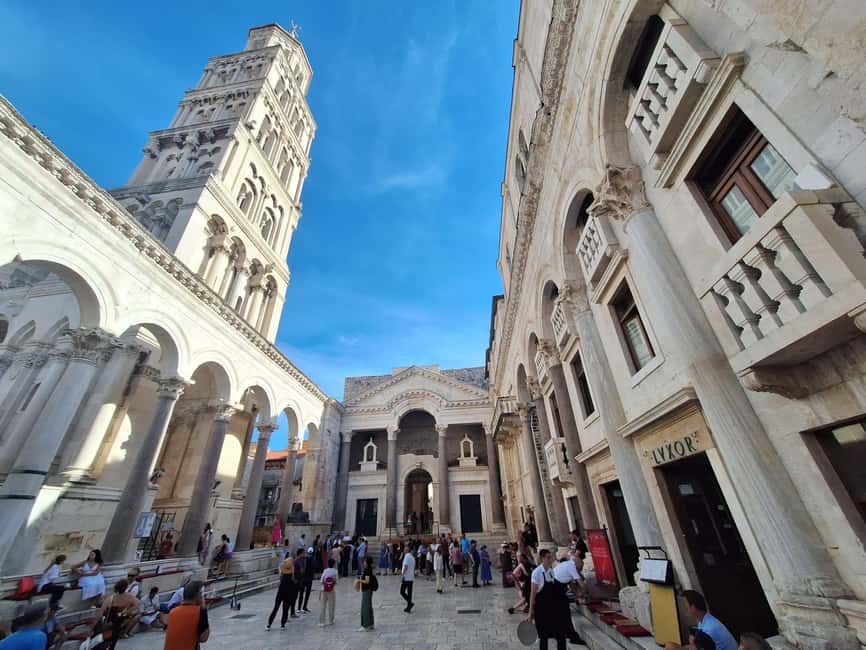
After the palace and cellars, the tour shifts outward into the city’s everyday heartbeat. You’ll reach People’s Square (Pjaca) and Fruit Square (Voćni trg), with guided commentary that connects the monumental past to public life.
Squares matter in old European cities because they’re where people gather for commerce, conversation, and routine. When your guide explains what these squares were and how they fit into the city’s layout, you start seeing them as infrastructure, not just scenery.
This is also where you’ll hear tips that go beyond history. Guides often point you toward local food choices and habits, including what to try and how to time meals. Past tours have included recommendations for beaches and even ice cream, which is the kind of practical info that helps you stop guessing once you’re done with the tour.
If you want your time in Split to feel like more than a photo stop, this portion is valuable. It gives you a sense of where to wander next, without leaving you totally on your own.
Ending at the Riva: Palm Trees, Sea Air, and a Real Day Plan
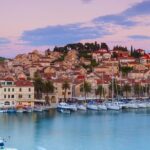
The tour finishes at the Riva, the seafront promenade lined with tall palm trees. This is a great ending point because it naturally moves you from “what is this place?” into “what do I do right now?”
Your guide typically shares recommendations for spending the rest of your day. That includes which islands to visit—useful if you’re short on time—and where to eat for Dalmatian specialties. In practical terms, ending on the Riva helps you instantly reorient: sea view behind you, walking route ahead, and a clear next step.
It also keeps the tour from ending abruptly. Instead of dropping you near a random stop, the guide leaves you at a place where you can keep moving, whether you want a slow stroll, a coffee break, or a quick jump to another area.
Price and Value: Is $41 a Smart Buy?
At $41 per person for around 90 minutes, this tour sits in the “small cost, big context” category. You’re paying for more than walking. You’re buying a licensed guide, organized palace coverage, and a story thread that connects the Golden Gate, Peristyle, Jupiter’s Temple zone, the Vestibule, and then down into the cellars.
The value gets even better if you consider what you’d otherwise do. If you tried to piece together Diocletian’s Palace on your own, you’d likely spend time searching for what you’re looking at and why it matters. Here, the guide gives you quick answers, plus humor and riddles that make it easier to retain the details.
There’s also a built-in “two-layers” payoff. You get Roman history and city development context, and you also get pop-culture references that help the tour feel fun and memorable. For many visitors, that combination is the whole point of paying for a guided walk in the first place.
Who This Tour Fits Best (And Who Might Not Love It)
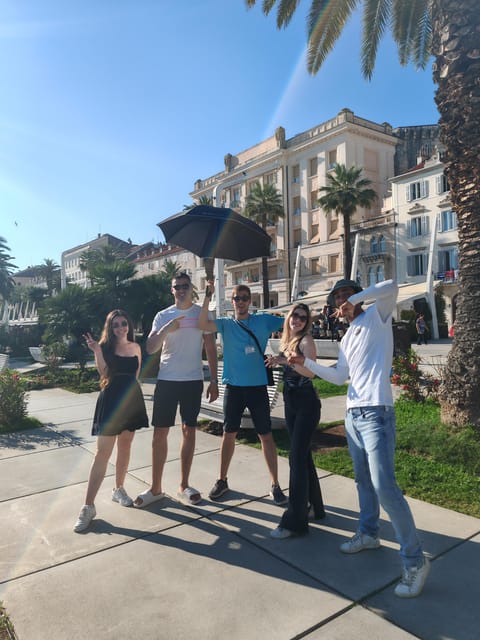
This tour is a great fit if you:
- want a guided introduction to Split’s Old Town without getting lost
- like architecture plus stories, not dry lectures
- enjoy pop-culture references used as a way to remember real places
- travel with friends or as a private group and want a flexible pace
It may feel less ideal if you:
- hate walking on uneven ground for about 90 minutes
- prefer to experience places completely independently
- want only factual, no-story interpretation (this guide style uses humor and riddles)
If you’re in Split for a short time, booking early in your stay can help. You’ll learn the layout and then your solo wandering becomes easier. If you’re staying longer, you can use the tour as a baseline and then pick one or two areas to revisit more slowly.
Should You Book This Split Old Town History Walking Tour?
I think you should book it if your priority is fast orientation plus high-impact highlights. You’ll cover the Golden Gate, key palace spaces like Peristyle and the Temple of Jupiter area, then go underground into Diocletian’s Cellars—one of the best ways to feel the history instead of just viewing it.
What seals the deal is the guide style. Based on past experiences, guides like Nina, Maya, Marc, and Marko tend to make the tour both clear and fun, using jokes, questions, and sometimes extra materials like photos and maps. That approach makes the information easier to hold onto, even if you’re taking lots of other sights in Split.
If you’re flexible and show up with good shoes and water, this is one of the smarter ways to spend a chunk of time in Split’s historic core.
FAQ
FAQ
How long is the Split Old Town History Walking Tour?
It runs for about 90 minutes.
Where does the tour start and where does it end?
It starts at a meeting point that depends on the selected option, and the tour route includes Golden Gate. The walk ends at the Riva seafront promenade, with drop-off at two locations including a model of the historical core and Split Riva.
What sites are included during the walk?
You’ll see Golden Gate, Peristyle, Mausoleum, the Temple of Jupiter, the Vestibule, Diocletian’s Cellars, People’s Square (Pjaca), and Fruit Square (Voćni trg), plus you’ll finish at the Riva.
Is the tour guided, and what languages are offered?
Yes, it includes a local licensed tour guide. The tour is offered in English and Spanish.
Does the tour include Game of Thrones references?
Yes. The cellars stop includes stories tied to Daenerys Targaryen’s dragons being chained in the Game of Thrones setting.
Is pickup available?
Pickup is optional. You can provide the hotel name and street where you want the guide to wait, or share details if you’re on a cruise ship.
What should I bring with me?
Bring comfortable shoes, a hat, sunscreen, and water.
What are the booking and cancellation options?
You can reserve now and pay later. Free cancellation is available up to 24 hours in advance for a full refund.