REVIEW · SPLIT
Split Walking Tour: History, Legends & Tales
Book on GetYourGuide →Operated by Tour4You · Bookable on GetYourGuide
Old stones, big stories, and a local guide. That mix is why this short walk lands so well in Split. I especially liked the focus on Diocletian’s Palace and the way the small group format keeps the pace easy. One possible drawback: it’s not a long tour, so if you want hands-on museum time or lots of free wandering, you’ll still need extra hours on your own.
This experience is built around how Split changes across time—from Diocletian’s era to the city you see today—while you move through the Old Town on cobbled streets. Your guide in English, Lucija, is local and answers questions about life in Split beyond the famous monuments, which makes the history feel less like a lecture and more like a place you can picture.
If you do it, wear comfortable shoes and plan for walking on uneven surfaces. Also, because it depends on weather, have a bit of flexibility if the forecast looks rough.
In This Review
- Key things that make this tour worth your time
- Why this Split walking tour is a great first-timer move
- Start at the model of Split: getting oriented fast
- Riva to Old Town: the waterfront context you’ll keep using
- Diocletian’s Palace: where the legends and the city layers meet
- Vestibul and Peristil: learning the spaces that make the palace work
- Golden Gate: the palace entrance you’ll remember
- People’s Square and Fruit Square: where the city’s daily pulse shows
- Price and value: what $28 buys you in Split
- Who this tour fits best (and who might want a different plan)
- FAQ
- Is the tour in English?
- How long is the Split Walking Tour?
- How much does it cost?
- Where do I meet the guide?
- Where does the tour end?
- Are entrance tickets included for sites?
- Do I need comfortable shoes?
- Can I cancel for a full refund?
- Should you book this tour?
Key things that make this tour worth your time
- Local perspective from Lucija: you get context about Split, not just dates.
- A tight 1.5-hour format: enough to orient you fast without taking your whole day.
- Diocletian’s Palace highlights: you’ll cover the spaces most first-timers miss.
- Legend-and-tales angle: stories help the architecture click into place.
- Easy meeting and return: it starts and ends at the same waterfront spot.
Why this Split walking tour is a great first-timer move
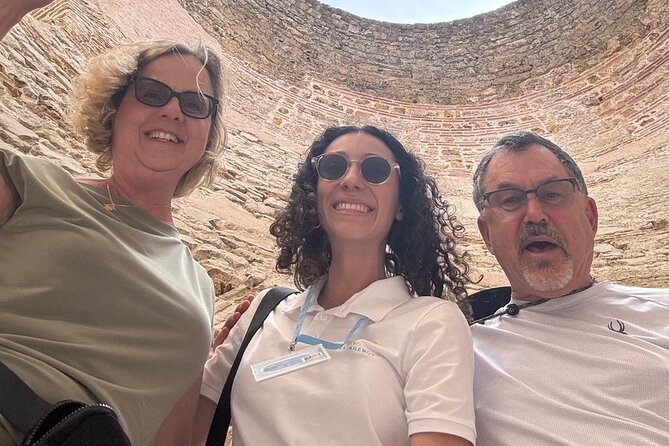
Split can feel like a history textbook that decided to move in and start living there. You see Roman stone, medieval layers, and modern streets all at once. This tour helps you sort it without getting overwhelmed.
The best part is the balance: you get must-see stops tied to the story of how the city formed and transformed, and you also get a guide who can answer the practical questions that don’t show up on plaques. When a local points out what matters, you learn what to look at next on your own.
It’s also good value in a very specific way. For $28 per person over about 1.5 hours, you’re paying for a licensed guide, a structured route through key areas, and a guided explanation that saves you time. You can absolutely spend that time doing independent wandering, but you’ll usually end up doing a lot of guessing about what you’re actually seeing.
You can also read our reviews of more walking tours in Split

Start at the model of Split: getting oriented fast
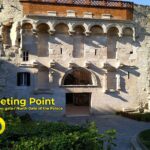
Your tour meets on the waterfront at Obala Hrvatskog narodnog preporoda 22, with your guide waiting next to a model of Split and holding a Tour4You sign. That matters more than you’d think. Split’s Old Town is compact, but the sightlines can confuse you on day one. Starting near the water helps you understand where you are before you head into the maze of streets and arches.
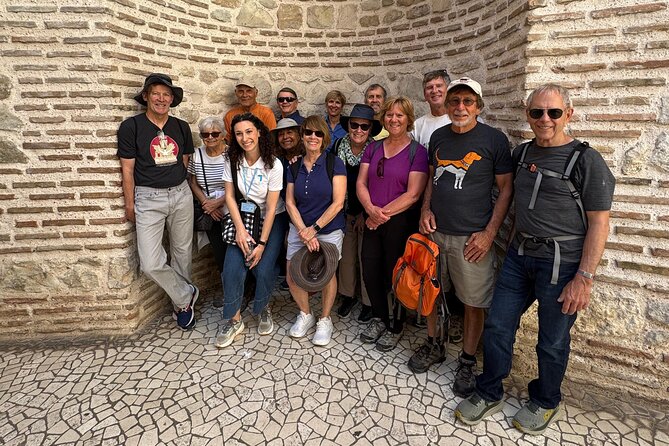
The group stays small, so you’re not just being herded past stops. You can ask questions as they come up, and you’re less likely to lose track of the route. Since the tour is in English and runs about 1.5 hours, it also fits neatly into the beginning of your trip—especially if you’re trying to plan meals, boat trips, or a second pass through the palace later.
One tip: arrive a few minutes early. With cobbled Old Town streets and tourists everywhere, you want your start to feel calm, not rushed.
Riva to Old Town: the waterfront context you’ll keep using
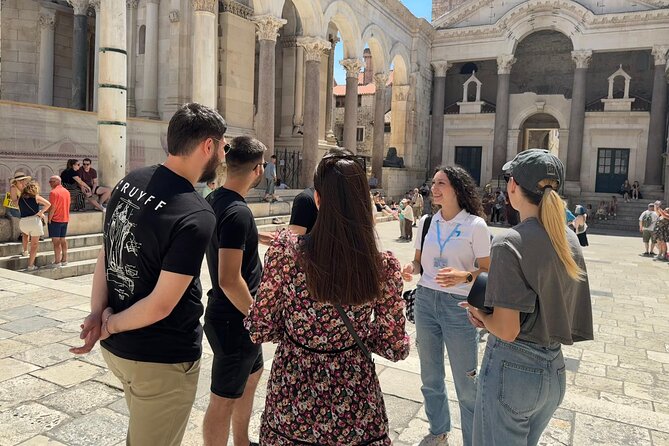
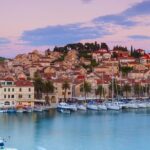
From the meeting area, the walk includes Riva, Split, with a guided explanation as you move. This is a smart opening stop because Riva isn’t just a pretty promenade. It’s the part of the city where you understand the rhythm of daily life—where people gather, where you feel the sea air, and where the Old Town connects to the present.
I like this approach because it sets expectations. When you go from the open waterfront into enclosed stone spaces, you’ll notice the shift in sound, light, and scale. You’ll also be better at making sense of what you see: where the palace sits relative to the rest of the city, how streets fold around older walls, and why some areas feel like they’ve always had a public purpose.
If you’re prone to “monument tunnel vision” (seeing only the big stuff), this step helps you broaden the view. You’ll get a feel for the city’s layout before the tour starts stacking up the palace details.
Diocletian’s Palace: where the legends and the city layers meet
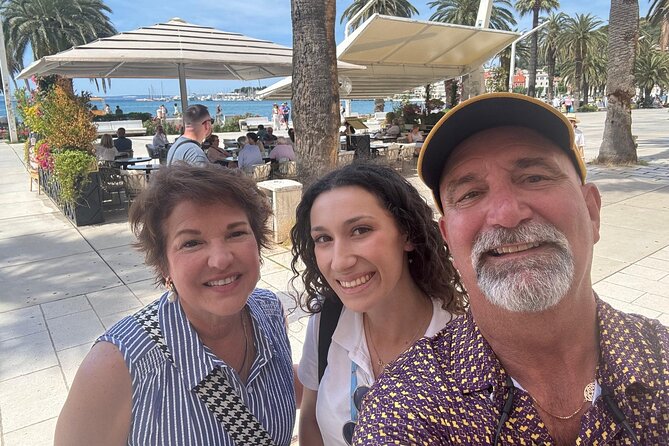
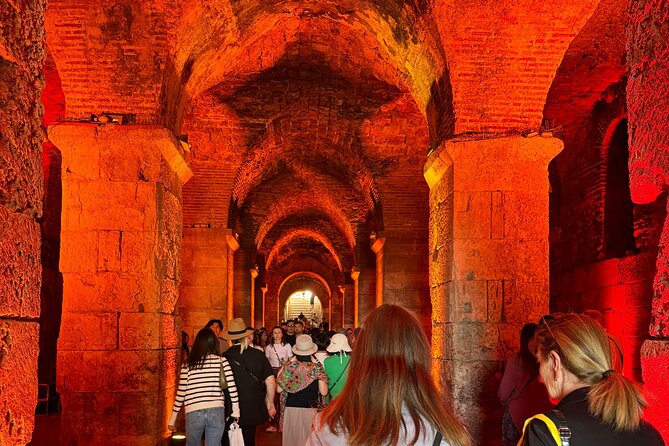
Next comes Diocletian’s Palace, and this is the anchor of the whole tour. You’re guided through the palace complex and the surrounding story of Emperor Diocletian choosing it as a luxurious residence—over 1,700 years ago. That timeline is the whole point. Split didn’t just build around the palace; it grew into it.
This stop is also where the legend-and-tales angle earns its keep. Architecture can feel cold until someone explains what people did in these spaces and why certain details mattered to the city as it changed. When your guide connects the walls and layout to human stories—who lived where, what entrances did, how the city adapted—the palace stops being a static ruin.
What you’ll likely notice during this part:
- The sheer sense of scale as walls and passageways compress and release your perspective.
- The mix of ancient structure with later city use.
- How the palace functions as both a landmark and a lived-in neighborhood.
A small caution: since this is a walking tour and time is limited, you won’t linger forever. That’s not a bad thing—it keeps energy up—but if you want long photo sessions or extended stops, you’ll want a return visit afterward.
Vestibul and Peristil: learning the spaces that make the palace work
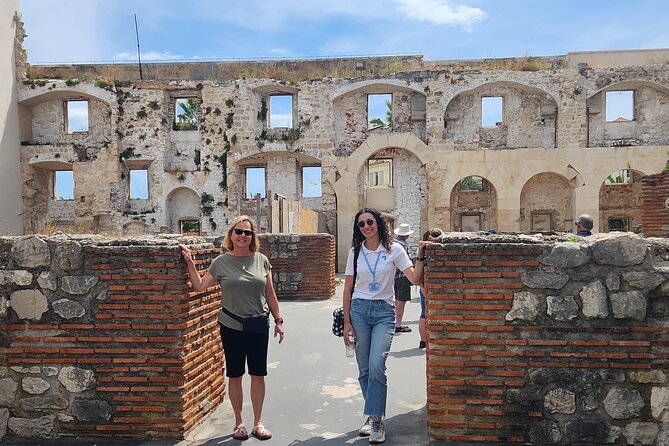
After the palace introduction, the route continues through key interior spaces, including Vestibul and Peristil.
These names matter because they’re not just random stops. They represent transitions: the idea of moving through planned spaces that control flow—street to palace, inward to communal areas. Even without turning it into an academic lesson, your guide helps you understand how the design shapes movement and visibility.
The Peristil area is often where people start to feel the palace’s “open-air” side compared to the tighter passageways. It’s the kind of space where you can look around and connect dots: where you’ve been, where the city is around you, and how that older plan still influences how Split feels today.
Practical note: bring patience for uneven ground and shifting lighting. This is Old Town walking, not polished museum floors. Comfortable shoes are your best upgrade here.
You can also read our reviews of more historical tours in Split




Golden Gate: the palace entrance you’ll remember
Then you’ll reach the Golden Gate. A gate is never just decorative—it’s a junction between inside and outside, between palace life and the city world beyond it. That’s why this stop tends to stick in your mind even after the tour is over.
Your guide uses it to explain transformation over time—how a palace that was once a residence became part of a much wider living city context. When you stand at a major entry point and get that story, you’re better equipped to see the palace not as isolated ruins, but as a structure that kept being re-used, reinterpreted, and re-lived.
If you’re the type who likes “one place, many meanings,” Golden Gate is a good fit. It gives you a focal point that’s easy to photograph and also easy to connect back to the rest of the tour.
People’s Square and Fruit Square: where the city’s daily pulse shows
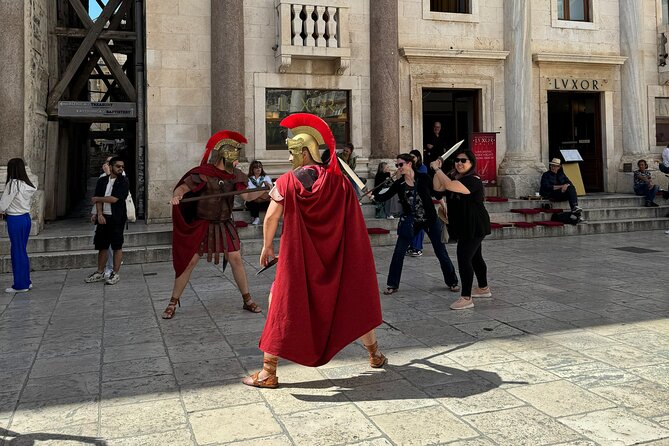
The final palace-adjacent stops include People’s Square and Fruit Square. These areas bring you back to the city side of the story—public spaces where everyday life continues. This is valuable because history doesn’t belong only in one building. In Split, history lives in how people move, meet, shop, and spend time.
I like ending with public squares because it helps you reset. You’ve just spent focused time inside an ancient complex; stepping into squares lets you absorb what you saw and start imagining where you’ll go next on your own.
Also, if you’re planning your own walking after the tour, these names help you. You get anchor points you can navigate by, so you don’t end up wandering in circles trying to find the same view again.
Price and value: what $28 buys you in Split
At $28 per person for roughly 1.5 hours, you’re buying three things: time saved, a guided story, and a local connection. You’re not just paying to stand in front of sights.
What’s included:
- A licensed tour guide in English
- A guided walk through major stops around Diocletian’s Palace and key squares
What’s not included:
- Entrance tickets for cultural and religious sites (you’ll get info so you can check them later at your own pace)
So the value equation depends on your style. If you want to walk, listen, ask questions, and get oriented quickly, this feels like a smart spend. If you’re hoping the tour covers every interior site with tickets included, you’ll need to plan for additional stops on your own after you know what you want to see.
The biggest win for me is the “first-trip clarity.” Split has layers. A guide helps you avoid the common mistake: seeing the monuments but not understanding how they connect.
Who this tour fits best (and who might want a different plan)
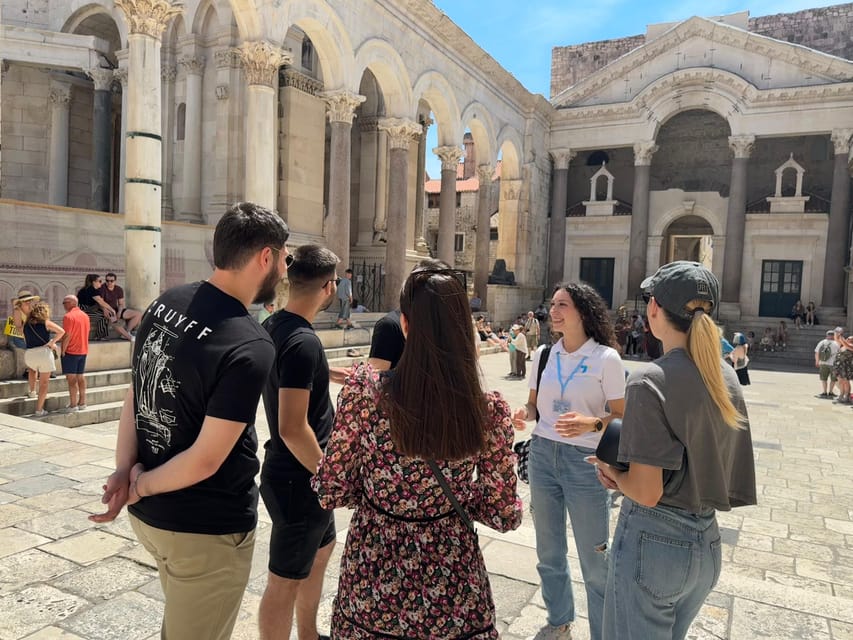
This tour is a good match for:
- First-time visitors who want a structured introduction to Split
- People who love history told through places, not just facts
- Anyone who wants a local voice and time for questions (Lucija’s local perspective shines here)
- Travelers who want a short outing that helps them plan the rest of their day
It’s less ideal if:
- You want a long, slow crawl through interiors and museums without time pressure
- You need wheelchair access. This tour is not suitable for wheelchair users.
A final practical thought: if you’re sensitive to weather, keep your schedule flexible. The tour is subject to weather conditions, and your plans should have some breathing room.
FAQ
Is the tour in English?
Yes. The live tour guide speaks English.
How long is the Split Walking Tour?
The duration is about 1.5 hours (you can check availability for starting times).
How much does it cost?
The price is $28 per person.
Where do I meet the guide?
Meet at Obala Hrvatskog narodnog preporoda 22, next to the model of Split, with your guide holding a Tour4You sign.
Where does the tour end?
The tour ends back at the same meeting point: Obala Hrvatskog narodnog preporoda 22.
Are entrance tickets included for sites?
No. Entrance tickets for cultural and religious sites are not included, but your guide will give you information so you can check them later.
Do I need comfortable shoes?
Yes. The tour includes walking on Old Town streets, so comfortable shoes are recommended.
Can I cancel for a full refund?
Yes. You can cancel up to 24 hours in advance for a full refund.
Should you book this tour?
If you’re visiting Split for the first time and want to get your bearings fast, I’d book it. The short duration, the major palace stops, and the guided explanations in English make it an efficient way to understand what you’re looking at. Add in Lucija’s local, question-friendly style, and you’ll leave with a stronger mental map of the city—not just photos.
Skip it only if you already feel confident navigating Diocletian’s Palace on your own and you’d rather spend the time on longer ticketed visits. For most people, this is the best kind of first day help: easy pace, clear story, and useful direction for what comes next.