REVIEW · SPLIT
Split Walking Tour: History, Legends & Tales
Book on Viator →Operated by Tour4You · Bookable on Viator
Split’s palace maze fits in 90 minutes. I love the way this tour maps Diocletian’s Palace onto what you see today, and I love Lucija’s conversational stories plus practical picks like pasticada and gelato. The main catch: you do not go inside museums or ticketed sights; it’s a history and legends walk, not a collection tour.
It runs about 1 hour 30 minutes, capped at 12 people, in English with a licensed guide (Tour4You). It starts and ends at Obala Hrvatskog narodnog preporoda 22, so you can hop off for lunch right after.
In This Review
- Key Highlights You Shouldn’t Miss
- 90 Minutes Around Diocletian’s Palace: What You’ll See
- Price and Value at $30.17: What’s Included and What Isn’t
- Start at Riva Harbor: Model of Split and First Legends
- Substructures Underground: The Roman Engineering You Can Almost Hear
- Vestibulum to Diocletian’s Apartments: Where Arrival Becomes Story
- The Peristyle Court and the 3,500-Year-Old Sphinx
- Golden Gate and Gregory of Nin: Big-Toe Luck, No Ticket Lines
- People’s Square (Narodni Trg) and Coffee Time Outside the Walls
- Fruit’s Square (Trg Brace Radic): Venetian Tower and Baroque Milesi Facade
- Tour Style With Lucija: Clear Stories, Good Pace, Useful Tips
- Who This Tour Fits Best (And Who Might Want Something Different)
- Should You Book This Split Walking Tour?
- FAQ
- How long is the Split walking tour?
- How much does the tour cost?
- Where does the tour start and end?
- Is admission included?
- What language is the tour offered in?
- How big is the group?
- Is a mobile ticket provided?
- What weather conditions does the tour require?
- Is there free cancellation?
Key Highlights You Shouldn’t Miss
- Tight 90-minute route that hits the most meaningful parts of old Split’s Roman core
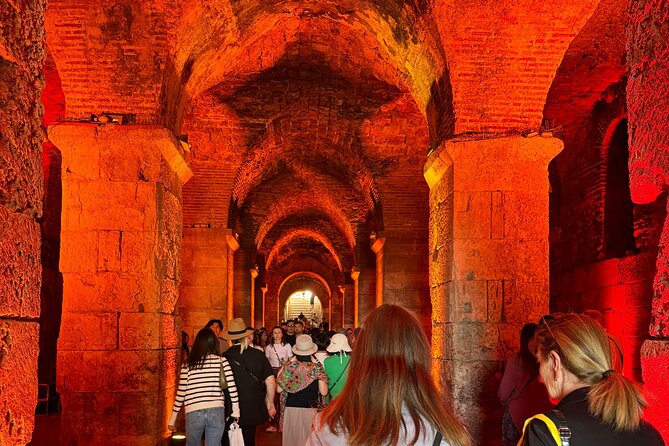
- Diocletian’s substructures explained like a real underground city, not a textbook
- Peristyle + the 3,500-year-old sphinx, where Roman and Egyptian details meet in plain sight
- Golden Gate to Gregory of Nin’s statue, including the classic big-toe luck ritual
- Two city squares outside the palace walls, with a good mix of cafés and landmark architecture
90 Minutes Around Diocletian’s Palace: What You’ll See
This is the kind of tour that helps you walk Split with your eyes open. Instead of wandering randomly and hoping things click, you follow a clear path built around one big idea: Diocletian’s palace shaped the city, and you can still read that story on the ground.
The route also stays realistic. You’re not asked to spend hours queuing, buying entry tickets, or hunting for obscure spots. In about 90 minutes, you cover palace substructures, entrance spaces, the Peristyle courtyard, and then you step outside to see how the town grew beyond the walls.
You’ll come away with two things that matter in a place like Split. First, you’ll recognize the big architectural moves—gate, corridor, courtyard, and civic square. Second, you’ll pick up the local stories that make those stones feel less dead. When you later walk on your own, it’s like someone turned on subtitles.
You can also read our reviews of more walking tours in Split


Price and Value at $30.17: What’s Included and What Isn’t
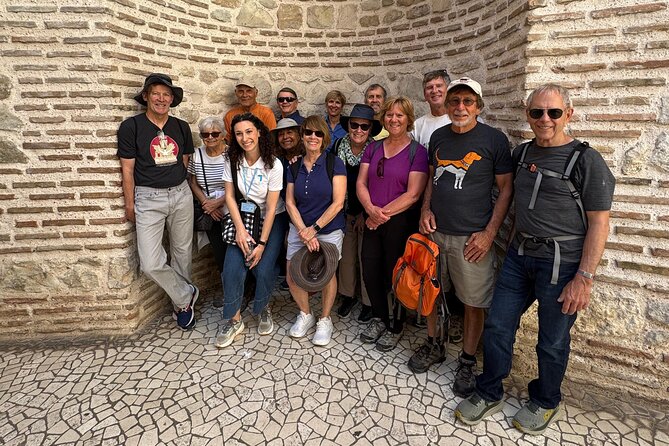
At $30.17 per person for roughly 1.5 hours, the value is mostly in the guide and the route design. You’re paying for a licensed guide to point out what’s worth noticing and connect the dots between legend, Roman engineering, and everyday city life.
Here’s the key budgeting detail: there are no admission tickets included, and the tour does not involve entering museums or paid sites. That’s not a flaw by default. It means you can do this early in your trip to get your bearings, then decide later if you want any ticketed add-ons.
If you’re the type who wants full-on indoor museum time, you might feel you’re getting mostly outdoor and accessible spaces. If you’re more interested in seeing the city, learning how it works, and then using that info to explore on your own, this price makes sense.
Start at Riva Harbor: Model of Split and First Legends
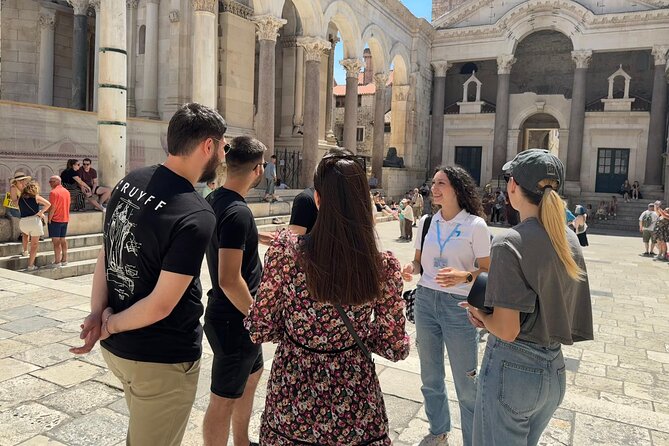
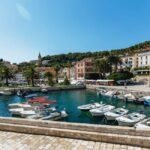
The tour starts on the main promenade at Obala Hrvatskog narodnog preporoda 22, right along the waterfront. That’s a smart choice. You’re already in the visual world of old Split—sea air, promenade energy, and the feeling that you’re at the city’s front door.
At Riva Harbor, you’ll get an introduction that sets the foundation: who Diocletian was, how his palace worked, and how the palace became the core of today’s Split. You’ll also see a model of Split, which helps your brain sort “where am I in this maze” into something clear.
Practical tip: arrive a few minutes early and use this as your warm-up. Once you understand the layout, the rest of the walking feels faster and less confusing.
Substructures Underground: The Roman Engineering You Can Almost Hear

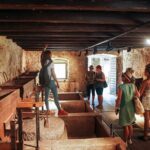
Next comes one of the most fascinating parts: Diocletian Palace Substructures. This is the underground labyrinth—corridors and rooms that once functioned as the foundation support for the palace above.
What makes this stop work is that you’re not just looking at damp stone and guessing. The guide frames it as a feat of Roman technique: smart engineering, deliberate design, and a layout that suggests how serious power needs real infrastructure. You’ll also be asked to imagine the daily reality of people connected to these spaces—who used them, what their purpose might have been, and why they were built the way they were.
Possible drawback: underground spaces can feel more enclosed than the promenade. If you’re sensitive to tight or dim areas, plan for a slightly slower pace and give yourself a moment before you move into the maze.
Vestibulum to Diocletian’s Apartments: Where Arrival Becomes Story
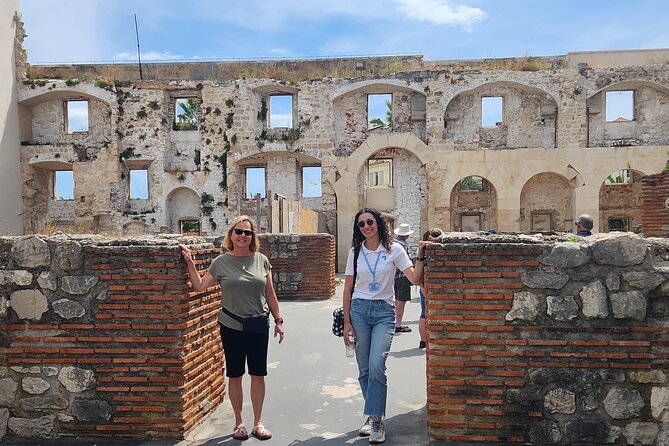
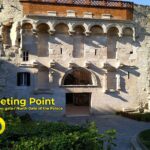
From the substructures, you move toward the Vestibulum, the grand entrance hall of Diocletian’s Palace. This is one of those spaces that makes the palace feel less like ruins and more like a machine for hosting people.
Along the way, the tour focuses on the southern parts of the palace, including where Diocletian’s apartments once stood. You’ll also hear about areas tied to daily high-status life, like the Triclinium (the dining hall) and the palace gardens.
This stop is valuable because it changes the way you see the whole complex. Instead of thinking of palace walls only as military defenses, you start seeing them as stages—places built for arrival, power, dining, leisure, and movement.
You can also read our reviews of more historical tours in Split





The Peristyle Court and the 3,500-Year-Old Sphinx
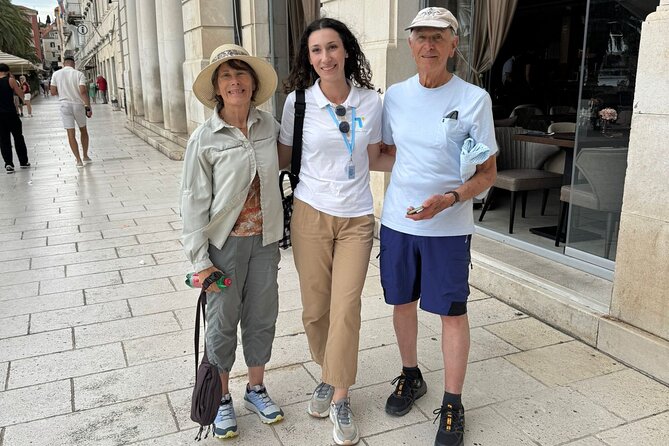
Now you hit Peristyle, and this is where the tour turns from explanation to experience. The Peristyle courtyard is the closest thing to a living connection with the ancient world you can get in walking distance.
The standout detail here is the 3500-year-old sphinx. The tour ties it to a bigger idea: the Peristyle isn’t only Roman in feel. Egyptian influence shows up in the mix, and the sphinx becomes a visible anchor for the story of Split’s layers.
I like this stop because it gives you a single focal point. You look at the sphinx, listen to the context, and suddenly you’re not just reciting dates—you’re watching history sit in front of you. It’s also a natural photo stop without turning into a rush job.
Golden Gate and Gregory of Nin: Big-Toe Luck, No Ticket Lines
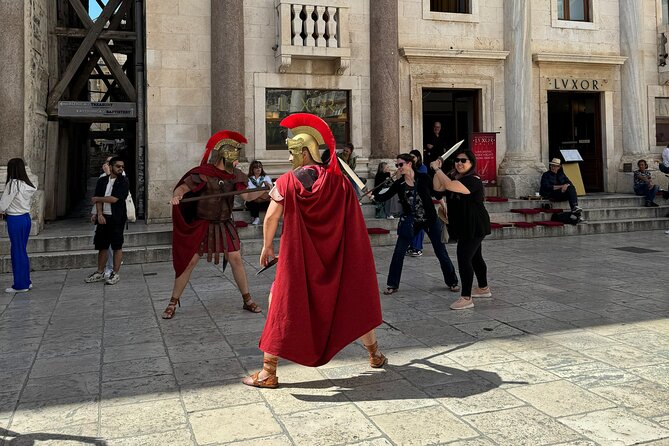
Next is the Golden Gate, described as a magnificent entranceway that once welcomed visitors into Diocletian’s Palace. Even without entering anything, gate spaces matter. They tell you where authority was performed and where movement was controlled.
From there, you walk to the statue of Gregory of Nin. This is where Split’s legend culture shows up in a very physical way: rubbing the statue’s big toe is said to bring good luck and grant wishes. It’s simple, harmless fun, and it connects the palace story to the living city that still repeats these rituals.
If you do it, do it quickly and politely. These spots can get crowded, especially in peak season.
People’s Square (Narodni Trg) and Coffee Time Outside the Walls
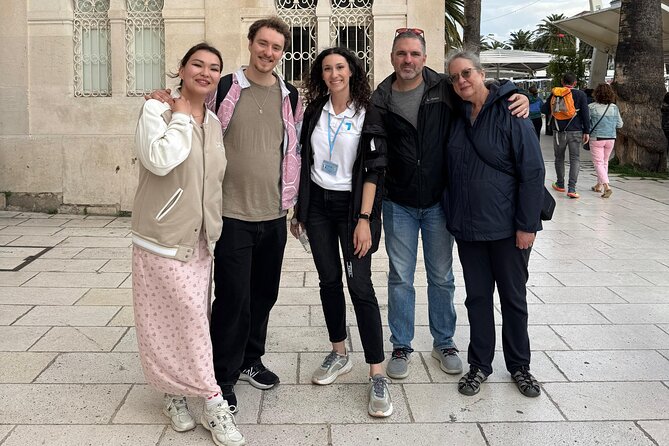
After the palace core, you step outside into Narodni Trg, also known as People’s Square. This area sits just past the western walls of Diocletian’s Palace.
Here you get the “how Split grew” story. As the palace became too small for a growing population, the city developed beyond the walls starting in the 14th century. You’ll also hear about the former 15th-century city hall, and how the square has long served as a gathering place.
This stop is practical. It’s a good place to pause, grab a coffee, and let the walking settle. You also get a feel for where you might want to return later for an evening stroll.
Fruit’s Square (Trg Brace Radic): Venetian Tower and Baroque Milesi Facade
The final stretch before you return to Riva Harbor takes you to Fruit’s Square (Trg Brace Radic). It’s not huge, but it has a lot going on—bars, restaurants, shops, and a square identity shaped by the kind of town gatherings that keep happening long after market days change.
Two landmarks anchor this stop:
- An octagonal Venetian tower, leftover from a fortress built in the 15th century for the defense of the town at that time.
- The Milesi Palace, a 17th-century building with a spectacular Baroque facade.
This is a great closer because it pulls you out of the Roman bubble and into later layers of Split. You finish with the feeling that Split isn’t one era. It’s a stack.
Tour Style With Lucija: Clear Stories, Good Pace, Useful Tips
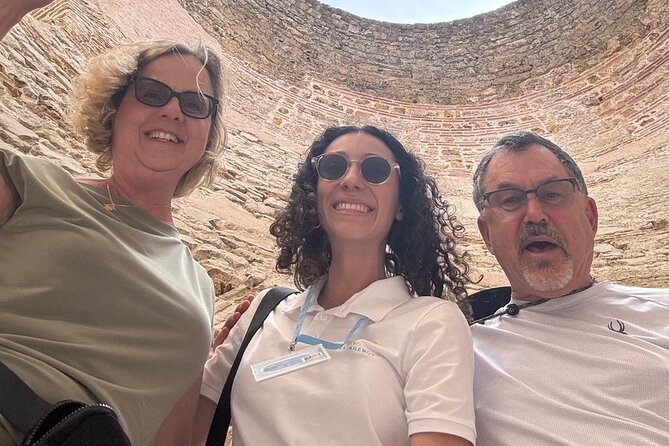
A big reason this tour gets such strong results is the way it’s taught. The guide, often Lucija, is described as conversational and patient, with a knack for making the information stick without sounding like a lecture.
You’ll also notice the tour doesn’t treat food like a random add-on. You get restaurant and snack recommendations, including local favorites like pasticada and sweets like gelato. That kind of practical advice helps you translate history into your actual day.
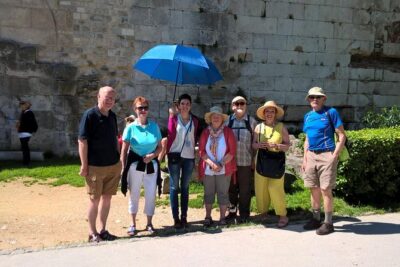
The group size is also a real benefit. With a maximum of 12 travelers, you’re less likely to get swallowed by the crowd, and it’s easier to ask questions. One advantage of a smaller group is that the guide can slow down when people need a second to orient.
If you’re on a cruise, this can be a smart choice too because the starting point is easy to find and the format gives you a strong overview without losing half the day in logistics. You still get value even if your time window is tight.
Who This Tour Fits Best (And Who Might Want Something Different)
This fits you if:
- You want a high-impact introduction to old Split quickly
- You enjoy city stories tied to real architecture
- You like walking tours with a friendly, talk-through-the-details guide
- You want ideas for what to eat next, not just what to see
It may not fit you as well if:
- You’re specifically hunting for museum interiors or paid attractions
- You prefer long, deep dives into one single building rather than a route through several major spaces
Should You Book This Split Walking Tour?
If it’s your first time in Split, I’d book this. It gives you a working map of Diocletian’s palace and the city that grew around it, and it does it in the right amount of time. The lack of museum entry is actually a plus if you want to stay flexible and explore the rest of Split on your own right after.
Also, the small-group setup and the strong track record of clear, friendly guiding (including Lucija) make it feel like a proper city orientation, not just a checklist.
If you’re deciding between this and something longer with paid sites, pick based on your energy. This tour is for getting oriented and learning the stories behind what you’ll see next. Then you can choose later if you want ticketed add-ons.
FAQ
How long is the Split walking tour?
It’s about 1 hour 30 minutes.
How much does the tour cost?
The price is $30.17 per person.
Where does the tour start and end?
It starts at Obala Hrvatskog narodnog preporoda 22, 21000, Split, Croatia, and it ends back at the same meeting point.
Is admission included?
No. The tour does not include admission tickets, and it doesn’t enter museums or paid sites.
What language is the tour offered in?
The tour is offered in English.
How big is the group?
The maximum group size is 12 travelers.
Is a mobile ticket provided?
Yes, there is a mobile ticket.
What weather conditions does the tour require?
The tour requires good weather. If it’s canceled due to poor weather, you’ll be offered a different date or a full refund.
Is there free cancellation?
Yes, free cancellation is available. You can cancel up to 24 hours in advance for a full refund.